

War in Gaza tests ties between Israel and traditional European allies
Germany, one of Jerusalem’s closest friends, seen as main holdout against EU efforts to ramp up pressure, take more significant punitive action
 Add ToI as a Preferred Source on Google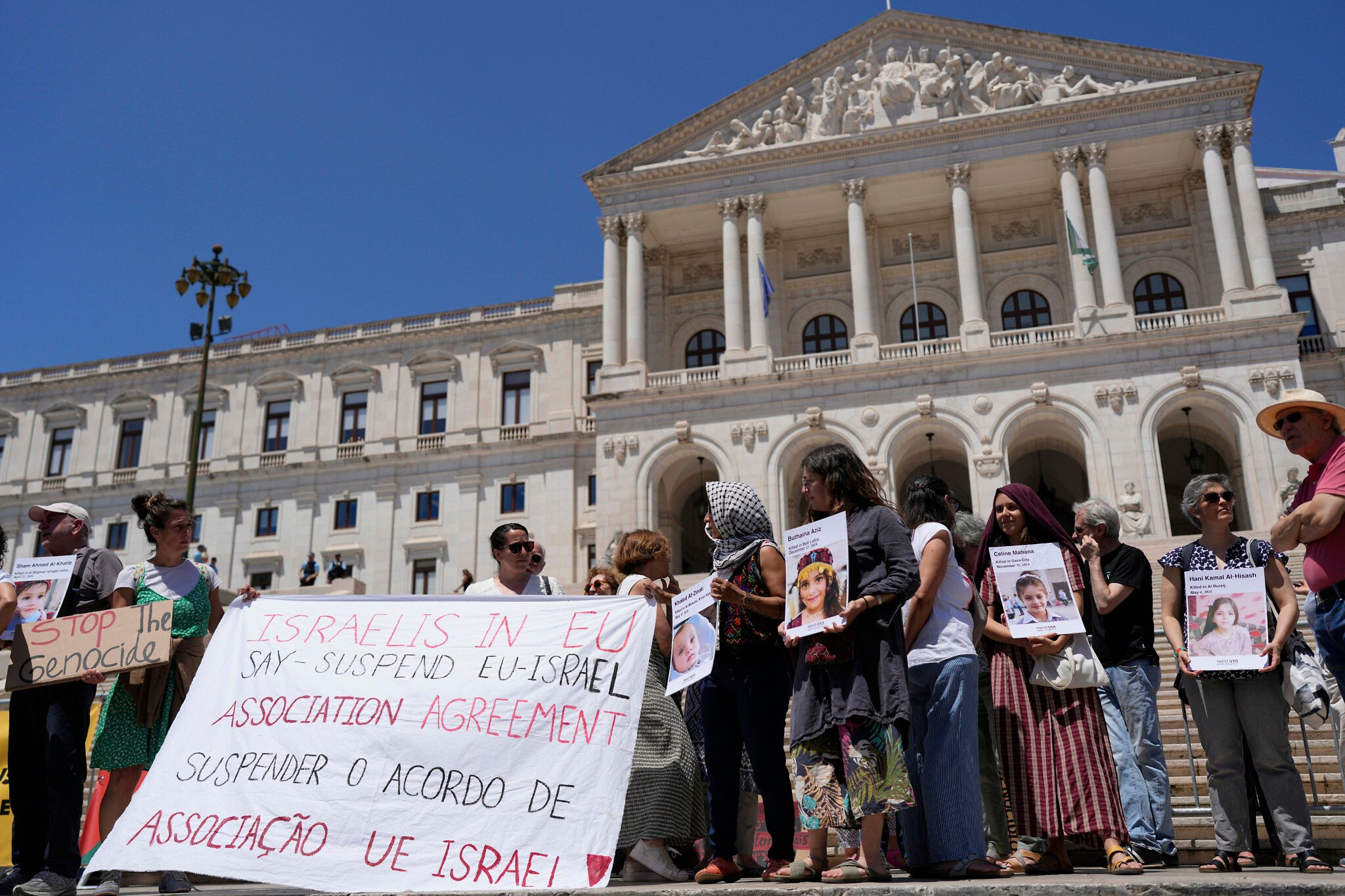
Britain threatened on Tuesday to take further action against Israel if it does not agree to end the war in Gaza, a day after two dozen mostly European countries condemned Israel’s restrictions on aid shipments into the territory and the reported killings of hundreds of Palestinians trying to reach food at designated aid sites.
Despite the increasingly strong words, many are skeptical that Israel will yield to such pressure without more significant punitive action — and especially without the backing of Germany and the US, Israel’s strongest Western allies.
Outrage over Israel’s actions in Gaza has grown in Europe as images of suffering Palestinians have driven protests in London, Berlin, Brussels and other capitals. More recently, the reports of near-daily mass casualty events in the vicinity of aid distribution sites have tested the EU’s friendly relationship with Israel like never before.
But Europe remains divided on its stance toward Israel, and its limited sanctions and condemnations so far have had little effect.
Here’s a look at what Europe can do or has done — and why it hasn’t done more.
EU reviews its ties with Israel over Gaza
The EU has been reviewing its diplomatic and trade ties with Israel over its conduct in Gaza. An internal report recently found indications that Israel has violated its human rights obligations under the EU-Israel Association Agreement, a 25-year-old legal framework governing the political relationship and trade cooperation between the two sides. But so far, the EU has taken no action to suspend such ties.
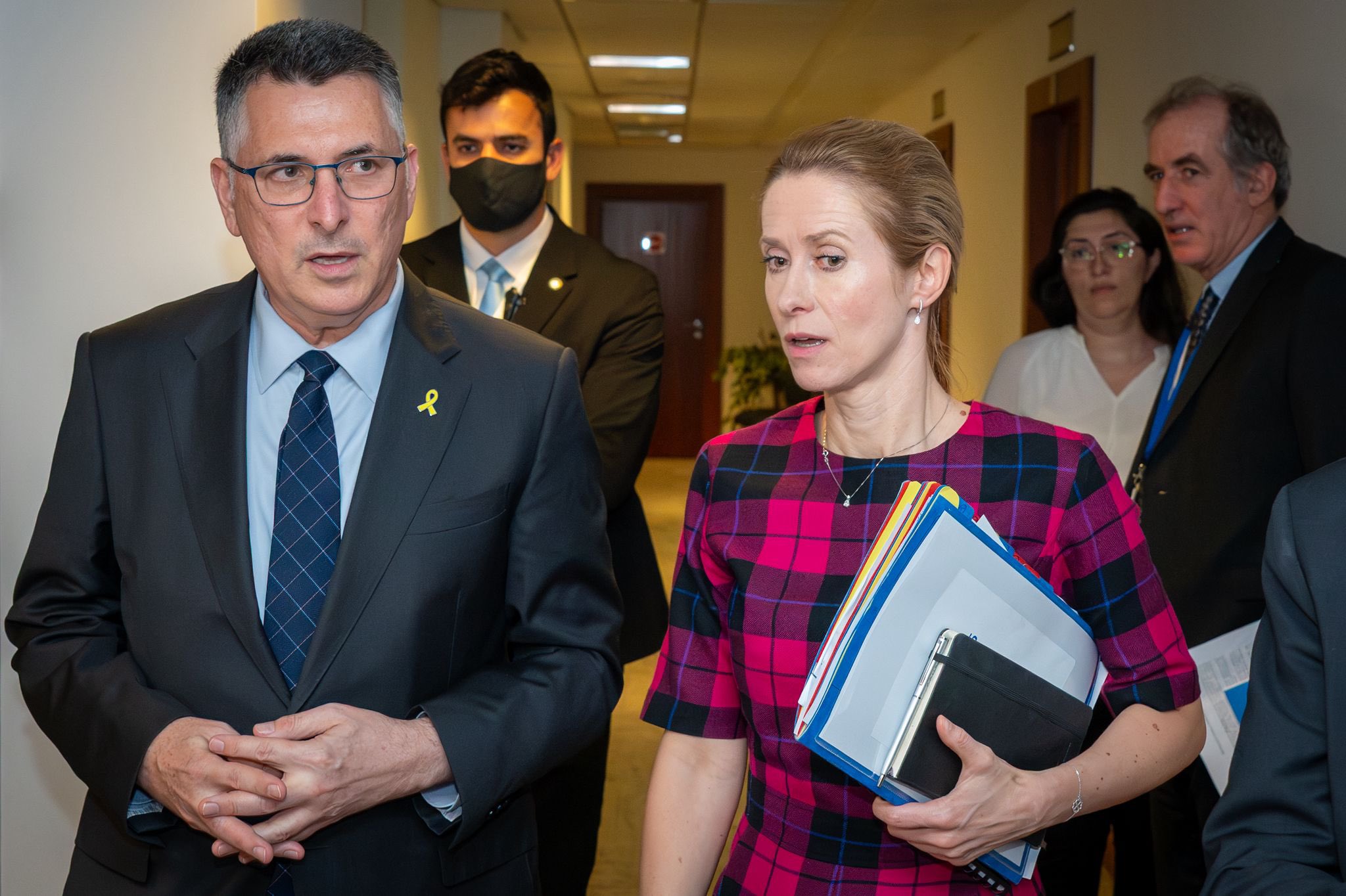
Some have accused the EU — Israel’s biggest trading partner — of a lack of political courage and of underestimating its leverage on Israel.
“What we can see is mounting pressure, but those are words, those are not actions,” said Yossi Mekelberg, a senior consulting fellow at London’s Chatham House think tank.
Individual countries, such as Britain, Canada and Australia, have slapped sanctions on Israeli settlers in connection with violence against Palestinians, including asset freezes and travel bans. But such measures have yielded few results.
In addition, Australia, Canada, New Zealand and Norway have sanctioned two far-right Israeli ministers, Finance Minister Bezalel Smotrich and National Security Minister Itamar Ben Gvir, for “inciting extremist violence” against Palestinians in the West Bank.
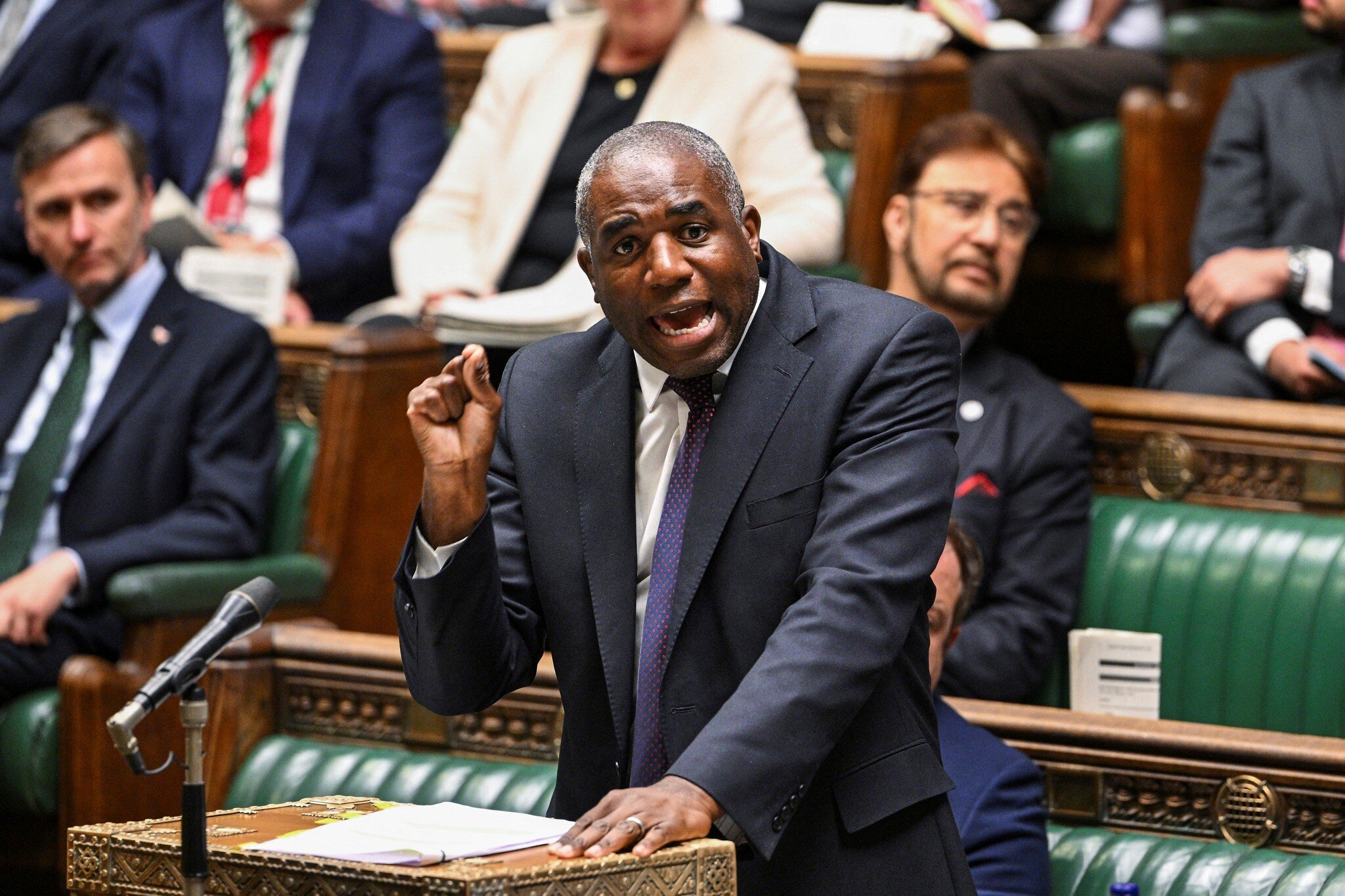
The UK said in May that it would suspend free trade talks with Israel, also over the West Bank. British Foreign Secretary David Lammy hinted at stronger action Tuesday, saying he felt “sickened” by the suffering in Gaza, but he did not specify what measures were being considered.
“We will continue to pressure. We will continue to act,” Lammy told British media, stressing the need to work with allies to get the “maximum result.”
Speaking on Tuesday on X, European Commissioner Ursula von der Leyen reiterated the EU’s call for “the free, safe and swift flow of humanitarian aid. And for the full respect of international and humanitarian law. Civilians in Gaza have suffered too much, for too long.”
If Israel does not change course, options could include fully or partially suspending the EU-Israel Association Agreement, which would require a unanimous agreement by all 27 members of the EU.
Other steps could be suspending an aviation agreement, blocking imports from settlements, limiting scientific and technological cooperation, and curtailing travel for Israelis in the visa-free zone known as Schengen, according to a leaked document sent by the EU’s top diplomat, Kaja Kallas, to member states. The document was seen by The Associated Press and verified by two EU diplomats.
Nations could act on their own, including sanctioning specific companies or individuals in Israel or the occupied West Bank.
Why hasn’t Europe taken stronger action?
The short answer is that Europe remains divided, and it is highly unlikely that the entire EU would reach unanimity to drastically dial up pressure on Israel.
European nations such as Ireland, the Netherlands and Spain have publicly urged the EU to reassess its ties with Israel, charging that Israel has violated human rights conditions in its agreement with Brussels.

But Germany and Hungary have staunchly defended Israel, along with Romania, which just bought air-defense systems from Israel. Suspending EU ties with Israel would require a unanimous decision, which is likely impossible to obtain.
Germany is the main holdout
Monday’s joint statement by 25 countries was rejected by the US ambassador to Israel, Mike Huckabee, who called it “disgusting.” Western allies should instead pressure the “savages of Hamas,” he said.
Israel condemned the countries’ stance and said Hamas was the sole party responsible for prolonging the war.
Hamas triggered the ongoing 21-month war with its deadly invasion of southern Israel on October 7, 2023, in which some 1,200 people were killed and 251 were taken hostage, of whom 50 are still captive.
One significant outlier in Europe is Germany, traditionally a staunch ally of Israel, with relations rooted in the memory of the Holocaust. The country has vehemently rejected the idea of suspending the EU’s association agreement with Israel.
Chancellor Friedrich Merz and other officials have gradually sharpened their criticism of Israel’s actions in Gaza in recent months. But they still appear to favor trying to influence Israel by conveying their concerns directly. Germany did not join the allies in signing Monday’s letter condemning Israeli restrictions on aid.
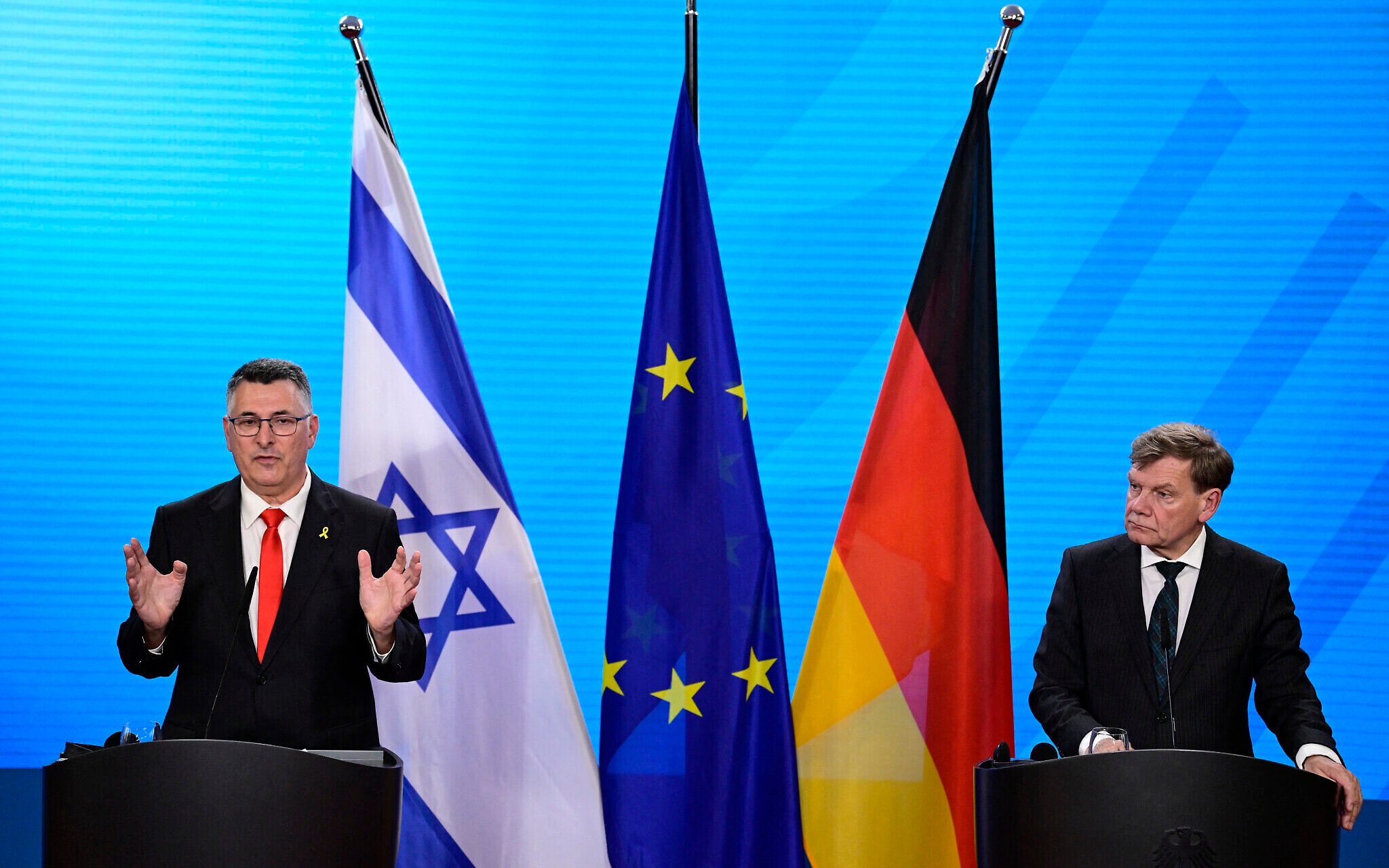
There were signs of pushback within the German government Tuesday, when the parliamentary leader of Merz’s junior coalition partner, the Social Democrats, said Germany should join Britain’s initiative and that “double standards undermine our international credibility.”
Merz said Monday that he had spoken at length with Prime Minister Benjamin Netanyahu last week and “told him very clearly that we do not share the Israeli government’s Gaza policy.”
“The way the Israeli army is acting there is unacceptable,” he said.
Nomi Bar-Yaacov, an expert on diplomacy in the Middle East, said any EU action must go beyond words.
“Israel doesn’t listen to language,” Bar-Yaacov said. “I mean, language doesn’t go anywhere with the current Israeli government. Unless a mechanism is agreed and enforced promptly, then the words have no meaning whatsoever.”







The Times of Israel Community.