

As dust settles in Gaza City amid truce, residents return to razed homes
Many returning to Gaza City now sleep in tents, some in the streets, after sweeping Israeli offensive reduced many of the city’s multi-story buildings to rubble
 Add ToI as a Preferred Source on Google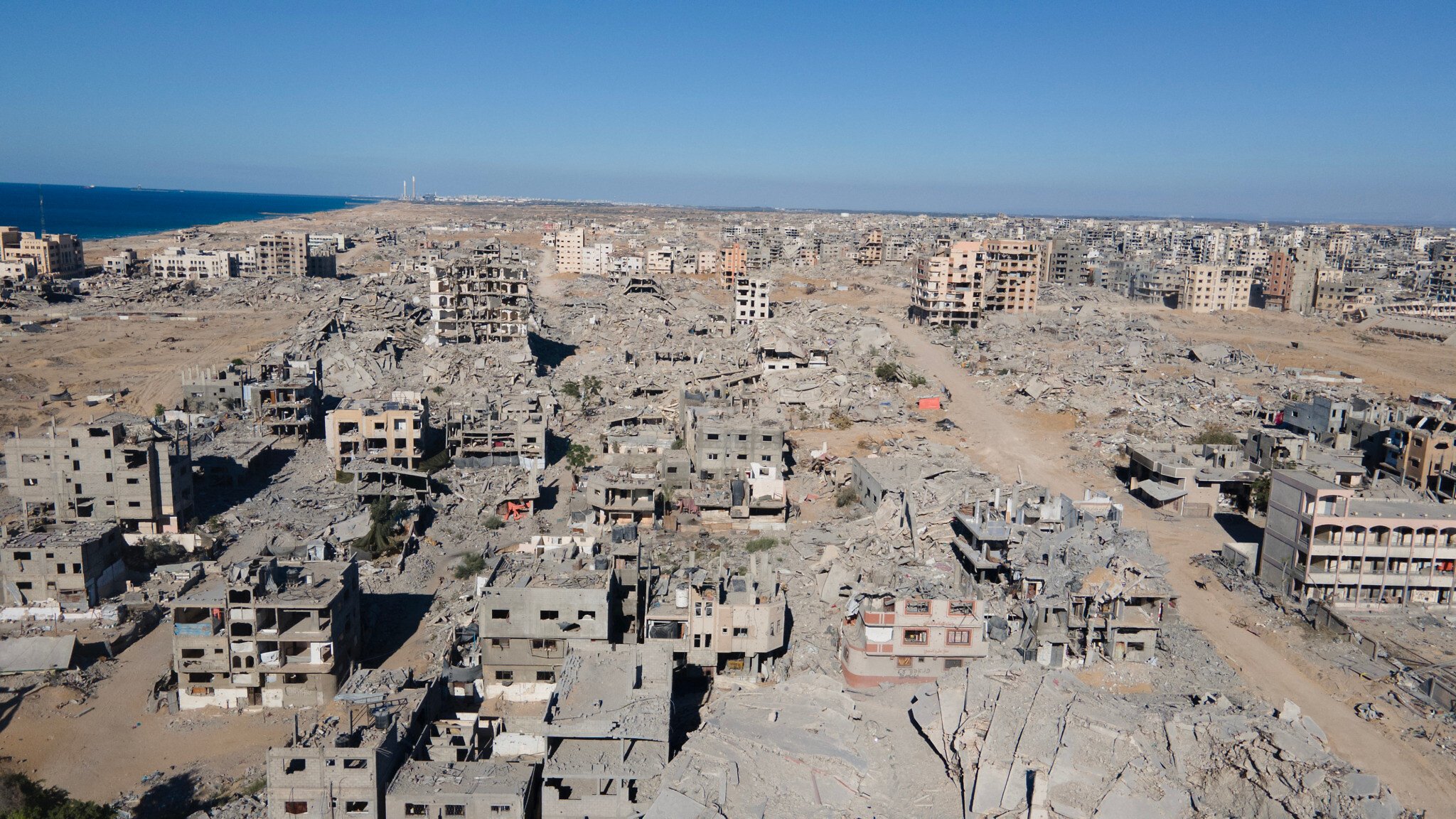
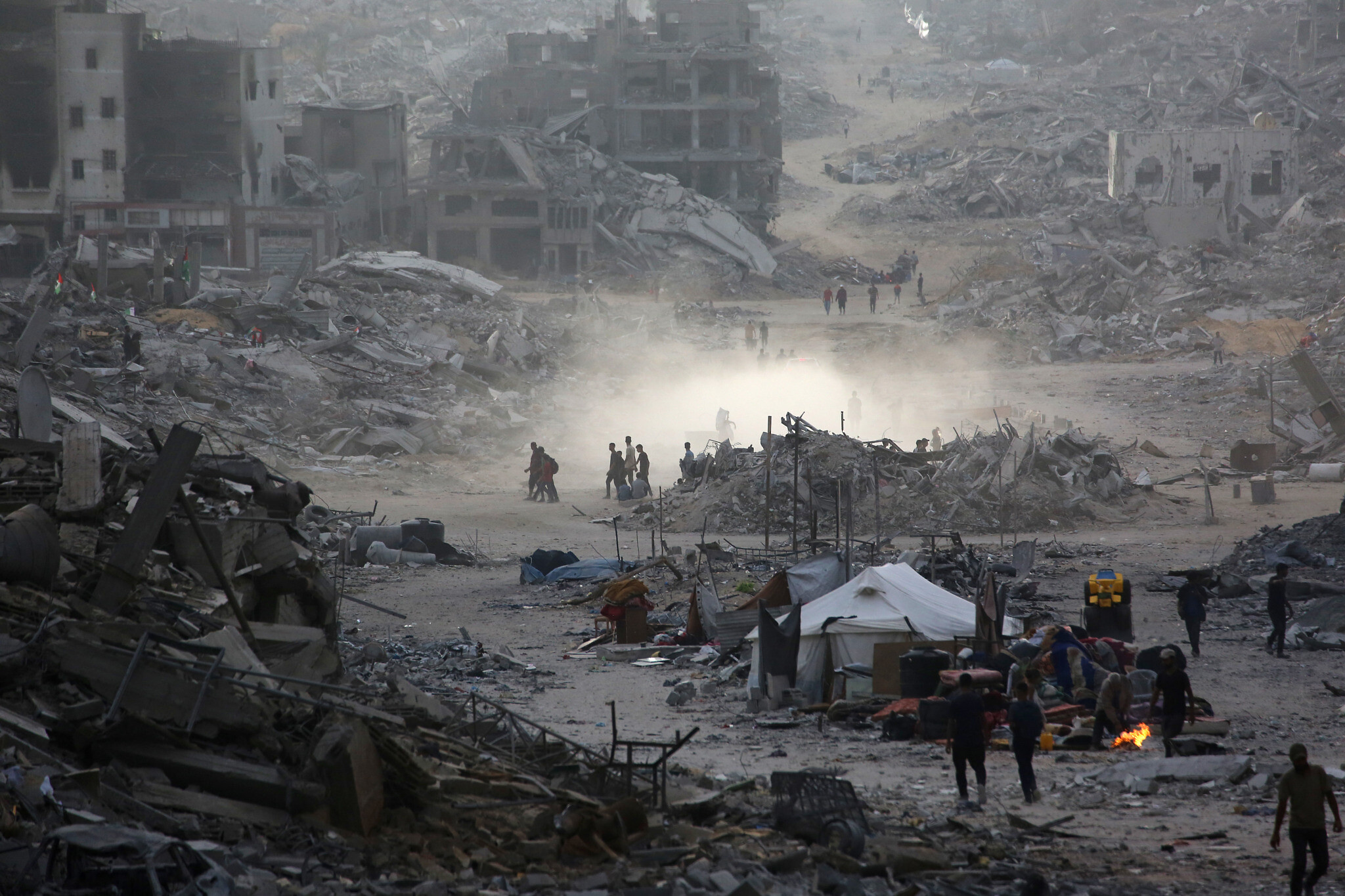
GAZA CITY — As a fragile ceasefire holds, displaced Palestinian residents of Gaza City have returned to their homes only to find rubble, with many of them forced to camp out in makeshift shelters.
In the northwest of the city, empty streets are lined with piles of concrete that once were apartment buildings before the Israel-Hamas war, with some structures completely collapsed.
Hossam Majed discovered his home reduced to rubble. Amid the ruins, the 31-year-old salvaged a few belongings, including some furniture and — crucially given the shortages — a large water tank.
While waiting for the rest of his family to return, he has swept aside some dust and rubble, set up a makeshift shelter and will guard what remains from potential thieves.
“Even food is more expensive than in the south because it’s scarce. There’s no electricity, no water, no internet. I have to walk a kilometer and a half… just to fill two water containers,” he told AFP.
Since a ceasefire deal came into effect in Gaza on Friday at noon, large numbers of Palestinians have returned to the ruins of their homes in the coastal territory.
Huge swaths of Gaza have been reduced to a wasteland by Israeli bombardment over two years, with the United Nations Development Program saying it had already cleared some 81,000 tons of rubble from the Gaza Strip and was continuing to do so.
In September, Israel ramped up its offensive in Gaza City and began to strike multi-story structures, asserting that the buildings were being used by Hamas as operational infrastructure.
Umm Rami Lubbad left her home last month to seek safety in southern Gaza, in Khan Younis, as Israel stepped up its offensive on Gaza City in a bid to root out Hamas, whose October 7, 2023, massacre of 1,200 people in southern Israel sparked the war.
She had hoped to return to her home, as “it was the only remaining hope for a little stability.” But upon their return, the mother, her young child and two teenage daughters were caught by surprise.
“My heart nearly stopped when I saw the house reduced to rubble,” she told AFP, adding: “I was looking as far as my eyes could see — and saw nothing.” Now, Lubbad and her children are effectively homeless.
“We sleep in the street regardless. I don’t have a tent,” she said, adding that neighbors took them in when artillery shelling made the outdoors too dangerous.
With her children, she has gathered some wood, clothing and a gas tank, hoping to use the wood for cooking or to build makeshift toilets.
No home, no supplies
“Life is extremely hard. I don’t know how long we’ll endure,” she said, adding that she hoped tents would eventually be allowed into Gaza.
Ahmad al-Abbasi, who had fled south during the bombings, returned to find that nothing of his five-story building remained in Gaza City.
“We came back north hoping to find our homes and [rebuild our] lives. As you can see… Gaza has turned into a ghost town,” he said.
In front of the ruins, he had attempted to set up a makeshift tent beside a Palestinian flag fluttering from a pole. He stacked some cinder blocks to anchor iron rods for holding up a sheet, which is meant to serve as a roof.
Though the shelter stands, the wind catches the fabric and the flag, making them flap loudly.
“We’re trying to salvage everything we can. We’ll try to fix even just one room or one tent to shelter ourselves, our children, and our families,” he told AFP.
Mustafa Mahram, another Palestinian who returned to Gaza City, also found his three-story house reduced to rubble.
“Everything’s gone, turned to ashes… There’s no way to live here,” he lamented. Mahram had set up a tent near the remains of his house and feels his family has been “thrown into the street.”
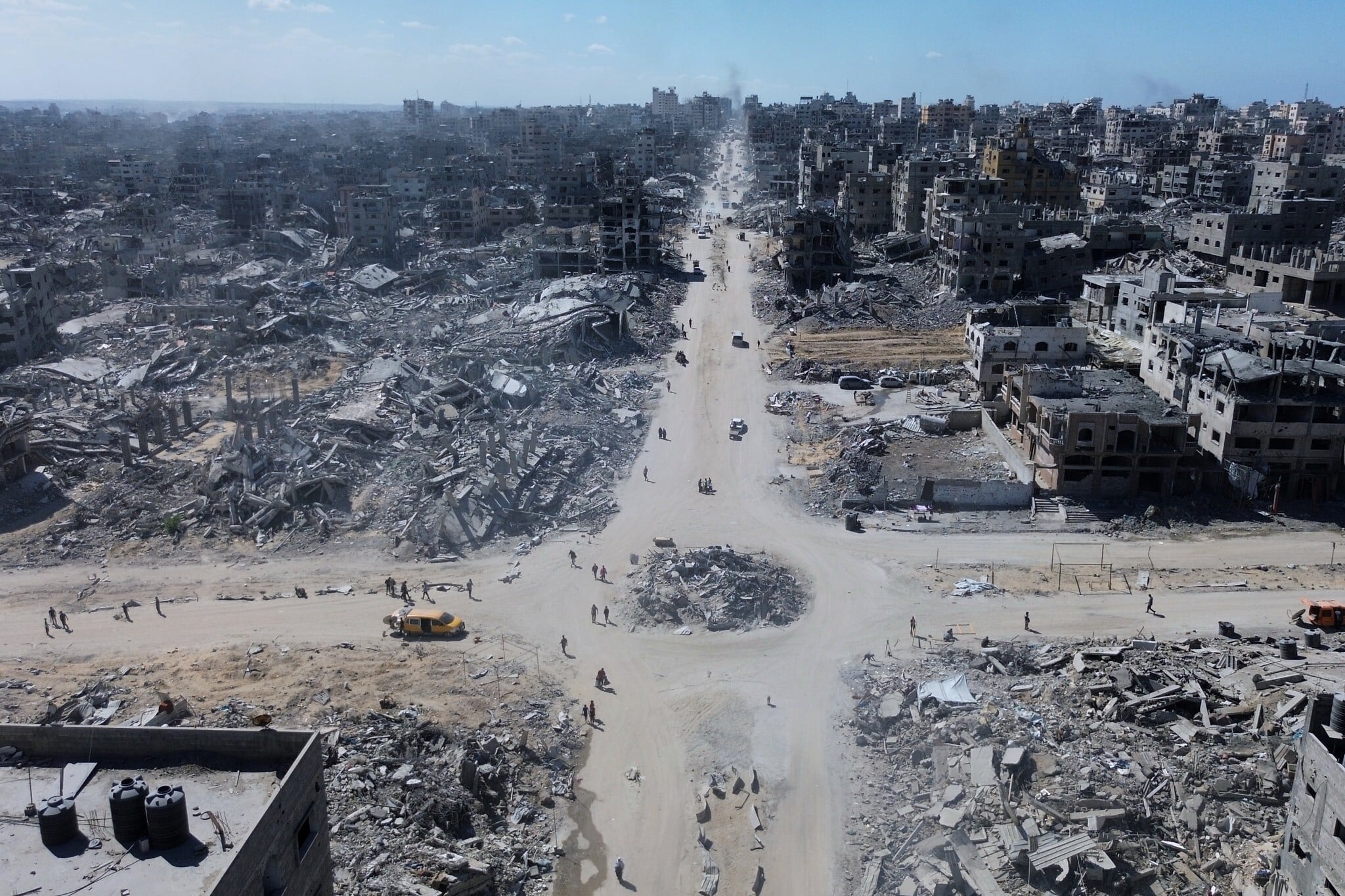
“There’s no water — no drinking water, not even salty water, no water at all,” he said. “None of the essentials of life are available — no food, nothing to drink, nothing. And as you can see, there’s nothing left but rubble.”
On Tuesday this week, a UN official indicated that European and Arab nations, Canada and the US appeared willing to contribute to the estimated $70 billion needed to rebuild Gaza.
However, it could take decades for Gaza to fully recover, added UNDP official Jaco Cilliers, noting that the war had generated at least 55 million tons of rubble.
The Hamas-run Gaza health ministry says more than 66,000 people in the Strip have been killed or are presumed dead in the fighting so far, though the toll cannot be verified and does not differentiate between civilians and combatants.
Israel says it has killed over 22,000 combatants in battle as of August and another 1,600 terrorists inside Israel during the Hamas-led October 7 onslaught, which killed some 1,200 people, mostly civilians, and saw 251 taken captive into the enclave.
Israel’s toll in the ground offensive against Hamas in Gaza and in military operations along the border with the Strip stands at 473.
Times of Israel staff have contributed to this report.






The Times of Israel Community.