

In election contest, two dueling defense doctrines
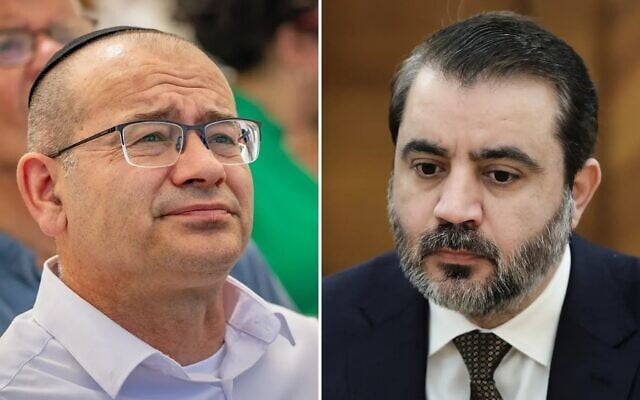
Moshe Ya’alon and Amos Yadlin, two contenders for defense minister, agree on much — but an ideological chasm divides them
- See more Times of Israel on Google - add us as a Preferred Source
Mitch Ginsburg is the former Times of Israel military correspondent.
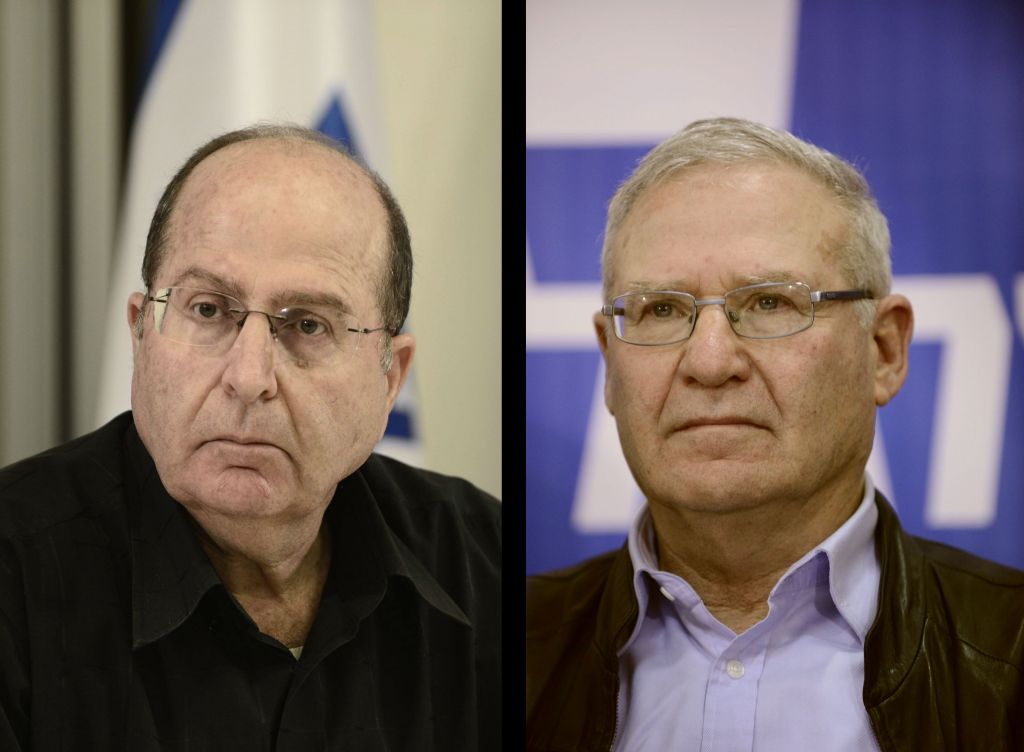
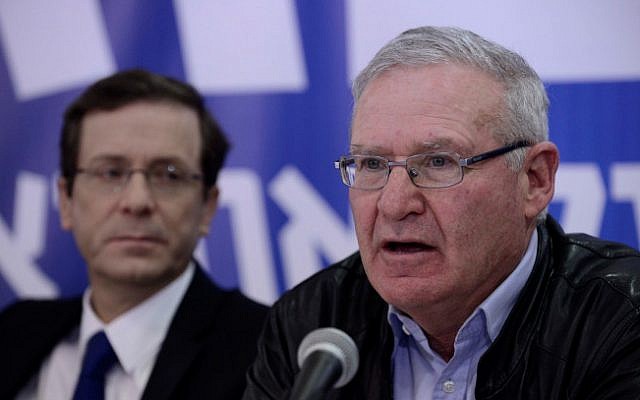
The two leading candidates for defense minister in the next government, Moshe Ya’alon and Amos Yadlin, are both rooted in the socialist kibbutz movement. They are both former generals. They are both austere, with the current defense minister, Ya’alon, setting the asceticism bar at a level not seen since the days of prime minister Menachem Begin.
Nor do the two seem to differ much on Iran — both view it as a potential existential threat that must be confronted, militarily if necessary, but not yet; nor on the Palestinian issue — neither has much faith in Palestinian Authority President Mahmoud Abbas and the bilateral negotiations track, and both believe there are significant gains to be had in what Netanyahu termed, on CNN, “the commonality of interests that has crystallized” between Israel and the more moderate Sunni states in the region.
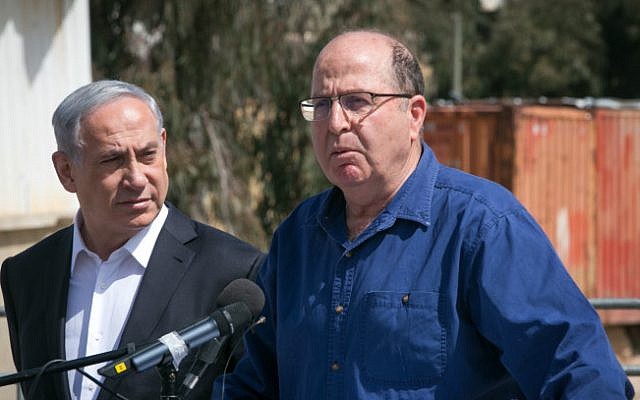
Netanyahu, seated beside Ya’alon at a press conference toward the end of the war in and around Gaza last summer, even said that with the conclusion of the war, “the unique link that has been forged with the states of the region… will open new possibilities for us.”
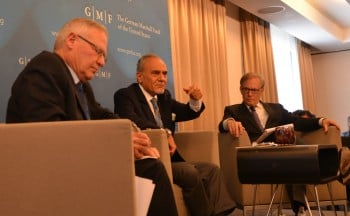
In short: He sounded rather like Yadlin, who suggested last year to Prince Turki al-Faisal, youngest son of the late King Faisal and former legendary head of Saudi Arabia’s General Intelligence Directorate for 24 years, that “his Highness come to Jerusalem, to pray at the mosques, which are for all practical purposes controlled by the Muslim leadership of Jordan and Palestine, and then [take] a very short drive to the Knesset and speak to the Israeli people.”
But consecutive addresses by the two old warhorses earlier this week, issued several days before national elections, revealed that despite the Likud’s acceptance of the necessity of a two-state solution, and despite Yadlin and Isaac Herzog’s hawkish stance on military affairs — “No” to a withdrawal from the Jordan Valley; “Yes” to a strike against Iran if necessary — an ideological chasm, on matters of war and peace, still divides the two camps.
Moshe Ya’alon’s outlook
Let’s start with Ya’alon. He was born in 1950 to a factory-worker father and a Holocaust-survivor mother. “The household was Mapai, the home one of Labor and Haganah,” he wrote in his 2007 autobiography. “The world view on whose knees I was raised stated that there is no patch of land so holy that it cannot be forsaken.”
Life, Ya’alon explained, was holier than land. The need for a Jewish national home in Israel, though, was to be paid for in blood, if necessary.
Speaking at Bar-Ilan University’s BESA Center earlier this week, he said that this remained his outlook until 1995 when he was promoted to two-star general and given command of the IDF’s Military Intelligence Directorate.
“I, too, thought that territorial concession would bring us to the end of our travails and to tranquility,” Ya’alon said. Until he realized that even the most conciliatory Palestine national group was willing, at best, to operate in the “step-by-step doctrine” of slicing away at Israel until nothing remained.
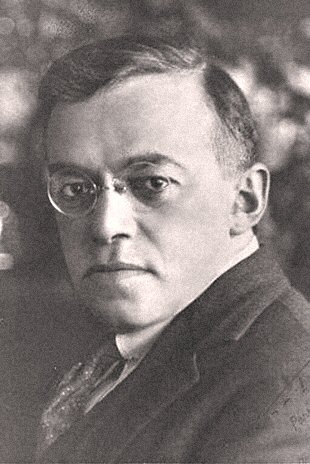
In response, and despite the fact that he remained a member of a cooperative kibbutz in the Negev Desert, he pivoted toward the security ideology of Labor’s historic opponent, Zeev Jabotinsky.
Empty talk of hope and the need for a near horizon of peace, he said, led directly to the loss of over 1,000 Israeli lives in the Second Intifada. The charges of stasis under Netanyahu, as articulated by a widening circle of former security officials, “is polluting the true nature of the security discussion.”
Instead, Ya’alon told the hometown crowd at Bar-Ilan University, the past six years of Netanyahu’s rule have been an oasis of calm that has endured precisely because there is no true talk of concessions.
“Folks, look at the last six years,” he said. “I hope we don’t long for them. I hope we don’t enter another stage of concessions and terror. Because there is a direct link between concessions and terror. Look at history. Look what happened after Oslo. Look what happened after the disengagement. Look what happens after there is so much as talk of a willingness to withdraw.”
Israel, he said, must stand strong and continue to do so until its enemies recognize that it will remain in this region forever. “This is not achieved by talk of concessions. This is not achieved by talk of withdrawal. This is not achieved by the display of weakness. This is achieved by the display of strength.”
He mentioned Jabotinsky by name, but did not quote from Jabotinsky’s seminal November 1923 essay. Ya’alon might as well have read it verbatim: “The only path to a peace agreement with the Palestinians is the iron wall,” Jabotinsky wrote, “which is to say a strong power in Palestine that is not amenable to any Arab pressure. In other words, the only way to reach an agreement in the future is to abandon all ideas of seeking an agreement at present.”
Moderate states in the region, Ya’alon argued, should not be rewarded with territorial concessions as stated in the Arab Peace Initiative but rather cooperated with solely on the basis of aligned interests, such as the rise of radical Sunni Islam and the threat of a nuclear Iran; the West, he intimated, should be told that peace is a final goal but its attainment lies far in the future, after generations behind the immovable wall.
This is the security doctrine of the Likud party. This is the doctrine that boxes Netanyahu in and serves to present to the public a figure seemingly unable to decide — one who believes in the Jabotinsky doctrine, to which he must have been exposed at his father’s earliest convenience (Benzion Netanyahu served as Jabotinsky’s personal secretary) and, at the same time, represents not an ideological minority in the Zionist movement but the leader of a state, who is compelled to deal with real-world demands that show no sign of abating.
Ya’alon, at any rate, said that the conveyance of Jabotinsky’s message, written at a time when Britain and France still held dozens of colonies each, is “the security challenge that every government of Israel faces.”
Amos Yadlin’s doctrine
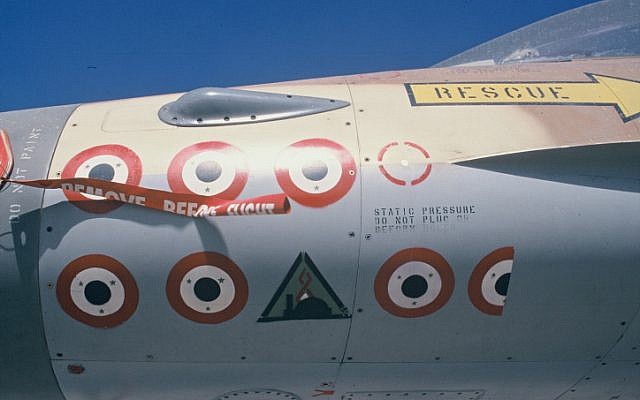
Yadlin, born in 1951 and raised on Kibbutz Hatzerim in the Negev, laid out a very different set of principles and guidelines in his address this week. He said that though a pessimist is said to be an optimist with experience, he has seen war aplenty — he served in the Yom Kippur War and was the first pilot to drop his payload on Saddam Hussein’s nuclear reactor in Iraq in 1981 — and is still firmly optimistic.
He ticked off the good news: The Syrian army, the military force that Israel has built itself up against since 1985, has essentially been decimated by war and attrition. The peace treaty with Egypt has weathered four different Egyptian leaders — including one from the Muslim Brotherhood — as has the treaty with Jordan. Israel, he added, maintains the strongest army “from Marrakesh to Bangladesh.”
True, the Middle East is unstable and tempestuous, he said. “But even if it’s stormy outside, we don’t have the privilege of going into a foxhole and doing nothing.”
The Islamic State, he continued, has its eyes on Damascus and not on Tiberias. Hamas may yet require a stronger beating in Gaza and will continue to try to spark an armed rebellion in the West Bank, but the main threats facing the state, in order to be successfully addressed, all require a security doctrine that extends beyond David Ben-Gurion’s deterrence, early warning, and decisive victory. Defense, he said, was added by then-intelligence minister Dan Meridor several years ago, but two other pillars, not made of dynamite, also need to be added to Israel’s security doctrine.
The first is international legitimacy. “The battery of our legitimacy is drained when we are perceived as the unjust side and as occupiers,” he said. The other is the diplomatic and logistical support of a superpower.
Both of those directly influence Israel’s strategy vis-à-vis Iran. “Iran cannot be allowed to get the bomb, period,” Yadlin said. The vast majority of Israelis agree with that statement. “The only question is how is this achieved?”
Marching alone toward “the intersection of [accepting the] bomb or bombing” is undesirable, he said, because even after the infrastructure is bombed, without the stopping power of a superpower, the regime could get back up, dust itself off, and resume the project.
Instead, he said, rather than acting from the outside, Israel must reach an agreement with the United States regarding the precise parameters of a bad deal. He suggested that the destruction of Iran’s advanced centrifuges, the closure of its underground enrichment facility in Fordo, the exporting of its already enriched stockpiles, and the alteration of the plutonium reactor in Arak, along with the oversight that keep the Iranians “locked in cement,” would suffice so long as there was also a “quiet agreement” on Israel’s reaction in the event of Iranian violations.
Calling North Korea’s defiant race to the bomb “our nightmare,” Yadlin said it must be made clear that “we are not South Korea.”
The same is true of the Palestinians. The most likely threat from the West Bank at this time, under Abbas, is in the form of “a diplomatic intifada,” continued Yadlin. The resolution that Abbas has prepared for the UN Security Council, where Palestinians now have the nine-vote majority they need but still face a likely US veto, is “the worst draft ever on the Israeli-Palestinian issue,” he added, noting that it includes nothing about an “end of claims” or “end of conflict” and it demands recognition of a Palestinian state, along the 1967 lines, with Jerusalem as its capital.
The only way to fend this off, the Zionist Union party platform makes clear, is by reaching a diplomatic accord, either with the Palestinians directly or with the surrounding Sunni states, and setting permanent borders.
Yadlin himself has spoken often about a three-tiered approach to the Palestinian conundrum: trying first to reach a deal with the Palestinian leadership; then trying to reach a deal with the Sunni states and the Palestinians; or, in lieu of a deal, unilaterally withdrawing to internationally recognized borders, while insisting on the Jordan Valley and the settlement blocs [a move that would only be feasible once it is clear to the world powers that Israel earnestly sought a negotiated solution].
These are the choices on Election Day. They are distinct and divergent. And it may be worth noting that at the heart of the dispute there is a barbed irony: the truth is with both sides.
Israel will not be accepted by the Muslim populations of the region until they realize, with the thud of finality, that the wall cannot be breached — a process that may take generations. And the West will not grant full legitimacy to Israel so long as it offers its neighbors nothing but the bleak back of its iron wall.






The Times of Israel Community.