

Iran’s Revolutionary Guards threaten US warships as they stage naval exercise in Gulf
Naval units ‘issued warnings to American vessels present in the region, conveying their firm message,’ says state media, though content of message to US ships unclear
 Add ToI as a Preferred Source on Google
TEHRAN — Iran’s Revolutionary Guards Corps on Thursday kicked off naval wargames in the Gulf, issuing warnings to US warships in the area, more than five months after the 12-day war with Israel that briefly drew in American forces.
State TV said the drill showcases the “sacrifice and spirit of resistance” of the IRGC’s naval forces “to confront any threat” against Iran.
Naval units “issued warnings to American vessels present in the region, conveying their firm message,” the report said, though the content of the messages was not immediately clear and US forces in the Gulf did not comment.
State media added that the Guards deployed air-defense systems under electronic-warfare conditions that “were able to detect aerial and maritime targets using artificial intelligence.”
The Gulf, and the strategic Strait of Hormuz at its bottleneck leading to the Sea of Oman, channels about 20 percent of the world’s oil exports each year.
On Wednesday, IRGC deputy commander‑in‑chief Ali Fadavi said “no country can diminish the role of the Strait of Hormuz,” vowing the Guards’ protection of the waterway.
???????? Naval exercises by the Islamic Revolutionary Guard Corps in the Persian Gulf
These exercises will take place tomorrow and will last for two days.
Iran’s IRGC Navy announced large-scale drills in the Persian Gulf starting tomorrow, lasting 48 hours. State media says the… pic.twitter.com/GiB8XOq5KC
— BiffBifford™ ???????? (@TBifford) December 3, 2025
“The security of the Persian Gulf is Iran’s red line,” he added, describing Tehran’s adversaries — the United States and Israel — as the “main drivers of global insecurity,” according to IRNA state news agency.
The Guards have repeatedly seized foreign-flagged tankers cruising in the Gulf over what Iranian authorities call fuel smuggling.
The war between Israel and Iran began with a sweeping Israeli Air Force assault on Iran’s top military leaders, nuclear scientists, uranium enrichment sites, and ballistic missile program, which Israel says was necessary to prevent the Islamic Republic from realizing its avowed plan to destroy the Jewish state.
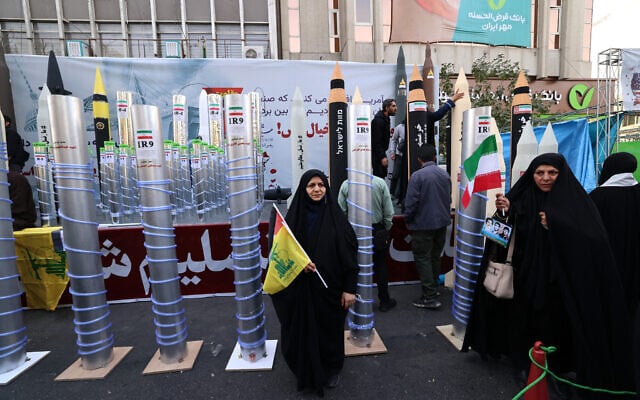
Iran has consistently denied seeking to acquire nuclear weapons. However, it enriched uranium to levels that have no peaceful application, obstructed international inspectors from checking its nuclear facilities, and expanded its ballistic missile capabilities. Israel said Iran had recently taken steps toward weaponization.
Iran retaliated to Israel’s strikes by launching over 500 ballistic missiles and around 1,100 drones at Israel. The attacks killed 32 people and wounded over 3,000 in Israel, according to health officials and hospitals.
In all, there were 36 missile impacts and one drone strike in populated areas, causing damage to 2,305 homes in 240 buildings, along with two universities and a hospital, and leaving over 13,000 Israelis displaced.








The Times of Israel Community.