

Let the electioneering begin
The Knesset does some last minute lawmaking and then dissolves, setting elections for March 2015
- See more Times of Israel on Google - add us as a Preferred Source
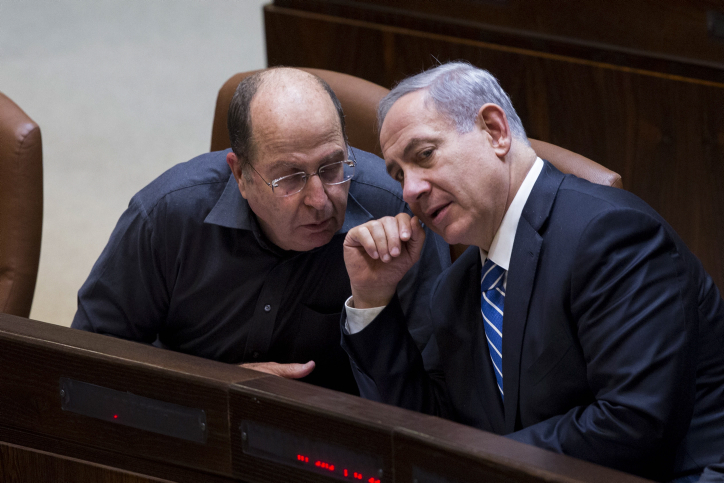
It’s official – there will be new elections in Israel on March 17, 2015. While there had been fading rumors of Netanyahu trying to cobble together another coalition, the 93-0 vote late Monday evening sealed the fate of the 19th Knesset.
Israel Hayom’s front page is a hodgepodge of election coverage, featuring news, election promises, and three election-themed op-eds. In the news part of its coverage, the paper lists the dates in the beginning of January when each party will hold its primary election. The final party lists must be submitted to the election committee by January 29.
Limor Livnat, the Likud politician and current minister of Culture and Sport, surprised the public and colleagues on Monday by saying she would not participate in the next elections. Israel Hayom writes that other politicians from both sides of the political spectrum lamented the loss of the 22-year political veteran. Labor Knesset member Shelly Yachimovich said that Livnat was a talented, practical politician and “she will be missed.”
Where Israel Hayom’s entire front page is a jumble of election coverage, Haaretz manages to do the same in one article. While its headline focuses on a possible merger next week between the Labor party and Tzipi Livni’s Hatnua party, the meat of the article focuses on the last-minute passage of an updated “Infiltrator Law.”
The law was revised after parts of it were struck down by the High Court, which gave the Knesset a deadline of December 22 to update the legislation. Among the new provisions: reduced time that the government can hold illegal migrants (3 months now, down from 1 year); afterwards they can only be held at the Holot facility for 20 months (previously it was indefinitely).
Yedioth Ahronoth has a decidedly anti-Bibi slant in its coverage, with its front page asserting that Netanyahu is flailing about. “Netanyahu declared 0% sales tax on basic food supplies – only two months after he opposed a similar move by Amir Peretz,” the paper writes. The paper seems particularly excited for the elections — it’s the only paper with a countdown to elections: 98 days to go.
Yedioth attacks not only Netanyahu on its front page but also his party, under the headline, “The new Likud: father to the right, more to the extreme.” In an article that it ties to Livnat’s departure, the paper highlights all the recent high-level departures from Likud, like Gideon Sa’ar, Moshe Kahlon, Benny Begin and Dan Meridor. The paper even quotes from Livnat, who recently said, “This is not the Likud of Menachem Begin.”
The Knesset wasn’t the only place to experience some drama on Monday: Yedioth reports that all was not quiet in the Defense Ministry. Defense Minister Moshe Ya’alon heard rumors that Netanyahu had promised Naftali Bennett the post after the elections, so he confronted Netanyahu about it. When Ya’alon asked Netanyahu if he would promise that he (Ya’alon) would be the next defense minister, Netanyahu reportedly said, “How can I promise you the post of defense minister if I’m not sure I will be the prime minister.”
Firing zones
While politics dominates the Hebrew dailies, the army also gets some space. Haaretz gives half of its front page to a report by a researcher who claims that 35,000 dunams (about 8,600 acres) of IDF firing zones in the West Bank have been set aside for settlement expansion.
The paper writes about a report compiled by researcher Dror Etkes, which outlines how the Civil Administration uses an Ottoman law (which is applied in the West Bank) that states that land that can’t be worked by its owners can be appropriated as state land. Land that cannot be worked includes land used by the IDF as firing zones, and the report states that 99% of land seized using this law has gone to settlement expansion. The Civil Administration blasted the report by saying that any attempt to portray the data as having a political motive is “totally baseless.”
Moving from firing zones to the soldiers who actually fire the weapons, Yedioth writes about IDF reservists and a plan to improve the backbone of the IDF. The IDF recently released a report on the state of the reserves and recommendations on how to make reserve units more effective (basically make the reserves stronger and smaller).
Included in the report are some surprising numbers: the average age of a reservist is 31, 60% of reservists are single, 93% of reservists are men. The paper also list the cities with the most reserve soldiers and coming in first is Tel Aviv with over 41,000, with Jerusalem next at over 30,000, and Haifa rounding out the top three with just over 24,000.
Finally, Israel Hayom provides an update on the mysterious attack on Syria Sunday afternoon. The paper quotes Arab news sources as saying two key Hezbollah officials were killed in the airstrikes. While Syria denies that anyone was killed, what doesn’t seem to be in doubt is that the targets were advanced missile systems that were being shipped to Hezbollah. While the world largely assumes that Israel is responsible, and Syria and Hezbollah have emphatically asserted so, Jerusalem has had no comment. Even Russia has asked Israel for clarification as to what happened just outside of Damascus, but as the paper points out, “Israel remains silent.”








The Times of Israel Community.