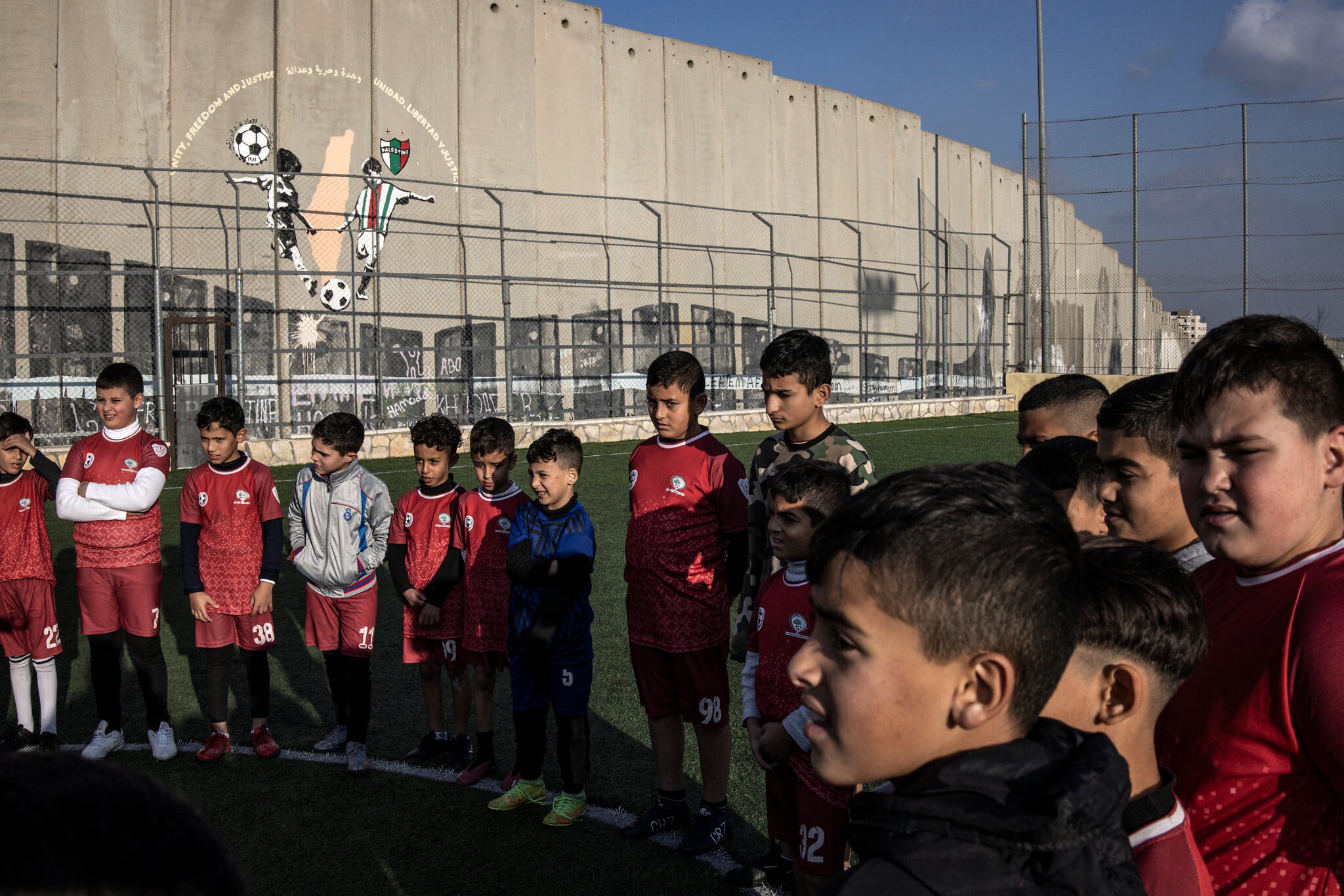
Displaced Palestinian youths take part in a training session at the Aida Refugee Camp's football pitch, next to the Israeli security barrier outside Bethlehem in the West Bank, on December 16, 2025, a few weeks after an Israeli military decision to demolish the field. (Photo by JOHN WESSELS / AFP)
Earlier this month a group of Palestinian boys turned out to train at their local soccer pitch in the shadow of the wall separating Israel from the West Bank’s Aida refugee camp — and found a note at the gate.
The children took the ominous message from Israeli authorities to Muhannad Abu Srour, sports director at the Aida Youth Centre in the camp near Bethlehem, and the news was not good.
“We were shocked to discover that it was a decision to demolish Aida camp’s football field,” Abu Srour tells AFP, adding that more than 500 children regularly train on the field roughly half the size of a regulation soccer pitch.
“The football field is the only open space we have. If the field is taken away, the children’s dream is taken away,” Abu Srour says.
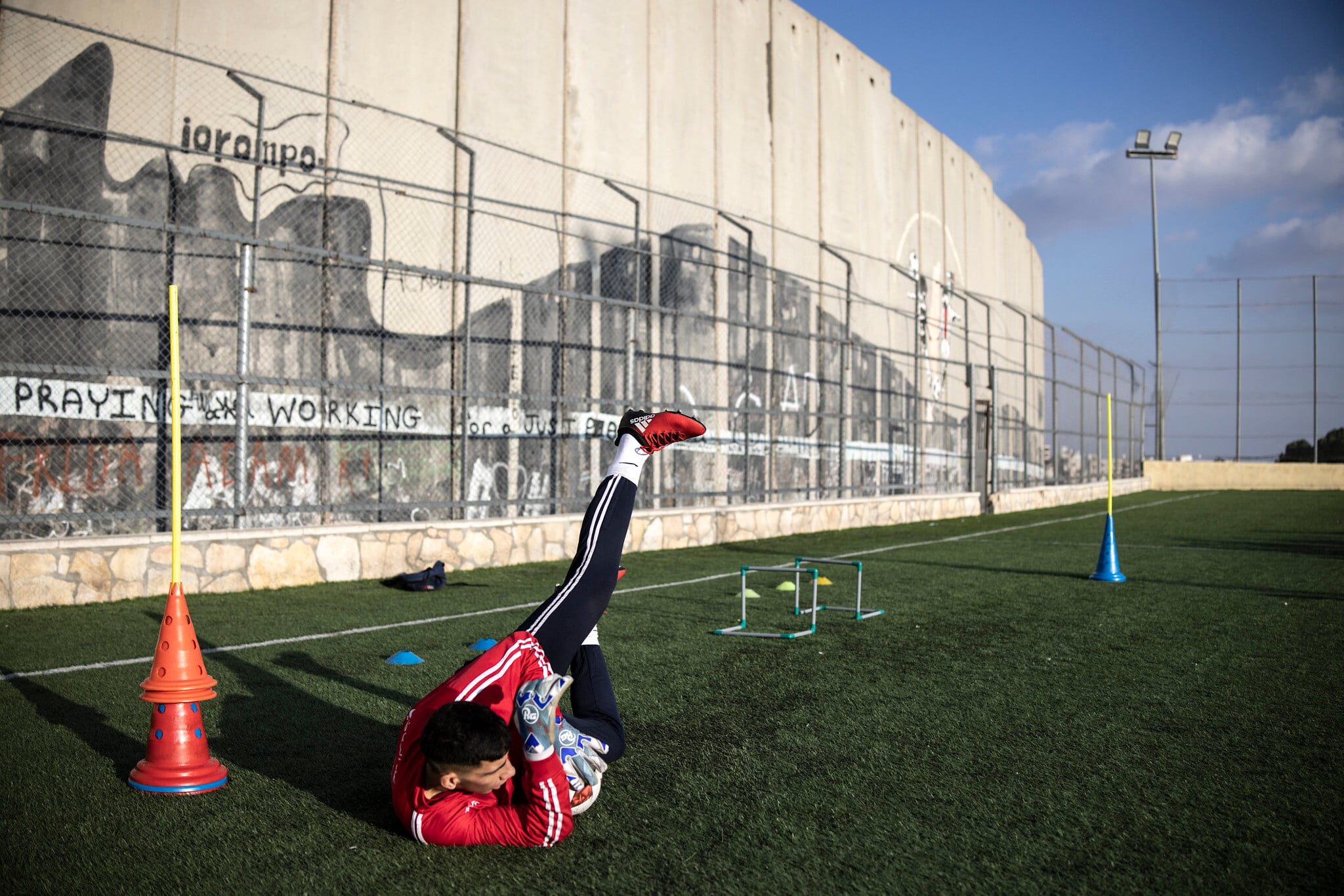
A displaced Palestinian youth dives for the ball during a training session at the Aida Refugee Camp’s football pitch, next to the Israeli security barrier outside Bethlehem in the West Bank, on December 16, 2025, a few weeks after an Israeli military decision to demolish the field. (JOHN WESSELS/AFP)
The planned destruction of the Aida field is one of many points of contention in the West Bank, but it is a particularly painful one for young Palestinians yearning for a better future.
One of the older members, 18-year-old Abdallah al-Ansurur, hopes to make it into the national Palestinian team, and, like many other youth at Aida camp, took his first steps in the game on the pitch flanked by the eight-meter Israeli security barrier.
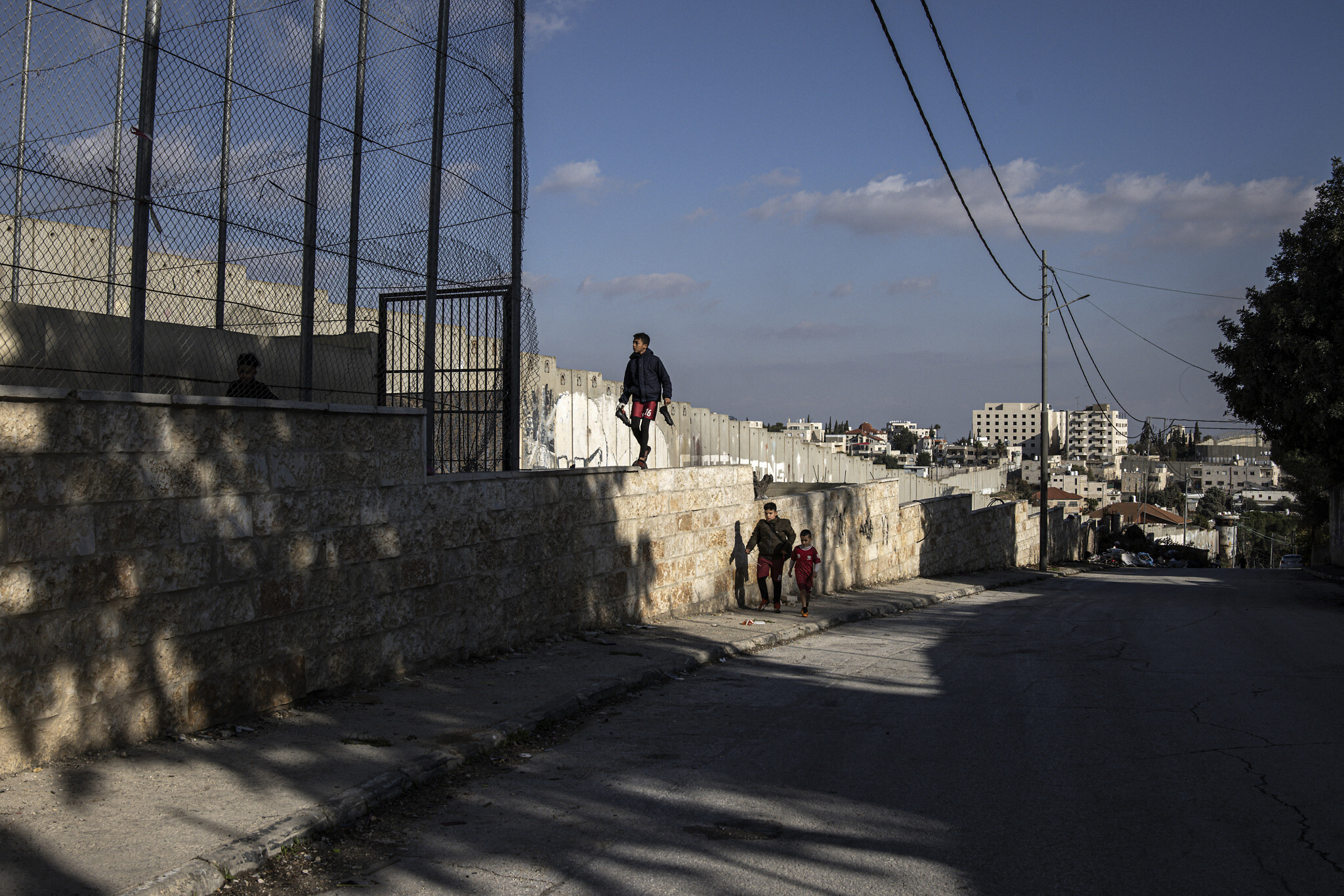
Displaced Palestinian children make their way to a training session at the Aida Refugee Camp’s football pitch, next to the Israeli security barrier outside Bethlehem in the West Bank, on December 16, 2025, a few weeks after an Israeli military decision to demolish the field. (Photo by JOHN WESSELS / AFP)
“I started when I was about 13 years old. This field gave me a real opportunity to train,” said Ansurur, who was born and raised in Aida camp, one of the smallest in the West Bank.
AFP was shown the note from COGAT, the Israeli defense ministry body in charge of Palestinian civilian affairs, which says the field was not authorized.
There was no immediate response from COGAT to this story.
Help us report truthfully on social media
As a multimedia journalist, my job is to take the quality, fact-based journalism produced by The Times of Israel newsroom and make it accessible across every platform — from Instagram posts to podcasts to short-form videos.
This is how many, especially young people, consume news these days. But misinformation is rampant on social media. Our team at ToI produces accurate, responsible short-form reporting on Israel and the Jewish world.
If you believe in the importance of factual social media journalism, please consider joining our reader support group, The Times of Israel Community. Your financial support is essential to sustain responsible multimedia reporting.
We’re really pleased that you’ve read X Times of Israel articles in the past month.
That’s why we started the Times of Israel - to provide discerning readers like you with must-read coverage of Israel and the Jewish world.
So now we have a request. Unlike other news outlets, we haven’t put up a paywall. But as the journalism we do is costly, we invite readers for whom The Times of Israel has become important to help support our work by joining The Times of Israel Community.
For as little as $6 a month you can help support our quality journalism while enjoying The Times of Israel AD-FREE, as well as accessing exclusive content available only to Times of Israel Community members.
Thank you, David Horovitz, Founding Editor of The Times of Israel


 From the Liveblog of
Friday, December 19, 2025
From the Liveblog of
Friday, December 19, 2025
 Add ToI as a Preferred Source on Google