

 From the Liveblog of
Monday, February 9, 2026
From the Liveblog of
Monday, February 9, 2026
Lapid acuses Netanyahu of falsifying security protocols to avoid Oct. 7 blame
 Add ToI as a Preferred Source on Google
Sam Sokol is a former political correspondent at The Times of Israel. He was previously a reporter for the Jerusalem Post, Jewish Telegraphic Agency and Haaretz. He is the author of "Putin’s Hybrid War and the Jews"
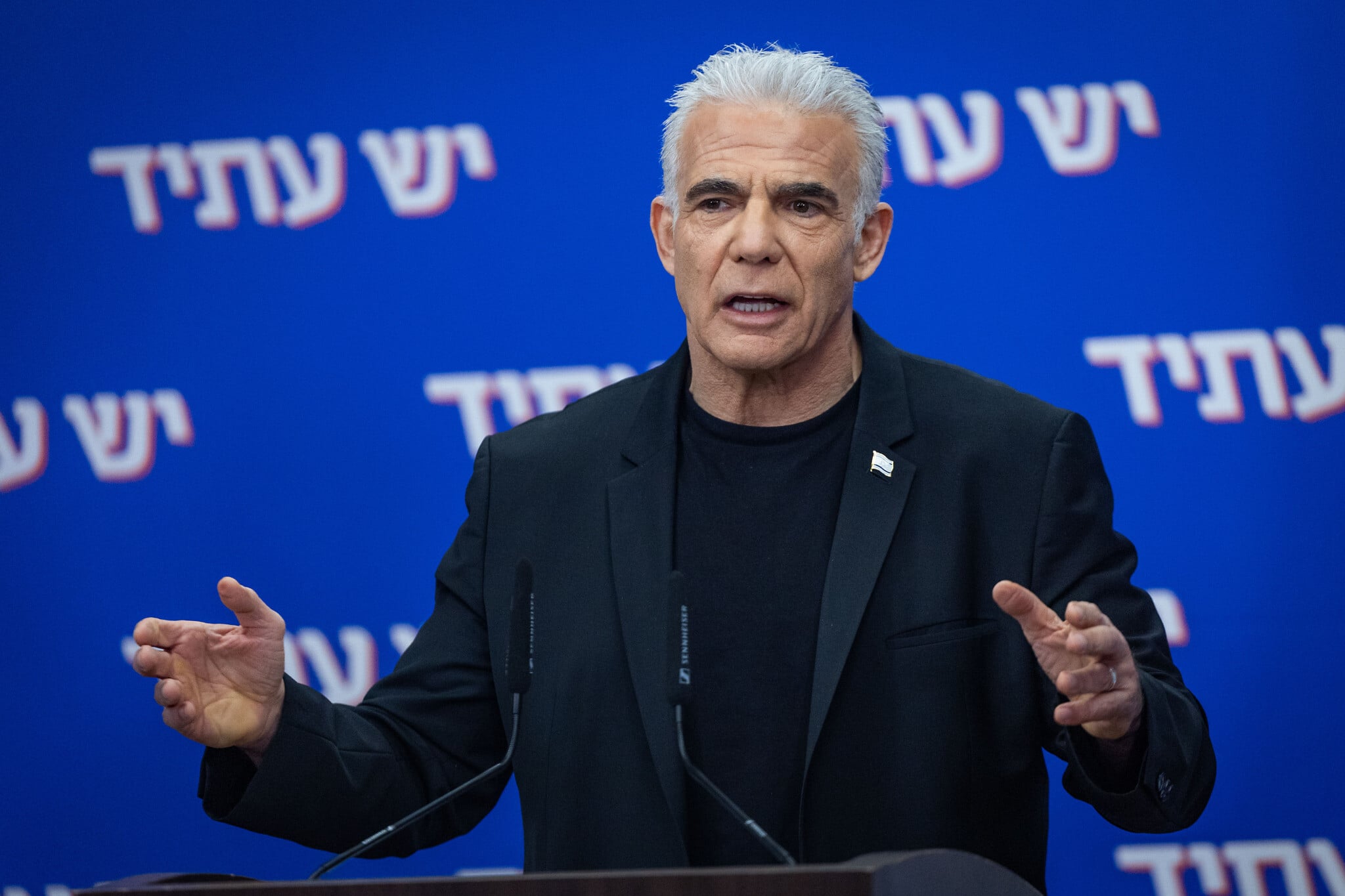
Opposition Leader Yair Lapid accuses Prime Minister Benjamin Netanyahu of falsifying security protocols in an effort to deflect blame from himself over his government’s failures on October 7.
“The Netanyahu document is a forgery of security protocols in an official document issued by the Israeli Prime Minister’s Office, in a way that must be intentional,” Lapid declares, referring to a 55-page document released by Netanyahu last week containing his answers given to the State Comptroller Matanyahu Englman as part of the ombudsman’s investigation into the attack.
By releasing the document, Netanyahu “made a mistake. He opened Pandora’s box, and they are trying to close it again. It will not work for them,” Lapid tells reporters ahead of his Yesh Atid party’s weekly faction meeting in the Knesset, adding that “the problem is not that Netanyahu is lying. The fact that Netanyahu is lying is not exactly news. This is much more serious. The biased editing of protocols of security discussions is a violation of the Official Secrets Law.”
In his answers to State Comptroller Matanyahu Englman, Netanyahu sought to build the case, with partial, curated quotes from cabinet protocols, that he repeatedly pushed for assassinating Hamas leaders but security chiefs consistently argued against the idea.
However, according to Lapid, Netanyahu’s description of a security assessment he held with senior defense and security officials on October 1, 2023, less than a week before the attack, omitted key details, releasing only a single misleading paragraph.
“What actually happened in that meeting,” says Lapid, is that “then-Shin Bet Director Ronen Bar recommended preparing for a series of escalation scenarios and targeted preventions in Gaza. In that same meeting, then-Chief of Staff Lt. Gen. Herzi Halevi recommended preparing a plan for a broad campaign in the Gaza Strip.
“The recommendations of Ronen Bar and Herzi Halevi came following particularly severe and urgent intelligence warnings about Hamas’s organization for combat in Gaza. I was familiar with these warnings; the entire system was familiar with them. We all thought the danger was immediate and tangible,” says Lapid.










The Times of Israel Community.