

 From the Liveblog of
Sunday, February 8, 2026
From the Liveblog of
Sunday, February 8, 2026
Security cabinet okays ‘dramatic’ West Bank policy overhaul, deepening Israeli control
 Add ToI as a Preferred Source on Google
Nava Freiberg is The Times of Israel's deputy diplomatic correspondent.
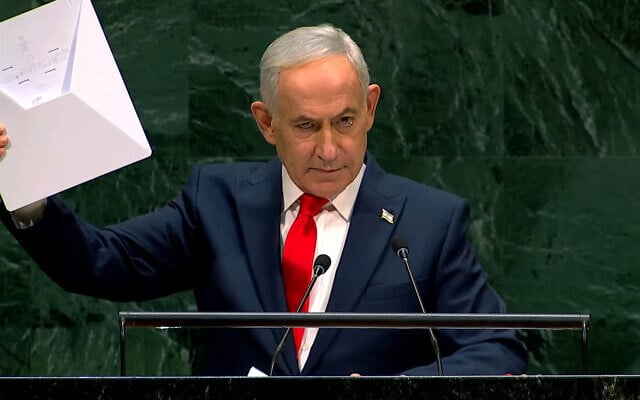
Finance Minister Bezalel Smotrich and Defense Minister Israel Katz announce that the security cabinet has approved a series of decisions to “dramatically” change policy in the West Bank, deepening Israeli control over the territory, including at sensitive sites such as Hebron, and paving the way for further settlement expansion.
The decisions “are intended to remove decades-old barriers, repeal discriminatory Jordanian legislation, and enable accelerated development of settlement on the ground,” according to a joint statement from the ministers.
The plan transfers authority over building permits for the Jewish settlement in the largely Palestinian city of Hebron from the Palestinian Authority’s Hebron municipality to Israel. The changes also affect the Tomb of the Patriarchs, a site holy to Judaism and Islam that has been a flashpoint of conflict.
Until now, in accordance with a 1997 agreement, any construction changes in the city’s Jewish community had to pass through both the municipality and Israeli authorities. Now, such changes will require only Israeli authorization.
“We are committed to removing barriers, creating legal and civil certainty, and allowing settlers to live, build and develop on equal footing with every citizen of Israel,” Katz says in the statement.
Smotrich says the move is “normalizing life in the West Bank” and promises to “continue to kill the idea of a Palestinian state.”
The approved plan also ordered the publication of land registries in the West Bank, the statement says, meaning that potential buyers will be able to identify landowners and approach them for purchasing. Until now, land registration in the West Bank had been classified.
It also repealed a legal provision that prevents non-Muslims from buying real estate in the area — a law left over from the period when Jordan controlled the territory — easing property purchases in the West Bank.
The decision also affects the site of Rachel’s Tomb in Bethlehem by establishing “a dedicated municipal authority” responsible for cleaning and routine maintenance of the holy site.
It was also decided to expand oversight and enforcement activities into Areas A and B, which are both meant to be under Palestinian Authority civil control, with regard to water violations, damage to archaeological sites and environmental hazards that pollute the territory, the statement says.
The measures were not brought for approval by the full government but rather to the cabinet, whose members have broadly called for applying Israeli sovereignty in the West Bank.
The Yesha Council, an umbrella council for the settlements, praises the decisions, saying they are “entrenching Israeli sovereignty on the ground, de facto.”









The Times of Israel Community.