

Marking global centennial, Reform movement aims to build bridges, strengthen Israel ties
At its biannual conference in Jerusalem, the World Union for Progressive Judaism will repoen its Beit Shmuel headquarters as a cultural center and event space
 Add ToI as a Preferred Source on Google
Zev Stub is the Times of Israel's Diaspora Affairs correspondent.
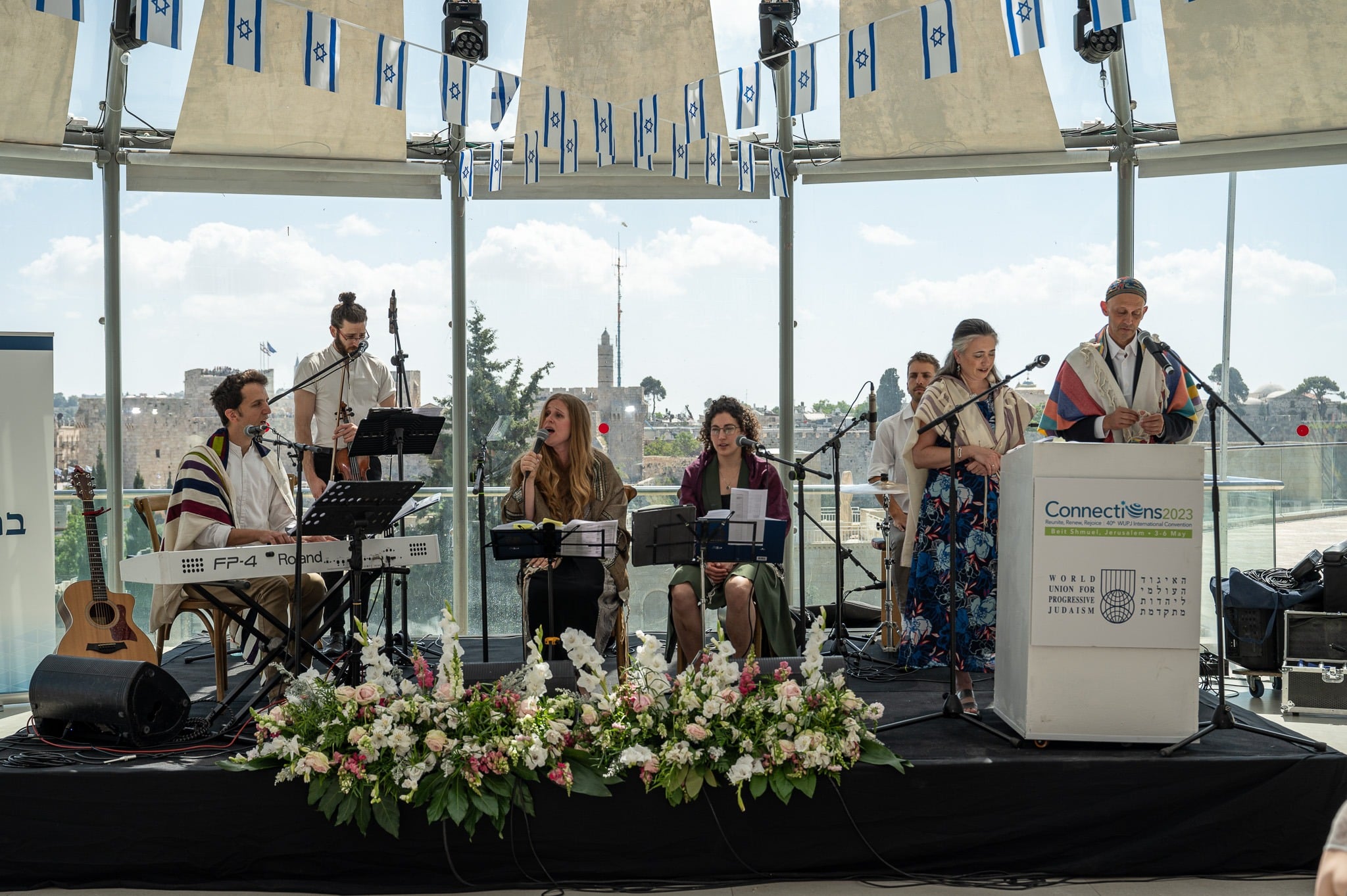
When the World Union for Progressive Judaism marks its 100th anniversary at the group’s biennial conference this week, it will also celebrate its newly renovated Jerusalem headquarters — a space that the movement hopes will embody its long-held values, its connection to Israel and its welcoming approach to the Jewish world.
Those principles, said WUPJ president Sergio Bergman, are crucial at this moment, as Israel’s two-year war in Gaza appears to be drawing to a close and the Jewish people face a turning point.
“After October 7, the Jewish world is in transition, and the only way to navigate the challenges is to stay focused on our values,” Bergman told The Times of Israel. “We have to have the courage and the strength to open the conversation about how to move forward and make the changes we need. As Rebbe Nachman of Breslov said, we need to cross the narrow bridge, without fear.”
The WUPJ says it represents some 1.8 million Jews in more than 50 countries, many of whom belong to the American Reform movement, the largest Jewish denomination in the United States. The convention marks 100 years since the network of the Reform, Liberal, Progressive and Reconstructionist movements was founded, and a bit over 50 years since it gained a footprint in Israel at its Beit Shmuel headquarters in the heart of Jerusalem. Now, the movement is convening as it hopes to reach more Israelis and recommits to supporting Israel in communities worldwide.
The four-day summit, running October 22-25, will include a variety of workshops as well as prayers at the egalitarian section of the Western Wall. It will be attended by the heads of Keren Hayesod, the Jewish Federations of North America, the World Zionist Organization, and others, WUPJ said, among 170 delegates from 50 countries.
One of the conference’s centerpieces is the relaunch of Beit Shmuel, newly renovated after years of inactivity, and rebranded as the new global hub of Progressive Judaism.
“Instead of old-fashioned offices, we are approaching the building as an open hub, a place for connecting our communities and training our leaders, with a cultural educational center that is open to all of Israeli society to explore our common ground of shared values,” Bergman said.
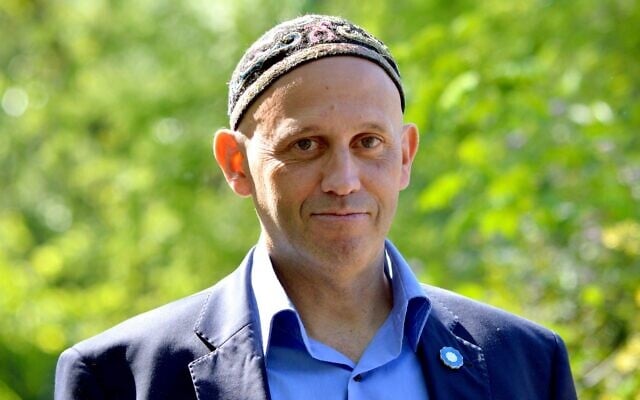
More importantly, he said, it will reaffirm the movement’s commitment to Israel that Beit Shmuel’s founder intended when the building was conceived in 1973. That recommitment comes as polls show that American Jews are increasingly split over Israel following the Hamas-led October 7, 2023, invasion and massacre and the ensuing war in Gaza.
There is scant polling specifically on Reform Jewish opinions of the war. But a Pew Research Center study taken years earlier, in 2020, showed that while most Reform Jews said they were emotionally attached to Israel, their rates of attachment and other measures of connection to Israel were lower than those of Conservative and Orthodox Jews.
The American Union for Reform Judaism (URJ) is committed to Israel as a Jewish, democratic state, and officially supports Palestinian statehood.
“When [former WUPJ president] Rabbi Richard Hirsch first came to Israel, he was looking to move the Reform movement away from the approach of early German leaders who saw Judaism as a universal religion that didn’t need to pray toward Zion,” Bergman said. “His goal was to establish a clearer commitment to Zionism, and he made the very practical decision to move the headquarters from the US to Jerusalem. Hebrew Union College had just been established on King David Street, and he came to the back of the building with a caravan and established what ultimately became Beit Shmuel.”
Beit Shmuel became a vibrant institution hosting cultural performances, conferences, seminars, and other gatherings. However, in the 2010s, activity dried up, and the building was almost empty when the decision was made during the COVID pandemic to shut it.
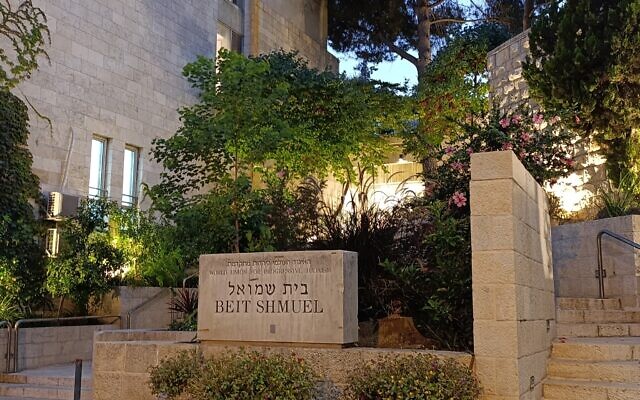
The renovation and restoration of Beit Shmuel as a cultural center was one of several changes Bergman made after he took the helm of the WUPJ in 2020. The space now includes art galleries, event halls, and hotel and dormitory rooms that will be used for the first time during this week’s convention.
Reforming Reform Judaism
The Reform movement, founded in 19th-century Germany as a modern, liberal approach to Judaism, is now the largest Jewish denomination in North America, but has struggled to gain significant traction in Israel. Its Israeli umbrella body, the Israel Movement for Reform and Progressive Judaism, runs around 50 congregations around the country.
Its presence in Israeli society is generally marginal, primarily due to being sidelined politically and legally by the Chief Rabbinate’s monopoly over marriage, conversion, and religious funding. In addition, many secular Israelis distrust the movement, seeing it as an imported version of Judaism. Efforts to expand religious pluralism, such as creating an egalitarian prayer space at the Western Wall, have faced stark opposition.
Ultra-Orthodox and right-wing politicians have repeatedly disparaged the movement publicly, including by demeaning Labor MK Gilad Kariv, a Reform rabbi. A Reform synagogue in Ra’anana has been repeatedly vandalized.
Bergman noted, however, that there are signs of increasing interest among Israelis in the progressive, inclusive values championed by the movement. That pointed to a social gap that Bergman, an Argentinian scientist, politician and rabbi of the Congregación Israelita Argentina synagogue in Buenos Aires, is looking to fill.
“For most secular Israeli Jews, the word ‘Reform’ doesn’t really speak to them, even though many embrace values that align with ours,” Bergman said. “I’m not looking to convince people to join our religious stream or tell them what they should do on Shabbat. What I want is to challenge them on how we build a society that is aligned with our values, because our common ground as Jews is our values.”
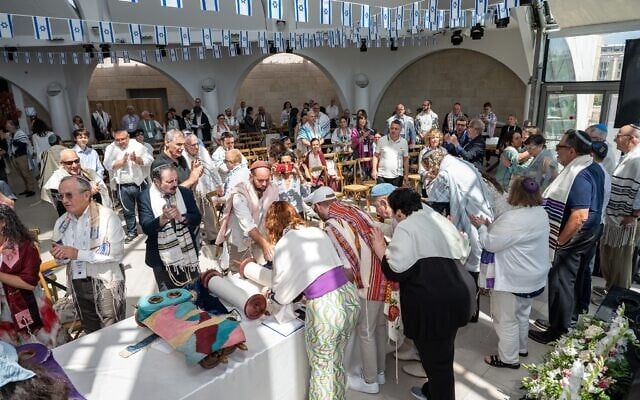
In recent years, Bergman said, WUPJ has been assessing the successes and failures of Progressive Judaism in Israel and abroad, and plotting a path forward that will help it stay relevant and redefine what being a Jew means to a new generation, even as it becomes less defined in terms of denomination.
“Defining ourselves by denomination is what is known in marketing as a red ocean strategy,” Bergman said. “You have fierce competition over people with overlapping identities, each fighting to pull you a different way. We are going for a blue ocean strategy, where we are not competing against others, but offering disruption and innovation. We welcome people not because we are sure we are right, but because we are genuinely seeking to find what works.”
“Denominations divide,” Bergman said. “A common vision unites.”
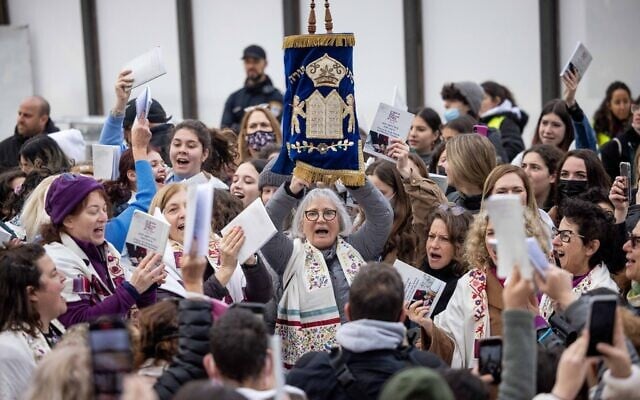
Bergman hopes that the Reform Movement can eventually find common ground with Orthodox leaders in Israel and find creative ways to bridge differences for the common good.
“I think we need to come back to more Torah, more halacha,” Bergman said, using the Hebrew word for Jewish law. “That doesn’t mean that we need to tell people what to do in a halachic way. All of our texts that are taught in the name of God are human interpretations. That means we have an opportunity [to be flexible.] It means that an Orthodox person can’t tell me I’m wrong because this is what God says.”
He added that, in pursuit of that goal, he wants to “keep power and politics outside the conversation.”
“If you tell me that only you know what God wants, that’s fundamentalism, not Judaism,” he said. “And when the discussion moves from theology to politics, there is no room for flexibility, and it becomes a struggle for power.”






The Times of Israel Community.