

Microbes pave the way for a living, green alternative to cement in buildings
Technion project, which sees microorganisms bind sand while absorbing carbon dioxide, is one of 16 on show at Triennale Milano
 Add ToI as a Preferred Source on Google
Sue Surkes is The Times of Israel's environment reporter
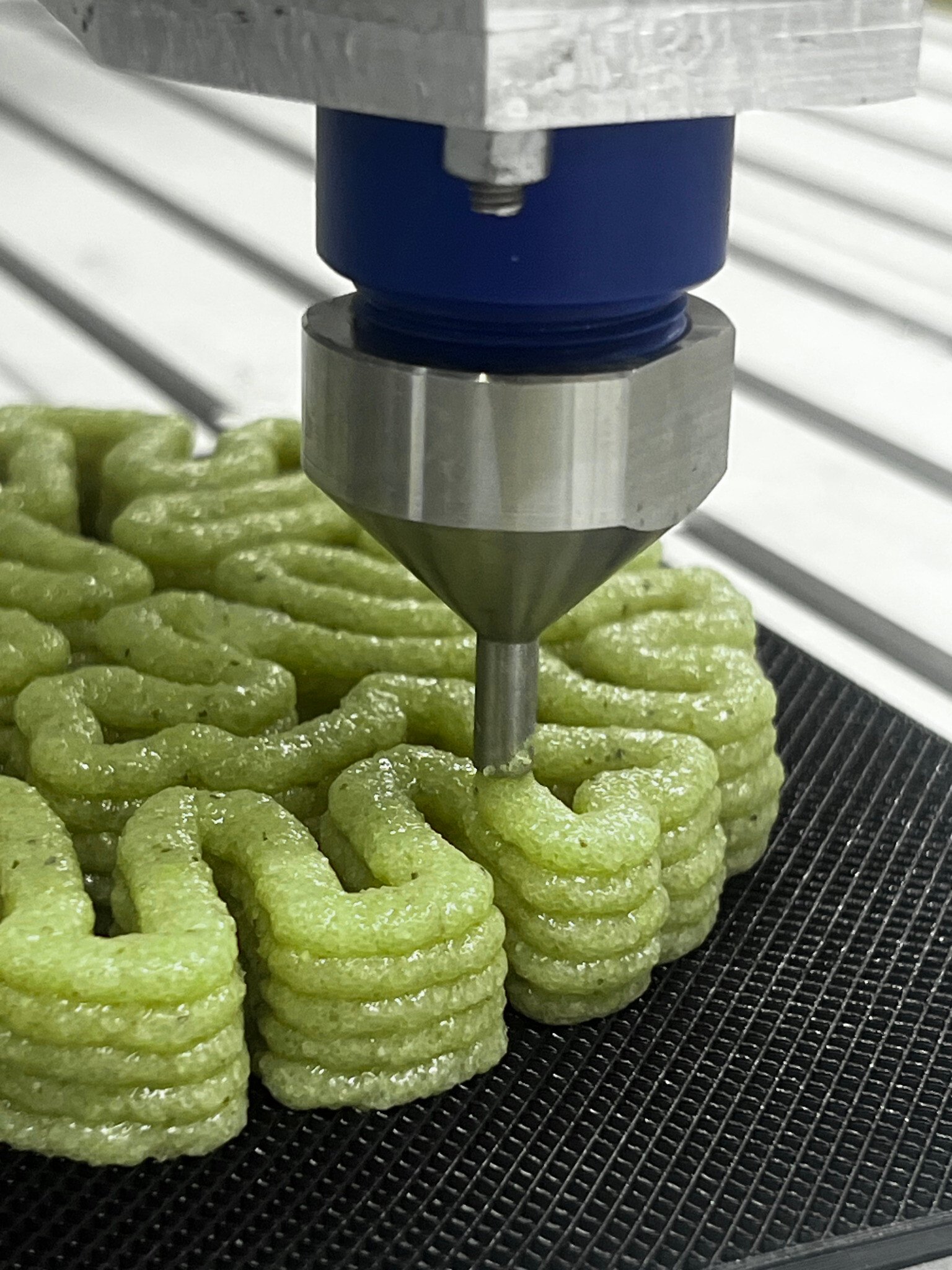
A potentially game-changing construction material under development at the Technion-Israel Institute of Technology utilizes microorganisms, rather than cement, to bind sand particles together, while also absorbing atmospheric carbon dioxide that contributes to global warming.
According to the UN Environment Program, the construction industry accounts for a whopping 37 percent of global warming emissions.
The Technion’s interdisciplinary project CyanoGems utilizes microorganisms that photosynthesize, meaning they use sunlight to create food from carbon dioxide and water. During photosynthesis, carbon dioxide is removed from the atmosphere and oxygen is emitted.
In the case of the innovative building material, produced by a 3D robot printer and currently on display at the Triennale Milano museum in Italy, the microorganisms not only remove atmospheric carbon as they photosynthesize; they form communities into what is known as biofilm — a slimy, sticky, surface — and they create calcium carbonate, which in nature is used to create materials such as shells, bones and teeth.
The team at the Technion, located in the northern city of Haifa, brings together academics from architecture and city planning with colleagues from biotechnology and food engineering.
According to Assistant Professor Shany Barath from the Architecture and Town Planning Faculty, who is leading the project with Prof. Yechezkel Kashi from the Biotechnology and Food Engineering Faculty, one ton of these microorganisms can absorb 1.8 tons of carbon dioxide.
Barath said that while work was being undertaken to calculate the exact figures, the carbon emissions associated with the Technion process were significantly lower than those in the concrete industry. While the latter burns fossil fuels to heat limestone and other minerals at high temperatures to produce one of the key ingredients in cement, emitting high levels of carbon dioxide, the Technion material is produced and dries at room temperature.
Even though the material dries, the selected strains of microorganisms continue to live and photosynthesize as long as moisture, sunlight, and carbon dioxide are available.
For this reason, each building component is designed to provide the maximum surface exposed to the air and the sun.
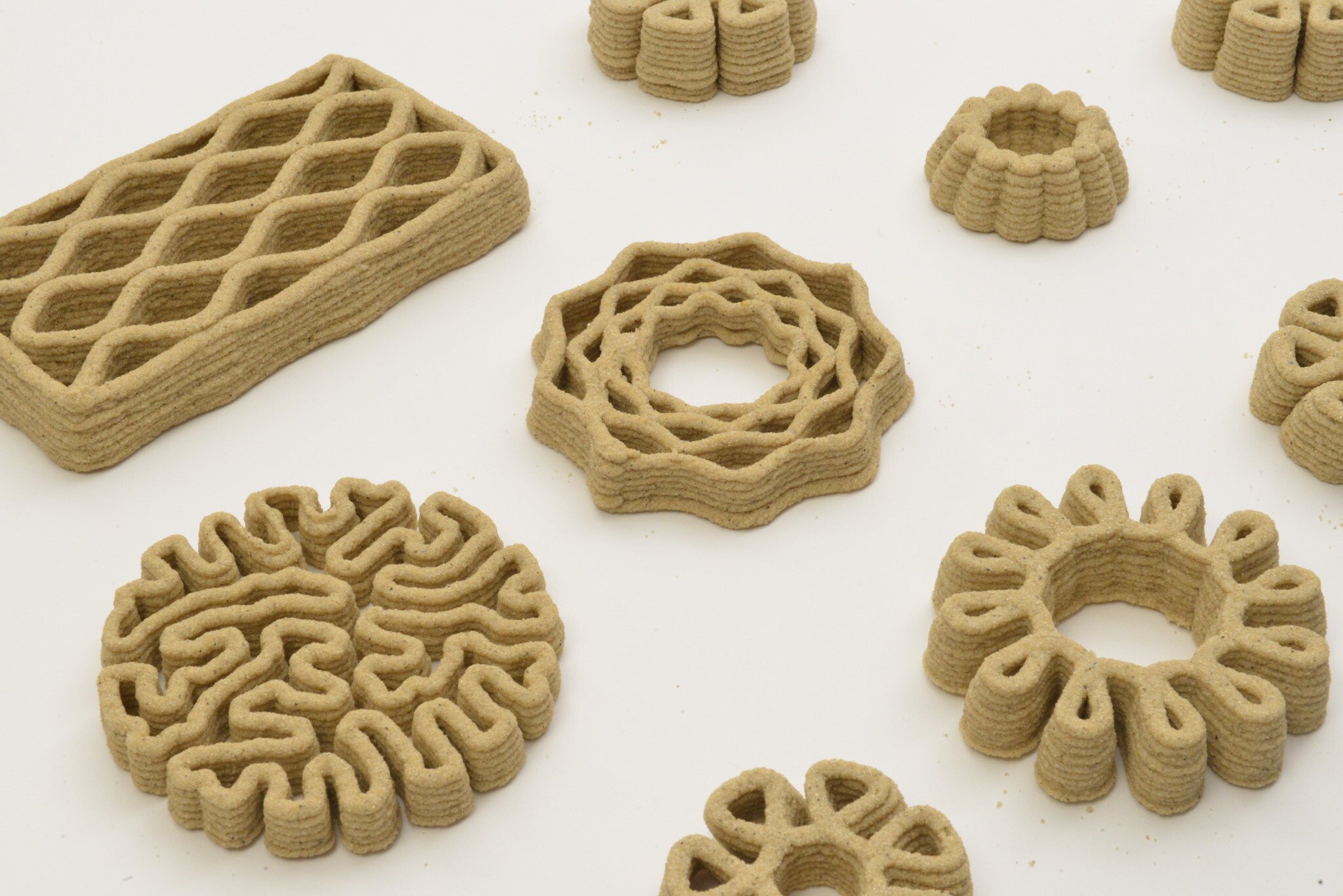
The project’s next step is to produce full-scale prototypes used by the architectural industry, such as bricks, panels, and cladding.
Regarding cost, a material that can be 3D printed on site has the potential to save on manpower, scaffolding, and other expenses, she said. The challenge was scalability in a non-laboratory environment, which is one of the things the team was working on.
Last year, the project won a Climate Solutions Breakthrough Research Prize, awarded by the Jewish National Fund of Canada with the support of KKL-JNF. It is generating substantial interest, according to Kashi. “Biological materials are a hot topic,” he said.
The Technion’s installation is one of 16 at the Triennale investigating experimental ways of living together with microbes in the built environment.
Also involved in the Technion project are PhD student Perla Armaly, master’s student Yuval Berger, and Dr. Lubov Illiasafov.










The Times of Israel Community.