

Netanyahu, Herzog hold brief, bitter, impromptu TV debate
PM warns Herzog will surrender to outside pressures; Labor chief accuses premier of weakening Israel’s global standing
 Add ToI as a Preferred Source on Google
Itamar Sharon is a news editor at The Times of Israel
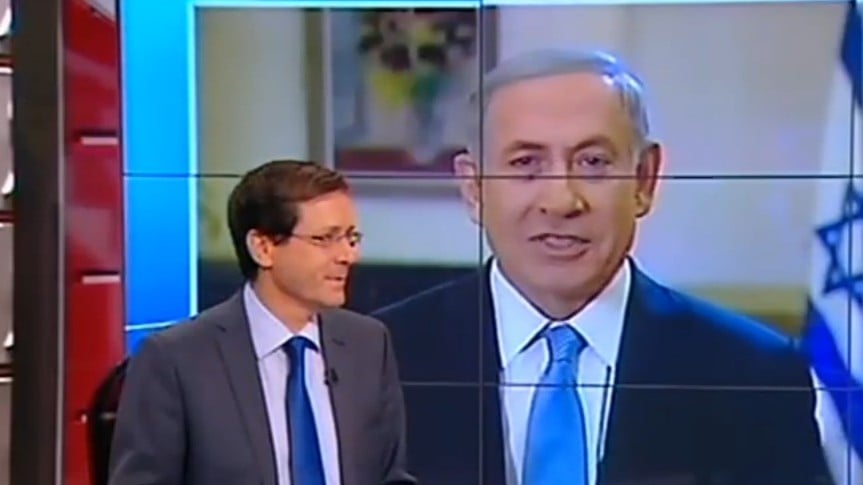
Despite Prime Minister Benjamin Netanyahu’s refusal to meet Zionist Union head Isaac Herzog for a one-on-one televised debate before Tuesday’s general election, the two shared a rare few minutes together on-air Saturday evening and exchanged political barbs during the overlap between successive interviews.
Channel 2 News was interviewing the leaders of the major parties in the race, three days before Israelis head to the polls to elect their next Knesset. Netanyahu, interviewed in a live feed from his office immediately after Herzog, who was in the studio, was asked by host Rina Matzliach if he had any questions for Herzog before his interview began.
Netanyahu initially seemed ill at ease with his position. When asked by Matzliach on the spot whether he would agree to come to the studio the next day for a true debate, he answered abruptly: “You have some original suggestions. We’ll consider them after the program, thank you Rina.”
He then went on to criticize Herzog for his ostensible failure to support the government on the world stage on issues such as the Iranian nuclear threat as well as Israel’s building rights in Jerusalem.
“Why won’t they say that they stand behind us (on these matters)?” Netanyahu asked.
Herzog quickly retorted that it was not the prime minister’s stances that he opposed, but his approach to the issues — which he claimed had cost the country critical backing in the global arena.
“The security of Israel is dear to us more than anything else,” Herzog said. “We know how to care for it and I will care for it.”
When the prime minister warned that Herzog may divide Jerusalem to appease Palestinians as part of a peace deal, Herzog said that, “It is Netanyahu who is bringing Jerusalem into the debate, when no one is talking about dividing it. Every election he does this, giving rise to unnecessary international chatter (on the issue).”
The Zionist Union leader then made a gaffe by vowing to “keep Netanyahu united,” while clearly intending to say “Jerusalem,” though he did not seem to notice his mistake.
Netanyahu restated his claim that Herzog and his Hatnua partner in the Zionist Union Tzipi Livni would “capitulate to any dictates” of the international community. “They can’t stand up to (them),” he said.
“He says he cares for Israel’s security but when he faces the test, the prime minister must say a simple word (to international pressures): no.”
Herzog maintained that Netanyahu was the one to push Israel into the defensive position before global powers on the Palestinian front, by providing fuel to the perception that it was Jerusalem that was creating obstacles to peace.
“The Palestinians have identified your weakness (on the global stage) and are attacking you there” as a result, Herzog said.
The bitter mini-debate was cut short by the host, who bid farewell to Herzog before continuing her interview with Netanyahu.
During his interview, Herzog maintained that he had the political prowess to bring rival political parties into a governing coalition following Tuesday’s general election, if his party gains enough of a lead over Netanyahu’s Likud. This, despite the fact that the emerging political map — as predicted by recent polls — would make it very hard for him to do so.
This perception was boosted by statements made earlier on the program by other party leaders, many of whom intimated that they would find it difficult to join a government led by a left-wing leader, with some declaring their support for Netanyahu outright.
Jewish Home chief Naftali Bennett vowed during his interview earlier that he would pledge his party’s seats to Netanyahu after the election results are announced.
With Likud and Jewish Home together, “the right will have a technical unified bloc of 35-36 mandates,” he said.
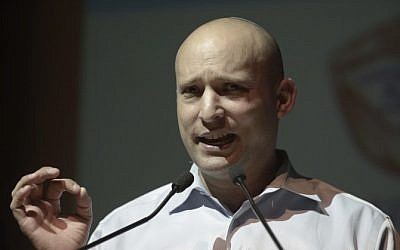
Bennett acknowledged that his party had sagged in recent polls — now projected to win 11-13 seats compared to 15-16 at the start of the race — and said he had made certain mistakes along the way, but promised that the party was now on the upswing.
Yisrael Beytenu leader Avigdor Liberman maintained during his interview on the program that his party would win mandates in the double digits, despite surveys saying it was set to receive around 4-6 seats in the elections.
Liberman denied rumors that he would quit politics in the event of a failure at the polls, saying he intended to “push forward…I’ll stay in the Knesset regardless.”
The foreign minister would not say who he would recommend to President Reuven Rivlin for the premiership following the election, but stressed that Yisrael Beytenu was a right-wing party that would not sit with leftists such as Meretz.
Shas leader Aryeh Deri did not make things any easier for Herzog, saying he would recommend Netanyahu to the president.
“I have nothing personal against Herzog,” Deri said, “but his partners are Meretz, Lapid and the Arabs and we cannot sit with them. We won’t sit in a left-wing government.”
Deri added that he did not rule out sitting with Yair Lapid in government, despite the animosity between Yesh Atid and the ultra-Orthodox public, but said this was unlikely to happen if Lapid does not change his stance on the drafting of the ultra-Orthodox to the army. “We won’t sit with Yair Lapid according to the terms he’s presented,” he said.
Kulanu leader Moshe Kahlon said he believed his party would surprise pollsters and win more than 10 seats in the election. “We’re feeling great,” he said.
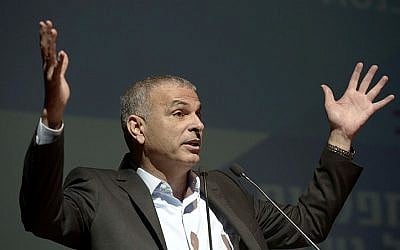
While he would not say who he would recommend for the Israeli leadership, Kahlon stated that he was a “right-wing pragmatist” and said he was “in no one’s pocket.”
Like Liberman and Kahlon, Lapid too said he expected to win more than the 12-13 seats currently projected by polls, claiming his party was enjoying an upward momentum which would continue into election day.
Lapid called on voters to choose “not according to coalition calculations but according to their values.”
Meretz chief Zahava Gal-on admitted that her party, that has been polling near the 4-mandate threshold, was fighting to remain inside the Knesset. Meretz faces the prospect of left-wing voters abandoning its ranks in droves in order to strengthen Herzog’s bid for the premiership.
Gal-on said it was “frustrating” that many people she met on the campaign trail expressed support for her party but said they would be voting for Herzog for strategic reasons.
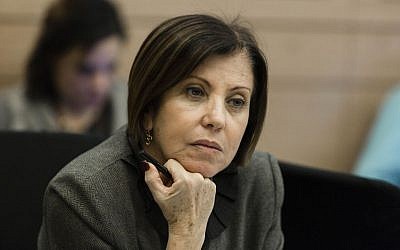
The Meretz leader would not rule out sitting with Yisrael Beytenu party in a Herzog-led coalition, saying she “will do everything” to enable Herzog to replace Netanyahu as Israel’s leader. However she stressed that she did not believe Liberman was “worthy” of being in such a coalition.
The head of the Joint (Arab) Party, which is projected by most polls to be the third largest faction in the next Knesset, faced tough questions on the list’s positions on Israeli affairs. Aiman Ouda of the socialist Hadash party is seen by many as the moderate face of a less-than-moderate slate, which includes controversial Knesset member Hanin Zoabi of the Balad party and other perceived isolationists.
Ouda’s party recently failed to sign a vote-sharing deal with Meretz that would have prevented the waste of votes that don’t round off to a mandate, owing to Balad members’ objection to cooperation with a “Zionist” party. Ouda defended the decision, saying “some of the Arab population wouldn’t have voted for us if we had made the deal with Meretz.”
Asked to comment on statements by a spokesman for his list who compared the Israeli military’s actions against Palestinians to the actions of Islamic State, Ouda refused to outright condemn the man. However, he stated that he did not like such comparisons.
Yachad leader Eli Yishai, who has been polling steadily at 4 mandates, just above the threshold, said he would recommend Netanyahu to the president.
“We’ll prevent the division of Jerusalem, we’ll keep Jewish society safe,” he said.



The Times of Israel Community.