

Peace balks
John Kerry is still in the region but talks have not been restarted and the Israel press has lots of reasons why
- See more Times of Israel on Google - add us as a Preferred Source
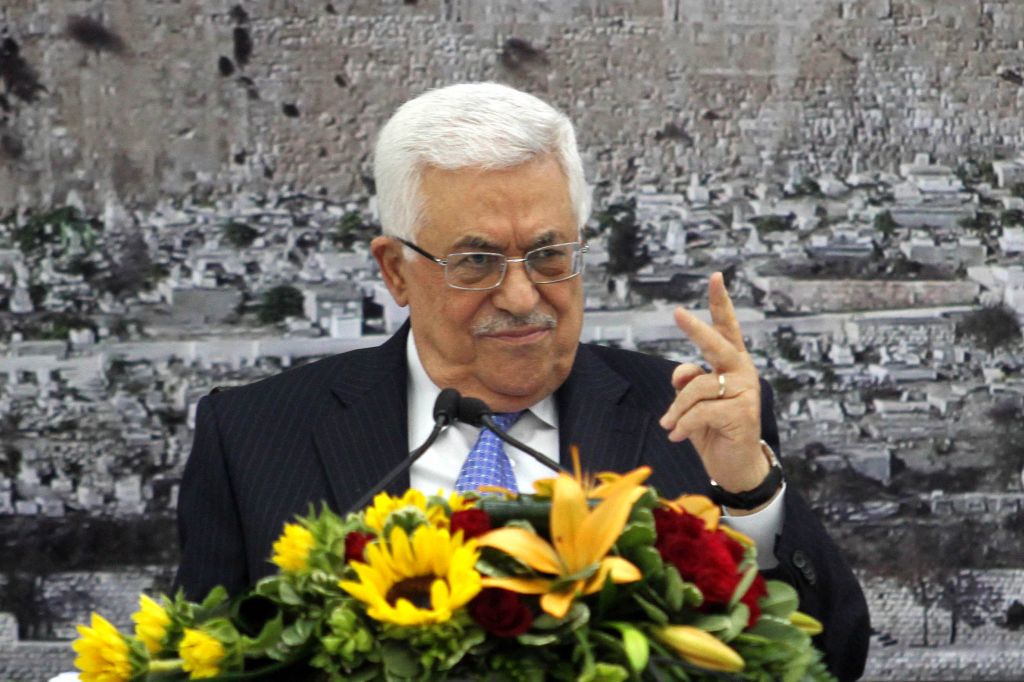
Rumors of a restart to peace talks have been circulating for weeks, with stories from both sides saying talks are imminent. Yet as of first-thing Friday, no new talks had been announced and the Hebrew press goes to town with opinion pieces on why nothing has happened.
Israel Hayom doesn’t even attempt to be objective with its headline, “Peace talks: Like always, waiting on Abu Mazen [Mahmoud Abbas].” The paper cites a meeting on Thursday in Ramallah where the Palestinians couldn’t reach a decision on whether to return to the table or not. Part of their concern is that the 1967 pre-lines won’t be a basis for the negotiations and that the Palestinians won’t gain anything in the event that the talks fail again. (As if.)
Israel Hayom includes two opinion pieces about the impasse and in one of them Boaz Bismuth accuses the Palestinians as playing hard to get. He thinks it’s time the Palestinians change their ways. “Over the years, the Palestinians have been attention addicts. They need to shift their approach: fewer headlines, more statecraft.”
Maariv also puts the ball in the Palestinians’ court, albeit more subtly than Israel Hayom. On its front-page (aside from the four opinion pieces buried in its weekend section), the paper tells how Palestinian Authority Mahmoud Abbas’s refusal to acknowledge that Israel is a Jewish state torpedoed the resumptions of peace talks (for the time being). The paper also reports that Prime Minister Benjamin Netanyahu, in an attempt to avoid coalition controversy, told his ministers that Israel will not directly agree to negotiate on the basis of the pre-1967 lines, rather that the basis for negotiations will be an Obama speech that vaguely refers to the borders, and to Israel as a Jewish state.
Aside from detailing the Kafkaesque complexities of trying to restart peace talks, Maariv also reports the US formal state of mind: John Kerry has lowered his expectations and a State Department spokesperson said that he has no intention of announcing renewed peace talks. Meanwhile, Maariv also finds room to report that the EU’s Catherine Ashton has rebuffed American pressure to delay EU measures that bar its member states from cooperation with Israeli entities in the West Bank.
Haaretz puts the pressure on Netanyahu on its front-page with a recitation of the challenges he faces, “Europe is boycotting, America is pressuring, the right is threatening – and once again Netanyahu is walking a diplomatic tightrope. In the meantime, the Palestinians are also dragging their feet.” On page 3, Haaretz commentator Yossi Verter demonstrates over many paragraphs how delicate and strained a game Netanyahu is playing between ostensibly negotiating for peace and appeasing the settlers. However, Verter writes, “At some point he will have to choose…Israel or [the settlement of] Beit El.”
Yedioth Ahronoth goes straight for the middle with its front-page showing forlorn images of Netanyahu and Abbas next to the headline, “Being dragged to negotiations.” Inside the paper lists the dilemmas that both leaders are facing. Netanyahu must decide about whether to agree to talks on the basis of pre-67 lines, a settlement freeze, and whether to release pre-Oslo Palestinian prisoners. Abbas has to decide whether it’s worthwhile compromising those pre-condition demands, and whether he can bring himself to declare that Israel is a Jewish state.
In one of the three accompanying op-ed pieces, Yedioth columnist Nahum Barnea writes that in the give-and-take of negotiations, we are right now seeing “only taking, no giving.” Barnea writes that there is a feeling reminiscent of the atmosphere surrounding the failed 2000 Camp David talks. He writes, “Abu Mazen is dragged to peace talks but doesn’t believe he will receive an offer from Israel that he can sign. He hopes to isolate Israel. Netanyahu also enters the peace talks hoping to declare that there is no partner and he is hoping to isolate Abu Mazen.” Barnea finishes the piece using the old metaphor, “You can bring the horse to water, but you can’t make him drink.” Secretary Kerry might yet get the sides to the negotiating table, but that certainly doesn’t mean he’ll manage to secure an actual accord.
Israel Hayom vs. Yedioth (again)
What started as a journalistic spat over whether to report the story of the second Prisoner X, secretly held in Israeli detention, has now seemingly turned into a concerted effort by Israel Hayom to call out its rival paper Yedioth Ahronoth. Leading the campaign is Gonen Ginat, who takes issue this time with Yedioth publishing a book about Sara Netanyahu, which was written by her brother, Hagai Ben-Artzi.
Ginat feels that this is the lowest of the low — to have one family member write a book about another. It doesn’t help that Ben-Artzi doesn’t say the most complimentary things about his sister. A teaser on the front page of Friday’s Yedioth about the book paraphrases Ben-Artzi view on his sister, “There is something in her that is immodest, ostentatious, extravagant. The country is thirsty for leadership and not someone who exploits its resources.”
Ginat accuses Yedioth of “making a concerted effort to defame the prime minister and overthrow the government.” Seeing as the economic and security situation are relatively stable, Ginat accuses Yedioth of picking on Netanyahu’s wife as a last ditch attempt to undermine the PM. Ginat is incredulous at the end of his piece, providing quotes from people who contradict Ben-Artzi’s claims, and concludes his piece promising more future columns that will prove Yedioth wrong.
Israel Hayom isn’t the only paper lashing out at its rivals. Maariv takes Israel Hayom to task in, of all places, a story about the 2013 Maccabiah games. It cites the success of the opening day, and notes that this year’s games are the largest ever, with diaspora Jews coming in droves to participate and watch — and then it goes on a curious offensive. Participants are coming “especially from the United States,” writes Nir Shauli, who then takes a swipe at Israel Hayom owner Sheldon Adelson. “But when you’re in America, you enjoy the best of both worlds. You can make billions from casinos and set the agenda in Israel by distributing a free daily propaganda newspaper, wipe out the rest of the media, and all this without drowning in a sea of blood, sweat and tears like the residents of Israel today.”
Enough bickering, let’s play!
Aside from Maariv’s bitter coverage, the rest of the papers seem to enjoy the sporting event and the celebrities who are attending. Yedioth includes a picture of Shimon Peres standing next to 6’ 11’’ (2.11 meters) NBA star Amar’e Stoudemire, who received an invite to play on Israel’s national basketball team from Peres. Stoudemire is in Israel helping coach the Canadian basketball team and he didn’t give an immediate answer to Peres’s offer. Which we can only take to mean he’s considering it, right?






The Times of Israel Community.