

Nepal flood death toll rises to 362 as rescuers dig through mud for more than 1,400 missing
Foreign Ministry says it’s providing assistance in search for Israeli man among the missing, is in contact with his family; survivors describe towns completely wiped out as rescuers race against fresh flood risk
 Add ToI as a Preferred Source on Google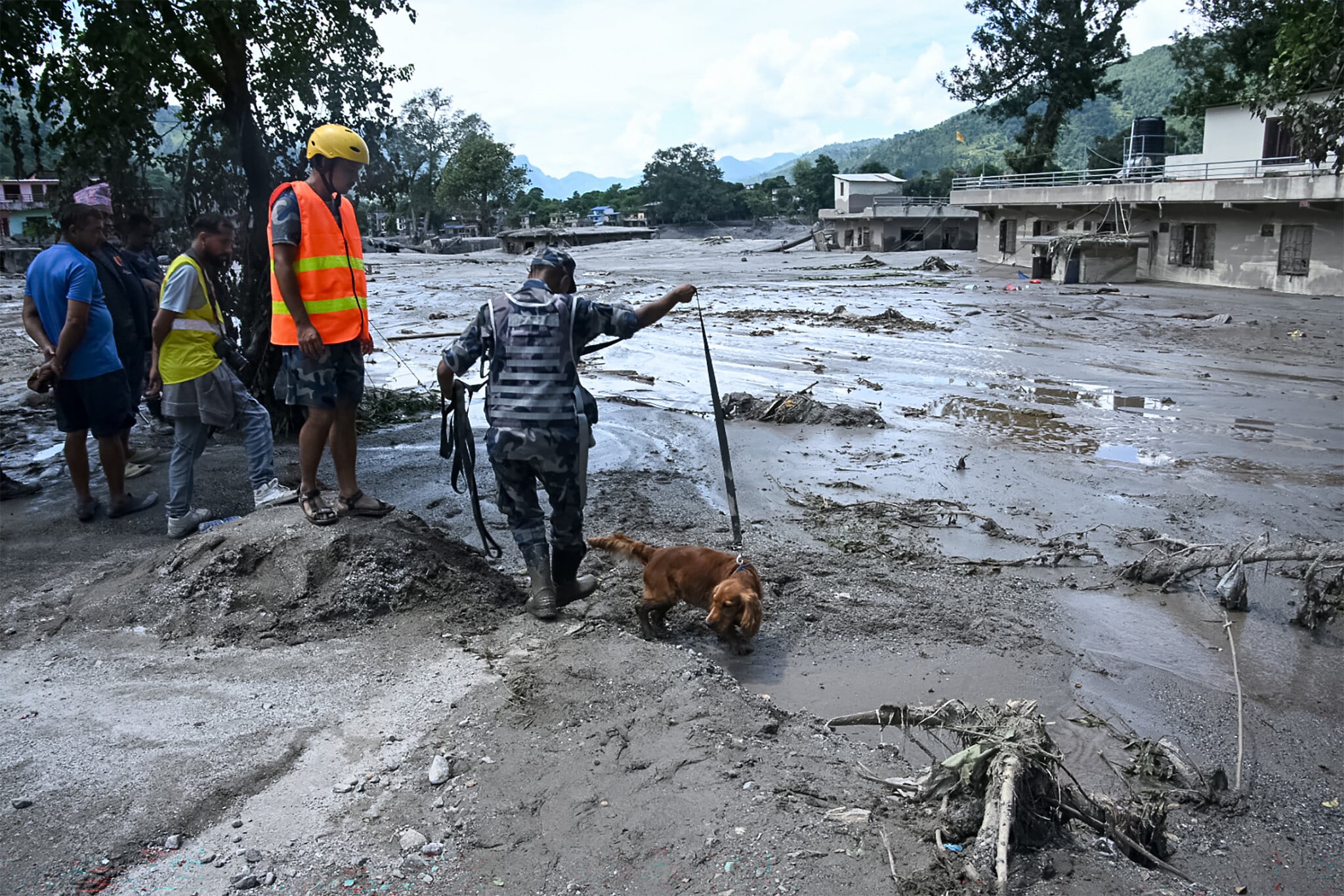
Rescue teams waded through mud on Thursday searching for more than 1,400 people still missing, including an Israeli man, after flash floods and landslides struck the Nepal-Tibet border. The death toll rose sharply to at least 362, with entire villages swept away.
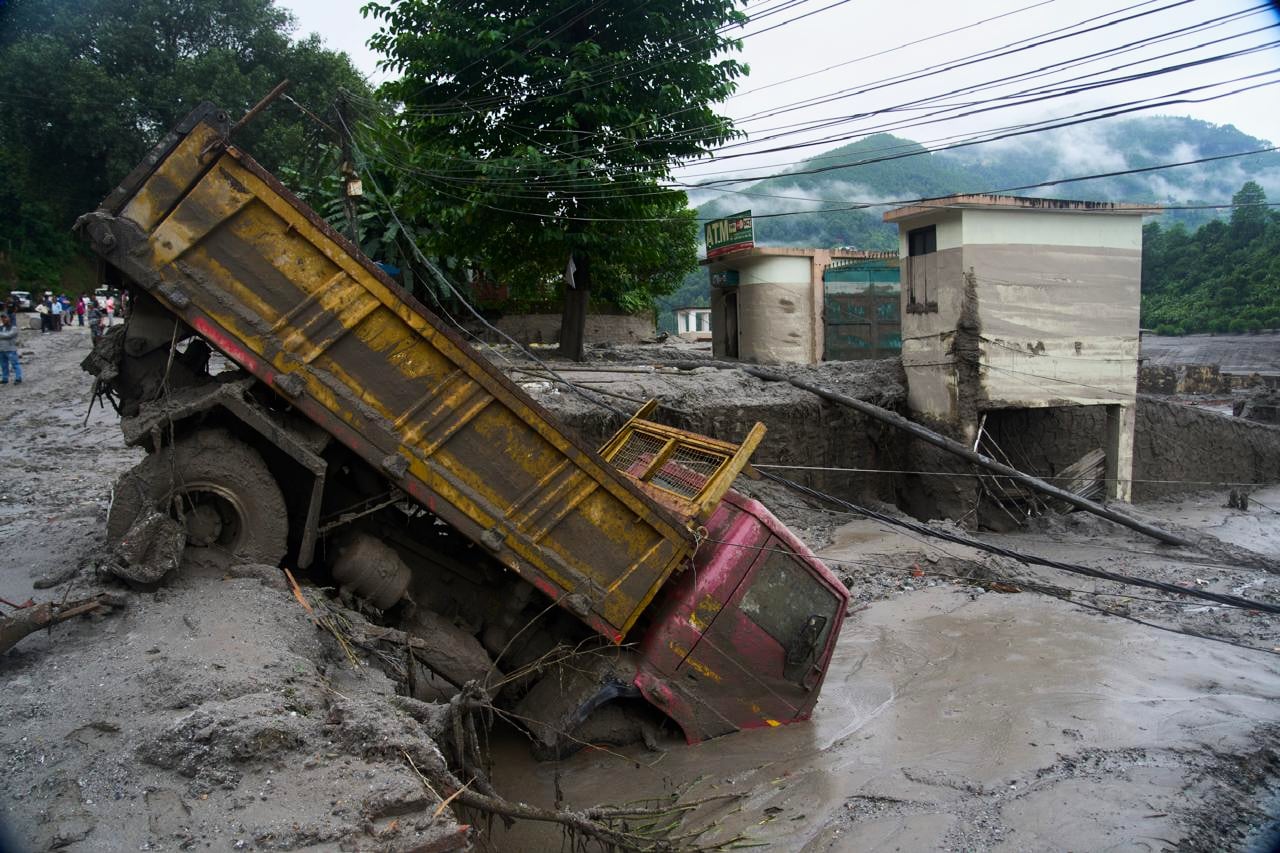
Experts warned of the risk of further floods a day after the devastating tsunami-like wall of freezing water and mud wiped out towns under a torrent of sludge, engulfing homes, smashing bridges and dams, and sweeping vehicles away like toys.
Many of the missing are foreign tourists, including scores of Hindu pilgrims to Tibet’s sacred snow-capped Mount Kailash.
The Israeli Foreign Ministry said it was doing all it could to assist in the search for the missing Israeli, who crossed the Tibet-Nepal border on Wednesday morning shortly before the flood struck. His condition and whereabouts remained unknown.
The Israeli consulate in Beijing and the Foreign Ministry’s Department for Israelis Abroad were in contact with the man’s family “and are assisting with all available means in an effort to locate him,” the ministry said, without giving specific details.
According to the Ynet news site, the man had been traveling with an organized trip to Mount Kailash via Tibet. He crossed the Tibet-Nepal border on Wednesday morning with dozens of other foreign travelers shortly before the flood struck.
The group organizing the trip said its representatives had spoken with the group leader roughly 10 minutes before the disaster, after which contact was lost. It remained unclear whether the Israeli and others in the group were on the Tibetan or Nepalese side of the border.
Ynet reported that several other Israeli travelers were also out of contact, though it was not clear whether their cases were connected to the flooding.
Hundreds of foreign tourists and pilgrims remain unaccounted for. Reuters reported that more than 650 foreigners were still missing in Nepal alone, while Chinese state broadcaster CCTV said 260 foreign nationals were among 558 people missing in Tibet’s Gyirong county.
Wall of ice, mud and rock tears through valley
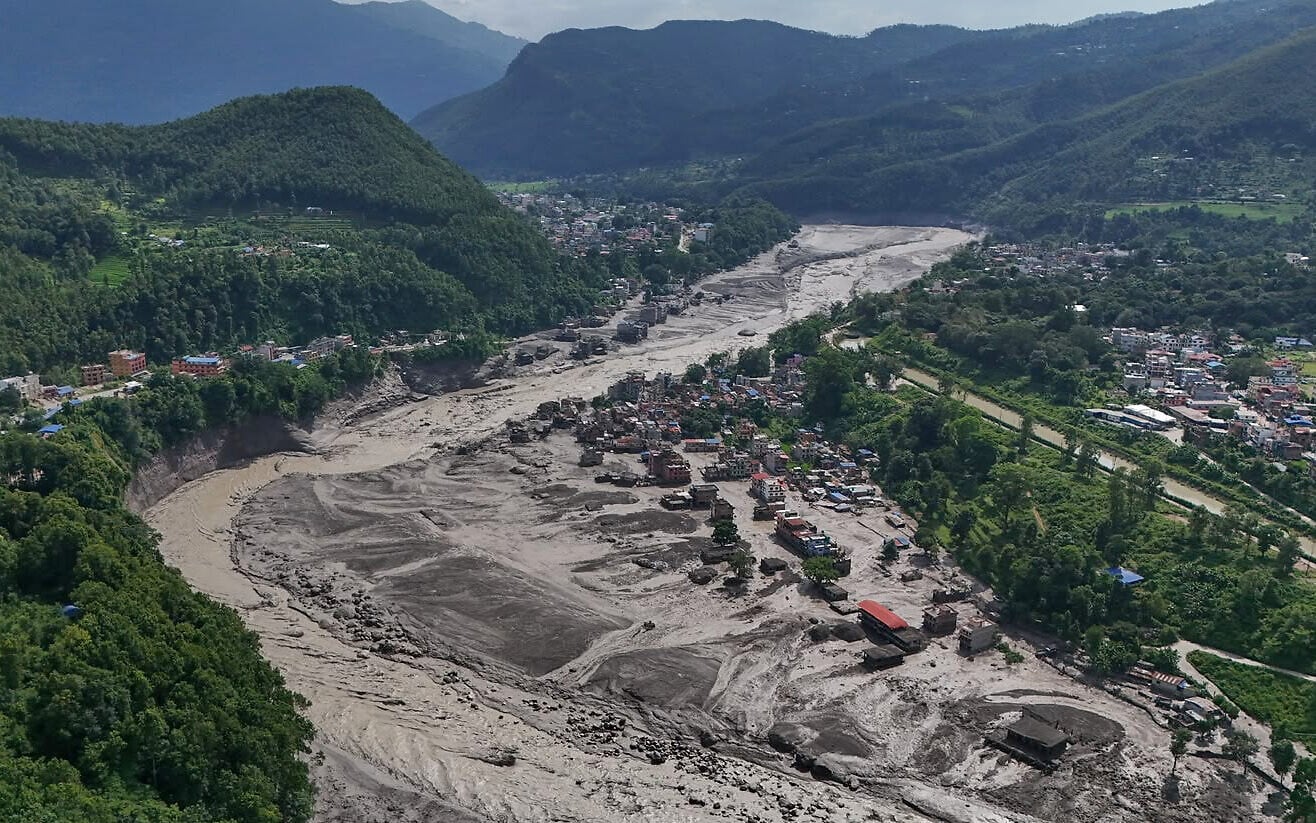
Preliminary investigations indicated that the disaster was likely triggered when a huge section of glacier broke off, sending ice and debris into a mountain river and possibly creating a temporary dam before the backed-up water surged downstream with enormous force.
The US Geological Survey said seismic data showed that a glacier collapse sent debris flowing downstream with catastrophic impact on communities. It said its determination was based on data from nearby seismic stations, long-period seismic waves and satellite imagery.
“A lower part of a glacier has really come off,” Jakob Steiner, a geoscientist at the University of Graz in Austria, told the Associated Press. “If you look at the imagery, it’s like someone cut with a huge knife through the whole lower part and it fell off.”
Researchers said water levels in rivers across the affected region rose by as much as 29.5 feet — 9 meters — in just 30 minutes.
“It was a huge rise, a huge surge of water that happened suddenly,” said Saswat Sanyal, a disaster risk reduction specialist at the Kathmandu-based International Centre for Integrated Mountain Development.
Chinese government geologist Guo Zhaocheng said the ice-avalanche debris flow traveled at around 50 meters per second and extended for more than 20 kilometers, leaving those in its path little time to react.
Verified footage showed enormous masses of water and debris sweeping away people, buildings and vehicles at the Gyirong border crossing, while homes, roads, bridges and power projects were destroyed farther downstream in Nepal.
Survivors describe towns swallowed by mud
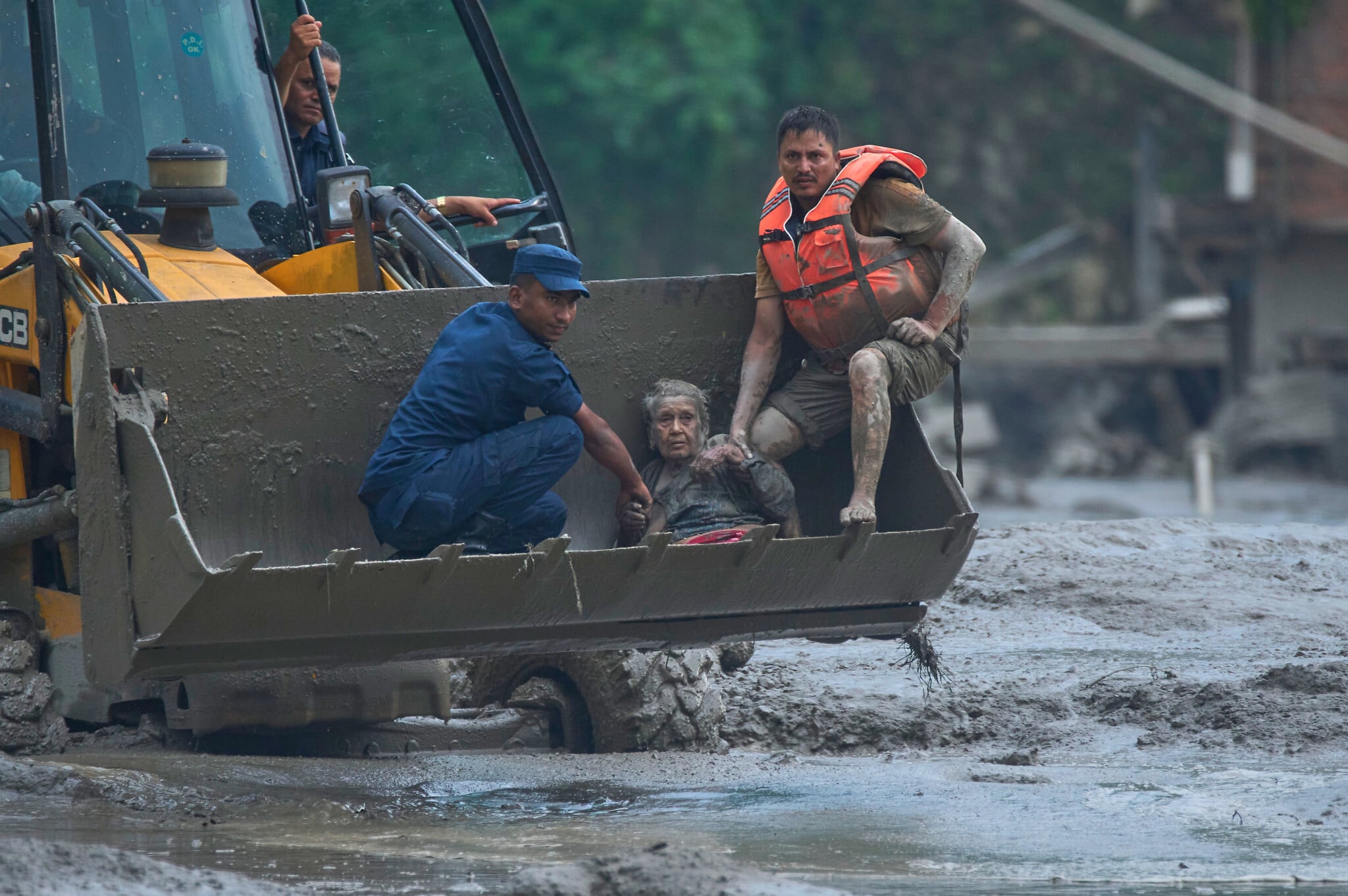
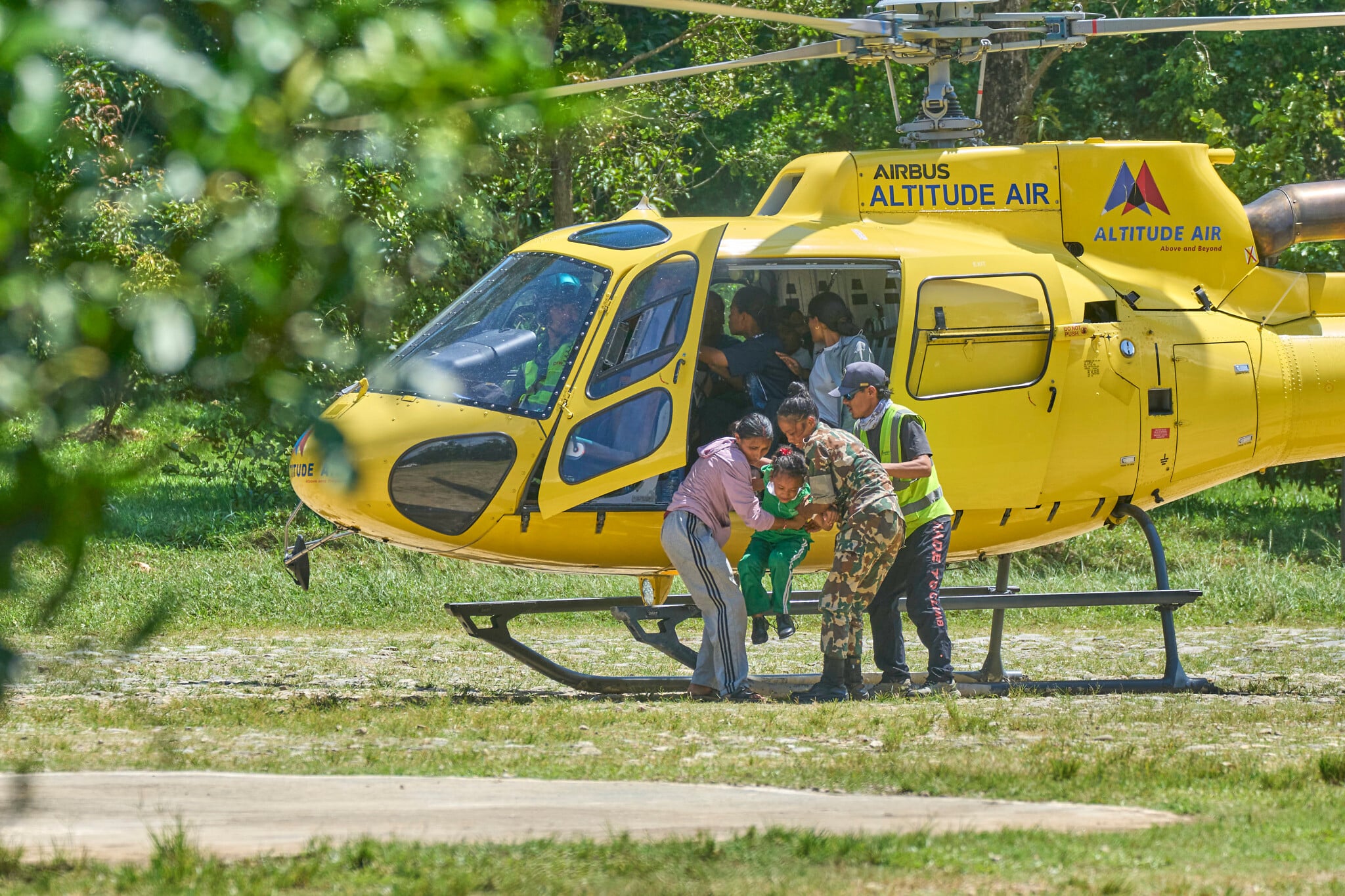
Survivors from Nepal’s flood-ravaged districts, some on stretchers, others gently supported by the shoulders, were airlifted to safety on Thursday as the constant roar of helicopters echoed across the devastated town of Bidur.
A few walked alone, their faces frozen in shock, as helicopters landed every few minutes on a football field inside the town’s military cantonment, whipping up clouds of dust.
Among the survivors was customs agent Omkar Joshi, who spent the previous night stranded on a hilltop in the border town of Timure before being rescued.
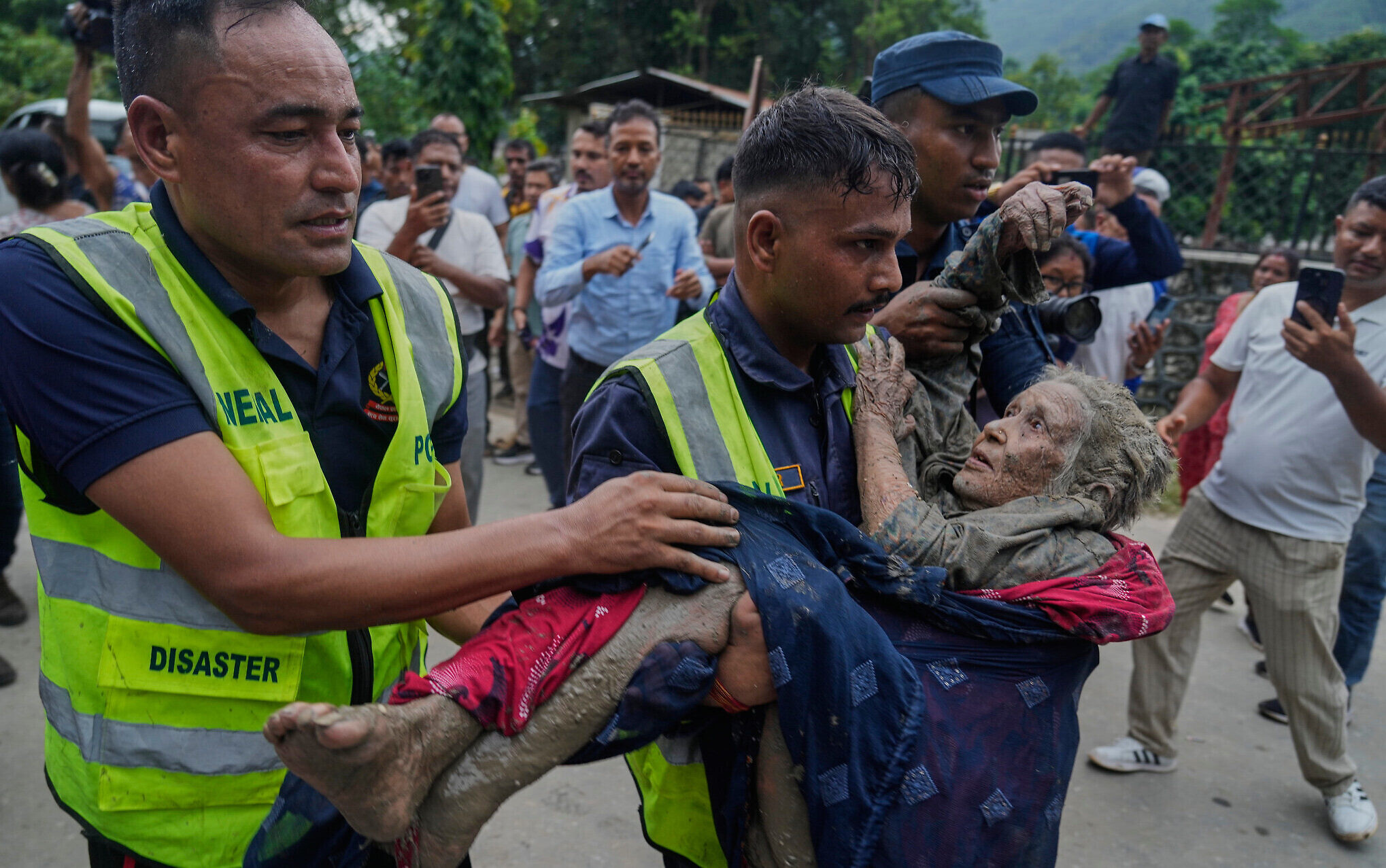
“Everything is finished,” he told AFP after being rescued.
The town, he said, had all but disappeared beneath water, mud and debris.
“It is a giant graveyard. All that is left are sand and pebbles, soaked red by human blood.”
Joshi said hundreds of people survived only by scrambling up nearby slopes as the floodwaters roared through the valley below, where they remained through a night of rain until helicopters arrived.
Another survivor, 68-year-old Keshav Prasad Baral, told Reuters he watched a wall of mud rise as it approached his home.
“When I saw it enter our home, I tried to grab my wife’s hand and take her to the terrace. But she was swept away by the mud,” he said.
A helicopter rescued him four hours later.
“My wife is still somewhere beneath the mud,” he said. “She’s gone.”
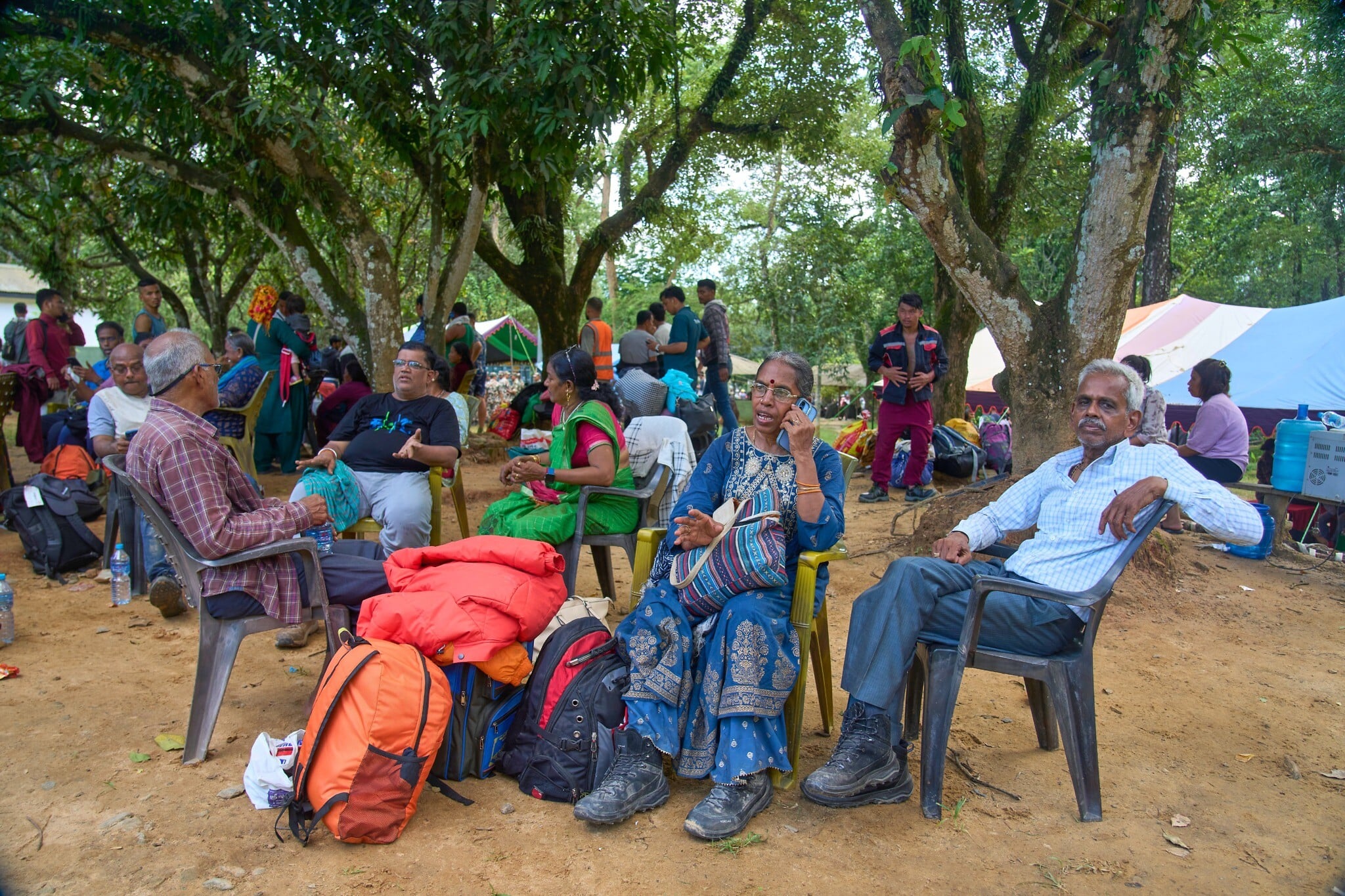
Search complicated by destruction, new flood threat
The Red Cross said entire villages had been destroyed and that impassable roads and bridges had cut off communities, leaving the full scale of the disaster unclear.
Nepalese authorities located 100 missing Indian visitors, most of them pilgrims, as well as 25 Chinese workers in the worst-hit region around Trishuli, while helicopters continued searching for survivors and delivering tents, food and other emergency supplies.
Authorities were also monitoring a newly formed dammed lake upstream in Tibet that could pose another flood risk. The lake contained an estimated two million cubic meters of water Thursday morning and was already overflowing, with another three million cubic meters expected to enter it over the following three days, state media said, citing the Chinese water resources ministry.
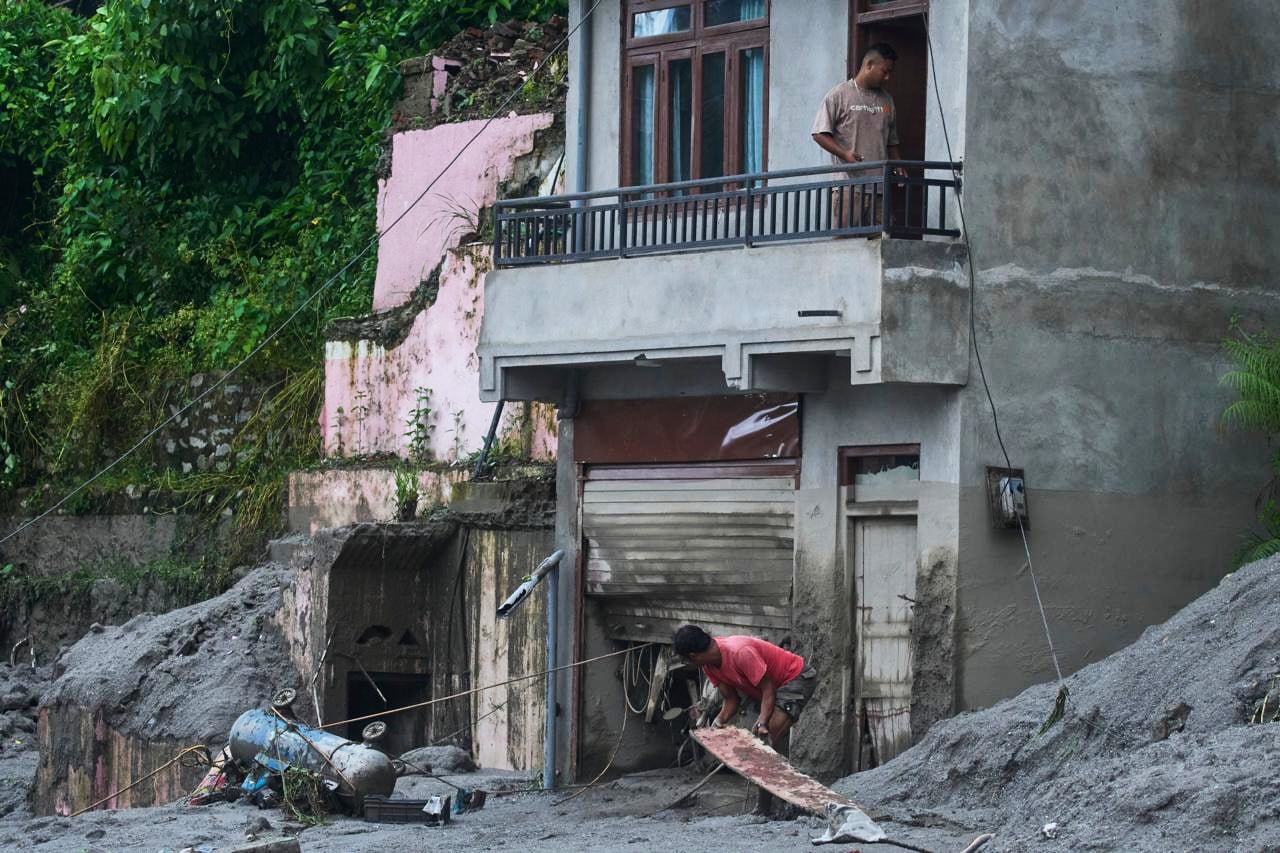
Many of those caught in the disaster had been traveling toward Kailash Mansarovar, a high-altitude pilgrimage site in Tibet revered by Hindus and Buddhists. The flood swept through a road linking Kathmandu with Lhasa that was heavily used by trekkers and pilgrims.
Scientists warn of growing Himalayan glacier risk
Scientists cautioned that it was too early to directly attribute Wednesday’s disaster to climate change, but said warming temperatures were destabilizing glaciers, permafrost and mountain slopes across the Hindu Kush Himalaya.
The Himalayan region is warming considerably faster than many other parts of the world. More than 63,000 glaciers feed at least 10 major Asian river systems and support the water, food, energy and livelihoods of billions of people.
Research by the International Centre for Integrated Mountain Development has found that the rate of glacier ice loss across the mountains has doubled since 2000. As glaciers retreat, rock once supported and insulated by ice becomes exposed to warmer temperatures, rain and repeated freezing and thawing, increasing the risk of collapses and avalanches.
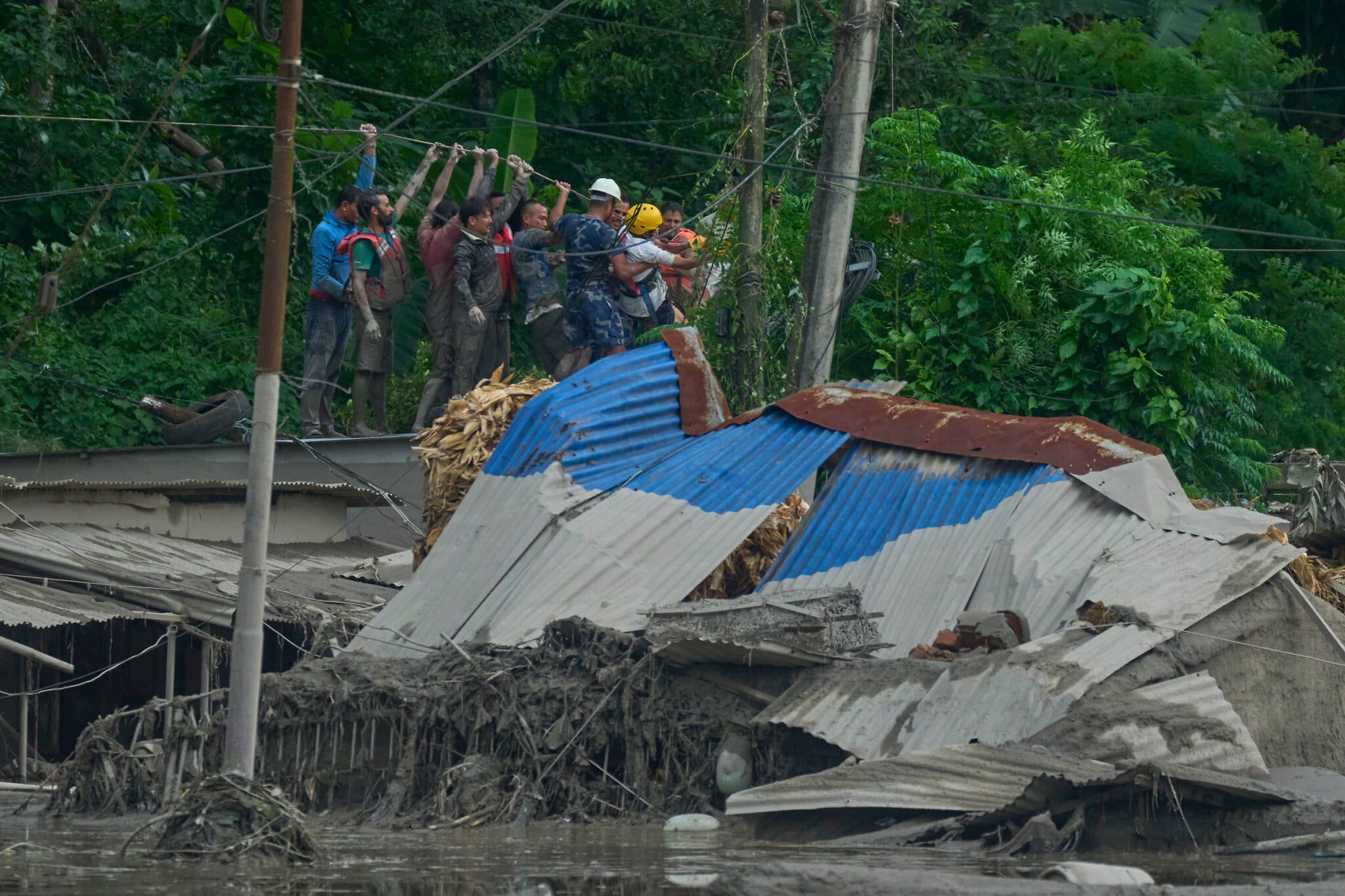
“What happened yesterday is unfortunately the new normal,” Steiner said. “It’s going to get worse from here onwards.”
The affected valley has already suffered repeated disasters. A glacial-lake flood struck it in 2025, while another ice and rock avalanche hit elsewhere in the region in 2024. The wider Langtang area was also devastated by avalanches during Nepal’s 2015 earthquake.
Scientists said stronger early-warning systems, better monitoring and faster cross-border information sharing would become increasingly important as mountain landscapes grow less stable, though monitoring thousands of glaciers, slopes and valleys across the Himalayas remained enormously difficult.
“We don’t have hours,” Sanyal said. “We have sometimes a few minutes to actually prepare.”









The Times of Israel Community.