

Study: Genocide claims on US campuses largely grew out of preexisting BDS activism
Research by AMCHA Initiative links prior anti-Israel advocacy to genocide accusations, arguing that scholars gave political rhetoric academic legitimacy
 Add ToI as a Preferred Source on Google
Luke Tress is The Times of Israel's New York correspondent.
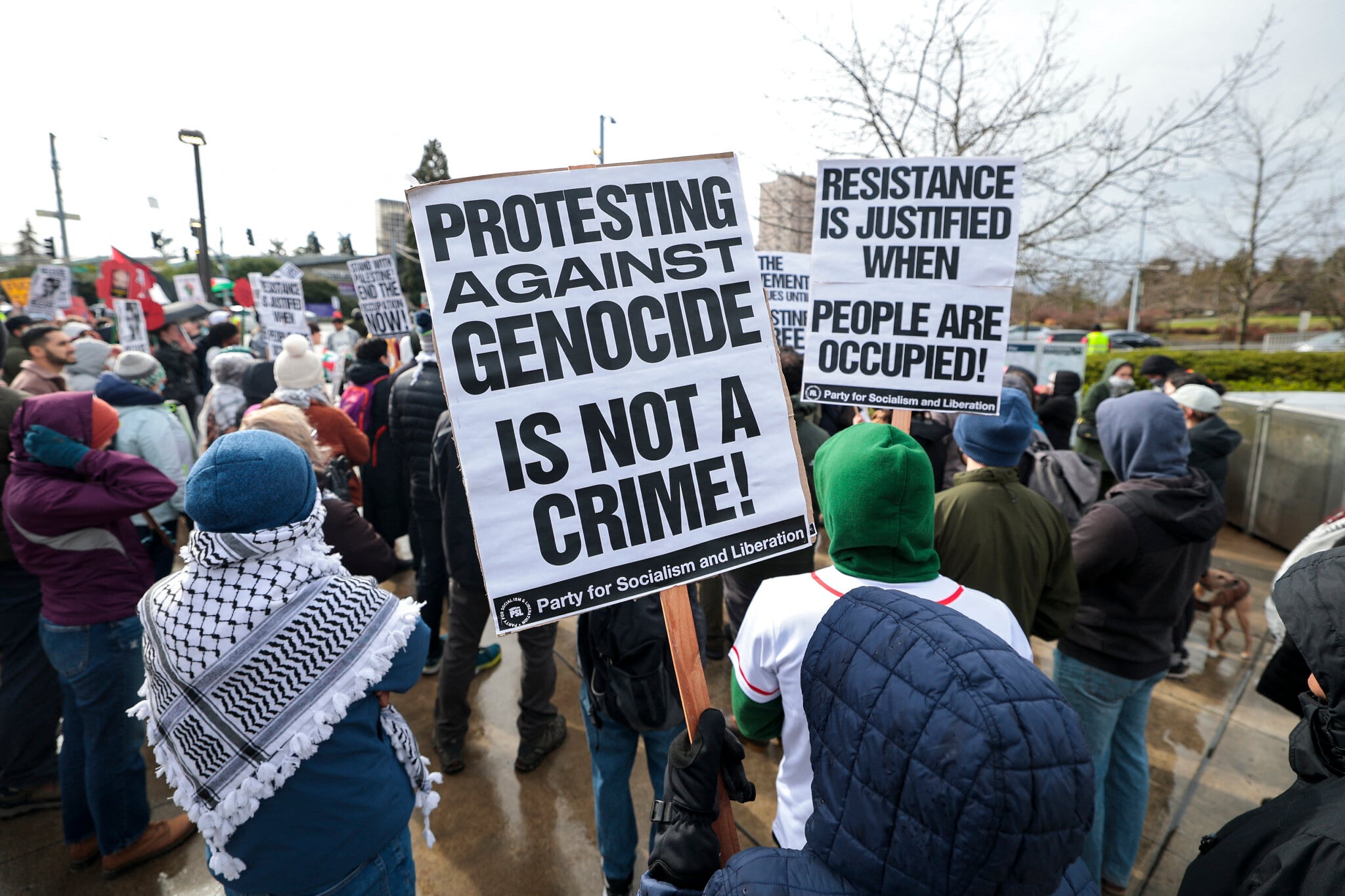
Claims of genocide against Israel that became prominent on US college campuses after the October 7, 2023, Hamas attack were largely concentrated among academics and speakers who had already supported the anti-Israel Boycott, Divestment and Sanctions (BDS) movement, according to a Wednesday report.
The report argues that academics had granted legitimacy to the BDS movement’s aim of stigmatizing Israel.
The report, by the AMCHA Initiative, a nonprofit that documents antisemitism and combats anti-Israel activism on US campuses, analyzed 278 recordings of events sponsored by academic units at US schools. Academic units included departments, centers, programs, institutes and schools.
The events took place on 51 US campuses during the 2024-2025 academic year. The study, called “When Political Advocacy Acquires Academic Authority: BDS and the Genocide Accusation on US Campuses,” selected colleges and universities that Hillel International identified as being popular with Jewish students.
Of those events, 93 featured speakers who had promoted BDS before the October 2023 Hamas invasion of Israel. Support for BDS included signing onto petitions, published writing backing BDS, social media posts and participating in boycotts.
The analysis found that events with BDS supporters were 40 times more likely to include genocide accusations — 85% of those events accused Israel of genocide, compared to 2% of events that did not involve boycott activists.
The strong correlation between prior BDS support and genocide accusations suggested that the charge was “not simply a broadly shared feature of academic discussion about Israel and Gaza,” the report said.
“Rather, its use was overwhelmingly concentrated among speakers who entered the post-October 7 period with a preexisting commitment to taking action against Israel,” the study said.
At the 83 events that included genocide accusations, there was a median of seven such accusations. One event featured the accusation 53 times, the report said.
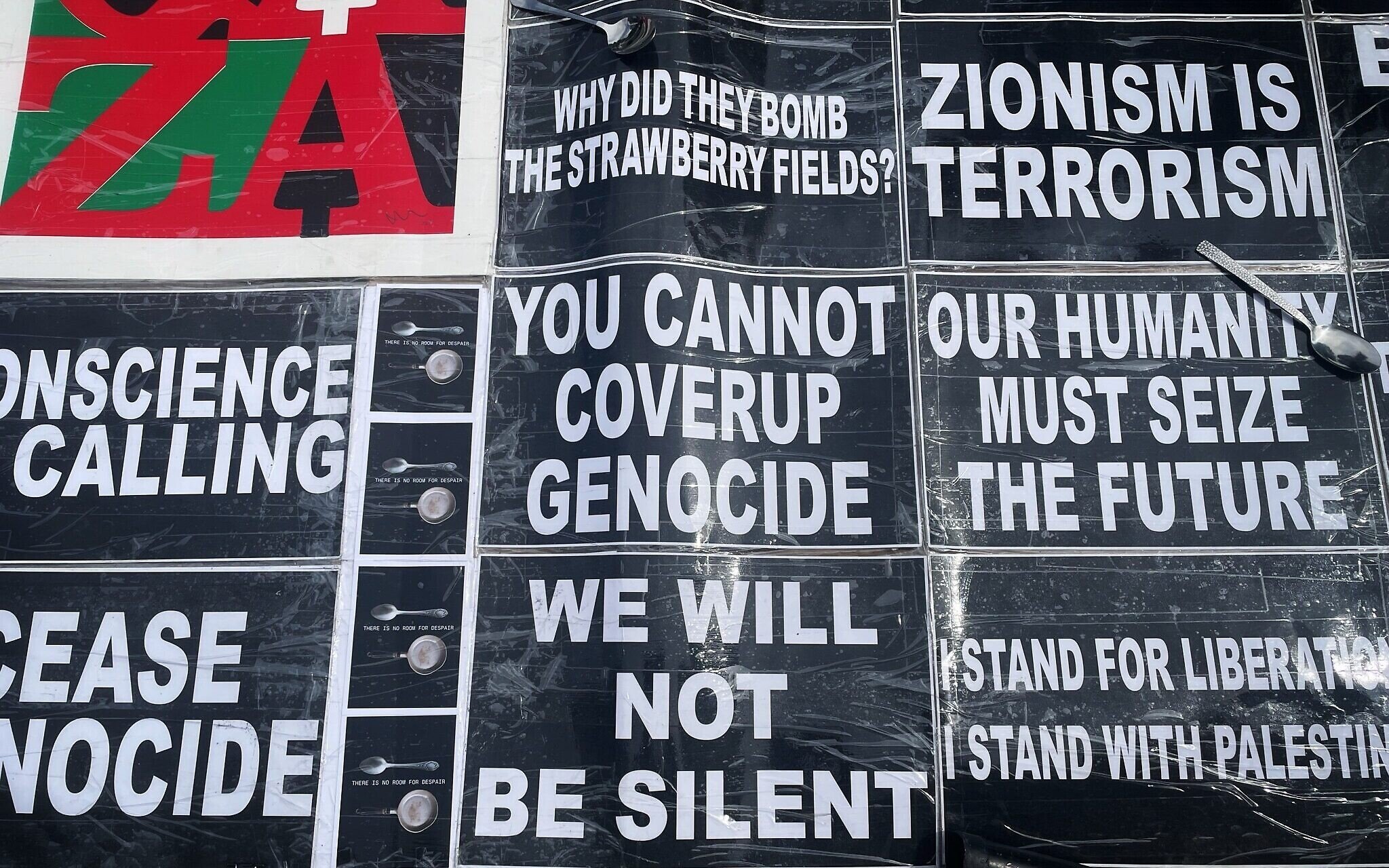
The events with BDS-supporting speakers were also nine times more likely to be sponsored by an academic unit led by a director who supported the boycott movement — 56% compared to 6%.
At one event described in the report, on October 20, 2023, Middle East studies departments at six universities co-organized a “Gaza in Context” online teach-in. Anti-Israel speakers referred to “genocidal warfare,” “clearly a genocidal war,” “genocidal intent,” a “genocidal machine,” and “the realities of genocide in real time.” The participating programs were from Georgetown, George Mason, Rutgers, Harvard, Brown and the University of Chicago.
The universities that held the most events with pro-BDS speakers and genocide accusations, among those surveyed, were Brown, Georgetown and Harvard.
A central goal for the boycott movement is the “anti-normalization” of Israel. The BDS movement defines “normalization” as participating in any program with Jewish Israelis. BDS makes exceptions for Jewish Israelis who recognize the boycott movement and programs that constitute “co-resistance against the Israeli regime.”
The study argued that genocide accusations also stigmatize Israel by making engagement with the Jewish state “morally unacceptable.”
“The findings reveal a strong connection between the genocide accusation in academic programming and a preexisting political effort to boycott and isolate Israel,” the study said. “That relationship suggests the genocide accusation is functioning as a form of anti-normalization within the BDS movement.”
The genocide charge also harms pro-Israel students, who can be framed as supporting genocide — or backing an “extraordinary moral crime” — due to their defense of the Jewish state, the report said.
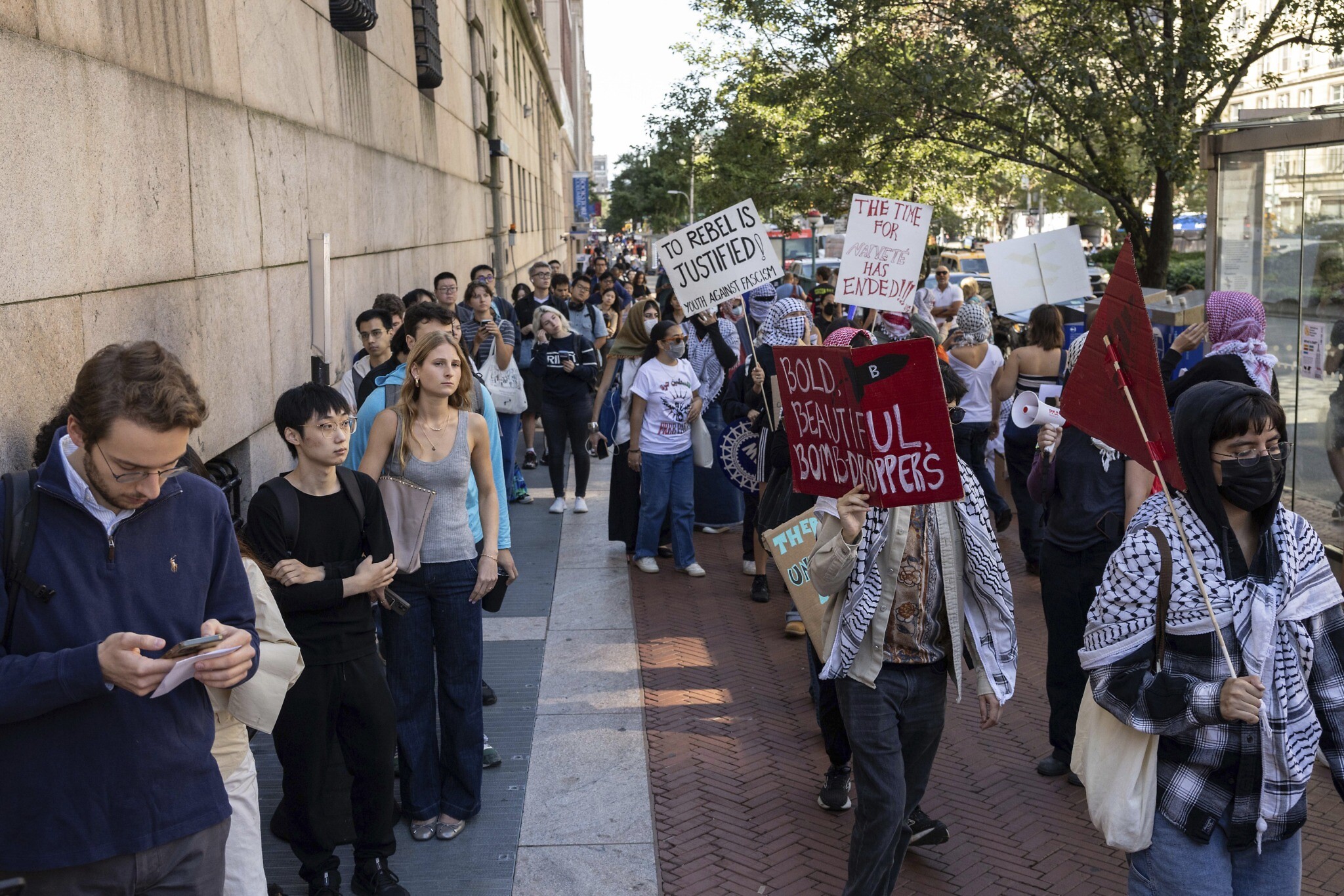
One quarter of the events with BDS-supporting speakers also called Israel genocidal in the event’s promotional materials. While event organizers cannot control what speakers say, making the accusation in official materials gave “institutional authority” to the political accusations, the study said.
For the events making the genocide accusation in promotional materials, 96% were sponsored by an academic unit with a pro-BDS director.
Boosting the accusation at universities gives the genocide charge purchase off-campus, because scholars are seen as having more authority than political activists, the study argued.
The authors said the research outlined a pathway for the genocide charge — from political activists, to sympathetic scholars who provided institutional authority, to the broader public.
The study also highlighted how early in the war genocide accusations emerged. Between October 10 and October 24, 2023, when Israel began ground operations in Gaza, 14 academic units on 12 US campuses accused Israel of genocide. Every one of those academic units was led by someone who supported BDS before the Hamas attack, the report said.
On October 10, 2023 — three days after the Hamas attack in which invaders from Gaza killed 1,200 people in southern Israel and abducted 251 — for example, the The Critical Race and Ethnic Studies Department at University of California Santa Cruz posted a statement on its website decrying “Israel’s genocidal attack on Gaza.”
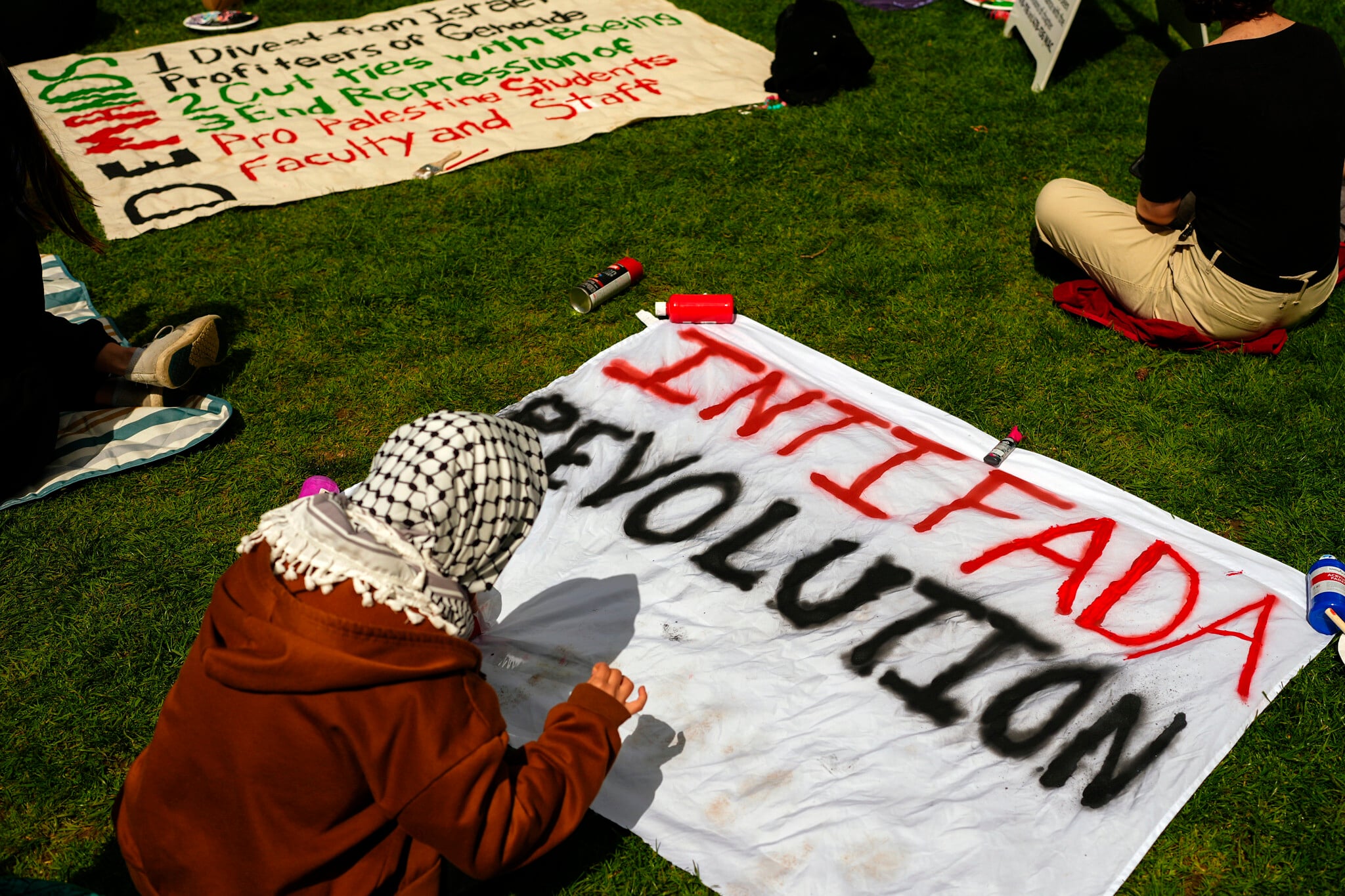
Genocide, the “crime of crimes,” is legally defined as acting with the intent to destroy a group of people.
While genocide is an international crime with a strict definition, the term is also used in a colloquial sense.
The UN’s International Court of Justice has said that genocidal intent must be the only reasonable interpretation for acts of suspected genocide.
Some anti-Israel critics have also sought to expand the legal definition of genocide to make the charge against Israel.
As of 2026, no international courts have found Israel responsible for genocide in Gaza. The ICJ is still reviewing the case brought before it by South Africa accusing Israel of genocide.
“To describe a state as committing genocide is not merely to criticize a government policy,” the AMCHA Initiative study said, but “casts continued engagement with it as potentially complicit in an extraordinary moral evil.”
The authors called for university safeguards against academic politicization, enforcement mechanisms to review misuse of academic authority for political purposes, withholding public funding over politicization, and legislation against political academic boycotts.








The Times of Israel Community.