

Riding the waves, Gaza border survivors meet fears head on by learning to surf
One in three survivors of the massacre at Nir Oz are surfing with HaGal Sheli, which has served thousands of Gaza border locals and recently opened a center at Zikim Beach
 Add ToI as a Preferred Source on Google
Sue Surkes is The Times of Israel's environment reporter
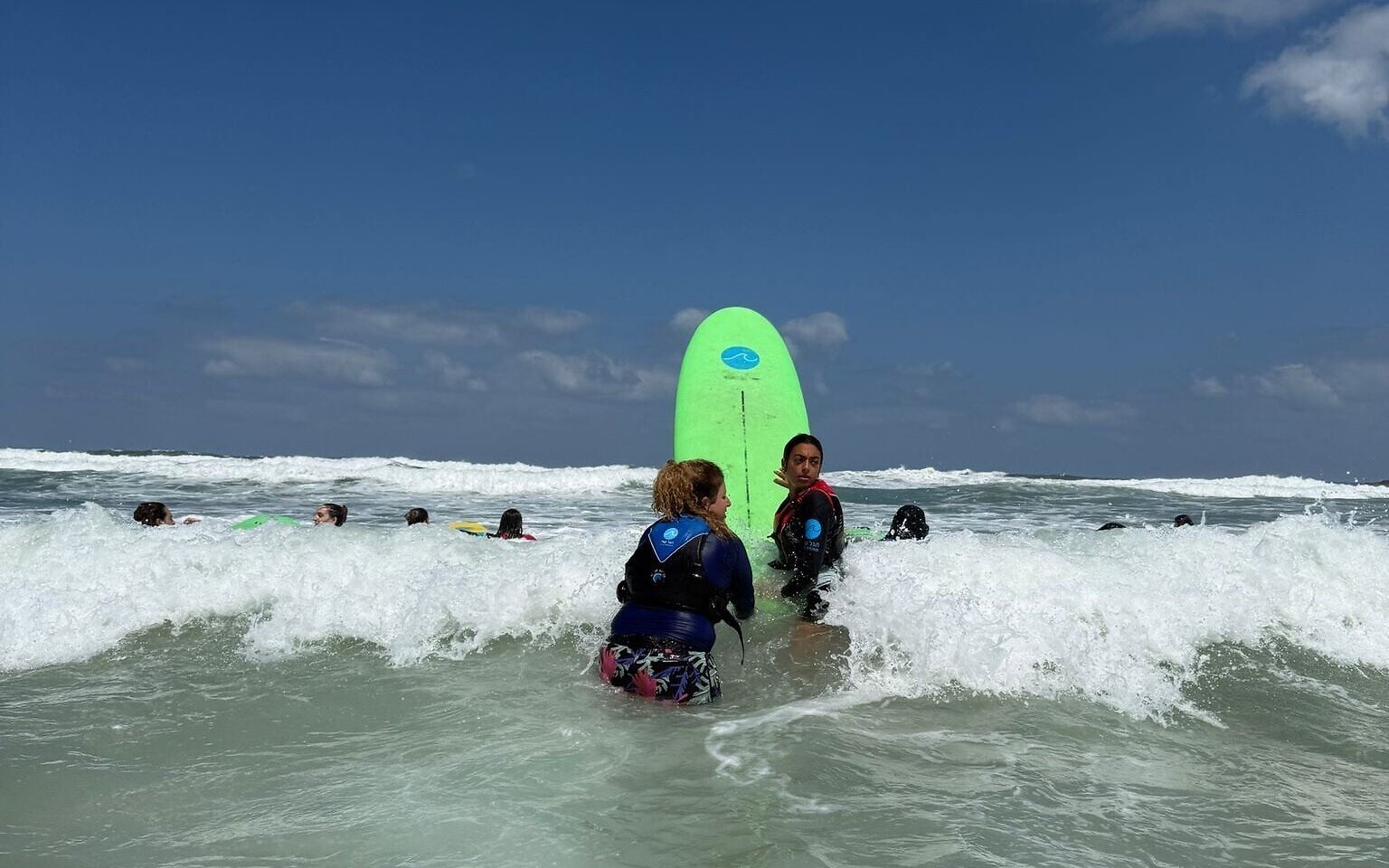
One stormy day, months after Rotem Lev Ari spent 12 hours hiding from Hamas terrorists in a safe room with her partner and two young children, she went to the beach with her surfboard.
Lev Ari, still learning the sport, didn’t want the rain to stop her. But when a teacher told her to take a break, it made her realize something pivotal about how she had processed the experience of October 7, 2023.
“I was fighting the waves, determined to beat them,” she recalled to The Times of Israel. “A surf guide said, ‘You know, you can come out of the sea and go back in again later.'”
She continued, “I got out and said to myself, ‘I’m not in the protected room anymore, and nobody’s shooting at me.’ The fact I could come out helped me repair, to understand that life doesn’t have to be just about war, and that we can move forward.”
A big part of moving forward, for Lev Ari and other survivors of October 7, has been learning to surf with the HaGal Sheli (My Wave) nonprofit, which offers trauma therapy through surfing.
Originally founded to serve at-risk youth, the organization has helped thousands of Gaza border residents process the impact of October 7, beginning in the days after the onslaught. It is now increasing its capacity in the south and inaugurating a new surf center at Zikim Beach, a site of the massacre that reopened to bathers last month.
“Riding the waves helps you to be present in the moment and understand that after every fall, you can get back up again,” said co-founder Yaron Waksman. “There are all the reasons for mourning and crashing, and saying ‘Why me?’ and there’s room for that, but the waves will keep coming, like opportunities, and you can choose whether to grab them, to act, to try.”
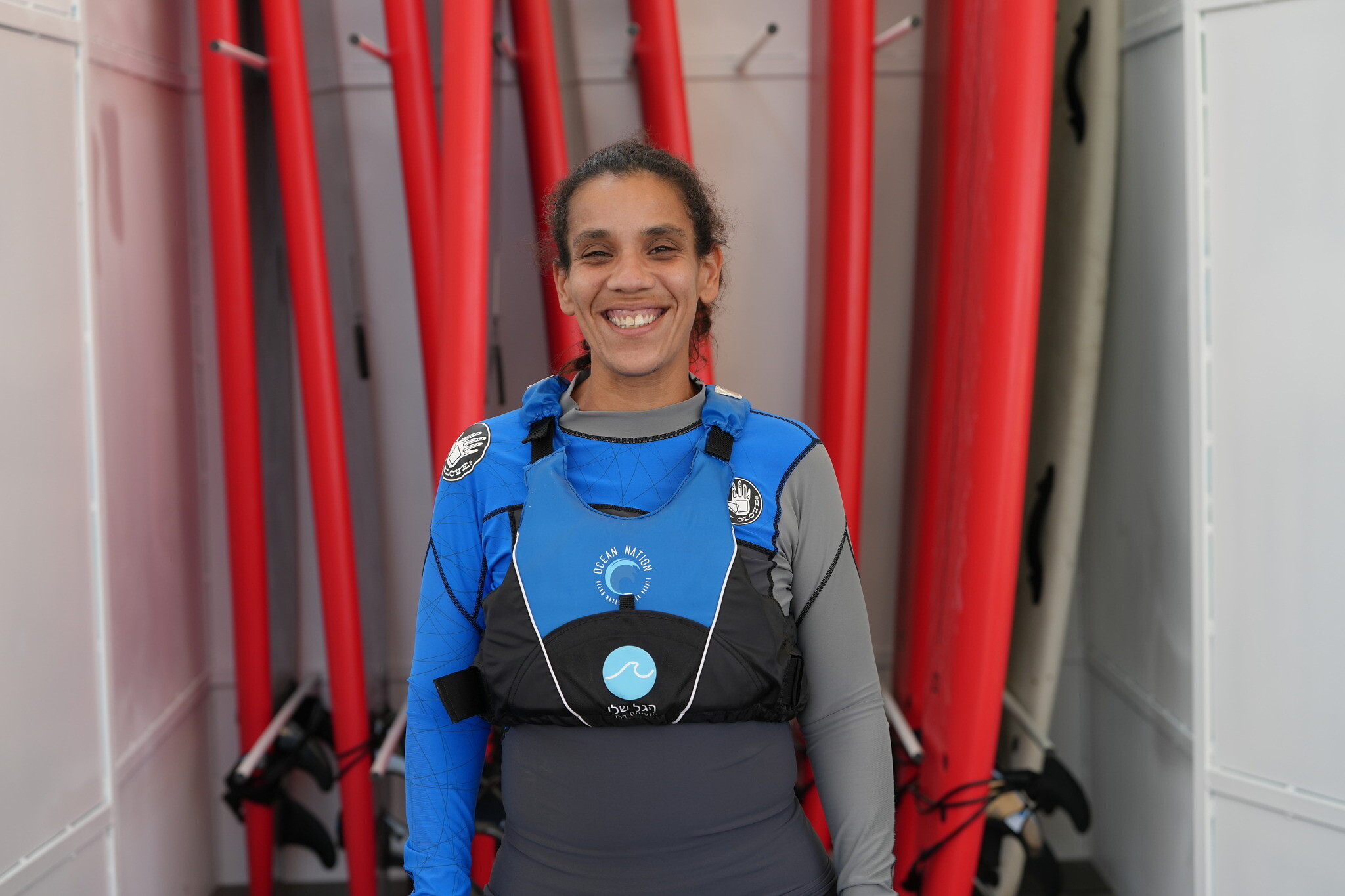
Lev Ari, 38, a social worker, has become one of the organization’s biggest proponents. Evacuated after October 7 from her home in the Gaza border moshav of Netiv Ha’asara, where terrorists murdered 17 people, she felt little motivation to go back to work.
That changed several months later, after she answered an advertisement to join HaGal Sheli’s surfing course on southern Israel’s Ashkelon coast. Now, she often begins or ends her day in the sea off Ashkelon, “but only with a surfboard,” she said.
“It was an amazingly strengthening experience. It gave me air that I’d lost on October 7,” she said. “There’s something about the sea that allows you to process things. It’s quiet even when it’s stormy. It enabled me to understand things about myself.”
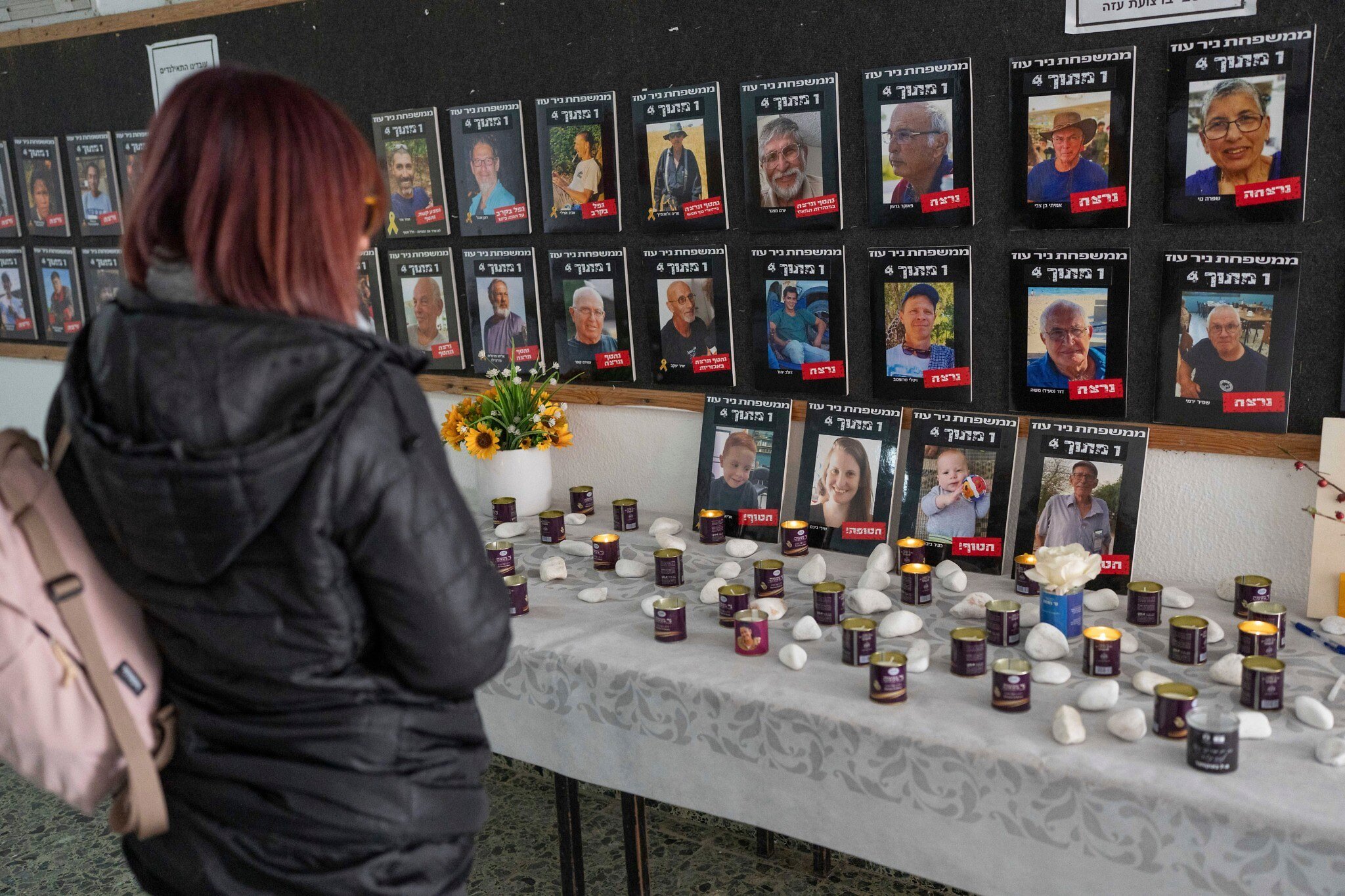
Now, she’s back on the job — and bringing others to the waves. She works with survivors from Kibbutz Nir Oz, one of the communities near the Gaza border hardest hit on October 7, where Hamas terrorists either murdered or kidnapped one in four residents — 117 people out of some 400.
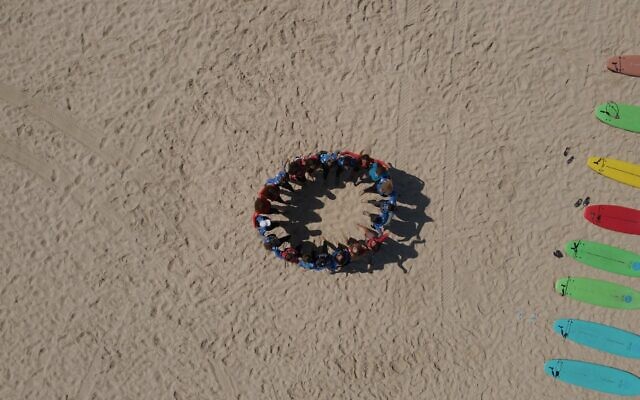
HaGal Sheli now runs eight surfing groups from Nir Oz, with 15 people per group. Participants range in age from 6 to 64.
“When I got to Nir Oz, I understood that I had to bring everybody to HaGal Sheli, and I did it,” Lev Ari said. “One in four residents was murdered on October 7. Now, one in three survivors surfs. Whole families are surfing together. It’s crazy.”
Lev Ari has already accompanied a group of 15 men from Nir Oz on a nine-day surfing trip to Sri Lanka. The men had completed two courses together at HaGal Sheli, and they continue to surf regularly as a group. She is now planning a similar trip with a Nir Oz women’s group in February, which will include participants widowed after October 7, and relatives of hostages.
HaGal Sheli was co-founded by Waksman and Omer Tulchinsky, two education students who decided to combine their passions for surfing and working with at-risk youth.
They started with a small pilot project in Tel Aviv in 2012. Today, they have 12 centers along the Mediterranean coast, from Zikim in the south to Nahariya in the north, working with over 500 cities.
Their program for teens uses surfing to teach tools for meeting challenges and coping with repeated failure, which the team then helps the kids to apply to real-life situations.
The organization’s trauma therapy program, running for four years before October 7, is based on a similar concept: It uses the physical activity of learning to surf to help participants work through trauma, and then combines that with emotional processing.
The program has significantly expanded since October 7, and is a contractor for the Defense Ministry’s Rehabilitation Division.
“By October 7, we had the knowledge,” Waksman said. “We mapped the places to which the Gaza border communities were evacuated, held a Zoom meeting the following day with our 450 staff members, and by October 9, began a surfing program with residents of Kfar Aza who had moved to Kibbutz Shefayim,” in central Israel.
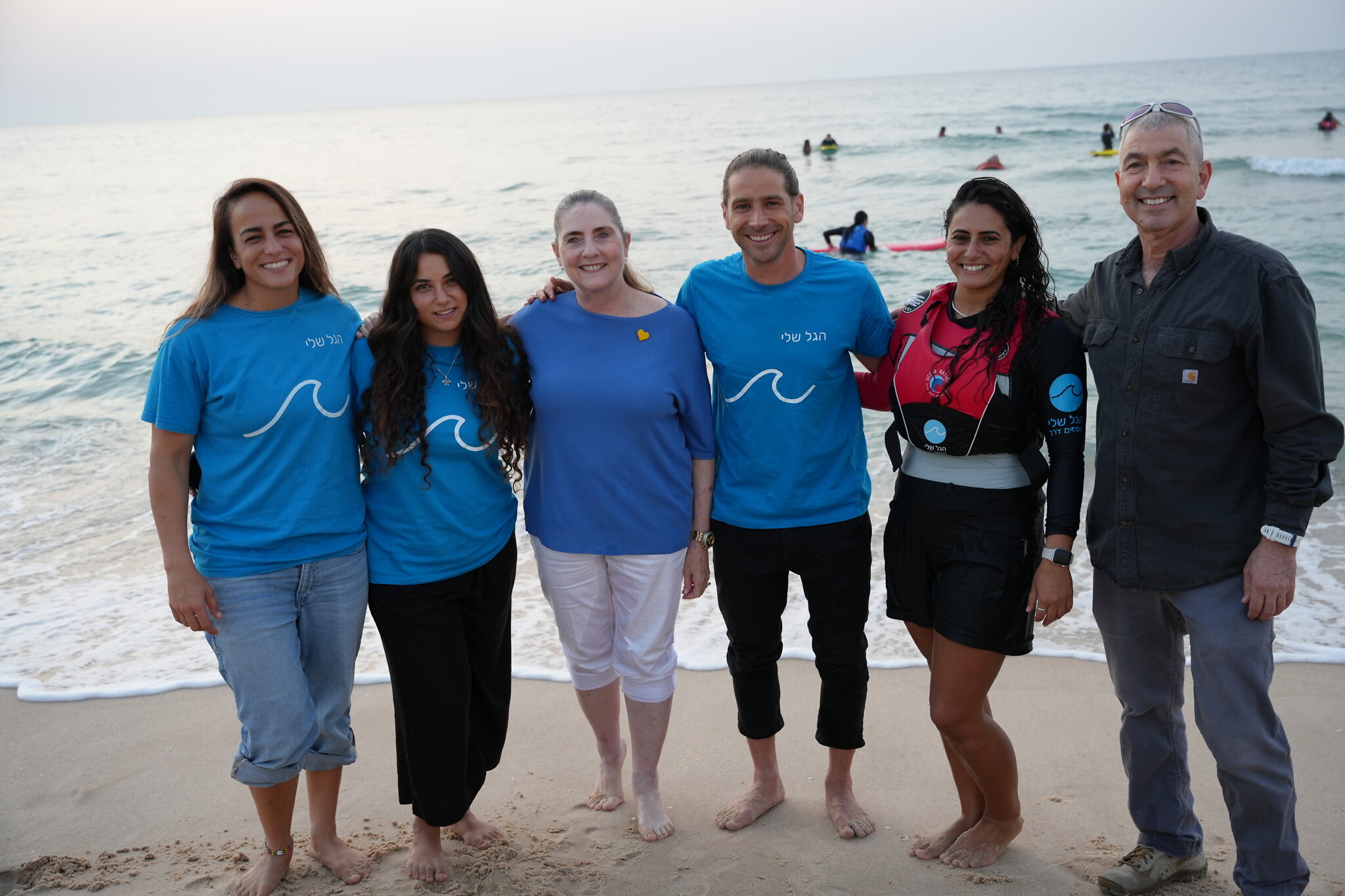
Since October 7, HaGal Sheli has worked with more than 4,000 people from just about every Gaza border community, among them bereaved families, relatives of hostages, surviving captives, Nova party survivors, and community security teams. It has also trained and supported first responders, medical professionals, vulnerable youth, and active and veteran IDF personnel, including amputees.
HaGal Sheli won a presidential citation last year for its contribution to the state during the war against Hamas. On a recent day at the new facility at Zikim, First Lady Michal Herzog had come to express her support. HaGal Sheli staff have also visited the White House.
“There’s a sense of accomplishment and joy while you’re riding a wave,” Waksman said. “I see people who, for the very first time, smile and throw up a fist in celebration. They realize that they can feel joy again.”
According to a study last year by Ben-Gurion University, 76 percent of direct trauma survivors taking part in surfing courses reported a drop in nightmares, disturbing thoughts, and flashbacks; 82% said it reduced avoidance of places they associated with trauma while boosting their confidence to go out, meet people, and create relationships.
A second survey this year found 67% of interviewees reporting a decline in intrusive thoughts. Meanwhile, 74% noted a decrease in avoidance measures and said they suffered less from negative thoughts and moods. And 61% reported a drop in hypervigilance, panic attacks, irritability, and difficulties sleeping and concentrating. Those percentages all rose among people with the most severe symptoms.
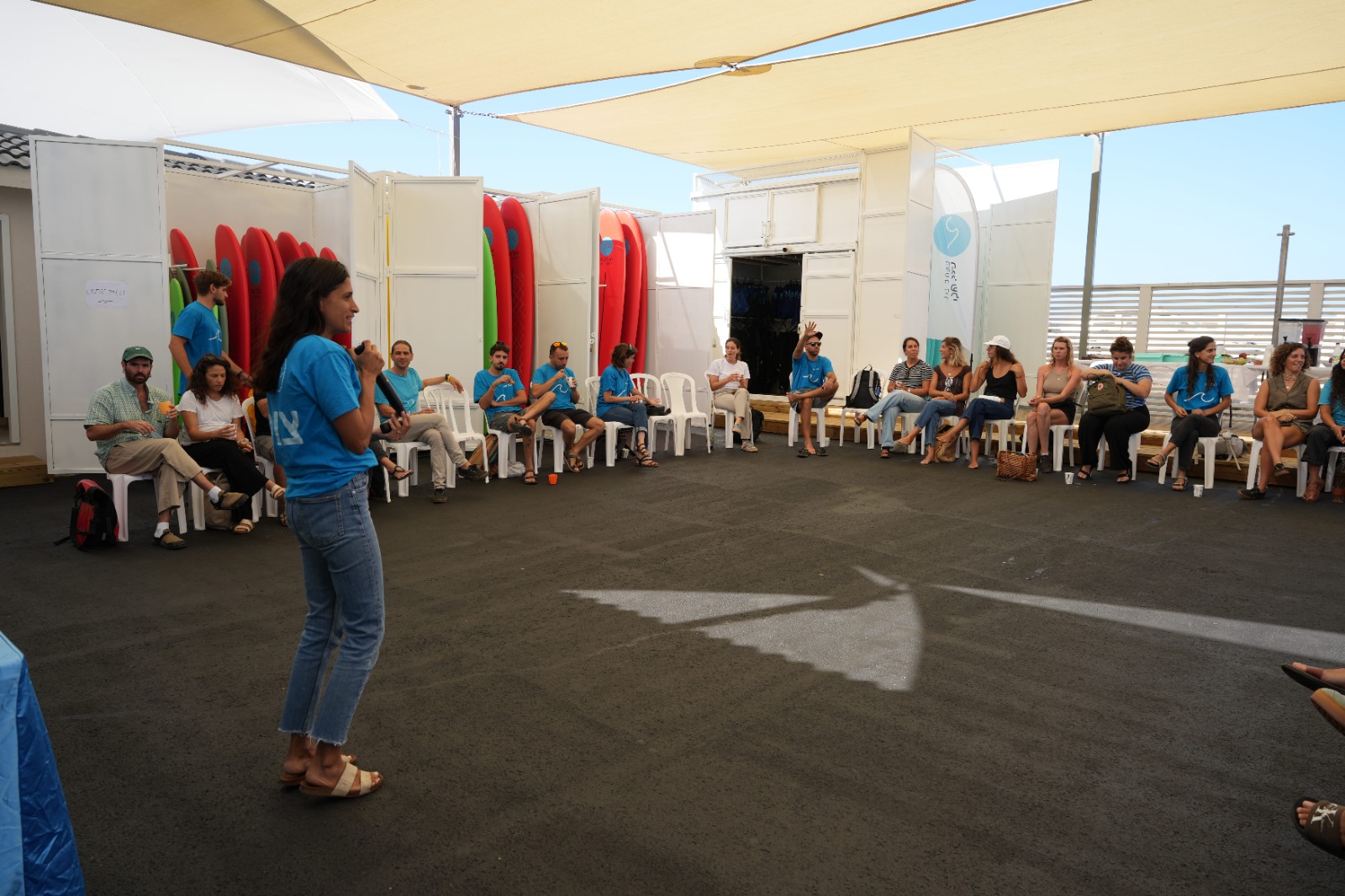
HaGal Sheli’s new surf center in Zikim, southern Israel. (Nadav Szpiler)
To create capacity for the thousands of new participants, HaGal Sheli founded a surfing center in Ashkelon last year, where the Nir Oz groups surf. Now, its center in Zikim comprises three classrooms, an office, a kitchenette, and changing and bathroom facilities. Brightly colored containers house the surfboards and wetsuits.
The Zikim center, Waksman said, hopes to serve 7,500 people over the next five years. Each group of surfers, who meet weekly for six months, costs $16,000. A third of that funding comes from the government, and participants pay a symbolic fee of NIS 50 ($15).
The beach carries its own legacy of October 7 tragedy. On that day, Hamas terrorists came ashore and massacred 19 people, mainly civilians. Among them were surfers Or Taasa and Tal Keren, both 17.
Lev Ari has a personal connection to both victims: Tassa’s parents lived next door to Lev Ari until October 7, when Tassa’s father Gil was also murdered. Keren’s parents are now Lev Ari’s neighbors.
Last week, she took another personal step on the road to recovery by agreeing to visit —and even surf — off of HaGal Sheli’s Zikim center. While Zikim had been Lev Ari’s local beach until October 2023, she had been unable to return until Shir Kahlon, HaGal Sheli’s southern district director, invited her on Wednesday.
Lev Ari’s dream is for the Zikim facility to adopt the residents of Moshav Netiv Ha’asara. Waksman, too, has high aspirations for the site.
“We will continue to live alongside the trauma,” he said. “We can’t bring back our loved ones. But the Zikim site is a perfect place where, alongside the trauma, we must carry on. We only have one Israel, and we want to be there for as many people as possible.”





The Times of Israel Community.