

Trump and Netanyahu present united stance on Gaza, but will Hamas agree to go along?
PM and US president seek to dispel reports of growing rift with chummy Mar-a-Lago meeting, making it easier to confront continued threats, though by no means guaranteeing success

 Add ToI as a Preferred Source on Google
PALM BEACH, Florida — As the ceasefire in the Gaza Strip stretches on, more and more reports have emerged of growing strains between US President Donald Trump and Prime Minister Benjamin Netanyahu.
Axios last week indicated that Trump’s top aides believe Netanyahu is sabotaging the ceasefire process. According to the report, Trump’s team is convinced that Netanyahu is delaying progress toward the second phase of the president’s Gaza plan, and could ultimately resume the war against Hamas. Trump, meanwhile, wants to unveil the new technocratic government for Gaza, backed by the international peacekeeping force, and to convene the Board of Peace.
There were disagreements over Syria reported as well. According to the Kan public broadcaster, Netanyahu asked Trump to retain some American sanctions on Syria as the president prepared to repeal them last week, in the hope that they could be used as a bargaining chip in future negotiations, but the request was refused.
At the heart of the ostensible strains is a fundamental disagreement over how to achieve some measure of long-term peace in Gaza and to pave the way for the realization of Trump’s vision for the Middle East. Trump wants to push ahead toward the day after Hamas without getting hung up on the thorny details like disarmament, otherwise Gaza will remain a conflict zone and the Saudis won’t agree to normalize ties with Israel.
Netanyahu, on the other hand, feels that no ceasefire with a terrorist group like Hamas or Hezbollah can stand — and that they certainly won’t actually disarm — unless there is a credible threat of a major Israeli attack.
With the meeting at Mar-a-Lago, Trump and Netanyahu sought to signal that those reports on growing tensions were overblown.
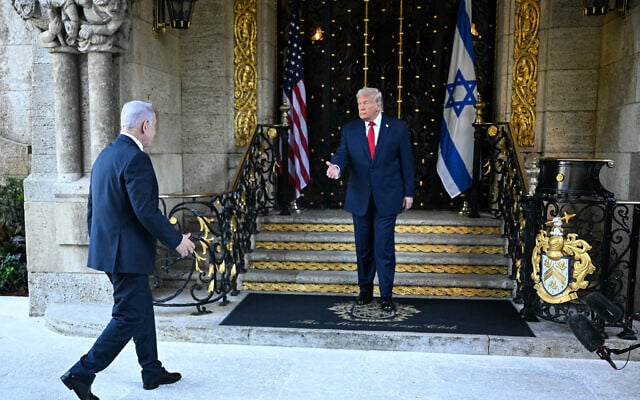
‘A hero’
A senior Israeli official who was present at the meeting told The Times of Israel that it was “the best” of the six they have held since Trump returned to office in January.
“Excellent meeting,” the official said.
That much seemed apparent from the two leaders even before they stepped into Mar-a-Lago for their discussions.
Trump, who looked clearly happy to be receiving Netanyahu, heaped praise on his guest, calling him a “hero.” The prime minister — who faces a difficult election campaign next year — basked in the adulation, as Trump told reporters that Netanyahu “has done a phenomenal job” and that “Israel, with other people, might not exist right now.”
Netanyahu must also have been thrilled to have the world’s most powerful figure, one who enjoys popularity in Israel across the political spectrum, double down on his call for the premier to be pardoned on corruption charges. “How can you not?” Trump said. “He’s a wartime prime minister who’s a hero. How do you not give a pardon?”
Trump even claimed that President Isaac Herzog had assured him that a pardon was on its way, though that was very quickly disputed by Herzog’s office.
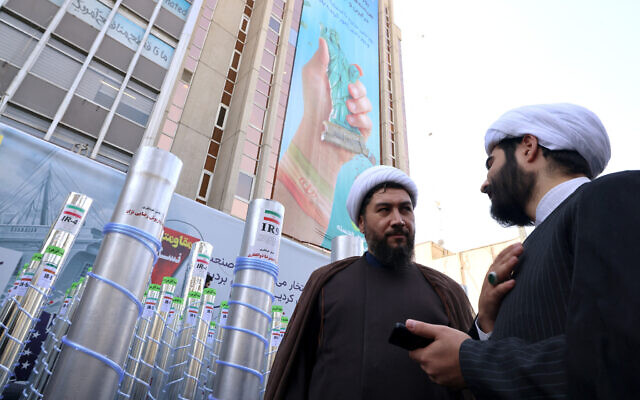
More importantly, Trump made it clear that he would back an Israeli attack on Iran if it tried rebuilding what was destroyed in the Israeli-US strikes in June.
“If [Iran] will continue with the missiles — yes. [And if they continue with] the [production of] nuclear [capabilities] — fast. One will be yes, absolutely. The other, we’ll do it immediately,” Trump said.
Alignment
The two also gave ample suggestions that the meeting itself went well as they addressed the press afterward. “There’s very little difference in what we’re looking at and where we want to be, where we want to go,” Trump stressed, refuting the earlier reports.
Trump explained that his ability to achieve “remarkable things in the Middle East” stems from working together with Netanyahu, which has been his guiding approach over the past year and seems to be the way he will operate moving forward.
“We’re with you, and we’ll continue to be with you,” Trump promised, in remarks that were certainly music to Netanyahu’s ears following his often problematic ties with former US president Joe Biden’s administration.
As for the reported disagreements over Hamas disarmament, Trump sought to dispel them as well. Hamas “will be given a very short period of time to disarm,” he underscored, or “there will be hell to pay for them.”
The two reportedly agreed that Hamas would be given a two-month deadline for disarming, and set down criteria for what disarming entails.
Trump also volunteered that he is “not concerned about anything Israel is doing” around his peace plan for Gaza, a statement that doubtless surprised many observers. “I’m concerned about what other people are doing or maybe aren’t doing.” Israel has “lived up to the plan,” he said. “They’re strong, they’re solid.”
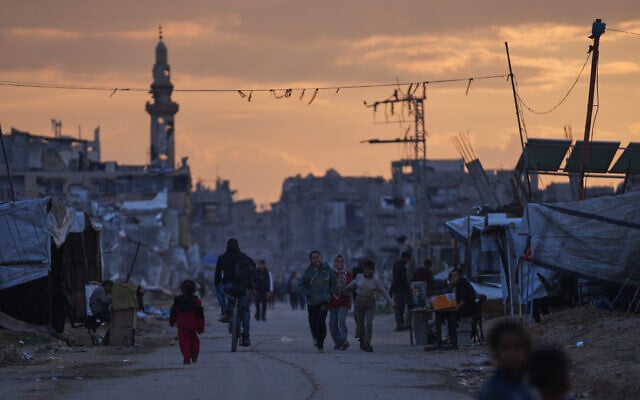
The president also did not close the door on the idea of massive emigration from Gaza. “Let’s see if that opportunity presents itself,” he said, arguing that more than half of Gazans would leave “if given the opportunity.”
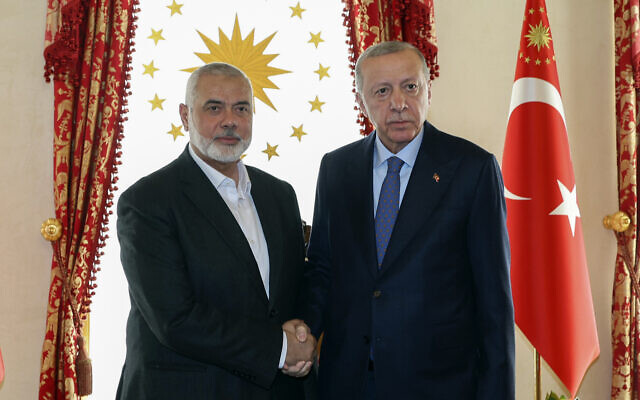
Despite the broad alignment between Netanyahu and Trump, however, the meeting did underscore several points of continued disagreement, with the US president praising both Syrian President Ahmed al-Sharaa and Turkish President Recep Tayyip Erdogan. He also dismissed Israeli concerns about the US selling F-35 fighter planes to Turkey, which under Erodgan has been a proud backer of Hamas and a leading critic of Israel.
Trump and his team also brought up concerns over Israeli policies in the West Bank, but it wasn’t done in an adversarial manner.
More practically, while Trump and Netanyahu are on the same page about their vision for Gaza, there is certainly no guarantee that Hamas will go along with it. Trump’s earlier threats that it would face “complete annihilation” if it clings to power in Gaza haven’t deterred the group from tightening its grip over the part of the Strip it controls.
Hamas knows that the US isn’t going to send troops to Gaza. It understands that no international force has any intention of risking combat against Hamas in order to disarm it, regardless of Trump’s claims that 59 countries “want to go in and wipe out Hamas.”

And if Gaza remains a bleeding sore, the chances of Saudi Arabia finally normalizing with Israel are slimmer than they would be if reconstruction were underway and Hamas sidelined.
Moreover, intensified Israeli strikes on Hezbollah and another round of attacks on Iran, even with Trump’s firm support, would not permanently solve those issues. As long as the Islamic Republic rules in Tehran, it will be working overtime to find new ways to threaten Israel and the pro-American alliance in the Middle East.
Plainly, Israel will continue to face complex security threats in the new year, and well beyond. Nonetheless, if Netanyahu and Trump can work amicably through their differences and coordinate closely, Israel’s ability to confront those threats effectively will be vastly improved. And that determination to work together was on full display at Mar a-Lago.



The Times of Israel Community.