

Trump: Regime change in Iran ‘would be the best thing that could happen’
US president confirms sending second aircraft carrier to Middle East in case ‘difficult’ Islamic Republic doesn’t make a deal, says ‘fear’ is only thing that will get Tehran to sign agreement
 Add ToI as a Preferred Source on Google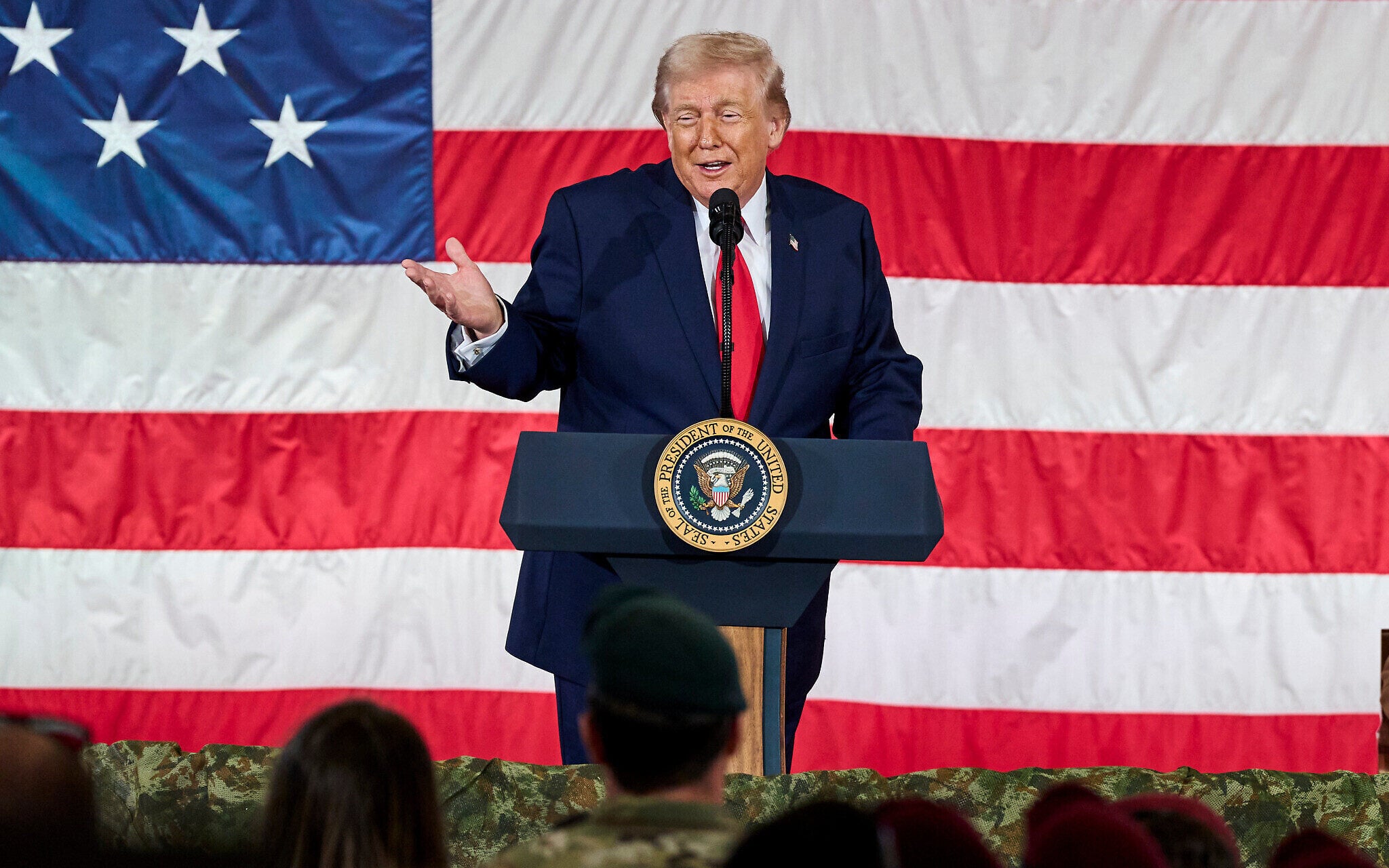
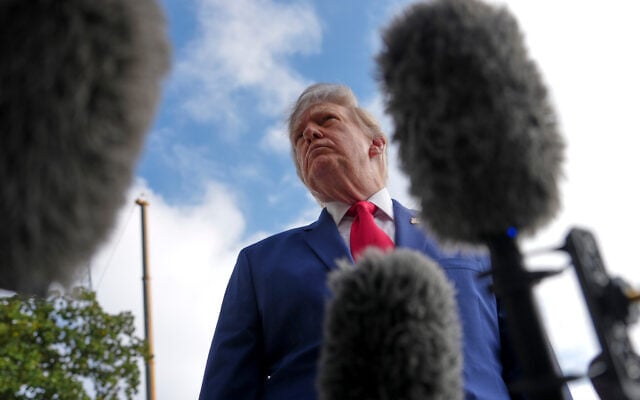
Asked Friday about potential regime change in Iran, US President Donald Trump said, “it seems like that would be the best thing that could happen,” as he confirmed sending a second aircraft carrier to the Middle East “in case we don’t make a deal” with the Islamic Republic.
“For 47 years, they’ve been talking and talking and talking,” Trump told reporters after visiting with troops at Fort Bragg, North Carolina, referring to Iran’s clerical rulers. “In the meantime, we’ve lost a lot of lives while they talk. Legs blown off, arms blown off, faces blown off. We’ve been going on for a long time.”
Pressed on who he would like to take over Iran, Trump declined to answer, but he added that “there are people.”
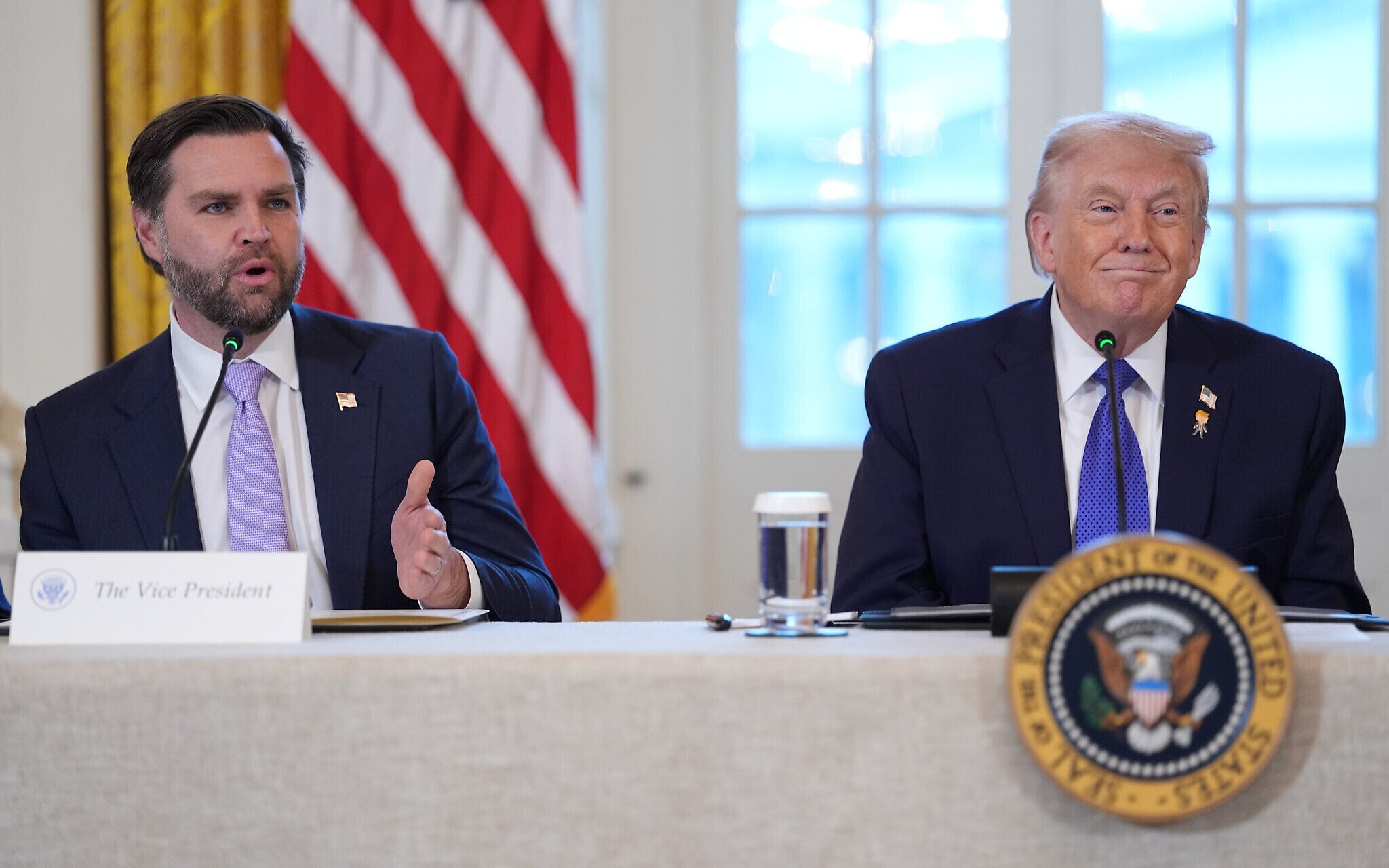
His comments appeared to contradict those made by US Vice President JD Vance, who indicated earlier this week that the administration was not pursuing regime change in Iran.
“If the Iranian people want to overthrow the regime, that’s up to the Iranian people,” Vance said, appearing to suggest that this was not the administration’s goal. What we’re focused on right now is the fact that Iran can’t have a nuclear weapon.”
The US had recently appeared to be open to the idea of regime change in Iran, with Trump calling on protesters to “take over” government institutions amid the mass protests there, and reportedly asking aides for a strike plan that could help spur the toppling of the government.
But then Washington entered negotiations with Iran, a second round of which will be held in Geneva next week, a source briefed on the matter told Reuters. Trump has repeatedly threatened Tehran with an attack if it doesn’t agree to a deal that sees the Islamic Republic give up its capabilities to produce a nuclear weapon, roll back its ballistic missile program, and cease its support for armed proxies in the region.
According to the source, a US delegation including envoys Steve Witkoff and Jared Kushner will meet with the Iranians on Tuesday morning, with representatives from Oman — which hosted the first round of talks — on hand to mediate the US-Iran contacts.
Witkoff and Kushner will then participate in separate trilateral talks with representatives from Russia and Ukraine in the afternoon, the source said.
‘Sometimes you have to have fear’
Before heading to Fort Bragg, Trump hit out Iran for being “difficult” in the nuclear talks.
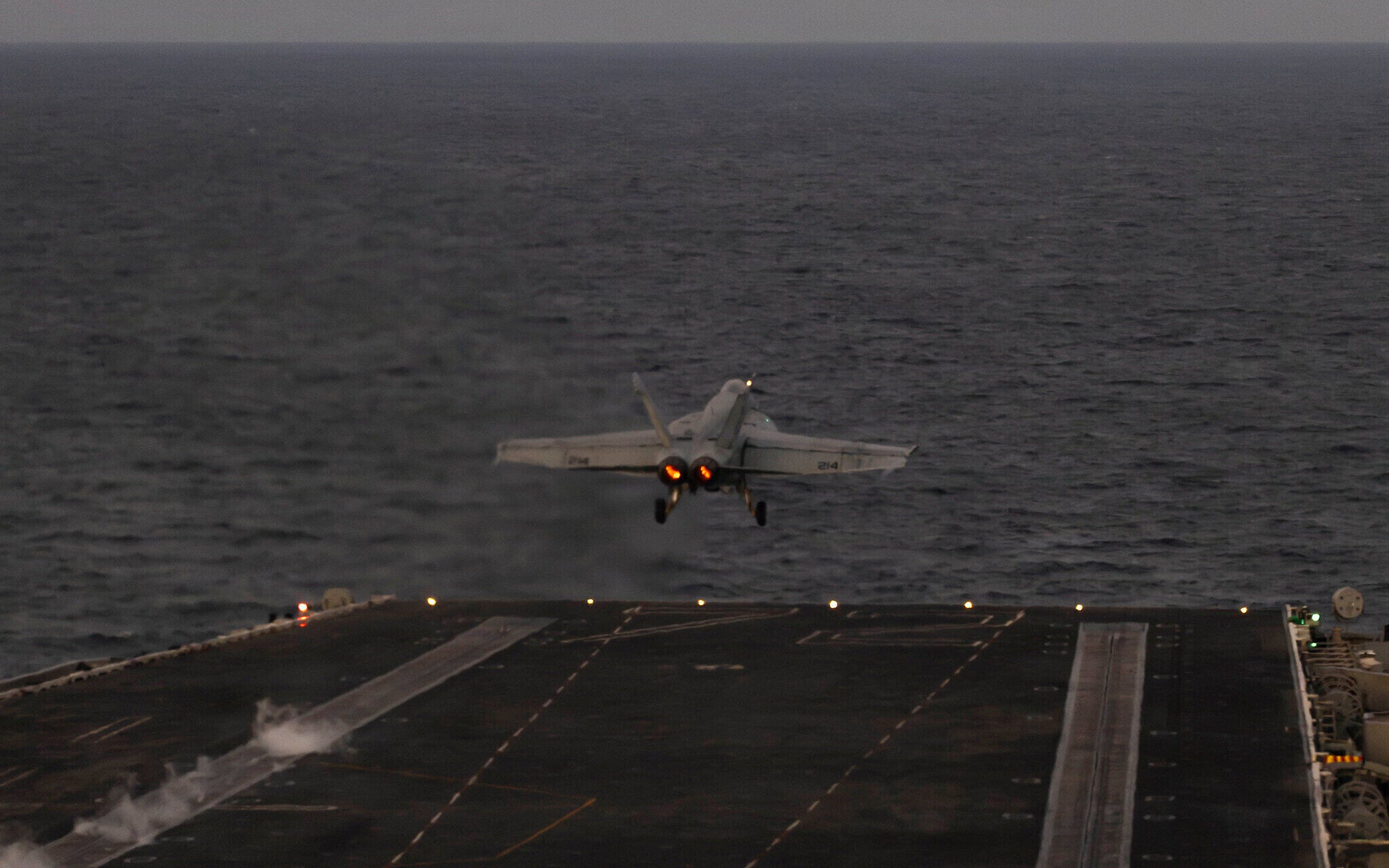
“If we don’t have a deal, we’ll need it; if we have a deal, we could cut it short — it’ll be leaving very soon,” said Trump of the USS Gerald R. Ford, the world’s largest aircraft carrier.
The Ford’s deployment was first reported by the New York Times on Thursday.
The aircraft carrier is currently en route from the Caribbean to join the USS Abraham Lincoln, which deployed in the Arabian Sea in January amid Trump’s threats to strike Iran if it did not stop its crackdown on anti-regime protests, where regime forces killed thousands of people.
Referring to the Lincoln, Trump told reporters outside the White House that “if we need it, we have it ready, a very big force.”
Later, speaking to troops at Fort Bragg, Trump said only fear would get Iran to sign a deal.
“We have a situation right now where we have sent a very big carrier group to Iran,” he said. “I would love to see if we could make a deal. They’ve been difficult to make a deal with.”
“I thought we would have had a deal last time. They wish they did,” said Trump, citing the US strike on Iran’s key nuclear sites on June 22, during the 12-day Israel-Iran war, which put an end to a previous round of US-Iran nuclear talks.
“Sometimes you have to have fear. That’s the only thing that really will get the situation taken care of,” he added.
#WATCH | US President Donald Trump says, "We have a situation right now where we have sent a very big carrier group to Iran. I would love to see if we could make a deal. They've been difficult to make a deal with. I thought we would have had a deal last time. They wish they did… pic.twitter.com/q0iBb9u14P
— ANI (@ANI) February 13, 2026
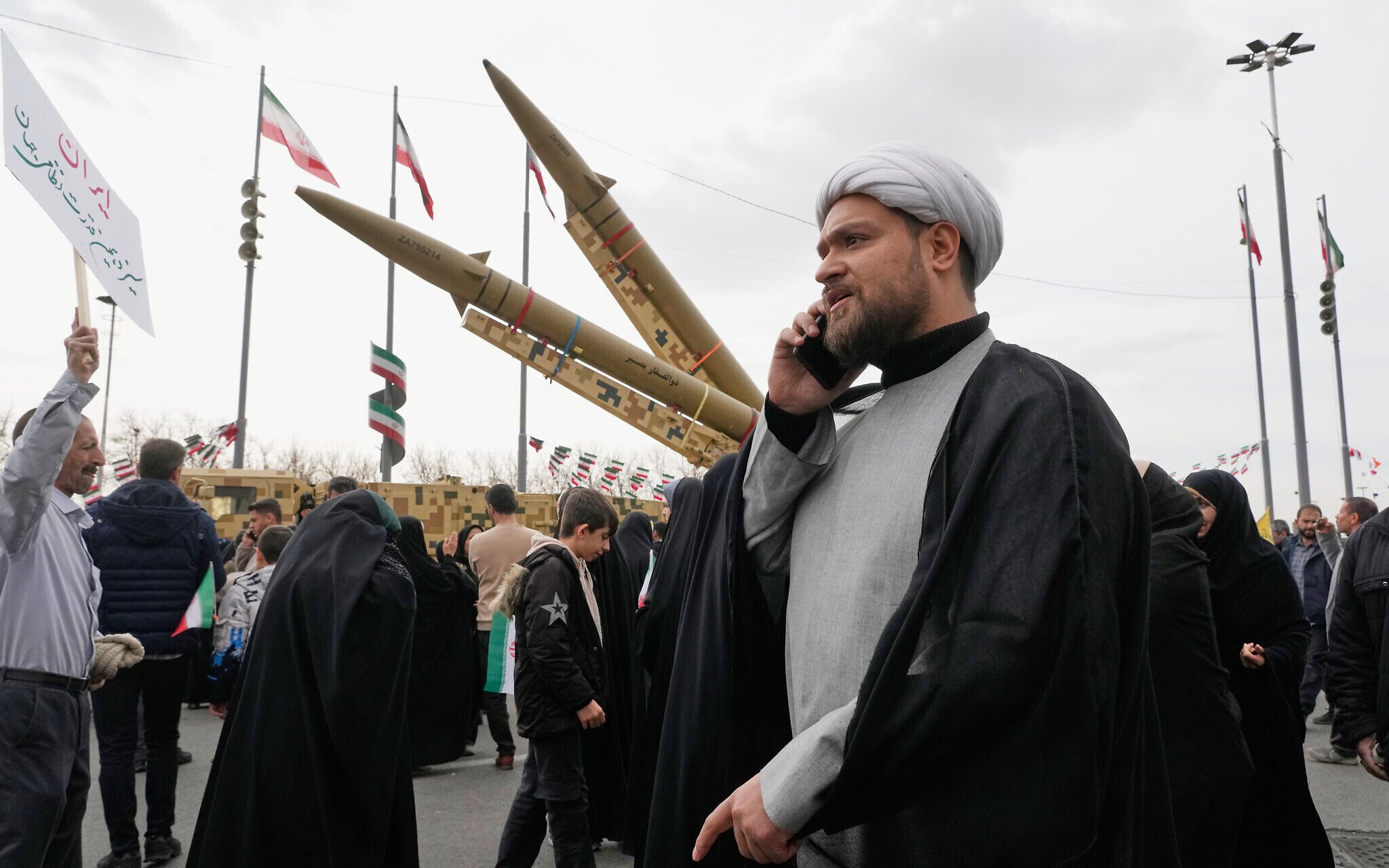
Iran, whose leaders are sworn to destroy Israel, denies seeking to acquire nuclear weapons, but has enriched uranium to levels that have no peaceful application, obstructed international inspectors from checking its nuclear facilities, and expanded its ballistic missile capabilities.
Rafael Grossi, head of the UN nuclear watchdog, Rafael Grossi, told the Munich Security Conference on Friday that reaching an accord with Iran on inspections of its processing facilities is possible but “terribly difficult.” He added that the agency’s inspectors had returned to Iran following the war, but have not been able to visit any of the sites that were targeted.
Oman facilitated the indirect US-Iran talks in its capital Muscat last week. A spokesperson for Iran’s foreign ministry said the talks let Tehran gauge Washington’s seriousness, and showed enough consensus for diplomacy to continue. The date and venue of the next round of US-Iran talks have yet to be announced.
The Islamic Republic has refused US demands to expand the scope of the negotiations to include the Islamic Republic’s ballistic missile program and support for regional proxy forces. Trump has repeatedly threatened to attack Iran if it doesn’t agree to a deal that encompasses all three issues.
Prime Minister Benjamin Netanyahu, returning from a meeting with Trump at the White House, on Thursday said any agreement with Iran must cover “not only the nuclear issue, but also ballistic missiles and Iran’s regional proxies.”
The premier expressed “general skepticism about the possibility of reaching any agreement with Iran,” but said Trump believes the Iranians could be forced into “a good deal.”
Commenting on the meeting with Netanyahu, Trump told reporters on Thursday: “We have to make a deal, otherwise it’s going to be very traumatic, very traumatic.”
Agencies contributed to this report.




The Times of Israel Community.