

US Jewish group publishes ‘Shofar Report,’ a liberal alternative to Trump’s antisemitism strategy
Group says ‘Project Esther’ and administration’s crackdown on antisemitism on campuses ‘weaponize’ anti-Jewish activity to advance US president’s wider agenda against universities
 Add ToI as a Preferred Source on Google
JTA — A group of Jewish leaders are fed up with right-wing efforts to combat antisemitism. So they created their own strategy.
The Shofar Report, released this week by the liberal-leaning Jewish group Nexus Project, is a new guide to fighting antisemitism that its authors say is intended to curb the strategies of the administration of US President Donald Trump.
The new report was written explicitly as a rebuttal to Project Esther, a 2024 blueprint against antisemitism written by the conservative Heritage Foundation that outlined many policies now undertaken by the Trump administration, particularly on campuses.
“Project Esther was not a strategy for fighting antisemitism,” Jonathan Jacoby, the Nexus Project’s president, told the Jewish Telegraphic Agency in an interview. “Project Esther is the Heritage Foundation’s tool for implementing Project 2025” — referring to a now-infamous policy blueprint for a second Trump term.
What Trump and his supporters are actually doing, Jacoby said, is “weaponizing antisemitism.” Conversely, he said, that is bad for the Jews: “Weaponizing antisemitism breeds antisemitism. Weaponizing antisemitism undermines efforts to confront antisemitism.”
In response, the Shofar Report — released during the High Holidays in an effort to mimic a shofar blast as a wake-up call to Jews — calls for policymakers to wind back the clock.
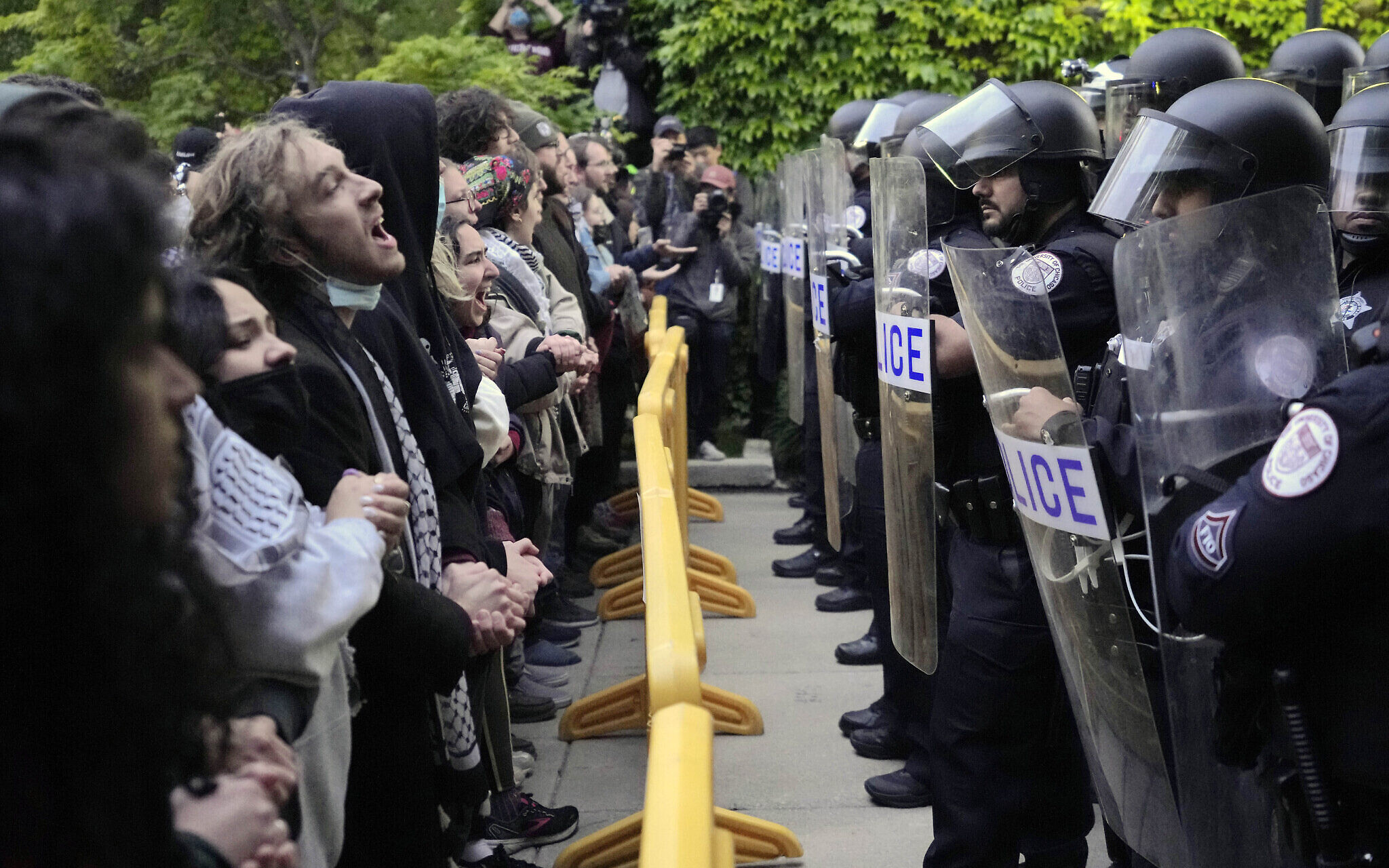
Many of its own recommendations for fighting antisemitism involve undoing Trump’s handiwork, along with some new proposals. Slashing university funding, arresting and deporting student protesters, blocking student visas and tying synagogue security funding to immigration enforcement are all steps the new report says must be reversed to fight antisemitism properly.

Its central message: that fighting antisemitism requires fighting for democratic institutions and embracing traditional liberal coalition-building. Universities, civil rights law, and immigration rights all must be protected in order to safeguard Jews within a liberal democracy, the authors argue.
That could prove a challenge, as many Jews have felt scorned by a lack of support from such coalitions and institutions after the Hamas onslaught of October 7, 2023, which sparked the war in Gaza. Some of the more combative Jewish groups, such as Betar US and Canary Mission, not only support Trump’s policies but are actively aiding them by naming pro-Palestinian protesters for the administration to target.
Jacoby acknowledged that Jewish appetites for coalition-building are lower now. But, he insisted, “Those coalitions are what we need to be strong in order to fight antisemitism.”
“Jewish safety is of utmost importance and must be protected,” he said. “There’s no substitute for that. We need to build on that, and understand how we can create an infrastructure, a civil and community infrastructure, that supports that, and that complements that. And that’s where coalitions come in, and that’s where institutions come in, and that’s where education comes in.”

The report’s authors speak highly of the previous, Democratic White House’s own, now-abandoned plan for countering antisemitism after the October 7 onslaught. That plan had identified the problem in terms of civil rights. The Shofar Report’s authors seek a return to what Jacoby called a “precedent for listening to Jewish voices about this” after the publication of Project Esther, the majority of whose contributors were not Jewish.
Contributors to the Shofar Report include Amy Spitalnick, head of the Jewish Council for Public Affairs; Jeremy Ben-Ami, CEO of the liberal Zionist organization J Street; UCLA Israel studies professor Dov Waxman; New Israel Fund president David N. Myers; Temple University scholar of Jewish History Lila Corwin Berman; Hannah Rosenthal, who served under former US President Barack Obama as envoy for combatting antisemitism; and journalist Emily Tamkin, author of the book “Bad Jews” about the history of American Jewry.
Among the report’s recommendations is a push for rollbacks on Trump’s antisemitism policies. The report calls for education funding, student visas and civil rights enforcement to be restored; for the administration to stop accusing nonprofits and NGOs of supporting terror; and for nonprofit security grants, which fund synagogue security plans, to not be “beholden to an administration’s ideological whims on issues like diversity or immigration.”
In this respect, the Shofar Report is following what appears to be the majority of American Jewish opinion. According to recent polling by Ipsos, the University of California, Berkeley and the University of Rochester, 72% of American Jews believe Trump is using antisemitism as an “excuse” to punish universities, and two-thirds don’t believe antisemitism justifies cutting university funding.
“As Jewish Americans struggle with hatred, even alienation from the Israeli state, they discover a slippery president who exploits a true danger,” that report’s authors, James Druckman and Bruce Fuller, wrote in an op-ed this week for the Chicago Tribune. “Trump erodes the very institutions that have long provided safety, learning and upward mobility for Jewish families — all the while claiming that he’s protecting Jews.”
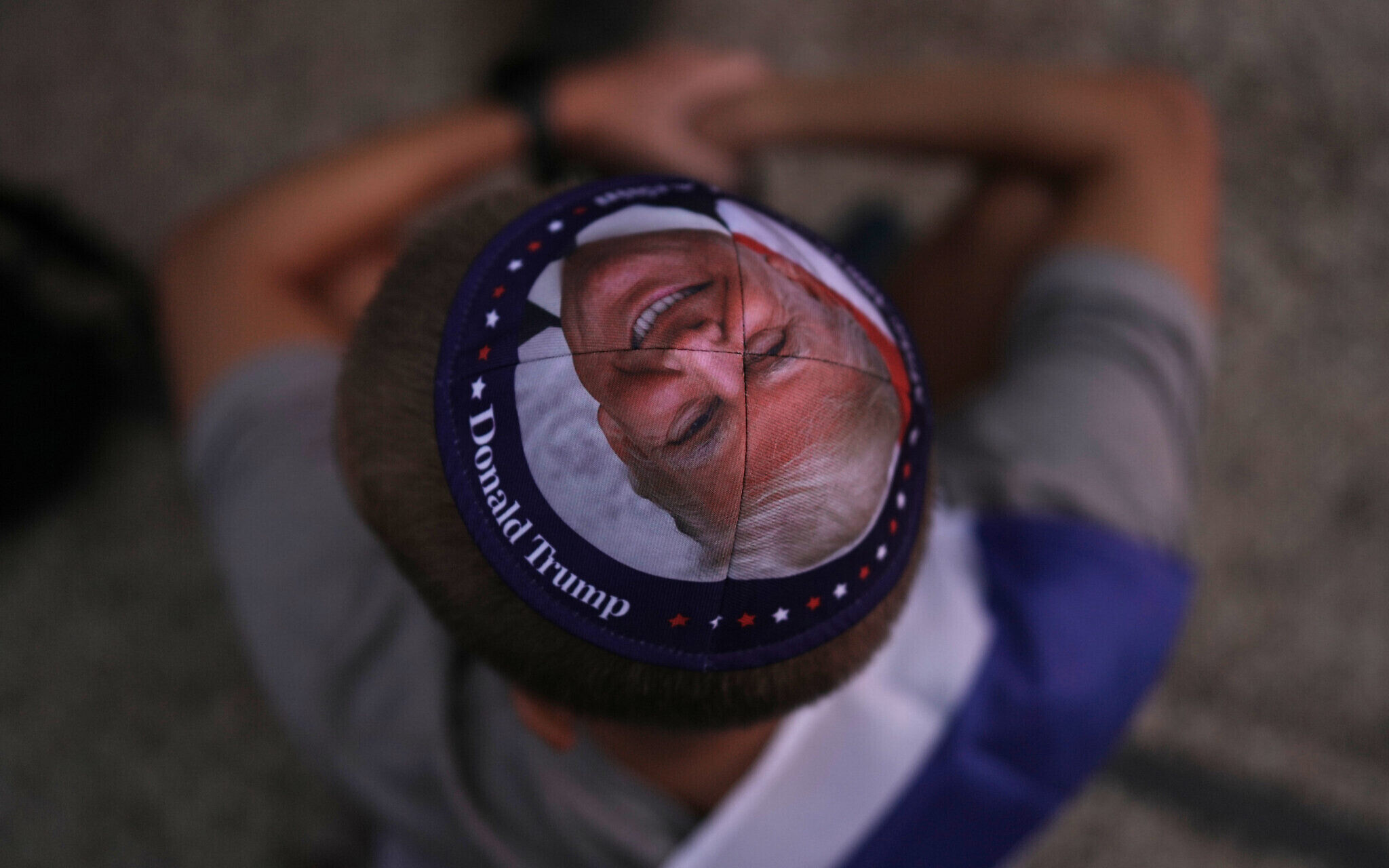
Not all of the Shofar recommendations are critical of Trump. An essay by Waxman and Ben-Ami backs the president’s 20-point plan to secure Gaza, dismantle Hamas and extend its ceasefire with Israel, and also urges the administration to end “blank-check” US funding for Israel and to stop supporting far-right parties around the world. That, too, is in keeping with what some Jewish leaders who are critical of Trump have said about his Gaza plan in recent days.
The report’s authors also push for ideas such as media literacy programs, Holocaust and Jewish history education, “off-ramp” programs to help people leave extremist movements, and combatting disinformation — particularly the QAnon and Great Replacement conspiracy theories — with the aid of social media companies.
Though light on specifics, Jacoby said the report would ideally lead to a broader effort from Jewish groups and institutions to articulate new visions for fighting antisemitism while upholding liberal democracies. He was encouraged, he said, by recent signs of Jewish pushback to Trump, including Jewish presidents of top universities rejecting a federal funding “compact” that critics said would have compromised academic freedom in order to restore grants pulled over purported antisemitism concerns.
He further predicted that the FBI’s recent severing of longstanding ties with the Anti-Defamation League would also galvanize the Jewish community: “I think that American Jews see the danger in these kinds of policies.”
There remains the question of how much influence such a report can have. As long as Trump and Republicans remain in power, the Shofar Report’s recommendations and persuasions will be swimming directly against today’s political currents. Jacoby lamented that properly dealing with antisemitism was not “a bipartisan issue,” but remains optimistic “that it will become one.”
“I would say there’s more work to be done,” he said. “Each of these recommendations needs to be translated into more concrete and more specific ideas for action, and our hope is that they will be over the coming year, and actually over the coming years as the political landscape shifts.”
He added, “I think this is the beginning. I think we need to take more steps to make this more concrete. And we will, and so will other organizations. … I think we are a guiding force.”










The Times of Israel Community.