

Druze mob’s rash attack may have doomed Syrian cousins
Killing of Syrian in Golan may inflame jihadi extremists and weaken Jewish Israelis’ concern for minority across border

 Add ToI as a Preferred Source on Google
Avi Issacharoff, The Times of Israel's Middle East analyst, fills the same role for Walla, the leading portal in Israel. He is also a guest commentator on many different radio shows and current affairs programs on television. Until 2012, he was a reporter and commentator on Arab affairs for the Haaretz newspaper. He also lectures on modern Palestinian history at Tel Aviv University, and is currently writing a script for an action-drama series for the Israeli satellite Television "YES." Born in Jerusalem, he graduated cum laude from Ben Gurion University with a B.A. in Middle Eastern studies and then earned his M.A. from Tel Aviv University on the same subject, also cum laude. A fluent Arabic speaker, Avi was the Middle East Affairs correspondent for Israeli Public Radio covering the Israeli-Palestinian conflict, the war in Iraq and the Arab countries between the years 2003-2006. Avi directed and edited short documentary films on Israeli television programs dealing with the Middle East. In 2002 he won the "best reporter" award for the "Israel Radio” for his coverage of the second intifada. In 2004, together with Amos Harel, he wrote "The Seventh War - How we won and why we lost the war with the Palestinians." A year later the book won an award from the Institute for Strategic Studies for containing the best research on security affairs in Israel. In 2008, Issacharoff and Harel published their second book, entitled "34 Days - The Story of the Second Lebanon War," which won the same prize.
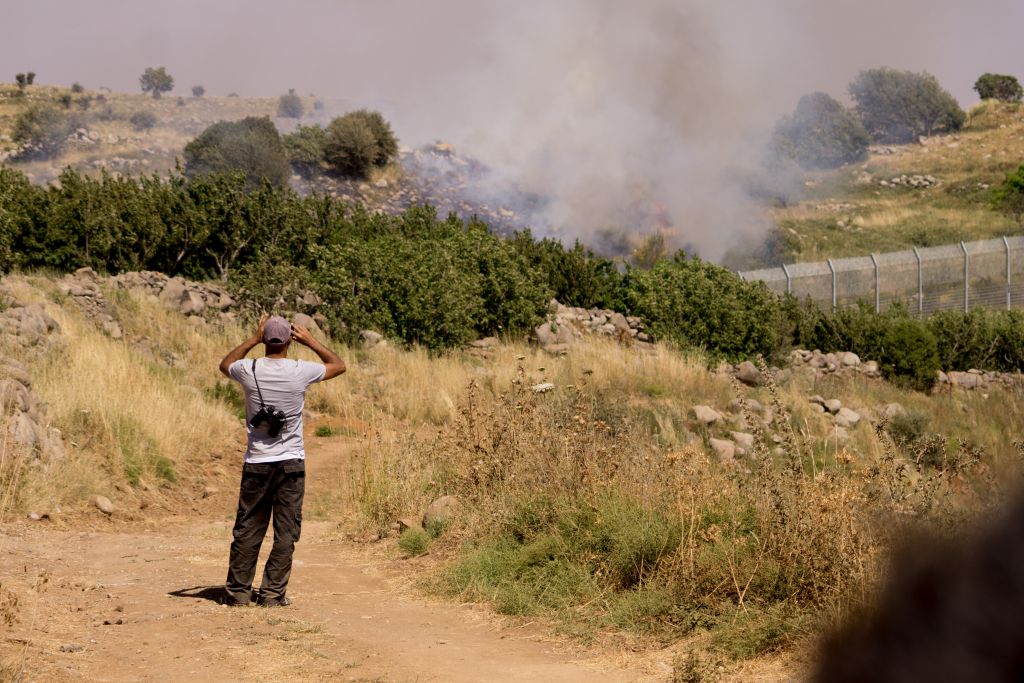
The brutes who lynched a wounded Syrian in cold blood near the northern Israeli village of Majdal Shams on Monday night almost certainly shot their Druze brothers across the border in the foot.
Not only did the perpetrators of the act severely tarnish the image of the Druze community and weaken Jewish Israelis’ feeling of concern for members of the persecuted minority in Syria, the lynchers also likely offered Sunni extremists in the war-torn region an excuse to avenge the killing of a man who was, at least according to the Druze and the Syrian regime, a fellow Sunni fighter.
Thus the same Druze men and women in the Golan Heights and in the rest of the country who have in recent days attempted to mobilize Israeli officials to take action in order to rescue the Syrian Druze from the impending disaster and revenge killings by jihadists may have ended up encouraging the extremists to go off on their own murder sprees, thus signing a death warrant for their cousins in the Syrian Druze village of Hader.
The Syrian regime’s response to the lynching certainly won’t help either. Official publications issued by supporters of President Bashar Assad praised the mob of Golan Heights Druze residents and described their assault on the injured Syrian as “heroic.”
It seems that regime authorities are working overtime to produce a violent reaction on the part of the Druze in Israel and the Golan Heights on the one hand, and the radical Sunni opposition in Syria on the other.
But it was various sources within the Druze community in Israel that played a role in spreading false information about occurrences on the other side of the border, apparently in order to portray the community in Syria as on the brink of imminent catastrophe.
The Druze in Syria and Israel certainly have many reasons to feel concerned, particularly after the massacre perpetrated by members of the al-Nusra Front in a small village in the northern Idlib province last week. Yet the community members in the Druze areas of southern Syria are not under attack or in immediate danger of annihilation.

Futhermore the village of Hader, which has dominated headlines in recent days due to the fear it will be attacked by the al-Nusra Front, is far from being a part of the famous blood covenant between Jews and Druze in Israel.
Residents of Hader have chosen to remain loyal to the Assad regime. The village has become a stronghold of Assad supporters and hosted senior Hezbollah members operating in the area on more than one occasion. Several attacks against IDF forces in the last year and a half originated in the village as well.
A postscript regarding the disinformation spreading within the Druze community in Israel: The mob which attacked the Israeli ambulance operated under the assumption that the vehicle was transferring al-Nusra Front members to Israel for treatment.
Israel claimed that they were civilians, and the army says it does treat members of al-Nusra or other jihadi groups, though it admits it is impossible to fully screen everyone who comes seeking help.
For over two years Israel has been treating wounded Syrians, but the identity of these patients is shrouded in mystery. Israel preferred to maintain a fog of war and lack of clarity over the relationship with opposition forces in Syria, on the assumption that if the individuals were exposed fellow members of the opposition would suffer and cooperation between the parties would be damaged.
But in recent months, numerous conflicting reports have been published on the nature of this sensitive relationship, and the relationship between Israel and opposition forces has been cast in an unfavorable light. It might now be time for the Israeli government to clarify who on earth these wounded Syrians are, and how and why they are transported for treatment into the country.






The Times of Israel Community.