

As evictions resume in East Jerusalem’s Silwan, residents fear their homes will be next
Rights groups warn of more removals in coming weeks after two families booted from homes, amid decades-long legal struggle for control over neighborhood
 Add ToI as a Preferred Source on Google
Palestinian residents of Silwan are on edge after authorities evicted two families from their homes in the East Jerusalem neighborhood at the start of the week — the latest development in a charged, decades-long legal battle over the neighborhood.
Early Sunday morning, large police and Border Police forces closed off the neighborhood’s Batn al-Hawa area and booted the Shweiki and Odeh families from their homes of several decades, following an eviction order issued by the Jerusalem District Court. Jewish families swiftly moved in.
Zuheir Rajabi, a neighbor of the Shweiki family who witnessed the eviction from his balcony overlooking their house, said officers closed roads leading in and out of the neighborhood and forbade residents to leave their homes.
The evicted families, 14 people in total, were caught off guard by police’s arrival, believing they had until Wednesday to pack up and leave, as set out in the court order. They were the first to be evicted from Silwan since December 2024.
Police told residents that they had asked the court to move up the eviction date to Sunday, and were granted their request, Rajabi said. They declined to notify the families ahead of time. Police did not respond for a request for comment on those claims.
“They come to the mother, a 72-year-old, and tell her that she has one hour to take her stuff and leave. To where will she leave?” Rajabi said of the family’s matriarch, Asmahan Shweiki. “She collapsed, the poor thing. She fell down and an ambulance had to come to pick her up.”
לכל מי שמברך על ההישג של עטרת כהנים, קחו, כדי שהשמחה שלכם תהיה שלמה ומלאה. pic.twitter.com/doqkwqVXdv
— نير حسون Nir Hasson ניר חסון (@nirhasson) November 9, 2025
The woman’s three children arrived at her home in order to console her, but police beat them, removed them from the area and arrested her grandson, Muhammad Shweiki, Rajabi claimed.
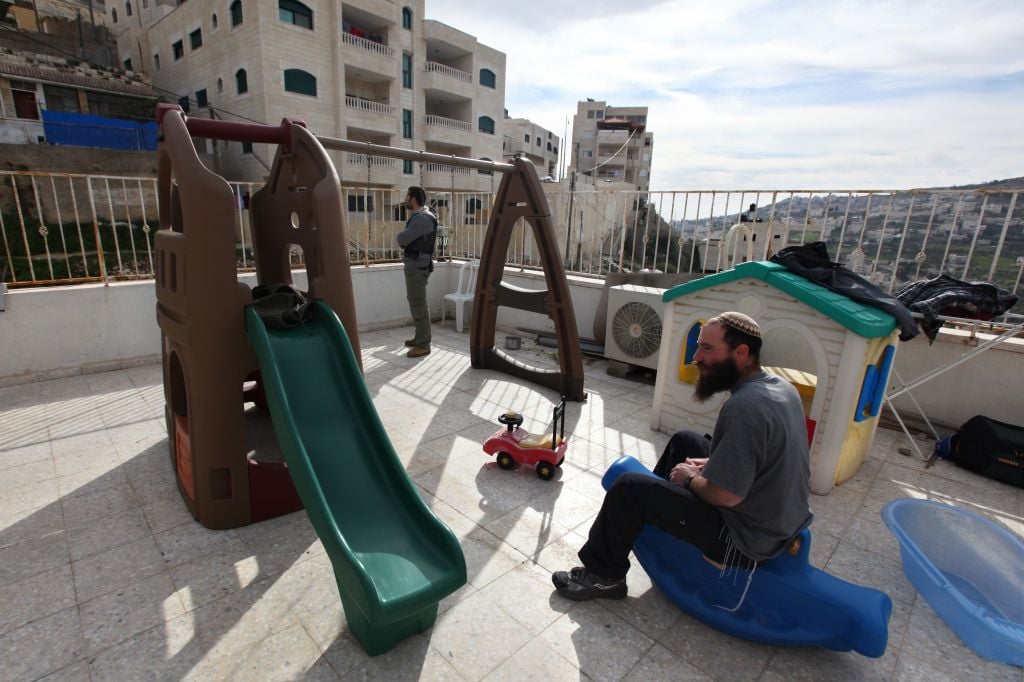
Jewish families moved into the emptied houses the same morning, he said, and soon hoisted Israeli flags from the roofs. Over the past couple of days, the new residents have been installing security cameras on the property.
Footage from the scene showed around a dozen men in neon orange work vests hauling furniture and other belongings out of the house. In another clip, police could be seen gathering on a narrow road near a row of homes as neighbors peeked out their windows to witness the spectacle.
פועלים מפנים משפחות פלסטיניות מהכפר סילוואן, היום pic.twitter.com/z1RwkoAE0N
— הארץ חדשות (@haaretznewsvid) November 9, 2025
“They started to take their [the families’] belongings down from the house and dumped them on the road,” Rajabi said. “After it ended, the police came and gave them a fine, because their belongings were on the road.”
Ateret Cohanim and the ‘Yemenite village’
The evictions are part of an ongoing struggle between Palestinian residents of Silwan and Jewish Israelis attempting to lay claim to the homes they live in. The disputes arose based on a law providing for the reclamation of property in East Jerusalem that was Jewish-owned prior to 1948.
The lawsuits mirror those of Sheikh Jarrah, another East Jerusalem neighborhood that saw Palestinians protest against evictions and a subsequent harsh police response. The dispute sparked international outcry and is viewed as one of several catalysts for the 2021 war with Hamas.
Several Jewish enclaves now exist within the mostly Arab neighborhood of Silwan, in what residents claim is part of a government-backed effort to dispossess them. Israel maintains that East Jerusalem is an integral part of its undivided capital, and that the Jews moving into neighborhoods there do so legally.
The claimants in the Silwan lawsuits are backed by Ateret Cohanim, a right-wing foundation that works to strengthen the Jewish presence in East Jerusalem. The group characterizes itself as the forefront of “Jewish land reclamation” in the city.
Prior to Israel’s independence, the land that Batn al-Hawa stands on used to be home to Yemenite Jewish immigrants housed there by the Benvenisti Endowment, a trust dating back to the late 19th century, when Jerusalem was under Ottoman rule.
The so-called Yemenite Village lasted until the Arab revolt that took place from 1936 to 1939, when it was demolished by British officials who grew weary of defending Jewish residents. The land remained in the endowment’s hands until the end of the British Mandate. It passed into Jordanian hands in 1948 when the kingdom began occupying East Jerusalem and leased many properties to Palestinian families.
Israel took control of the lands when it annexed the city’s eastern half after the 1967 Six Day War. Three years later, the Knesset passed a law stipulating that former owners would be able to reclaim their lands lost during Israel’s war of independence.
Rights groups frequently allege that the law enforces a double standard, since Palestinians are unable to claim lands their families lost in West Jerusalem following the war.
Evictions began more recently, after Ateret Cohanim obtained trusteeship over the Benvenisti Endowment in the early 2000s.
Rights groups say the foundation lacks any connection to the original owners of the land, but Ateret Cohanim has nevertheless filed dozens of lawsuits in the Benvenisti Endowment’s name, characterizing Palestinian residents as “illegal squatters” on the trust’s lands.
Ateret Cohanim did not respond to a request for comment.
‘A whole neighborhood’ at risk of eviction
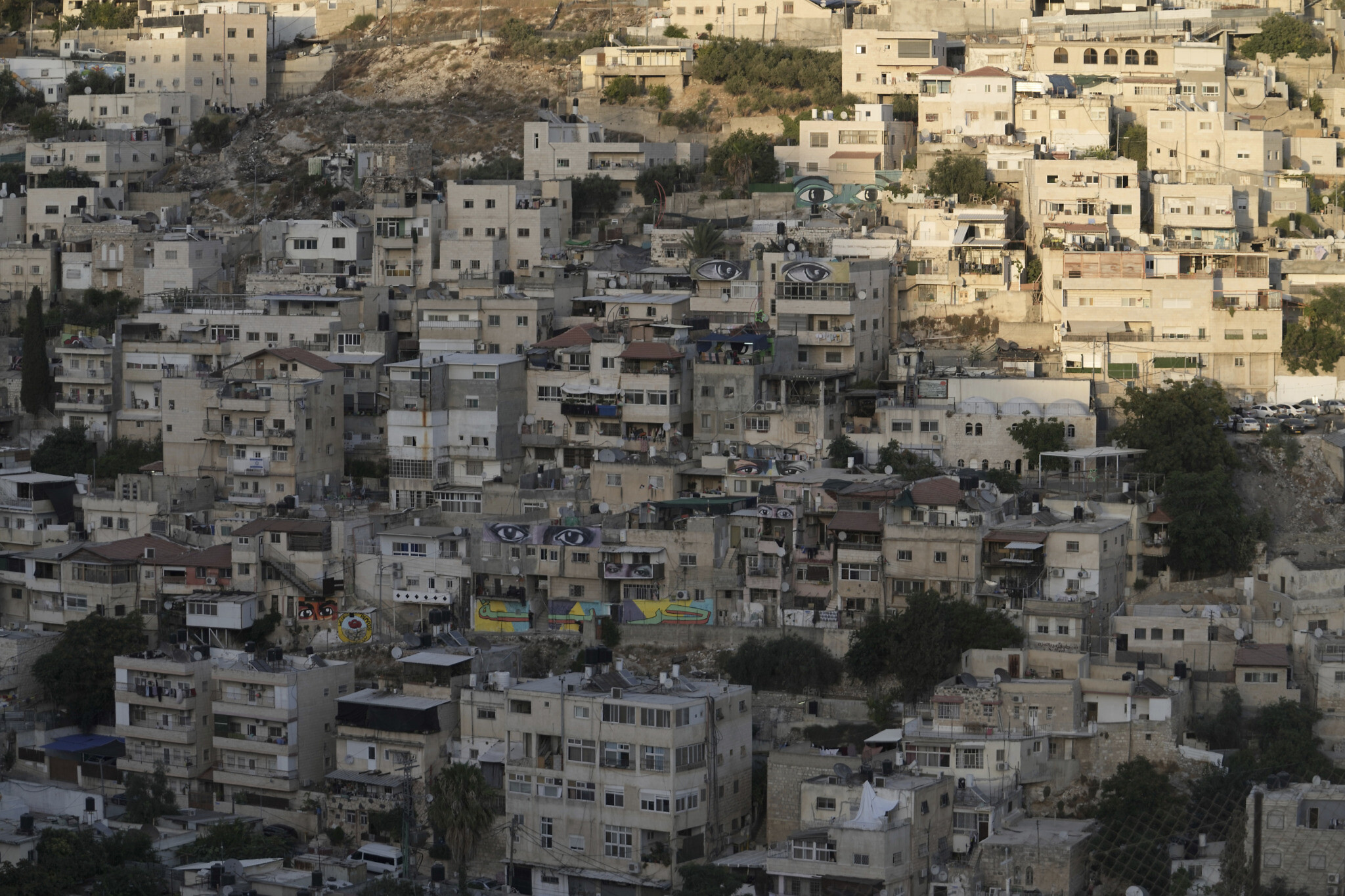
Aviv Tatarsky, a researcher for Ir Amim, a group that advocates for Palestinian Jerusalemites, warned that Sunday’s evictions “signal the possibility of a new, much bigger wave of evictions in the coming weeks.”
He said the evictions are “a completely political issue” and that Israel’s legal system effectively denies Palestinians proper housing rights.
“There are 70 to 80 more families under threat of eviction in Batn al-Hawa… The eviction yesterday is not a story of just one or two families, it’s a whole neighborhood,” he said.
According to Ir Amim, nine families have been evicted from their homes since the outbreak of the war in Gaza that began with the Hamas-led October 7, 2023, attack.
The same morning that the Shweiki and Odeh families were forced to clear out, police delivered eviction orders to three other households belonging to a branch of the Rajabi family. The orders are set to take effect in 21 days. The families tried to appeal the District Court decision to the Supreme Court, but the petition was rejected.
Days earlier, the Supreme Court dismissed a similar appeal by the Abd Al-Fatah Rajabi family, paving the way for another pending eviction.
Zuheir Rajabi is also facing eviction in a separate lawsuit, and is slated to submit an appeal to the Supreme Court on Sunday next week with five other households, numbering some 230 people in 26 families.
He worries that his petition won’t succeed, however, and noted the rejections other families have received in recent months. “It’s never-ending chaos. I don’t even know who we should be turning to,” he said.









The Times of Israel Community.