

Cannes wrap-up: Few Jews, but some anti-Semitism on the silver screen
At France’s prestigious film festival, only a Chosen few make the final cut; a Spike Lee joint features an undercover Jewish cop; and Han Solo stays in the Tribe
 Add ToI as a Preferred Source on Google
Jordan Hoffman, a member of the New York Film Critics Circle, is The Times of Israel's long-time film reviewer and the co-host of The Reel Schmooze.
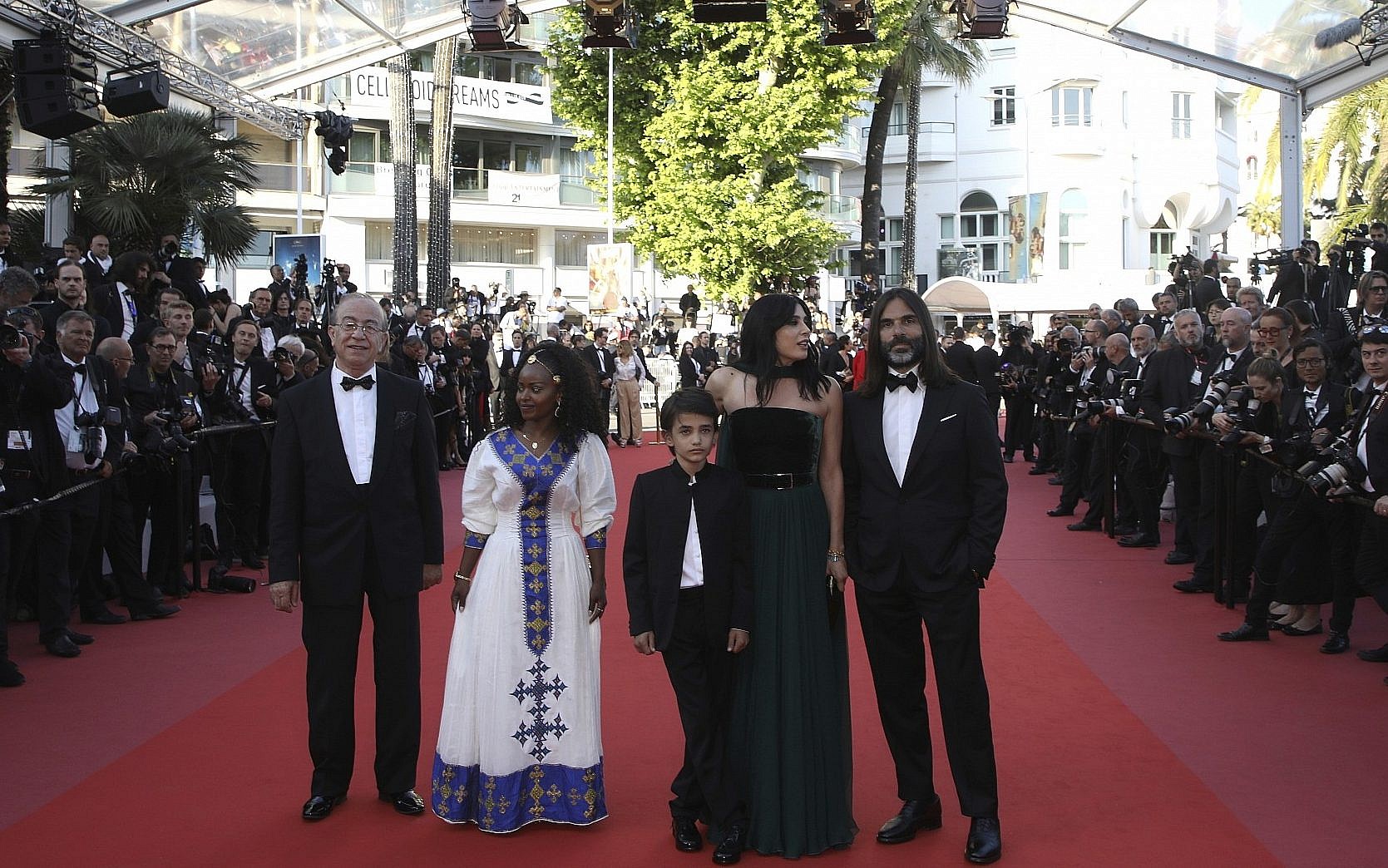
CANNES, France — Once I landed in Cannes and stuffed my face with a brioche au sucre the likes of which you just can’t get in New York, I headed down to the elegantly named Palais des Festivals et des Congrès.
Collecting my film critic’s badge and swanky satchel overstuffed with glamorous glossy magazines, I embraced my assembled colleagues from around the globe. There was also a short, quiet exchange I shared with those whom I shared a more tribal bond. “There are no Jewish films here this year,” we noticed.
Only one Jewish director, nothing from Israel (“the Israelis have gone mad making TV,” someone suggested) and very few Jewish actors or actresses. Between the competition films and the numerous sidebars, something like 90 films are screened, and that the Chosen People came up a big goose egg is unprecedented — at least in the six years I’ve been coming to the most prestigious film festival in the world.
There was, however, a twist ending. “BlacKkKlansman,” directed by African-American auteur Spike Lee, apart from being a tremendously emotional and engaging yarn, is essentially “half-Jewish.” (Maybe 47% Jewish, some friends and I concluded afterwards.)
It concerns the very real story of a black Colorado Springs rookie detective in the early 1970s who, powered only by his own chutzpah, ends up infiltrating the Ku Klux Klan. He does this via the telephone, so when it comes time to meet, he’s going to need a “face.” That’s where his colleague Flip, played by Adam Driver, comes in.
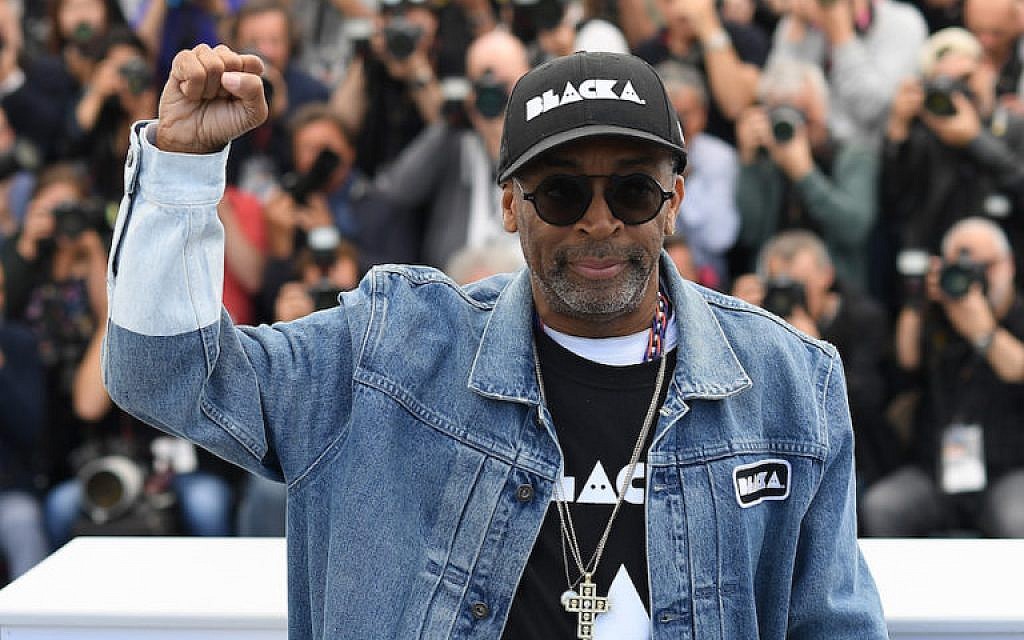
Flip is Jewish, even though Adam Driver is not. This actually works well, because Flip is the type of guy to whom people say “oh, I didn’t know you were Jewish” when they learn that he is. “You’re passing,” our lead character Ron Stallworth (played by John David Washington, son of Denzel) says of Flip, and at first he shrugs it off. As they pair go further undercover, and Flip realizes the depth of anti-Semitism that lives all around him, he begins to think of things like “tradition” in ways he’s never done before.
“BlacKkKlansman” is an entertaining police story (and has a great circumcision joke) but it’s also a panacea for Black-Jewish relations. Ron and Flip are a dynamic duo battling hate, and maybe is a good reminder to both minority groups about how much we have in common with one another.
Jewish stars
As I say, Adam Driver isn’t Jewish. But Alden Ehrenreich is, and the fast-paced, energetic “Solo: A Star Wars Story” had its international debut here on the Côte D’Azur. I tell you, it was great to see Chewbacca walk up the red carpet.
Ehrenreich had enormous shoes to fill, playing a role initiated by the legendary Harrison Ford, but, by and large, the kid did all right. The movie itself is a bit thin, but coming off the extremely dark and heavy “The Last Jedi,” this may not be such a bad thing. Disney will be feeding us “Star Wars” movies every year until long after we’re all dead, so it’s not such a big deal if some of them are a little frothy.

The former Spider-Man, Andrew Garfield (original family name: Garfinkel) was also at Cannes, with a movie a lot of people didn’t like called “Under the Silver Lake.” I’m in the minority, but I think this rambling, paranoid, Los Angeles-based comedy is actually a rather astute commentary on aimless male 30-somethings who vaguely aspire to some sort of celebrityhood, but don’t have anything substantial to offer. (Some take issue with the fact that it wanders around aimlessly for close to two-and-a-half-hours, but I say this is part of its charm!)
Garfield plays against type: a not-very-likable schlep who always looks like he just got out of bed, speaks in half-sentences and, worst of all, lies to his mother! He believes he is close to uncovering a major conspiracy, if he can just decode the hidden messages that, as he goes more and more insane, he’s convinced are all around him.
You mad, bro?
Two very talented directors who have made a hobby of flirting with anti-Semitism had films at Cannes this year. Legendary Franco-Swiss director Jean-Luc Godard, age 87, brought another of his inscrutable cures for insomnia, an essay film called “The Image Book,” in which blurry, washed-out video clips play as he croaks baffling thick blocks of text on the soundtrack.
Godard made some outstanding movies in the 1960s, so no one wants to be a philistine and say anything negative about his new ones, which are more art installations than what anyone would consider “a movie.”
But in between naps I did catch a few sequences of ISIS videos and Godard lamenting that the West has failed to understand the plight of Arab oppression.
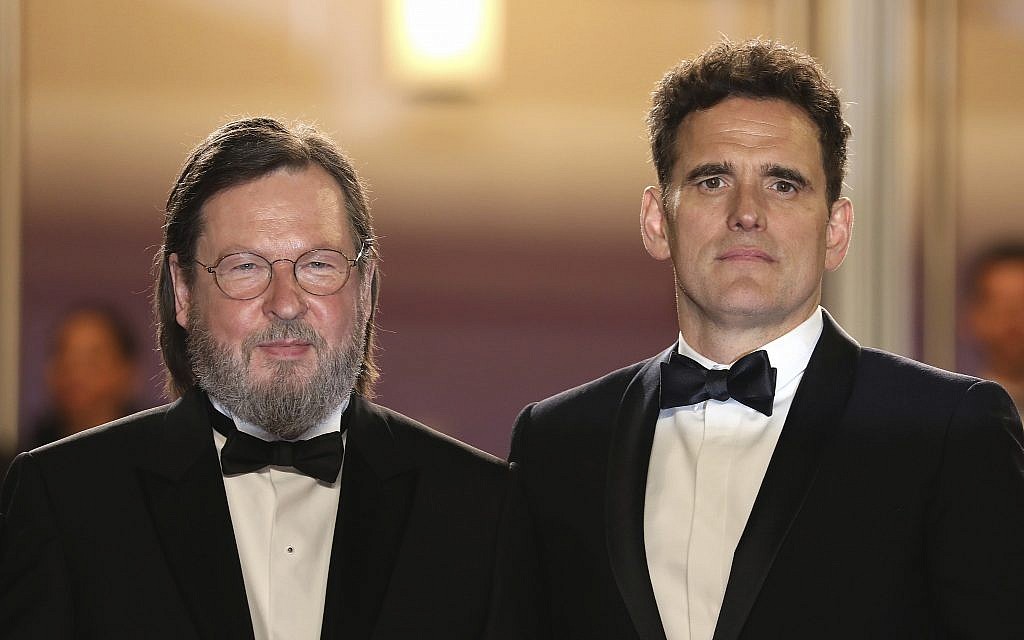
Danish film director Lars Von Trier, who has also made plenty of great films, rammed his foot far into his mouth in 2011 when he expressed sympathy for Hitler at a Cannes press conference. There’s a boatload of context to that, including the fact that Von Trier grew up thinking he was half-Jewish, only to discover that the man who raised him was not his biological father, and was, in fact, German.
Nevertheless, Von Trier’s repeated appreciation for Nazi art, specifically architect Albert Speer, comes up again in his gruesome, immature and plainly awful serial killer film “The House That Jack Built.”
A montage in this movie about “murder-as-art” features images from Auschwitz which are called “extremist art,” and the phrase “you have to hand it to them” is spoken to a shot of Hitler. It’s hard to watch this (plus all the brutal violence against women) and not think this is deliberate bit of “you mad bro?” trolling.
Von Trier’s earlier films like “Zentropa,” “The Idiots,” and “Breaking the Waves” are all very interesting, but this guy, truly, can go take a hike already.
Italian director Stefano Savona’s “Samouni Road” was one of the few documentaries at the fest. It is a look at the Gaza family that suffered losses during the so-called Zeitoun incident during 2009’s Operation Cast Lead.

There is, as we can only expect at this point, no larger context given to the fighting, but Savona’s style is very much the fly-on-the-wall approach. Video interviews are mixed with animated interpretations of what happened to the village and, undeniably, it was a horrible event.
The film does show groups like Hamas and Islamic Jihad swooping in on the family survivors like vultures to try and appropriate their suffering. (The family shrugs them off as best they can.) Given the not-exactly-Zionist setting of the Cannes Film Festival, the film was met with tremendous applause and I got the hell out of there the minute the closing credits started just in case anyone got a good look at me. (Kidding, kidding, just kidding. I think.)
Wish you were here
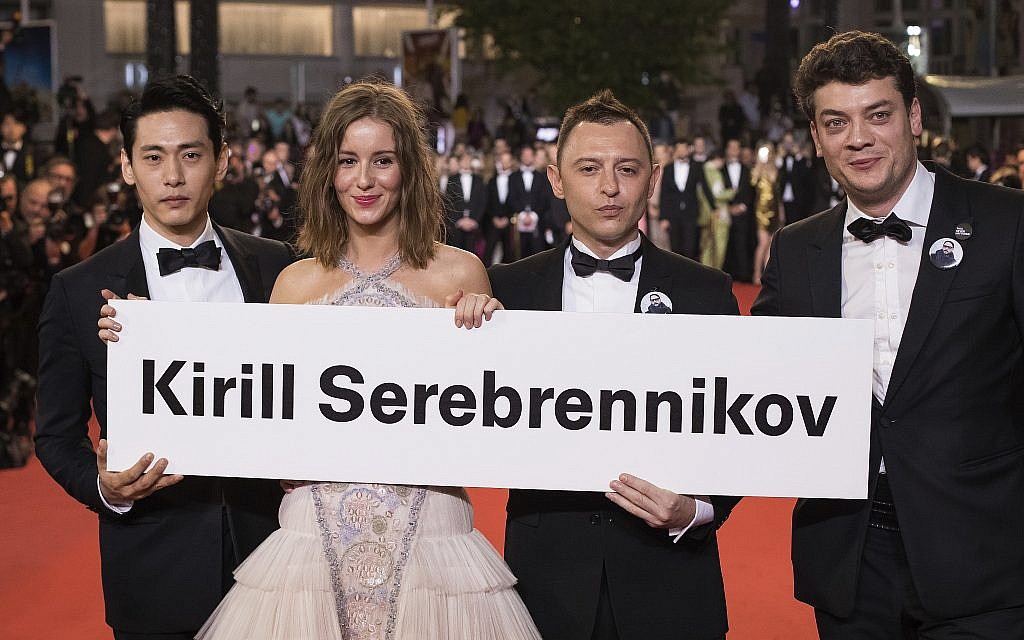
The one Jewish director at the fest (well, half-Jewish) wasn’t even here. Kirill Serebrennikov’s “Leto” is a pretty good (but not great) ode to the rock scene in early 1980s Leningrad. (If there are any fans of the band Kino, this one is for you.) Serembrennikov is currently under house arrest, ostensibly for embezzlement. However, the director and his Moscow-based theater group have been critical of Vladimir Putin, so the true nature of his guilt or innocence is understandably suspect.
Joining Serebrennikov in absentia was a more famous director, Iranian political prisoner Jafar Panahi. “Three Faces,” a hazy road trip to the hinterlands on the Turkish border in which actors appear as themselves, is actually the fourth movie Panahi has made since he was stripped by the Iranian government of his ability to work. (His project “This Is Not A Film” was actually smuggled to Cannes years ago on a flash drive baked into a cake!)
“Three Faces,” a very stripped-down affair, is something of a self-referential look at censorship and social control over artistic impulses. That sounds very weighty, but despite the patient pace, it’s actually got more punch to it than the rock video-styled “Leto.”
Two other Iranian directors were at Cannes, and interestingly enough both made their films in other countries. Two time Oscar-winner Asghar Farhadi’s “Everybody Knows” is set in Spain (and stars Javier Bardem and Penélope Cruz, as former lovers caught up in a kidnapping plot) and Ali Abbassi’s “Borders,” which was not in the main competition, is a dark love story about inhuman freaks who live among us, and was made in Sweden.
Other competition films from Israel’s neighbors included a film from Egypt called “Yommedine” and another from Lebanon called “Capernaum.” Both concern outcast citizens making their way through a cruel society.









The Times of Israel Community.