

Did medieval Jews hide a ‘secret synagogue’ in tarot cards? Boston exhibit turns over clues
‘Torah in the Tarot,’ named for researcher Stav Appel’s book of the same name, runs through June at the Vilna Shul, makes claim the deck was created by early crypto-Jews
 Add ToI as a Preferred Source on Google
Reporter at The Times of Israel

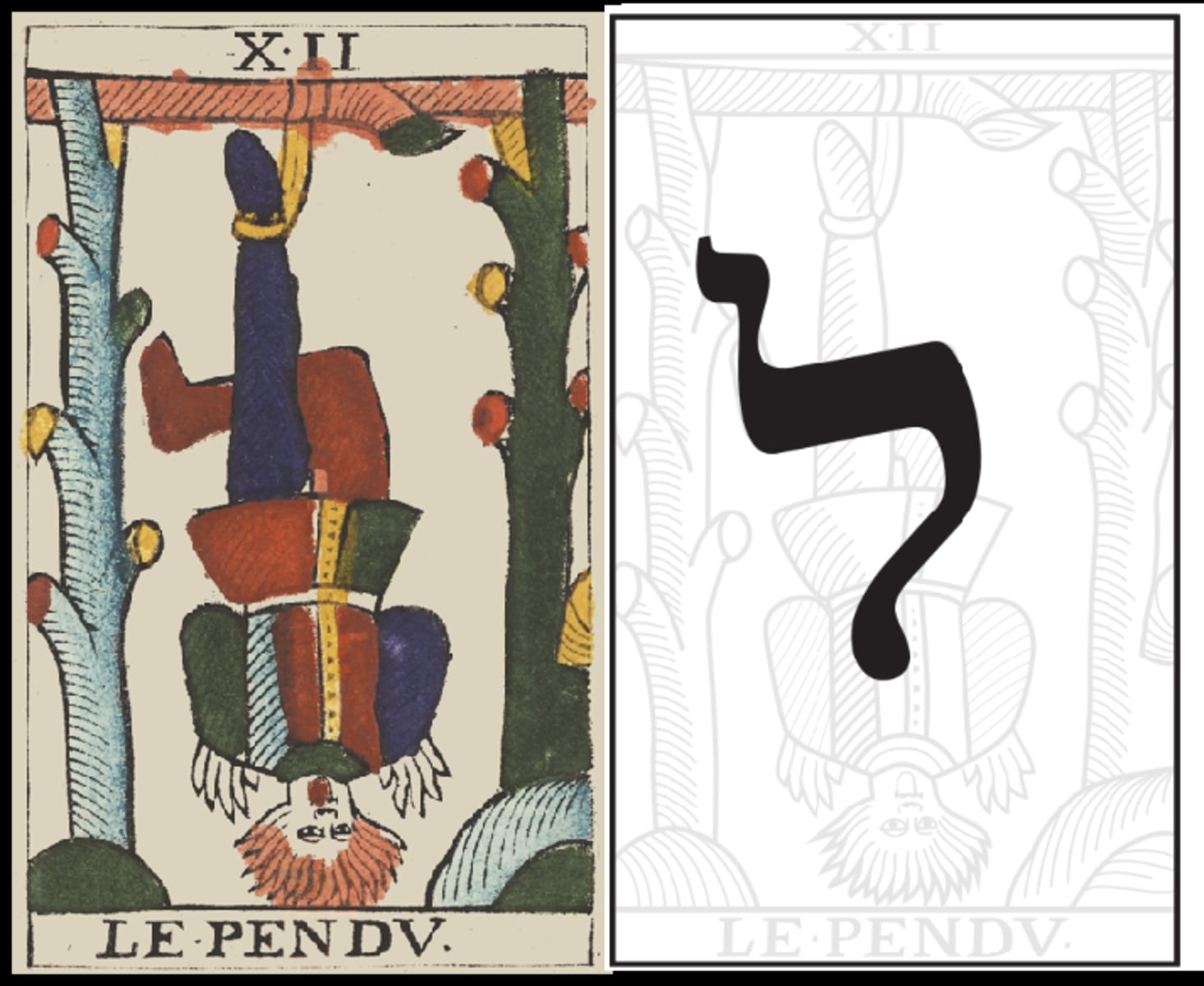
BOSTON — Researcher Stav Appel shows a tarot card via the Zoom screen. Its French-language title is Le Pendu, “the hanged man,” and that’s exactly what the card depicts — a man’s body hanging by one leg upside-down. Pretty straightforward, right?
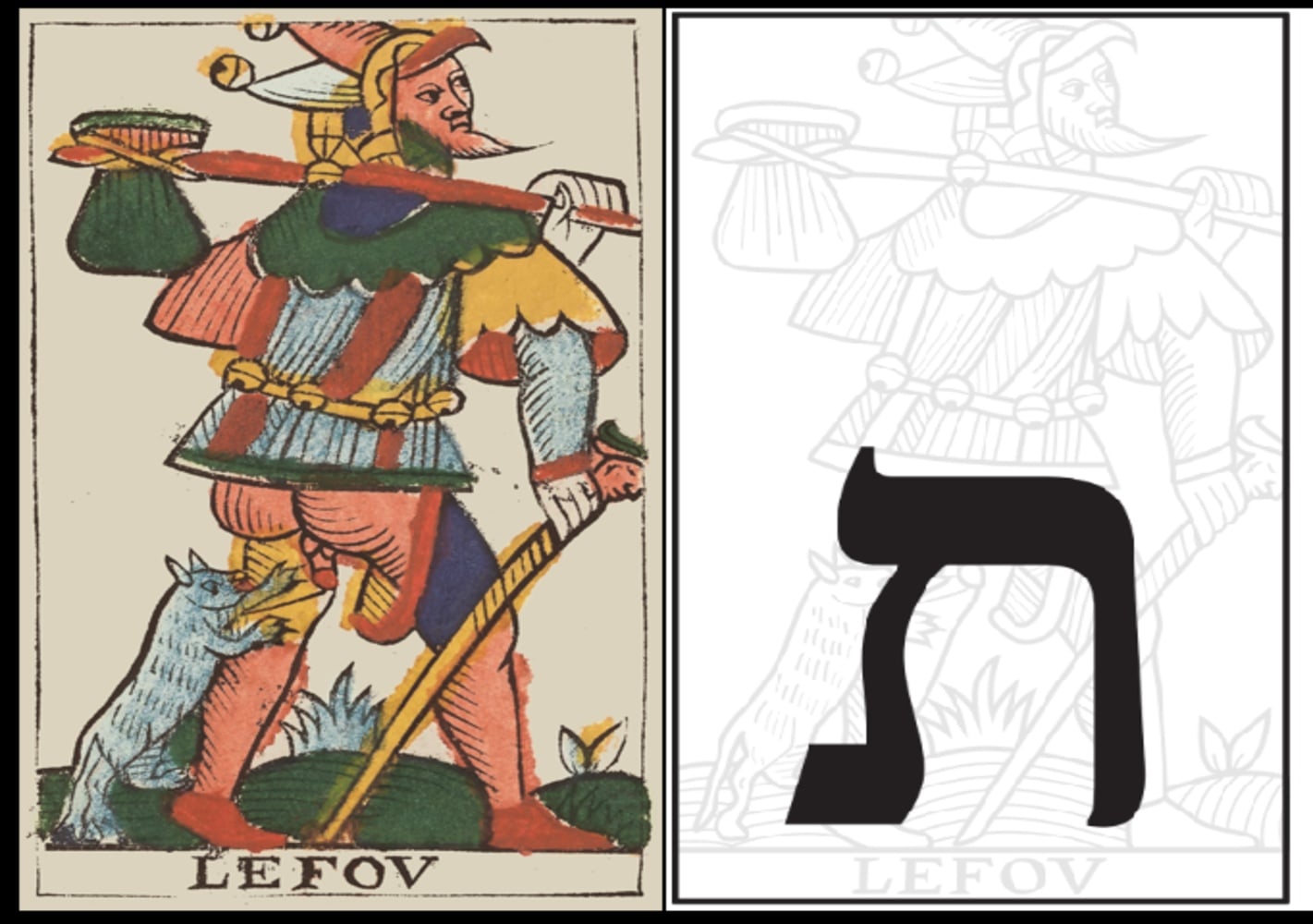
But Appel is digging deeper to find a hidden Jewish context in these cards used in fortune-telling ever since the Middle Ages. Consider Le Pendu. To Appel, the body is contorted into a shape that suggests the Hebrew letter lamed. And who might the hanged man actually be? Appel posits that he is Haman, the arch villain of the Purim story. Haman was hung from a tree on the 14th day of Adar, the 12th month of the Hebrew calendar. Wearing a 14-buttoned outfit, Le Pendu also hangs from a tree, and it is card number 12 in the deck. Haman was executed with his 10 sons — matching the total of cut-off branches on the tree. And the dead man’s tongue is sticking out, evoking a custom of eating pickled tongue on Purim.
It is widely accepted that the 22 Major Arcana cards in a tarot deck reflect the 22 letters of the Hebrew alphabet, but Appel sees a larger Jewish story here. He contends that in medieval France, Jews seeking to preserve their religion in the shadow of hostile ecclesiastical policies did so through tarot cards. They embedded messages about their scripture, alphabet, liturgy and holidays into the cards, knowing that this risked punishment by the Catholic Church.
Now Appel is bringing it all into the open, through “Torah in the Tarot,” an exhibition at the Vilna Shul Jewish arts and cultural center in Boston. The display has recently been extended through May 28.
“It’s like the Da Vinci Code of Judaism; sitting in plain sight but yet entirely unrecognized,” Appel said in a press release.
Or, as he told The Times of Israel over Zoom, “Everything you can find in the cards is a very comprehensive introduction to Judaism.” He likened the cards to “a secret synagogue, an encrypted Torah. It’s fascinating.”
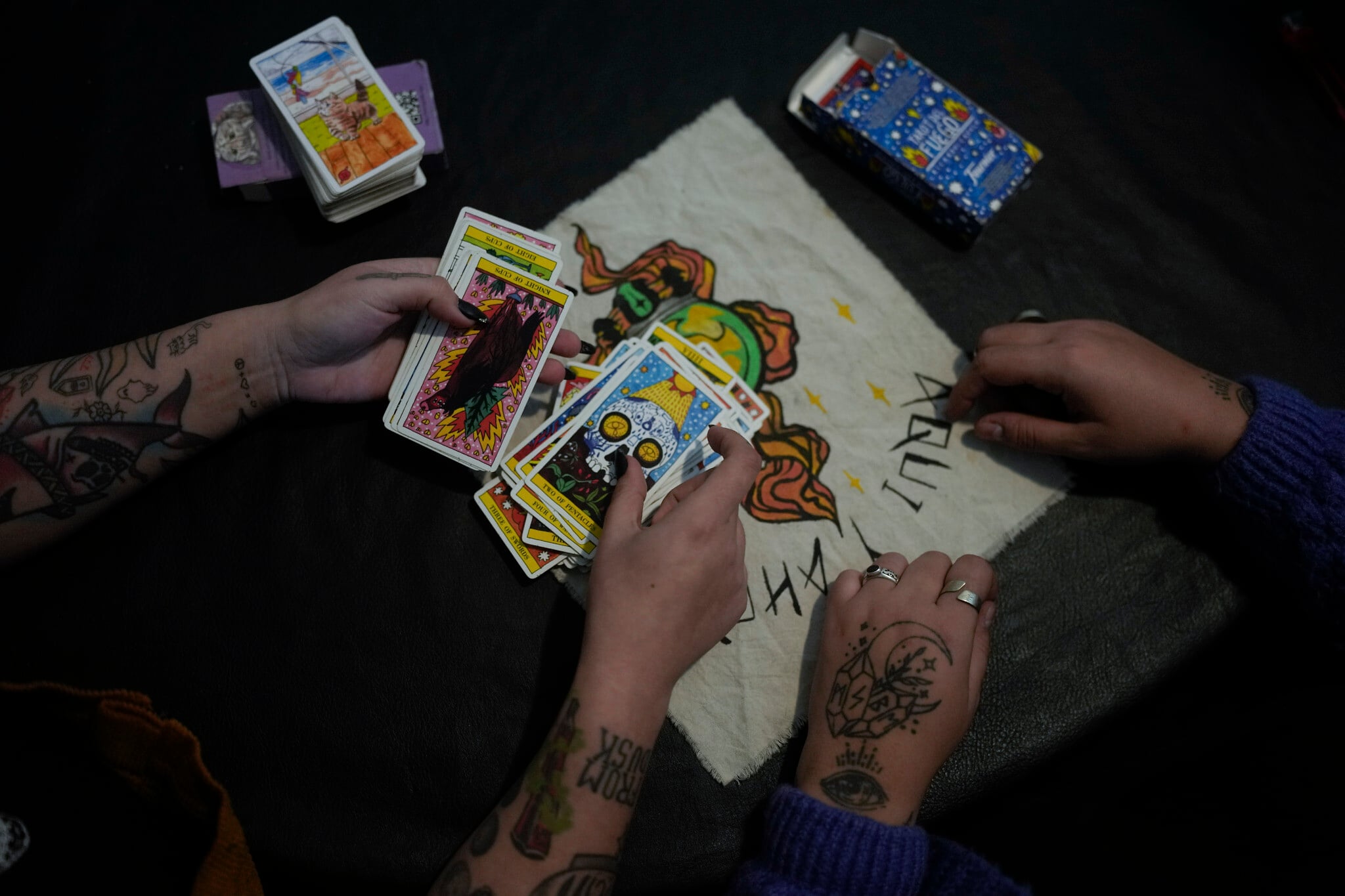
For him, the fascination began almost a decade ago, when his wife brought home a deck of tarot cards from a bookstore near their home in New York state. She thought it would be a fun Shabbat entertainment for their kids, but then Appel started looking at the cards himself. He focused on the Major Arcana cards, each of which has a specific name — i.e., The Devil, The Sun, The World.
Appel is a data scientist whose diverse career path includes previous positions working for Israeli-Palestinian coexistence through the organization Nitzanei Shalom, and for human rights through American Jewish World Service. He holds an MBA from Yale, which is also one of two places where he studied biblical Hebrew, the other being Hebrew University. Sitting before a packed bookshelf, Appel recounted seeing connections between the tarot cards and the Hebrew Bible.
“There were many depictions of Bible stories,” he recalled. “I did not know there was a connection between the cards and the Bible.”
Appel’s curiosity grew enough for him to buy a tarot history book, and then reprints of older tarot decks — including an especially rare deck designed in France around 1650 by Jean Noblet, which further piqued his interest.
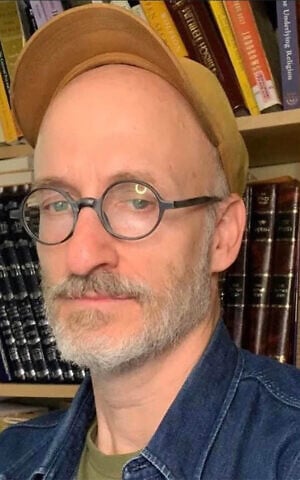
“The characters had their bodies in the shape of Hebrew letters,” he said, adding that he made a further realization about the cards: “They were not just Bible stories, they were Torah stories.”
Appel has put in the research over the nearly 10 years since his first eureka moment. He’s published a book, “The Torah in the Tarot,” and now he has an exhibit of the 22 Major Arcana cards in the style of Noblet, known as the Tarot de Marseille. French artist Florent Giraud created prints of the cards for display at the Vilna Shul.
Earlier this year, The Times of Israel went to a gallery viewing at the Vilna Shul for an up-close look at the cards — and any hidden messages they contained.
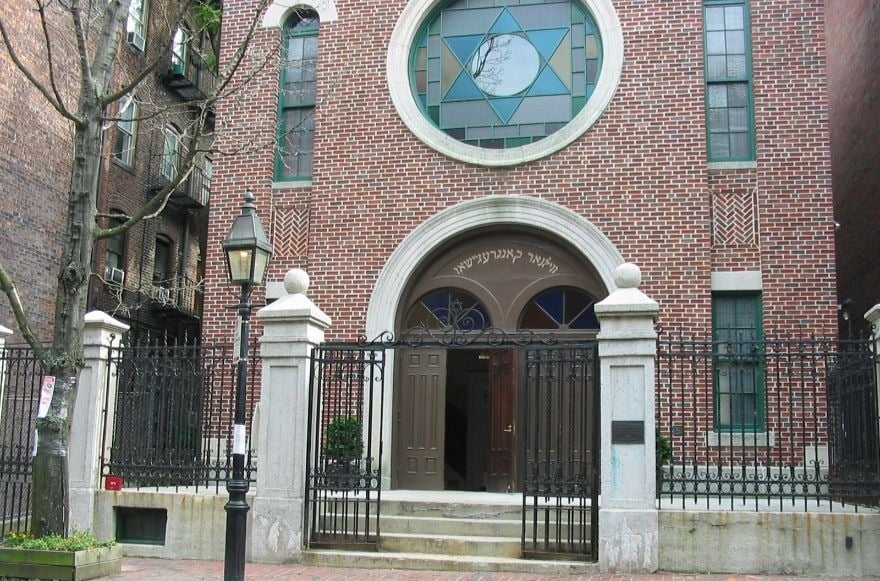
Located in the Beacon Hill neighborhood of Boston, the Vilna Shul is a historic immigrant synagogue dating to 1919. The colorful prints line the white walls of the first-floor gallery, which doubles as a space to learn about the Jewish immigrant history of Boston. Visitors can walk clockwise around the gallery to examine the cards in sequential order and read Appel’s accompanying text.
Card number one, Le Bateleur, shows a magician with arms twisted above a table crammed with objects. To Appel, the magician’s body suggests the letter aleph. But that’s far from the most thought-provoking claim.
As Appel recounts, when he gives hourlong presentations at synagogues, he will ask audiences what the magician holds in his left hand: “Eventually someone is curious enough to say, ‘It looks a lot like a penis.’”
More precisely, to Appel, it’s a circumcised penis, and the text card identifies the objects on the table as “the instruments needed for a circumcision,” such as “a knife and its sheath for the cutting of the foreskin.” To Appel, the magician is the patriarch Abraham, whose name begins with aleph.
Even when some of the cards seemingly bear Christian connotations, Appel detects clandestine Jewish messages.
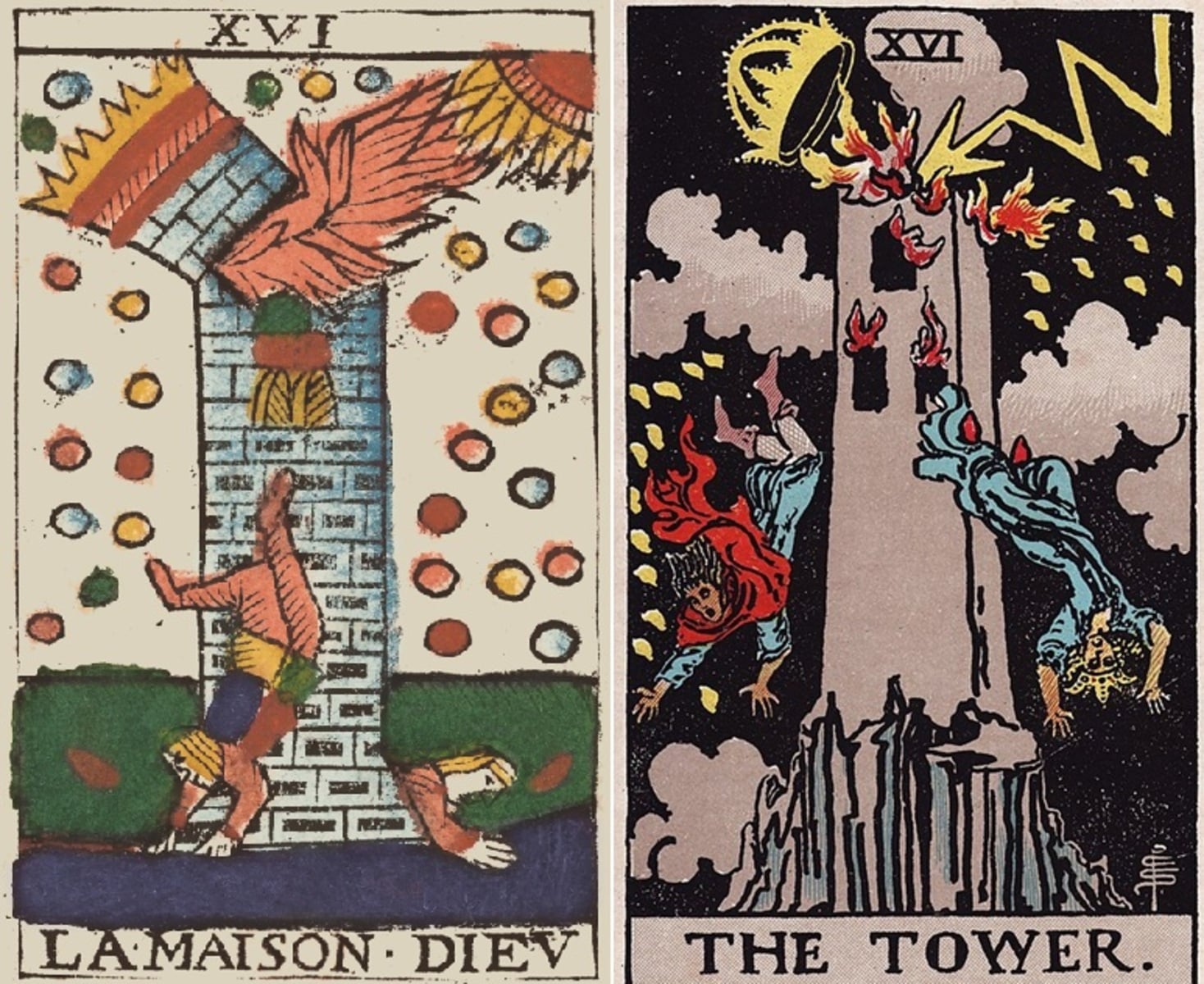
Le Pape (The Pope, card number five) appears to show a bearded, crowned man with cross symbols on his hands, holding a scepter, before a pair of cloaked figures. In the accompanying text, Appel finds that the letter heh within the pope’s body, and states that the pope is actually King Solomon. While Appel identifies the two other figures as monks, he characterizes their bodies as composites of objects in the temple Solomon built, including the Ark of the Covenant.
As visitors peered at the cards in the gallery, a laptop played a video of Appel discussing his findings with digital storyteller and Talmud enthusiast Miriam Anzovin in an appearance at the Vilna Shul last year.
In the video, Appel noted that tarot cards were an unconventional place to hide Jewish messages: “A lot of traditions in Judaism find this topic a kind of heresy … Fortune-telling is absolutely forbidden in Judaism.”
Earlier in the video, Anzovin says that when she first looked at the cards, “I could not see the Jewish stories that he could. Stav started to point out some clues. Only then was it all revealed to me.”
When Appel spoke with The Times of Israel, he explained why French Jews would have worked so hard to hide any connections to their ancestral faith.
The Tarot de Marseille originated at “a time in France when it had been illegal to be Jewish for over 200 years,” Appel said, noting that the exile of French Jewry predated the better-known expulsion from Spain.
“The only conclusion I could make was that the only people who would be motivated to hide Hebrew letters in a deck of playing cards were secret Jews, crypto-Jews,” he said.
In Appel’s discussion with Anzovin and in his interview with The Times of Israel, he contended that there was a further complication to the story: Over time, the cards had become more closely associated with kabbalah.
A key figure in this, he said, was a 19th-century French occultist named Éliphas Lévi. Originally a Catholic named Alphonse Louis Constant, Lévi adopted a Hebrew pen name and popularized both tarot and kabbalah.
Appel told Anzovin that Lévi changed the traditional spelling of kabbalah to qabalah and created an occult version, “a form of kabbalah that had been purged of any connection to Judaism, made it safe for the consumption by French Catholics, no mention of the Torah, no mention of Judaism.” And, he added, when it came to how Lévi explained the history of tarot cards, “in regard to the Hebrew alphabet, there was no connection to Judaism whatsoever.”
Looking back at the origins of tarot, Appel sees even more connections between the cards and Judaism.
“‘Tarot’ is kind of a play on ‘Torah,’” he said. “It first arose in northern Italy, which was a place of refuge for Jews from the Spanish Inquisition. Now the story is, why did it take so long for people to put all this together?”






The Times of Israel Community.