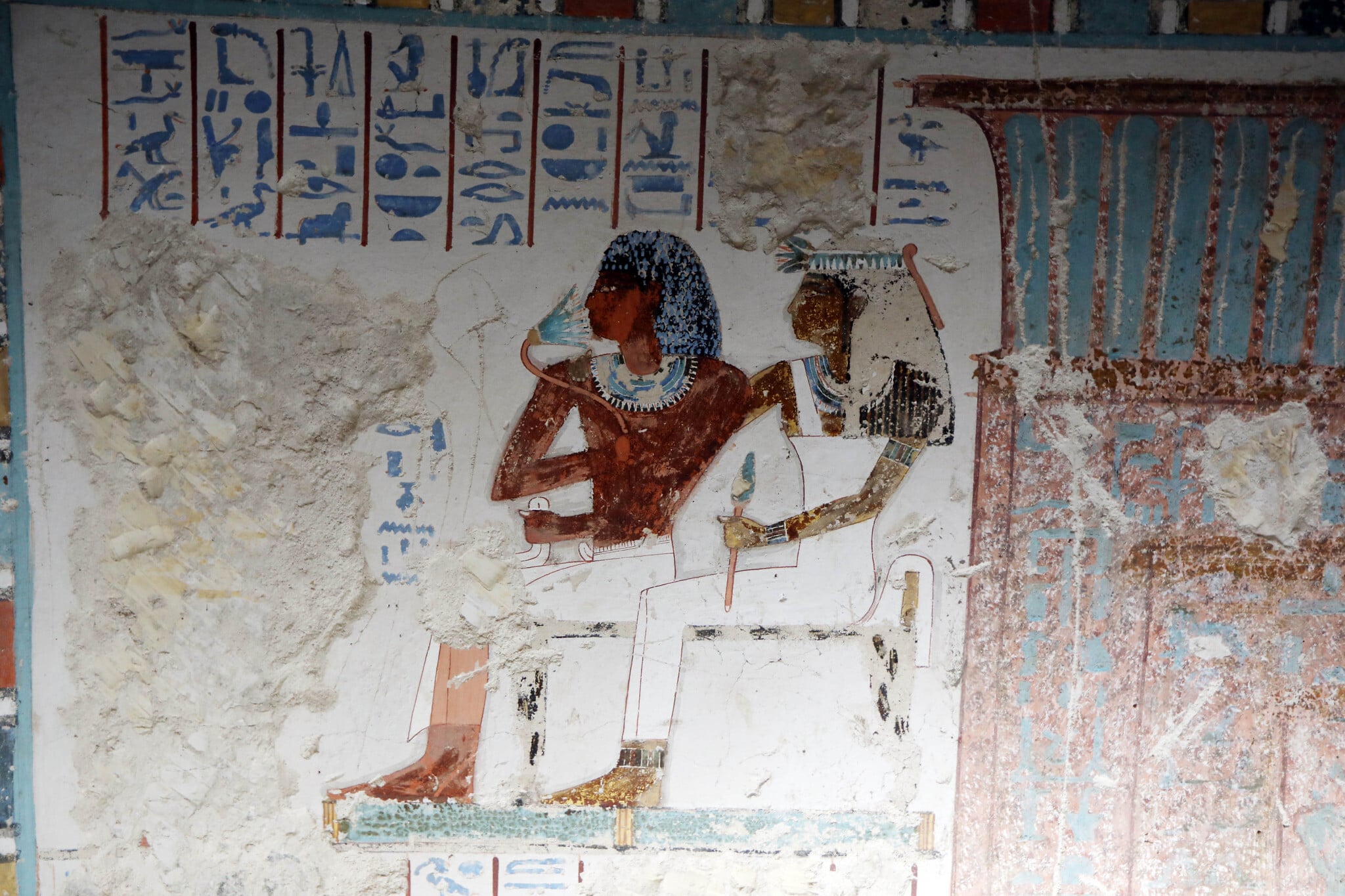
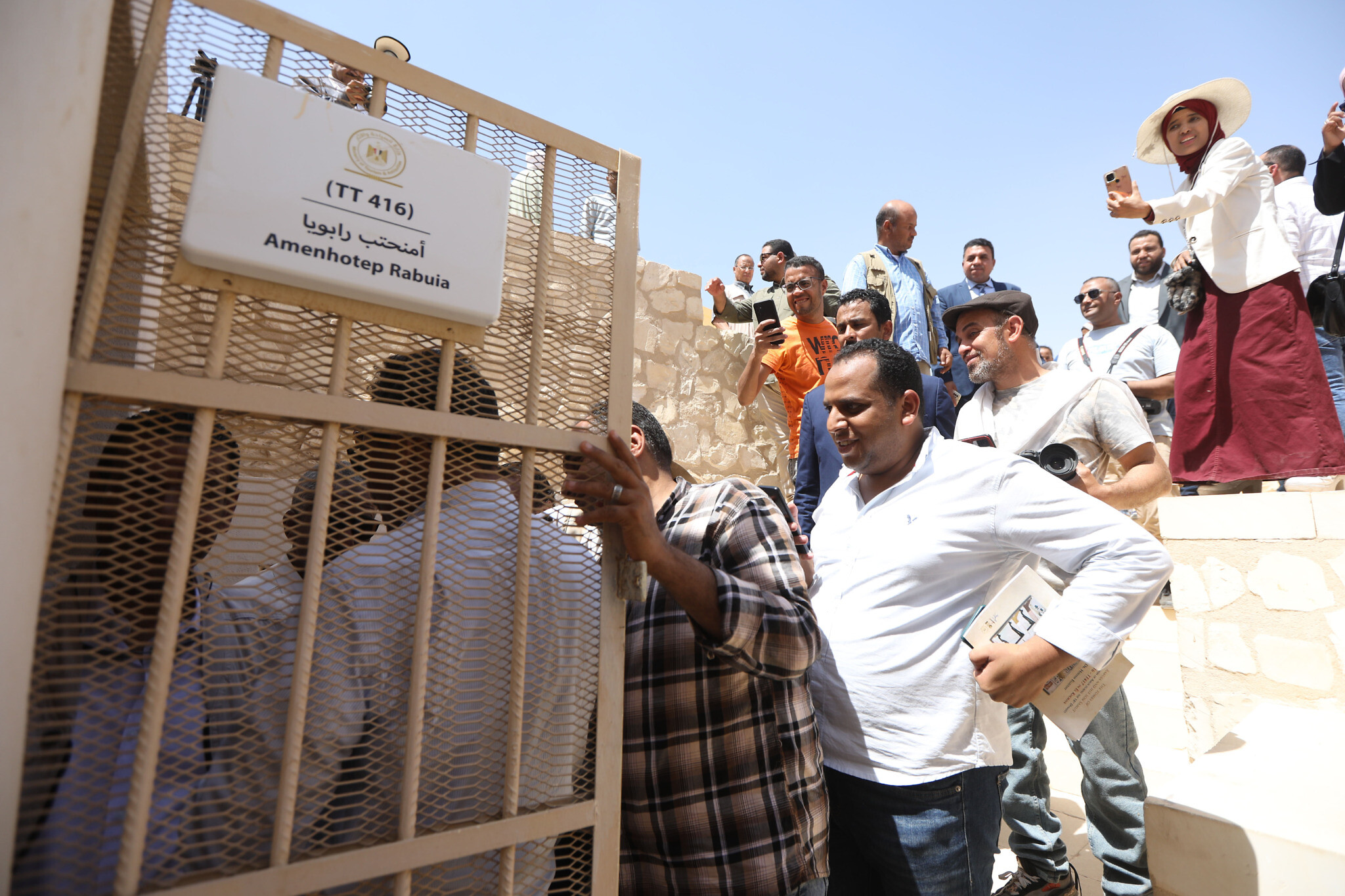
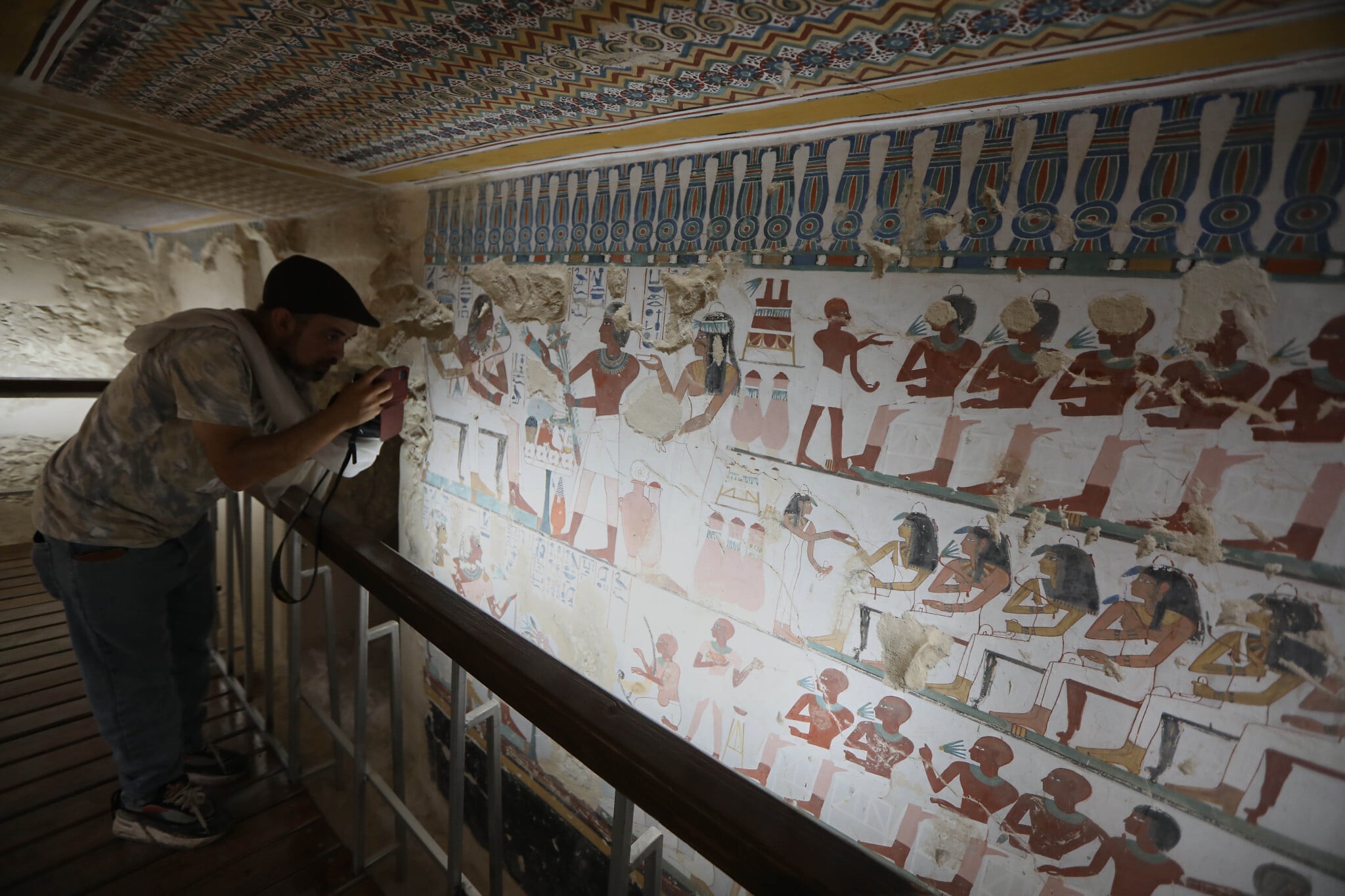
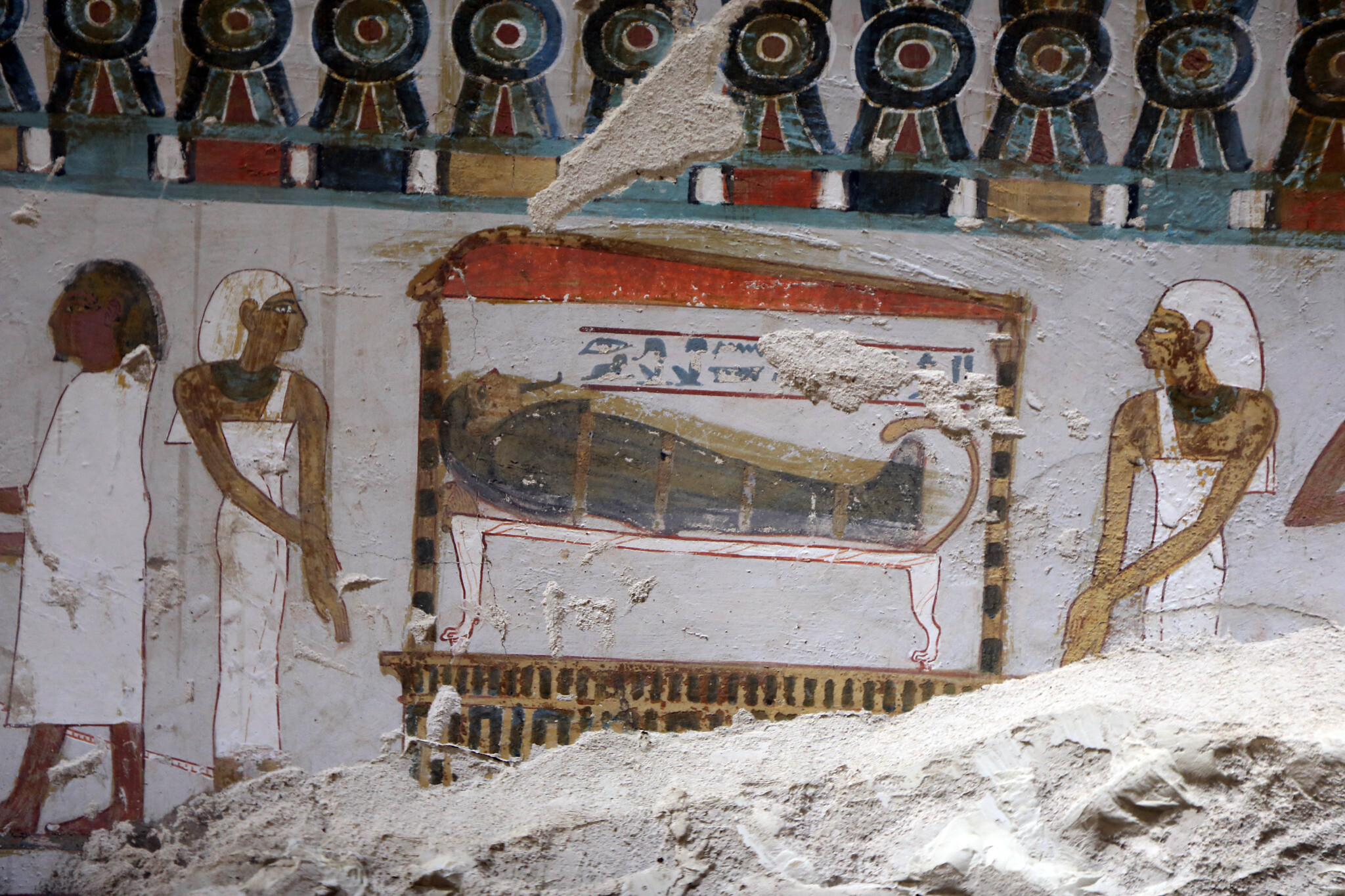
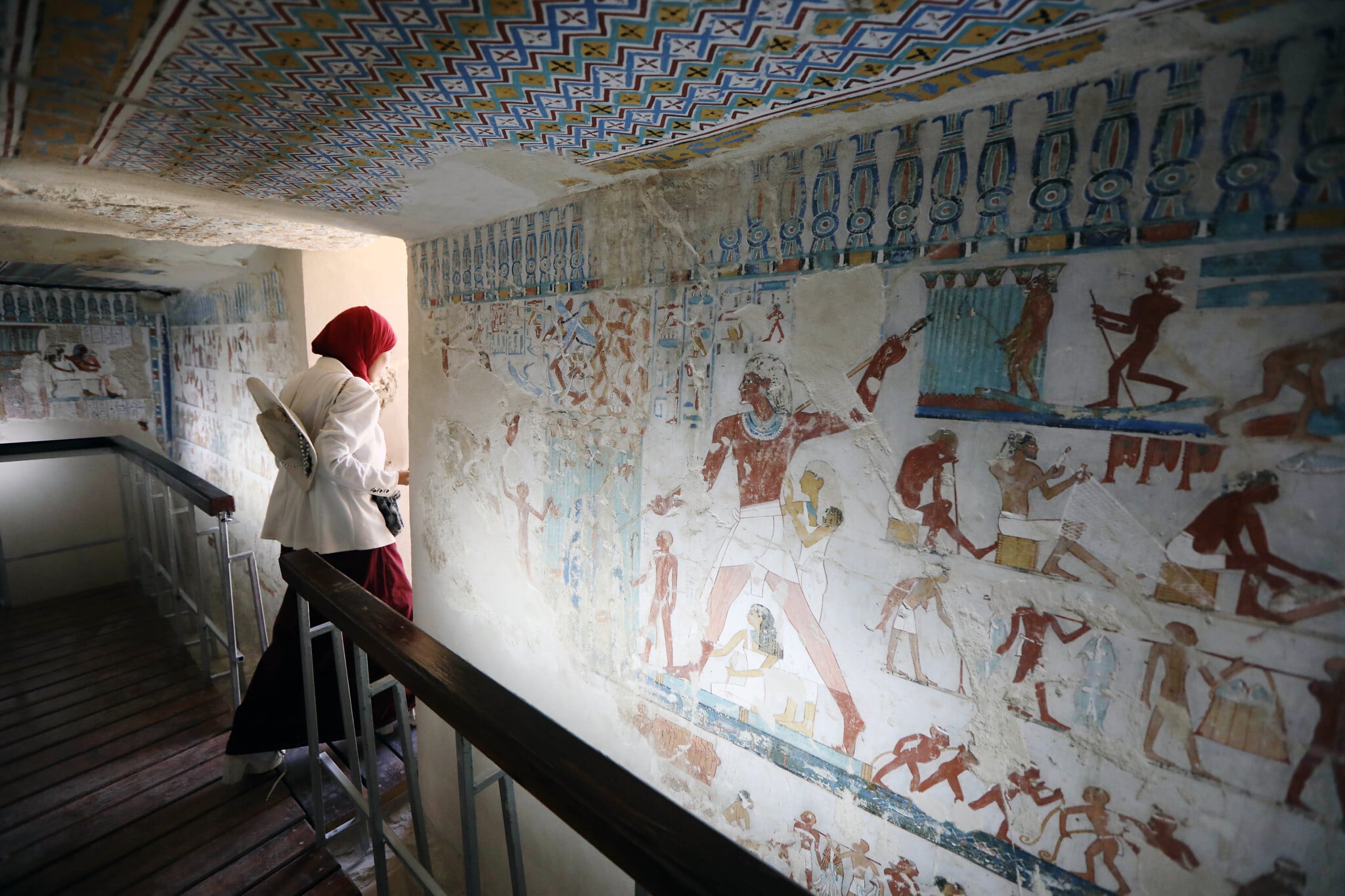
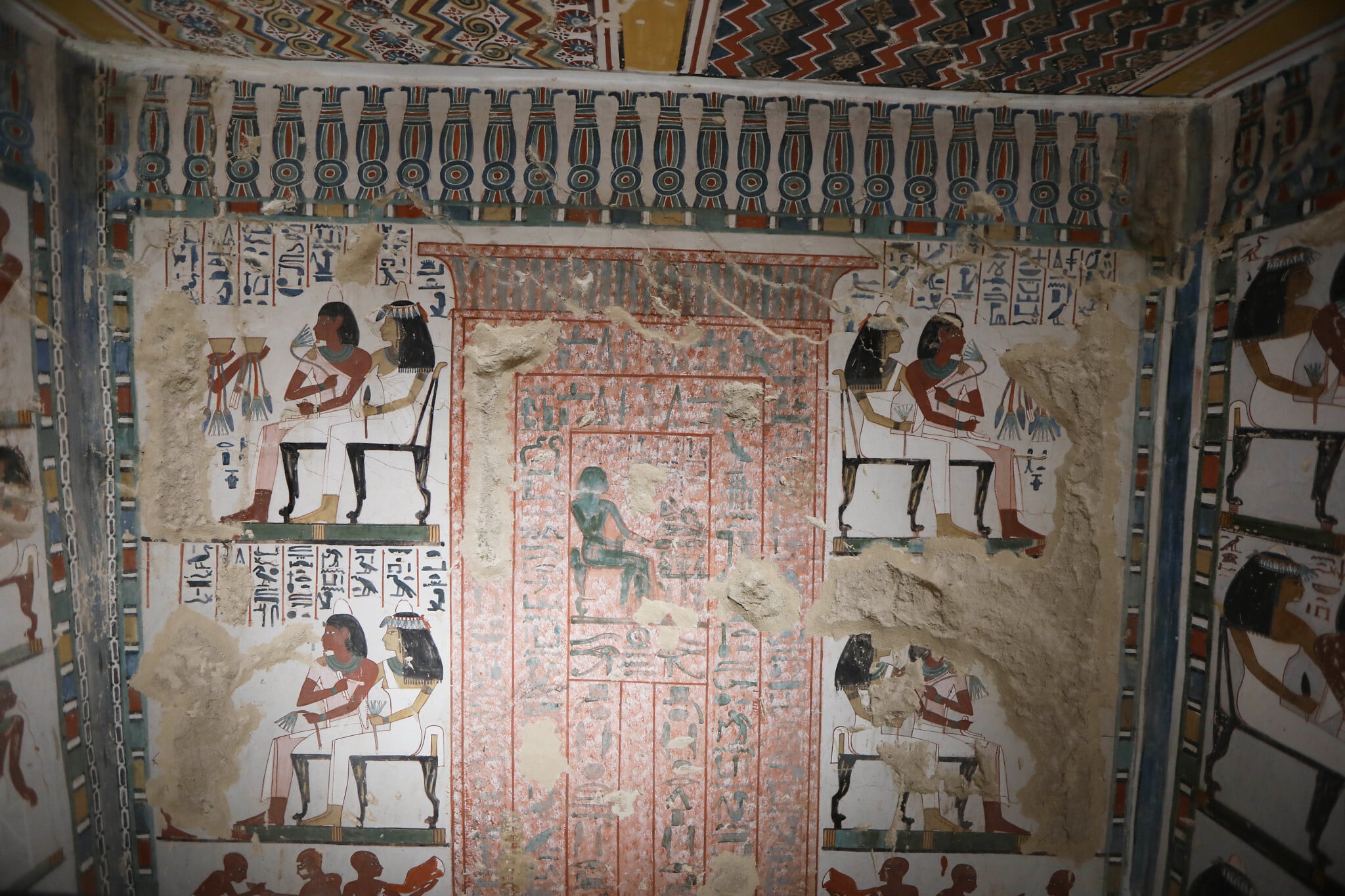
LUXOR, Egypt (Reuters) – Egyptian authorities on Thursday unveiled two restored ancient tombs on the West Bank of Luxor that date back to the New Kingdom and contain scenes of daily life and funerary rituals.
The tombs are those of Rabuya and his son Samut from the 18th Dynasty, the first of the New Kingdom dynasties. Rabuya and Samut served as door keepers of the deity Amun, the Egyptian Ministry of Tourism and Antiquities said.
“Today we are inaugurating two very important tombs that were discovered by chance in 2015,” said Hisham El-Leithy, secretary-general of Egypt’s Supreme Council of Antiquities.
The tombs contain scenes of activities including agriculture, harvest, crafts, bread, pottery and wine production.
The West Bank of the River Nile at Luxor is home to the Valley of the Kings, where pharaohs and nobles of the New Kingdom were buried in tombs carved into the rock.
Get The Times of Israel's Daily Edition
by email and never miss our top stories
By signing up, you agree to the
terms
Among the many New Kingdom pharaohs buried there were Tutankhamun – popularly known as King Tut – whose 14th-century BC tomb and its full contents were unearthed in 1922.
Help us report truthfully on social media

As a multimedia journalist, my job is to take the quality, fact-based journalism produced by The Times of Israel newsroom and make it accessible across every platform — from Instagram posts to podcasts to short-form videos.
This is how many, especially young people, consume news these days. But misinformation is rampant on social media. Our team at ToI produces accurate, responsible short-form reporting on Israel and the Jewish world.
If you believe in the importance of factual social media journalism, please consider joining our reader support group, The Times of Israel Community. Your financial support is essential to sustain responsible multimedia reporting.
— Gabriella Jacobs, multimedia journalist
Support our work
Support our work
Already a member? Sign in to stop seeing this
You're a dedicated reader

We’re really pleased that you’ve read X Times of Israel articles in the past month.
That’s why we started the Times of Israel - to provide discerning readers like you with must-read coverage of Israel and the Jewish world.
So now we have a request. Unlike other news outlets, we haven’t put up a paywall. But as the journalism we do is costly, we invite readers for whom The Times of Israel has become important to help support our work by joining The Times of Israel Community.
For as little as $6 a month you can help support our quality journalism while enjoying The Times of Israel AD-FREE, as well as accessing exclusive content available only to Times of Israel Community members.
Thank you,
David Horovitz, Founding Editor of The Times of Israel
Join Our Community
Join Our Community
Already a member? Sign in to stop seeing this


 Add ToI as a Preferred Source on Google