

Europe on tenterhooks as debt-ridden Greece votes on bailout
Greeks head to polls to decide on whether to accept EU’s terms or exit Eurozone, in decision that could shape future of continent
 Add ToI as a Preferred Source on Google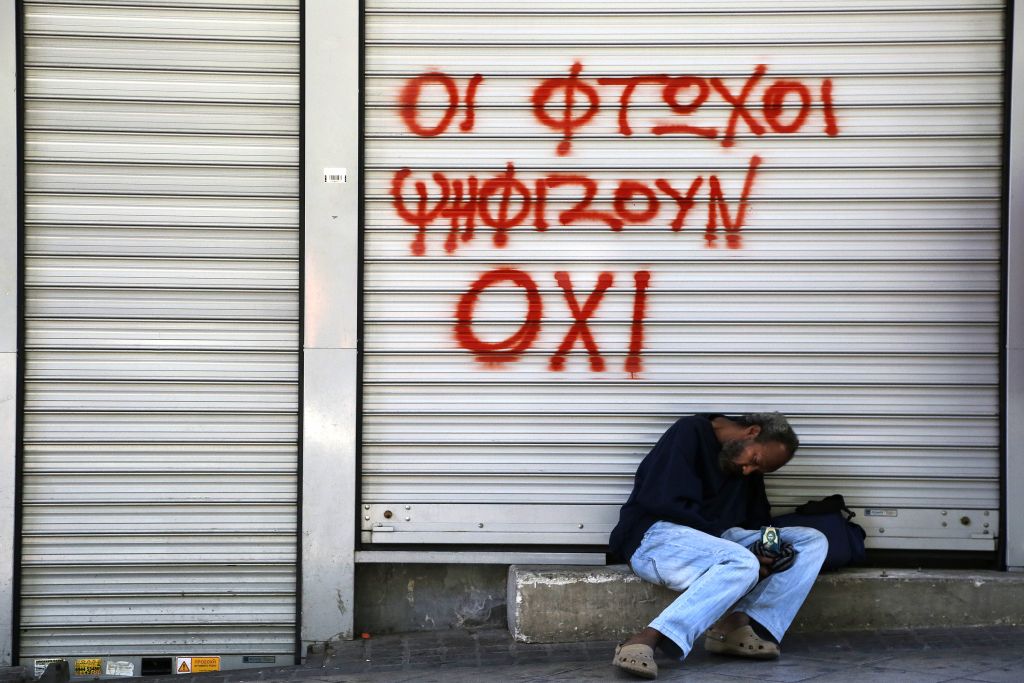
German Chancellor Angela Merkel and other EU leaders await with trepidation the outcome of a referendum in Greece Sunday that is already dividing opinion in Europe and could even shape its future.
After months of fruitless talks with its creditors, Greece’s dramatic bid to place a bailout decision in the hands of its people will have an impact far beyond the heavily-indebted country’s borders, analysts warn.
The vote on whether to support Greece’s radical left-led government in its tough anti-austerity line is a “signpost” for future negotiations, said Julian Rappold of the German Council on Foreign Relations.
With fears a “No” vote could lead to Greece exiting the eurozone — a so-called “Grexit” — Pawel Tokarski of the German Institute for International and Security Affairs said its impact would reach much further.
It will “determine the future trajectory of European integration,” he said.
Merkel, seemingly sanguine last week in remarking that Europe could “calmly” await the result of the referendum because the bloc was “strong,” has been at the forefront of efforts to resolve the crisis.

Now, the head of Europe’s biggest economy is “faced with a dilemma,” Rappold said.
If Greece were to leave the euro, it would signify the failure of Europe’s crisis management that Merkel has championed though years of economic turbulence.
“She would not like it to be said that she pushed Greece out of the euro,” Rappold added.
She also fears unforeseen economic consequences, a boost for anti-euro groups in some countries and that a “No” vote would be seen as a sign of weakness by nations such as Russia or China, he added.
But if Greek voters defy Tspiras and vote “Yes”, Merkel must win parliamentary approval for negotiations on a new aid programme for Greece amid growing dissent within her conservative party on the Greece issue.
She would also have to win over a bailout-weary public tired of picking up a lion’s share of the bill.
But the referendum is not just dividing Greeks.
Germany’s Bild mass-market daily, which has taken a tough line with Athens since the start of the crisis, held its own referendum, asking readers if they wanted to go on supporting Greece with billions of euros.
It said the response indicated that 89 percent of the 200,000 people who took part said “Nein.”

Thousands of Greece supporters meanwhile took to the streets of Barcelona, Paris, Dublin and Frankfurt to show solidarity with the Greek people and hit back at European policies.
Merkel was greeted by placards stating “Oxi” (no, in Greek) at an event in Berlin Saturday for her Christian Democratic Union party’s open day.
In Spain, which has endured its own economic crisis, allies of Greece’s Syriza party see the referendum as an historic opportunity to change Europe, months before the country holds its own polls.
Parties on the political right however fear a spread of radical leftist policies.
If Italians were called to vote like the Greeks, 51 percent would support tough measures imposed by Europe to avoid crashing out of the euro, while 30 percent would vote against, according to a recent poll by Ipsos.
And Britain, too, where voters will be called to decide on its future in Europe, sees a particular resonance in the Greek bid.
Different interpretation
Elsewhere among Europe’s leadership, European Central Bank chief Mario Draghi will also dread a “No” vote.
He is not accountable to voters but nevertheless is in “an extremely difficult situation,” Tokarski said.
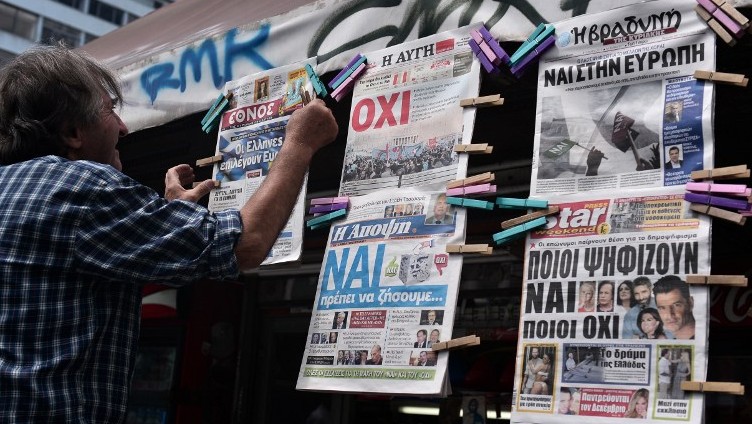
Through its emergency funding, the ECB is keeping Greek banks afloat. If it were to stop these loans, it would risk pressing the “Grexit” button — a decision its chief wants to leave to the politicians.
For now though, the post-referendum scenario is far from clear, especially as the question being posed is open to wide interpretation.
Athens argues it means saying “No” to new austerity measures proposed by creditors in return for aid.
But this proposal has in the meantime expired, leaving others to interpret the referendum as a vote for or against the euro.
“Whatever the result, it will be interpreted differently by political forces in Greece and in the eurozone,” Tokarski warned.










The Times of Israel Community.