 Add ToI as a Preferred Source on Google
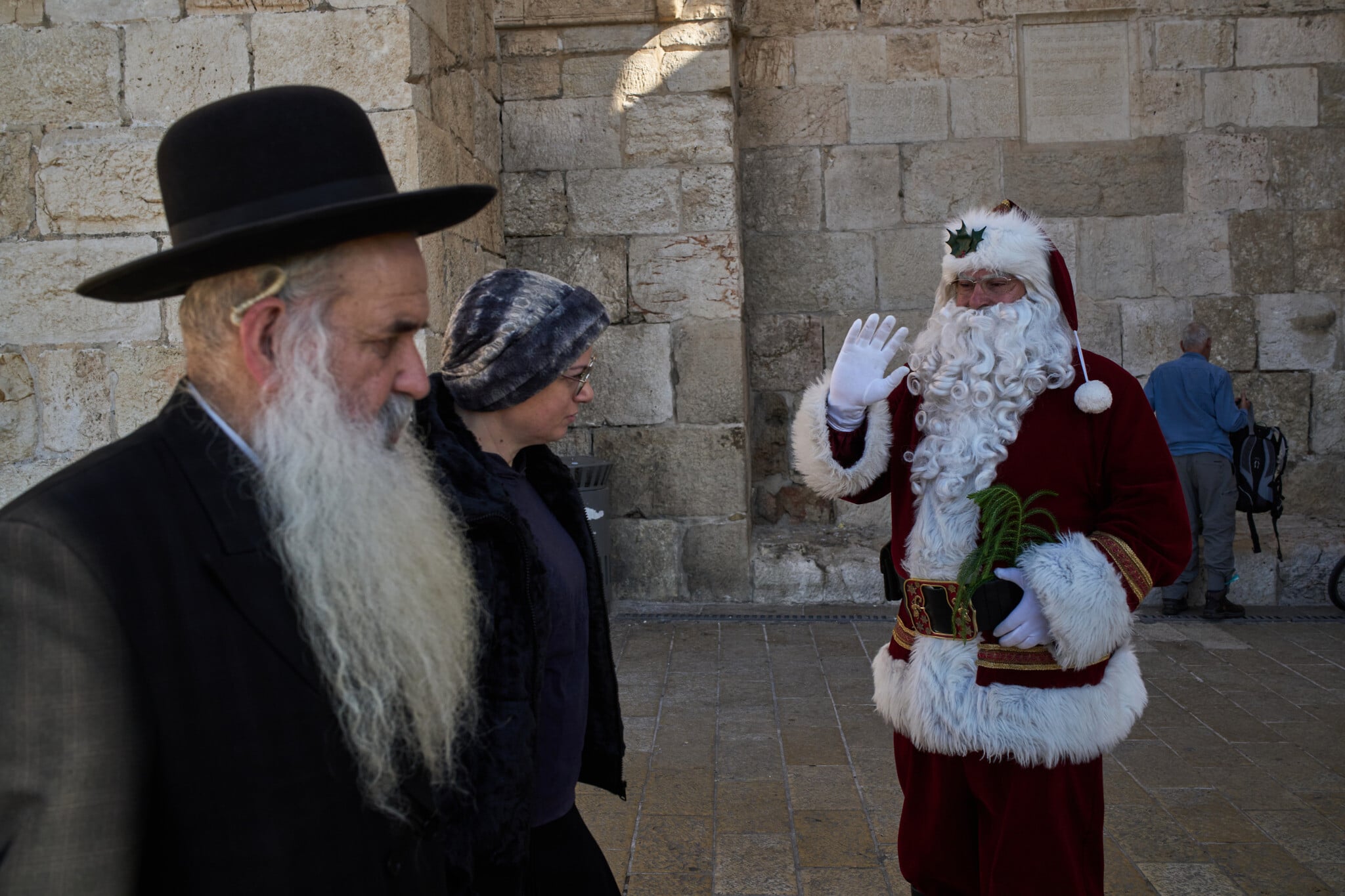
Though Jews have famously written many of today’s popular Christmas songs, there’s an additional layer of characteristically Jewish irony in hearing those tunes sung in Yiddish — the widespread language of Eastern European Jews before the Holocaust is likely the last one associated with the late-December Christian holiday.
But is the account of Yiddish Christmas carols factual or a historical bubbe meise?
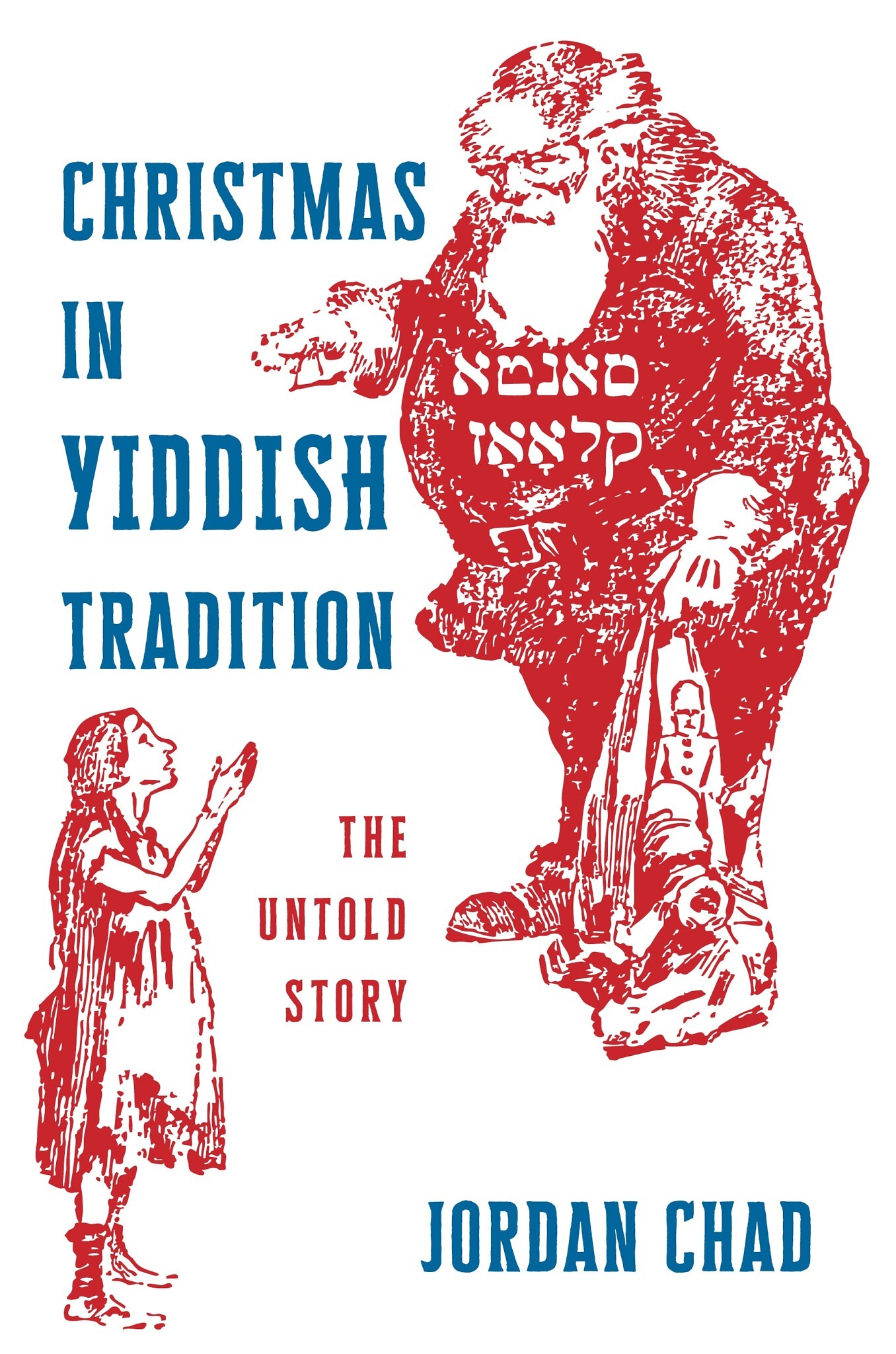
In his new book, “Christmas in Yiddish Tradition: The Untold Story,” Jordan Chad explores the folklore of Yiddish-speaking Jews in Central and Eastern Europe from the Middle Ages through the Modern period. The study reveals that Christmas was surprisingly one of European Jews’ favorite days of the year, and how Christmas traditions were once transmitted in Yiddish — a language non-Jews didn’t often speak.
Chad, 31, is a researcher in physics, mathematics, neuroscience, and Yiddish at the University of Toronto.
“At one point, as a side project, I translated an old Yiddish booklet on the theory of relativity that was written in Yiddish under Einstein’s supervision by one of his students… Then I started thinking, ‘I wonder what else there is in Yiddish that people don’t know about, what is there besides the Sholom Aleichem stories and the romanticized shtetl stories?'” Chad said in a recent interview with The Times of Israel.
“I was digging deeper into Yiddish memoirs and folklore… I started going beyond physics and Yiddish and got into Christmas in Yiddish. And that’s how this book came along,” he said.
Chad delved into Yiddish memoirs and other accounts of Jewish life in Western Europe, and later in regions such as Russia, Poland, Belarus, and Ukraine.
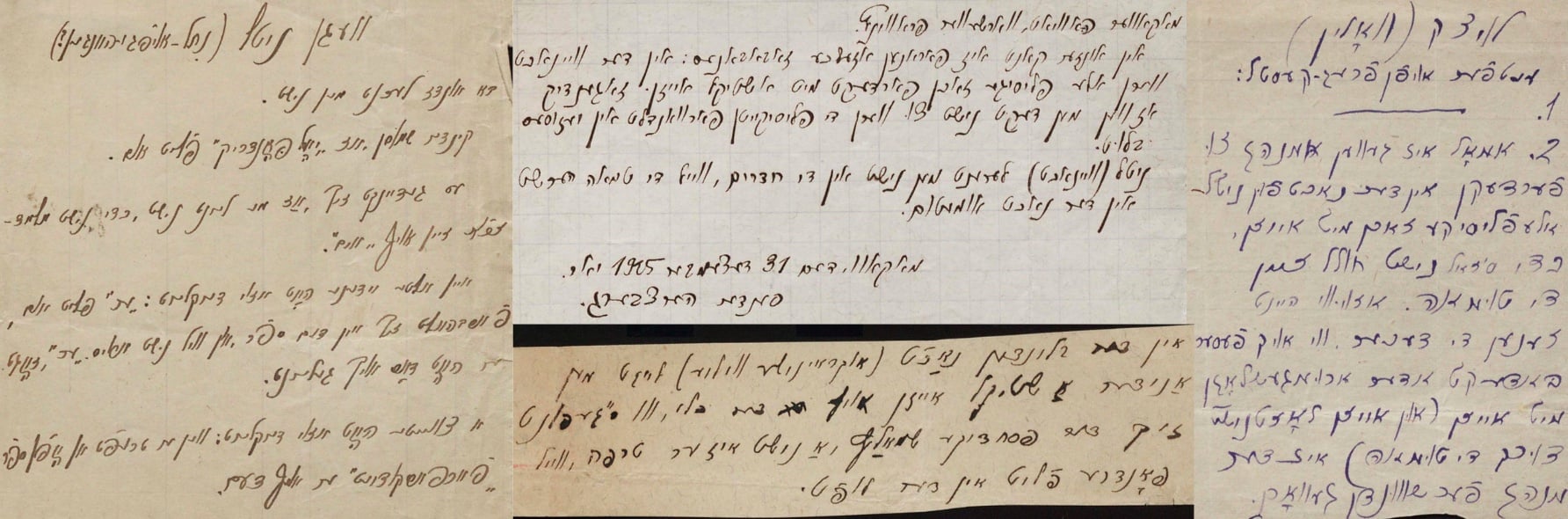
“Very consistently in the Yiddish literature, memoirists would write about their favorite yontif [holiday] when they were a child. They called [Christmas] a yontif, and they called it Nitl. They would say, ‘On Nitl, we had so much fun,'” Chad said.

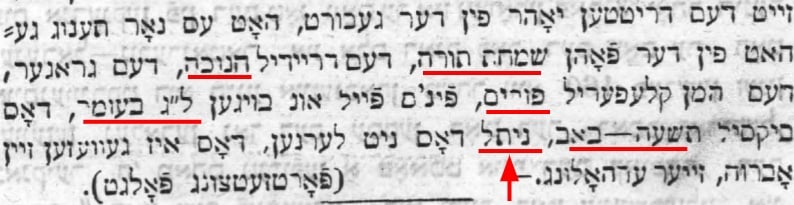
“Yiddish dictionaries translate Nitl as Christmas. So essentially, these Jews are saying their favorite holiday in Eastern Europe was Christmas. I certainly wasn’t expecting that… Other scholars had noticed this and mentioned it as a strange custom, but I tried to really understand why or how this came about,” he said.
In his well-researched book, he explains the various possible origins and meanings of the Yiddish term Nitl (or Nitl-nakht), which refers to December 24 — Christmas Eve. Some refer to Jesus, while others relate to the fact that Jews stopped all Torah learning on Christmas Eve (until Midnight Mass began for the Christians, at which time the Jews returned to Torah study and Christmas shifted into a Christian religious observance).
This is precisely why the Jews loved Christmas — the men got a break from the study hall and could play cards and games and generally make merry.
The Christians were doing the same thing, and it wasn’t simply to have fun. For centuries, this was believed to be the means of warding off the evil spirits that roamed the earth during the winter solstice, the coldest and darkest time of the year.
Chad mentions in the book that there are non-Jewish and Jewish artifacts from ancient times that suggest that even before the advent of Christmas, people already believed that demons were roaming on Christmas Eve.
He then shifts to the book’s main timeline, which begins about 1,000 years later, in the High Middle Ages, with the emergence of Ashkenazi Jews and the beginnings of the Yiddish language.
Wee beasties playing havoc
In the Middle Ages and into the Early Modern period, Jews and non-Jews continued to believe in the supernatural and were afraid of the havoc it could play with their lives. As part of this belief, both groups recognized a range of evil spirits. They also saw each other as a threat.
“In Christian folklore, Jews worked for the devil and were bad guys. And in Jewish folklore, Jesus was a terrible guy. This was already the situation before Christians established Jews, and Jews established Jesus, as the allegorical demons [among others] on Christmas Eve in the Early Modern era,” Chad said.
The author explained that while the Jewish men and boys warded off Jesus on Christmas Eve by playing cards and games, the women and girls were preoccupied with using materials such as iron to keep Yosl Pandrek (a derogatory term for Jesus) from polluting open books and dropping blood in the water.
“In Europe, for both Jews and Christians, iron was like garlic and protected against demons. On Christmas Eve, Jews would use pieces of iron, such as nails or whatever they could find, to protect their water from being poisoned. They placed iron on top of their vessels of water and covered wells with iron bars,” Chad said.
In Eastern Europe, while the Jews mostly stayed inside making merry with fellow Jews, Christians would carouse outside. Young men, in particular, would dress up and go from house to house singing and asking for food. This is where the Jewish women and children would again play a role: They would hand out the challah bread and gefilte fish that the carolers requested.
Chad pointed out that Christians wanted to be near Jews on Christmas Eve because they were afraid of filthy midwinter creatures out on Christmas Eve — and in Christian folklore, Jews were filthy creatures. The Christians thought that mingling with and disguising themselves as Jews — by eating challah and gefilte fish, for instance — they would be better protected from the creatures.
“This interaction was not completely friendly. There was a definite social boundary between Jews and Christians. In the Yiddish folklore, there are mentions of how ‘The Christians demanded gefilte fish for their dinner from us, so we gave it to them,'” Chad said.
Chad noted that even today, in Poland, Christians eat “Jewish-style fish” on Christmas Eve.
When was that pogrom again?
As the timeline reaches the 20th century, millions of Yiddish-speaking Jews emigrate from Europe to the United States, leaving their superstitions behind.
For Christians, too, Christmas in America was no longer what it was in Europe. It became a reinvention of the holiday. It now promoted a reimagined past and sentimentality, invoking the Christian Bible’s “goodwill to all men.”
In response, and in an effort to differentiate themselves from the overwhelming Christian majority, most Yiddish speakers reinvented their connection to Christmas. Jews suddenly recalled Christmas Eve as a night of bloody attacks by Christian neighbors, when in fact, this was not historically accurate (attacks typically happened on Easter).
“The historical pair of fright and merriment associated with Christmas was therefore binarized within Jewish memory: Merriment was assigned to Christians, and fright was assigned to Jews. In accordance with the emblematic image of the shtetl being of peaceful Torah study, the emblematic image of nitl-nakht was of roaring church bells provoking a violent Christian mob that puts Torah study to a halt. Memories of Jesus dropping blood as Christians caroled Jewish homes transformed into memories of Christians violently drawing Jewish blood. Memories of Jews using iron to protect against Jesus’s uncleanliness were transformed into memories of Jews using iron to bolt doors and windows against raging Christians, ” Chad wrote.
“That is, as the historical nitl-nakht slipped away from the minds of Jewish children assimilating into the New World, their parents deemed the fear of nitl-nakht necessary for selective preservation — no longer for the purpose of warding off Yosl Pandrek, but now, for the purpose of warding off Santa Claus.”
In other words, Jews don’t celebrate Christmas — other than by attending Jewish singles’ parties or eating Chinese food and watching a movie.
The sole remnant of the Jewish observance of Christmas Eve, as it was marked in Europe, is found among the largest Yiddish-speaking community. Hasidic men still vacate the study halls on December 24 and make merry. Those who aren’t up for the fun use the time to catch up on sleep, errands, or housework.
However, as interest in Yiddish has grown among other young Jews in recent years, so has interest in observing Christmas Eve in ways that feel right for current times. After a 100-year lull in Yiddish and Christmas, some Jews are returning to the folklore of nitl-nakht. Far more are creating what Chad calls a “Yiddish Christmas counterculture” based on irony and humor, such as the aformentioned popular Yiddish Christmas songs and Klezmer concerts on Christmas Eve.
“No matter what their ideological viewpoints are towards Christmas, they’re finding a way to make use of Yiddish to deal with it,” Chad said.

The Times of Israel Community.