

Israeli-American Nobel laureate says his award is secondary to hostages’ safe return
Joel Mokyr, an economic historian who grew up in Israel, says news that he won Nobel Prize in Economics stunned him; credits high school history teacher with shaping his vision

 Add ToI as a Preferred Source on Google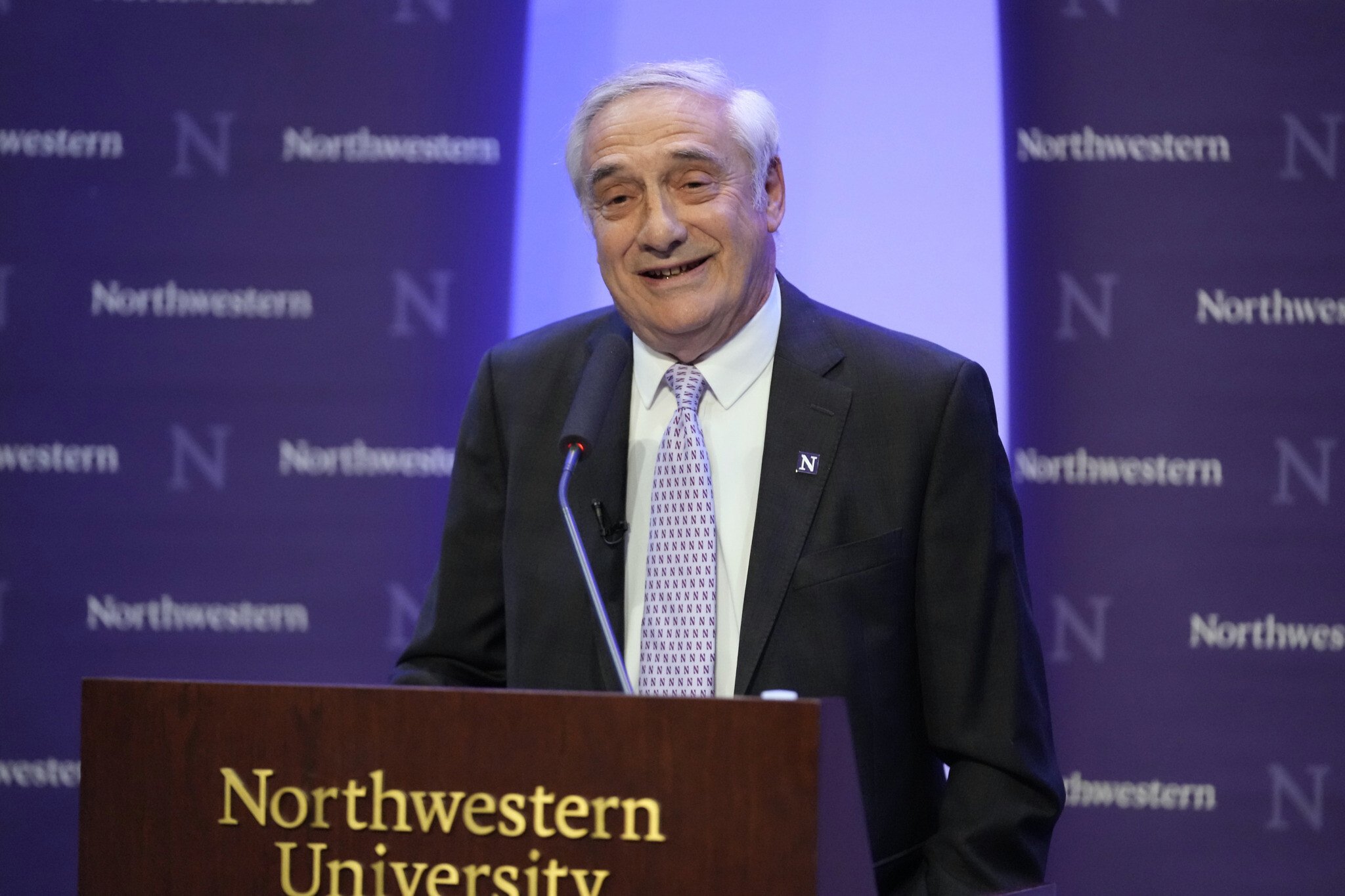
In the early hours of the day when the Nobel Prize in Economics was awarded, Israeli-American economic historian Joel Mokyr was glued to his screen, following news of the release of Israeli hostages from Gaza.
Little did he know how his day would evolve.
“It was a very odd morning,” said Mokyr of Monday, October 13, when 20 surviving and four deceased hostages came home from two years of captivity. “I woke up very early in the morning, dashing to my computer to see what happened with the hostages, and while reading the news about their return, somehow my inbox pops up with like 20 incoming messages that all say ‘congratulations.’”
He continued, “I thought, ‘What the hell is this,’ as it wasn’t my birthday, and only when I opened some of the emails, which prompted me to check my phone, I saw a missed call from Sweden, called back and was told that I won the Nobel Prize in Economic Sciences.”
Speaking to The Times of Israel a week after winning the most prestigious award in his field, Mokyr, 79, said that the return of the hostages that day warmed his heart far more than the Nobel and meant more than any personal achievement he could ever attain.
“Somewhere in the back of my mind, I knew that the Nobel Prize in Economics was going to be awarded because I’m an academic economist,” he said. “But I completely forgot about the announcement, and it never even occurred to me that I might have a chance to win.”

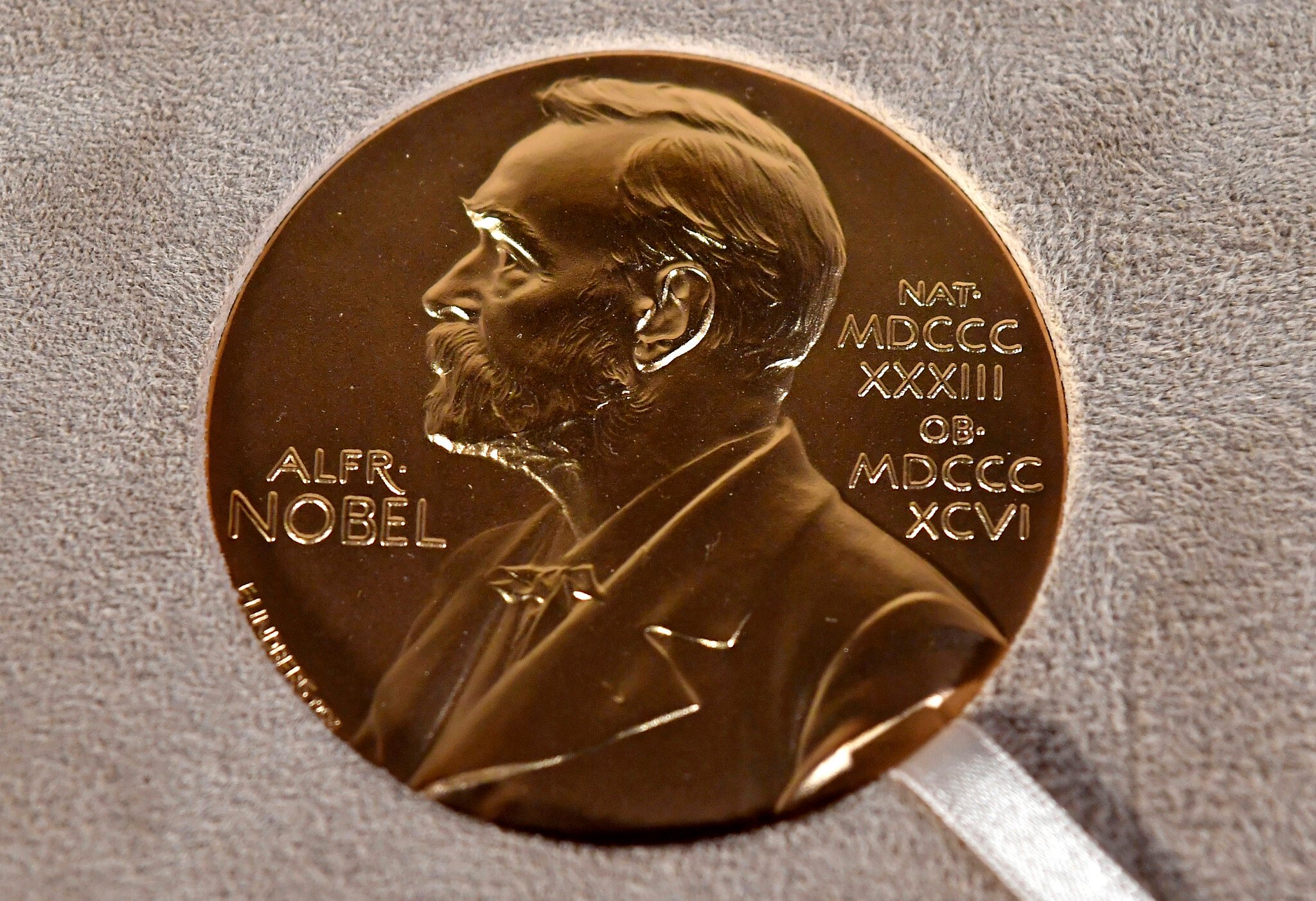
Mokyr, a professor at Northwestern University who also teaches at Tel Aviv University, is one of three laureates of the 2025 Nobel Prize in Economic Sciences for “having explained innovation-driven economic growth.” The Israeli-American scholar won alongside Philippe Aghion from the College de France and the London School of Economics (who is also of Jewish descent), and Peter Howitt from Brown University.
The Nobel committee complimented the trio for recognizing in their work that “we should not take progress for granted” and that “society must keep an eye on the factors that generate and sustain economic growth.”
Mokyr’s research specializes in the economic history of Europe, examining the economic and intellectual roots of technological progress and demographic change. He was awarded half of the prize, valued at 11 million Swedish kronor ($1.2 million), for identifying and explaining the “prerequisites for sustained economic growth through technological progress.”
The Nobel committee said Mokyr “demonstrated that if innovations are to succeed one another in a self-generating process, we not only need to know that something works, but we also need to have scientific explanations for why.”
He is the Robert H. Strotz professor of Arts and Sciences and professor of economics and history at Northwestern, and serves as a visiting professor at the Hebrew University in Jerusalem. Since 2001, he has also been a Sackler visiting lecturer at the Eitan Berglas School of Economics at Tel Aviv University.
Mokyr recounted that on the morning he learned the news of his prize, he was at his summer vacation cottage in western Michigan.
“My wife and I had to sit down and catch our breath for a few minutes, and then I remember what she said: ‘Oh, that’s great, we can pay for our grandchildren’s private school,’” Mokyr said.

Born in Leiden in the Netherlands to a Dutch-Jewish family that survived the Holocaust, Mokyr moved to Israel at the age of nine and was raised in Haifa. He earned his undergraduate degree at Hebrew University before moving to the US to continue his academic pursuits, getting a PhD in economics from Yale University.
“My mother, a member of the Zionist movement in the Netherlands, always said that life for a Jewish family in Israel would be a lot more secure than it would be in the Netherlands,” Mokyr said. “My mother just wanted me to have a decent job and marry a nice wife.”
Mokyr shared that growing up in Israel, the most influential person in his life was his high school history teacher, a Polish Jewish intellectual whom he described as a “brilliant historian.”
“I was sitting in her class in utter admiration, and that’s how I ended up doing what I’m doing, studying history all my life,” he said.
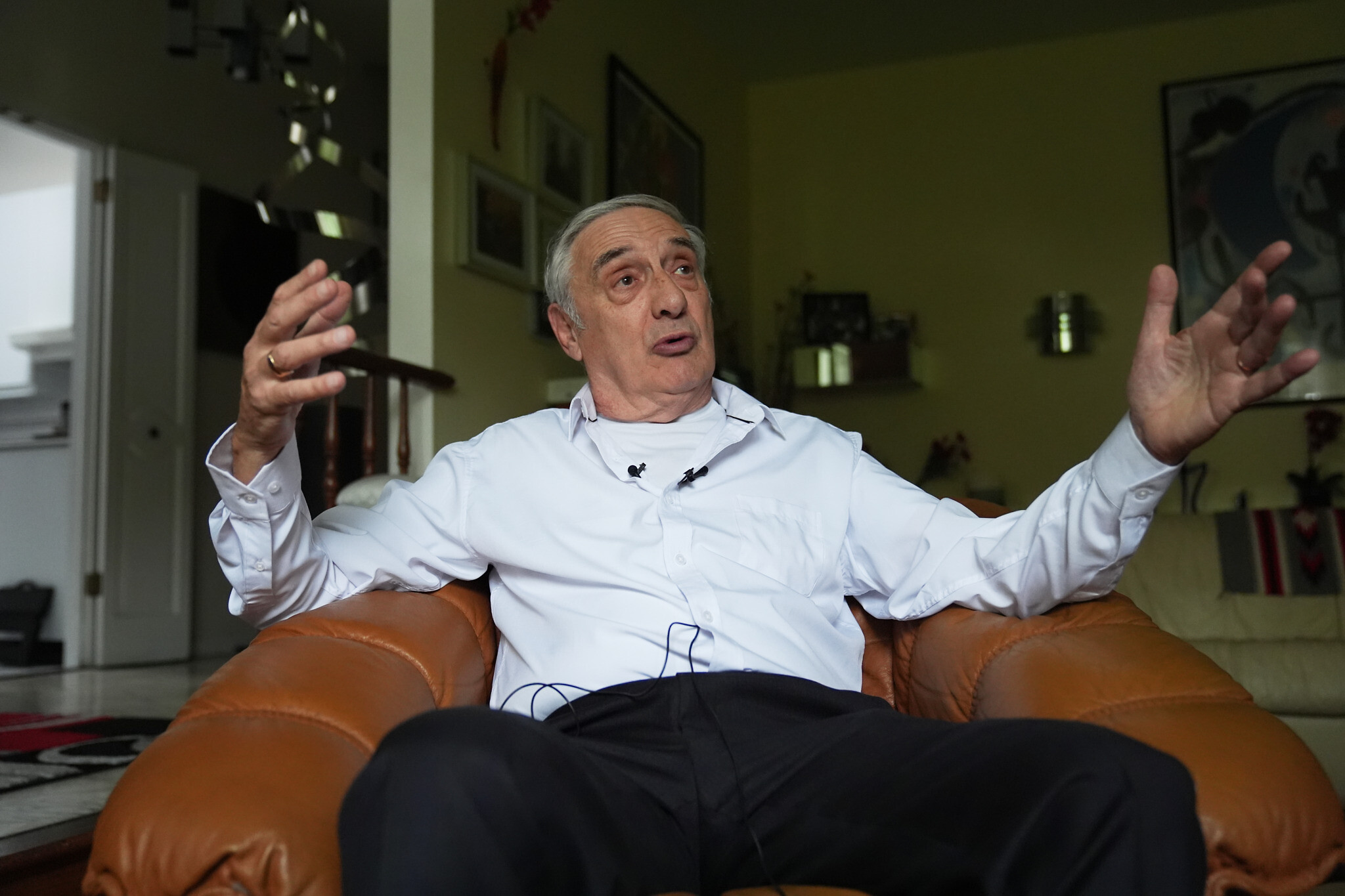
Mokyr said that he loves Israel and that he is an avid listener of Israel’s classical music station Kol Hamusica, which always plays in the background when he works. Over the past 25 years, he has come to the country at least once or twice a year on average to teach.
“Kol Hamusica is very much part of my life, and there is no classical music station in the US that can hold a candle to the intelligence and the knowledgeability of the Israelis who run it,” said Mokyr. “One thing that I have always admired in Israel is that it is by far the most creative nation in the world relative to its size.”
He continued, “Israelis are exceptionally creative not just as far as technology, particularly digital technology, is concerned, but across the board, from irrigation technology, food preparation, to literature and music.”
At the same time, Mokyr raised the concern that “all of this creativity is produced by about half the population because the other half, particularly the ultra-Orthodox groups, contribute practically nothing to this.”
Still stunned by his award, Mokyr insisted that there remains a long list of brilliant academics and researchers who deserve to win the Nobel for their work.
“I’m not a theorist and I don’t have a theory that I came up with, but a lifelong study of history, with one leg in the economics department at Northwestern and a degree in history from Hebrew University in Jerusalem,” said Mokyr. “I try to use history to understand economics, and use economics to understand history.”
Mokyr emphasized that there are many other areas in which economic history is useful, “all the way from international trade to the use of money and the emergence of banks, the whole nature of work and the supply of labor.”
Overwhelmed by the attention he has received since winning the award, Mokyr said he was incredibly pleased that all of a sudden, lots of people from his Israeli past are writing to him.
Discussing his contribution, Mokyr said, “My main success, as I think of it today, is actually not the Nobel Prize, although I’m very happy and thankful.”
He said, “I think my main contribution is that I have trained somewhere over 60 PhDs who all work in the area [of economic history], and they continue it.”









The Times of Israel Community.