

King Charles comforts wounded Jewish community in London’s Golders Green
Visit comes weeks after terrorist stabbing attack wounded two and arsonists torched ambulances of Jewish EMT service amid unprecedented wave of violent antisemitism
 Add ToI as a Preferred Source on Google
LONDON — Police once again locked down the heavily Jewish neighborhood of Golders Green in northwest London on Thursday — but unlike after the stabbing attack in which a terrorist wounded two Jewish men last month, this time the cordon was welcome, as residents of the area turned out in force to greet King Charles III.
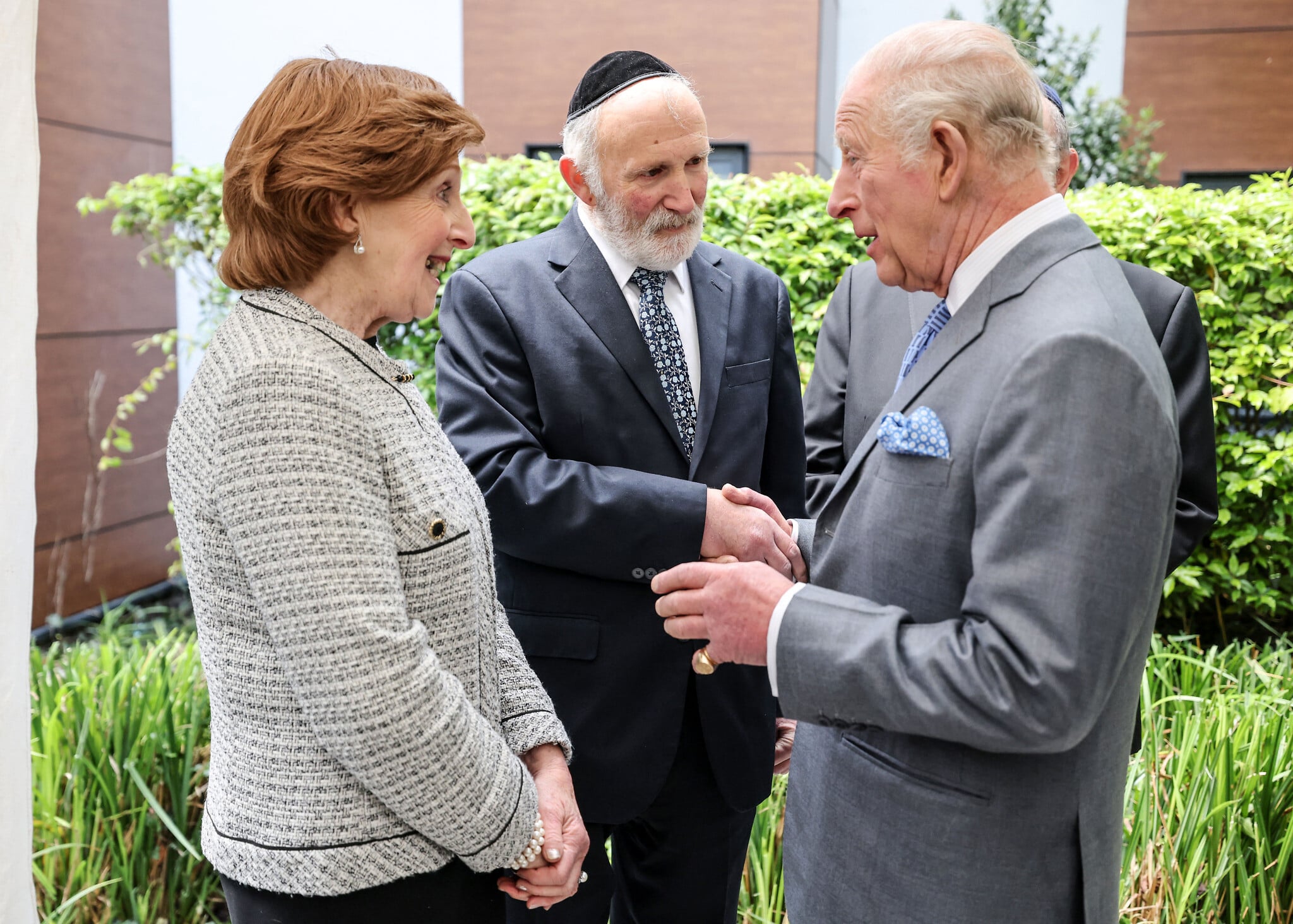
The monarch visited the head office of Jewish Care, a leading nonprofit health and social care organization serving the local Jewish community, and met with the two men who were stabbed just feet away from the building as he sought to express his support for the country’s under fire Jewish community.
British Chief Rabbi Ephraim Mirvis, who was also at the meeting, along with Metropolitan Police chief Mark Rowley, told Charles his visit was much appreciated by the victims, 34-year-old Shloime Rand and 76-year-old Norman Shine.
Mirvis later wrote on Facebook: “Thank you, your Majesty, for coming today to Golders Green to bring comfort and encouragement to our Jewish community.”
Charles was met by a cheering crowd of people who live and work in the area, many of whom called out, “Long live the King,” as he arrived. Some had come after hearing about the visit in the synagogue, while others picked up the news while shopping at nearby stores such as Kosher Kingdom.
Speaking afterwards, Shine, who was stabbed in the neck, said he had felt “genuine warmth” from the monarch.
“The most inspiring thing was that he didn’t let go of my hand,” said Shine. “I mean, it was amazing. He is the king, but I felt a genuine warmth and concern.”
Somali-born Essa Suleiman, 45, has been charged with three counts of attempted murder in connection with the stabbing on April 29. He is accused of trying to kill another man before stabbing Rand and Shine that day.
The trip to Golders Green came the day after the king’s speech that marked the opening of parliament at Westminster, in which Charles outlined government plans to introduce tougher new legislation to protect the Jewish community from growing antisemitism. It also coincided with the publication of a letter by Prince Harry, who is estranged from Charles, condemning the “deeply troubling” rise in antisemitism in the country.
The stabbings were the most recent in a string of attacks on Britain’s Jewish community in recent months, amid an unprecedented spike in antisemitism following Israel’s wars in Gaza and Iran, which were sparked by the October 7, 2023, Hamas massacre.
Two men were killed during Yom Kippur services in a Manchester terror attack this past October, and four ambulances belonging to the Jewish volunteer emergency service Hatzola were torched by arsonists in March, as the nonprofit Community Security Trust reported that 3,700 antisemitic incidents were recorded targeting the community of 290,000 last year.
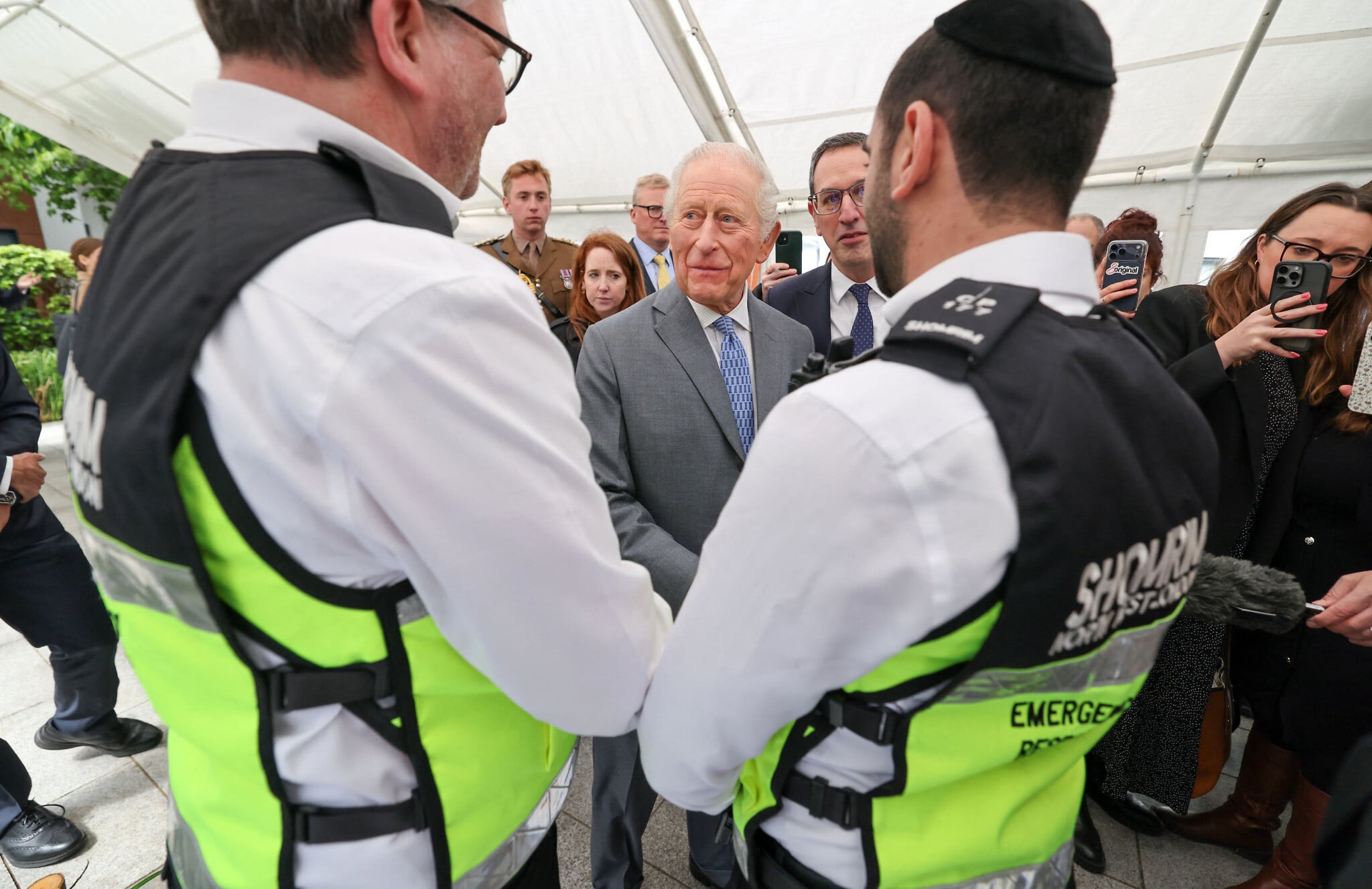
While at Jewish Care, Charles also met with representatives of the emergency response service Shomrim, who were first responders at the stabbing and apprehended the attacker.
Outside, Charles chatted with members of the Jewish community who had waited to catch a glimpse of him.
“It’s a dangerous world, isn’t it?” the king said, while speaking with members of the public. When another person described the April 29 attack as “horrific,” Charles replied: “I know.”
The visit was intended to “reaffirm his steadfast support” for the Jewish community amid rising security concerns following the attack, Buckingham Palace said in a statement.
He was presented with a loaf of challah from the popular Grodz bakery, which has been a much-loved institution in London for over a century, and also spoke with children from a local primary school. Pasted to the railings behind the children was a sign decorated with pictures of London buses and featuring the Hebrew wording for a prayer traditionally recited upon seeing royalty.
The King’s grandmother, Princess Alice of Battenberg, was recognised as Righteous Among the Nations for saving Jews during the Holocaust.
Following the horrific rise in antisemitism and the recent terror attacks targeting Jews, the King has visited Golders Green today.
At a… pic.twitter.com/Q77uxKOBZk
— Dov Forman (@DovForman) May 14, 2026
One woman, who asked to be named only as Leah, explained the meaning behind the blessing.
“The Jewish people revere monarchy, whether they’re Jewish or not. And we are given an opportunity of making a special blessing when you see monarchy in real life, whether a king or a queen,” she said, adding that this is different from the prayer for the royal family traditionally recited in synagogue on Shabbat mornings. “It’s a special blessing to thank them for the ability to live safely and for sharing the honor of their kingdom with us — and that is what we all hope to say now.”
Leah said she has lived in the area for 36 years, after moving from New York.
“This country has always been very good to me — until now,” she said.

A man who asked only to be named as Yakir said he came down to join the gathering after hearing about the king’s imminent visit at synagogue this morning.
“He should know what’s going on in the world and hopefully things will get better. It must stop,” Yakir said of antisemitism in Britain.
Susan Winegarten, 77, had the wording for the prayer open on her phone. There with her granddaughter, Winegarten told The Times of Israel that she had previously recited it when she saw the royal entourage on its way to the late Princess Diana’s funeral, and also while as a guest with her husband at a garden party at Buckingham Palace.
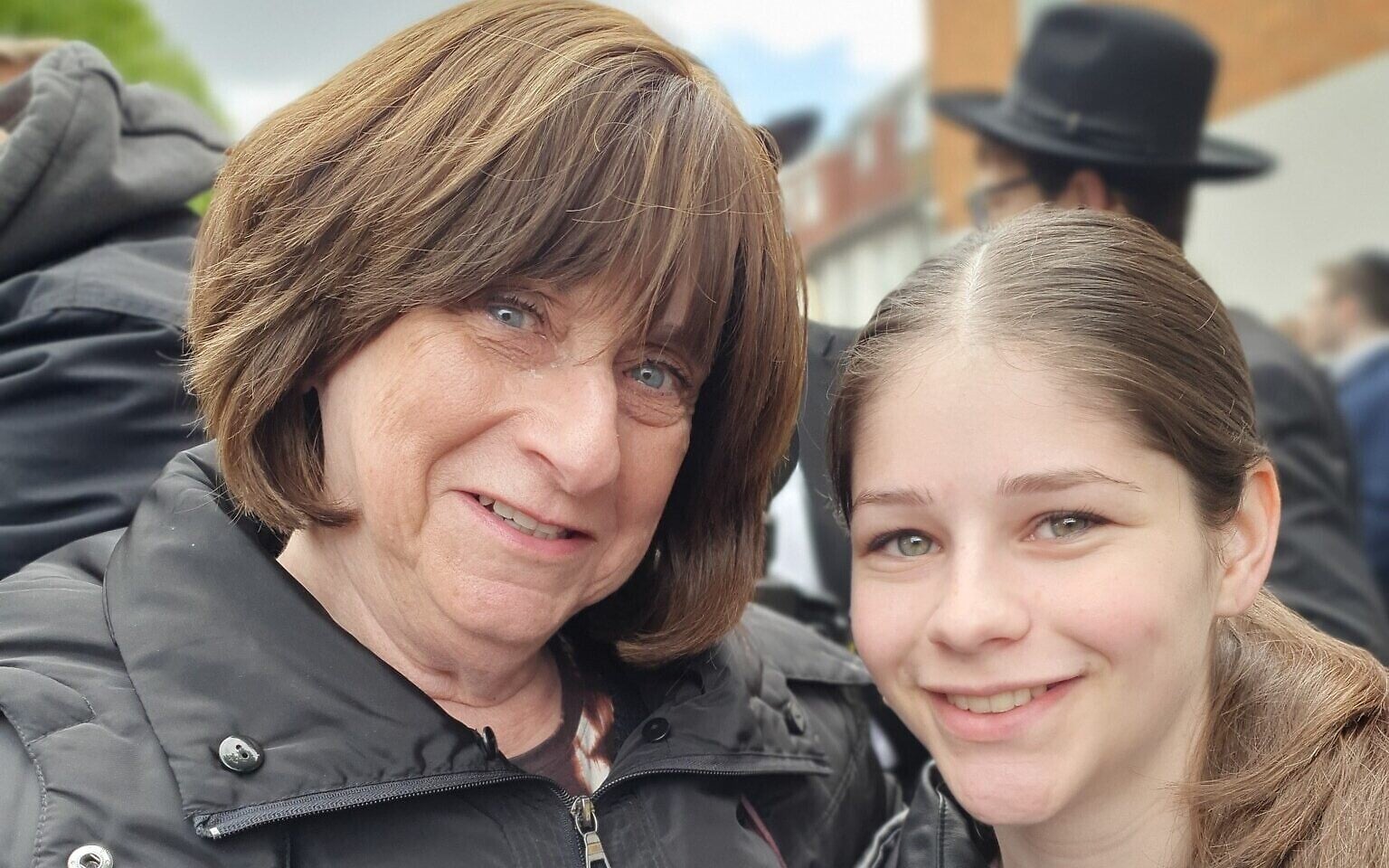
Winegarten had also attended the procession for the coronation of the king’s late mother, Queen Elizabeth II, when she was just 4 years old. She described Charles’s visit at this difficult time for the community as “lovely.”
Winegarten said the stabbing took place down the road from where she lives.
“It was crazy,” she said. “The roads were all blocked. I couldn’t get out, even to walk.”
She said she was born and spent much of her life in Golders Green, and could never have imagined something like this happening. “It just doesn’t seem real,” she said.
Zev Stub and AFP contributed to this report









The Times of Israel Community.