

Live Now
 Add ToI as a Preferred Source on Google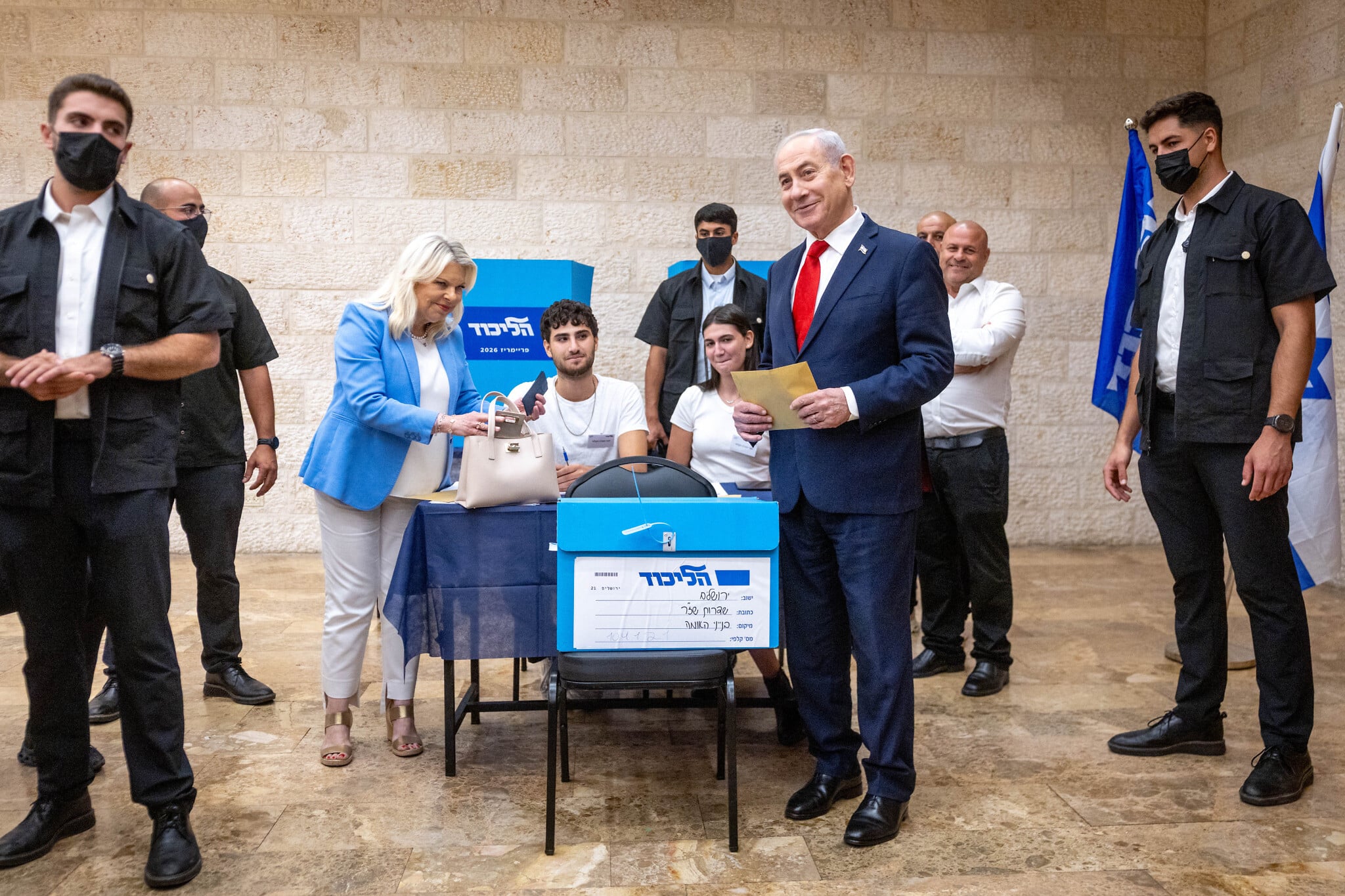




Key updates
Iran condemns ‘suspicious’ drone attack on Iraqi Kurdistan PM’s office
Iranian Foreign Ministry spokesman Esmaeil Baghaei condemns a drone attack that targeted the Iraqi Kurdistan prime minister’s office overnight, state media report.
Baqaei denounces the attack, “describing it as a highly suspicious development that requires vigilance and careful attention,” according to a statement carried by state news agency IRNA.
Kushner predicts progress on Hamas disarmament in about 30 days, says deal is ‘win-win’ for Israel

Jared Kushner speaks during a news conference following a military briefing with US Vice President JD Vance at the Civilian-Military Coordination Center in Kiryat Gat, October 21, 2025. (Nathan Howard/The New York Times via AP, Pool, File)
Progress in getting Hamas to give up its weapons and move forward with a Gaza peace plan could materialize in about a month, US President Donald Trump’s envoy Jared Kushner says.
“We could be seeing progress… in as little as 30 days, hopefully in starting to take some of the weapons out,” Kushner tells Fox News while in Israel.
Filling in Gaza’s Hamas tunnels could happen in the next 60 to 90 days, Kushner says.
“Progress could come quite soon, but we do need cooperation from both sides,” he says.
Kushner, who is Trump’s son-in-law, said the Israeli side voiced some “valid concerns” during his meeting earlier today with Prime Minister Benjamin Netanyahu in Jerusalem.
For example, the Trump administration is committed to helping rebuild Gaza — destroyed in the war that followed the Hamas-led October 7, 2023, attack.
“But we will not allow Gaza to be rebuilt until the demilitarization occurs. Nobody wants to put more money into a place… if it’s just going to be taken over by terrorists,” he says. “We’re also not going to restrict Israel’s right to defend itself if there are any imminent threats and so we had to clarify what that means.”
“For Israel we think it’s a win-win situation,” Kushner says. Either Hamas will go ahead in disarming “willingly over the next 60 to 90 days” or “Israel will have a lot more support from the US and others to go and finish the job in the appropriate way.”
Kushner says he had a “very cordial” meeting with Hamas officials, but “it’s very, very hard to trust a terrorist organization.”
“They said all the right things, so we’re going to give them a chance to perform,” he adds.
New poll shows opposition bloc getting Knesset majority if new right-wing party runs
A poll by Channel 12 shows the anti-Netanyahu bloc of parties securing a majority of the Knesset following the October 27 election if a new right-wing party headed by retired maverick Gen. Ofer Winter runs and joins that camp.
Without Winter, the poll shows results consistent with many previous polls. The opposition parties would receive 60 seats, one short of a majority in the 120-seat Knesset, while the parties supportive of Prime Minister Benjamin Netanyahu would get 50 seats, and Arab parties would win the remaining 10 seats.
In present conditions, the opposition Yashar party headed by Gadi Eisenkot would win 24 seats and Netanyahu’s Likud would win 22 seats.
The opposition B’Yachad party headed by former prime minister Naftali Bennett would win 15 seats, followed by the left-wing Democrats at 11 and hawkish opposition Yisrael Beytenu at 10.
Two pro-Netanyahu parties — Haredi United Torah Judaism and far-right Otzma Yehudit — would each win eight seats. The Sephardi Haredi Shas would win seven and far-right Religious Zionism would win five. The Arab parties, Hadash-Ta’al, and Ra’am — would also win five each.
If Winter — who has garnered controversy on the battlefield and was released from the army, but is a proponent of drafting Haredim — forms a party that joins the anti-Netanyahu bloc, he will win five seats and bring the bloc’s total tally to 63k, the poll indicated.
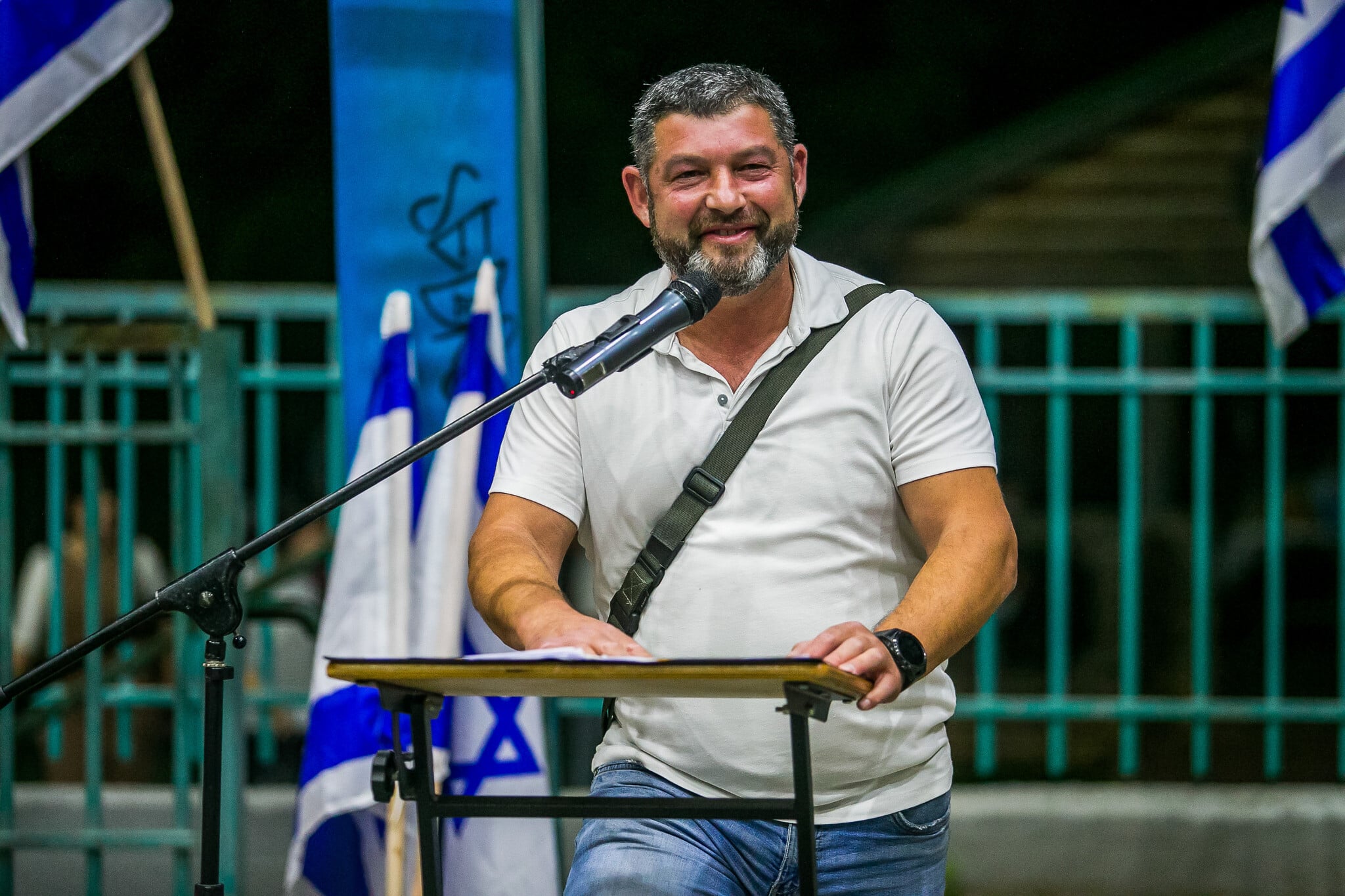
It appears that he would draw many of his votes from the far-right Religious Zionism, which is a pro-Netanyahu party, according to Channel 12.
Key Update
Amid Israeli pushback to phased Gaza withdrawal, source reveals Board of Peace weighing new disarmament framework
Amid pushback from Israel over the Board of Peace’s plan to disarm Hamas, which envisions a corresponding phased IDF withdrawal from Gaza, a source directly familiar with the negotiations reveals to The Times of Israel that the US-controlled panel is considering a completely new framework under which Hamas would hand over its weapons.
The original disarmament roadmap approved by Hamas breaks the roughly 47 percent of the Gaza Strip still controlled by Hamas into five sectors and envisions each sector being demilitarized successively.
Under that framework, once the weapon handovers and tunnel destruction for a particular sector are verified by the Board of Peace, the IDF would be required to pull back the troops it has stationed along that decommissioned sector. The troops would redeploy closer to the Gaza-Israel border, moving back from the Yellow Line to a Red Line, as demarcated in the map issued as part of US President Donald Trump’s 20-point plan for ending the Gaza war from September 2025.
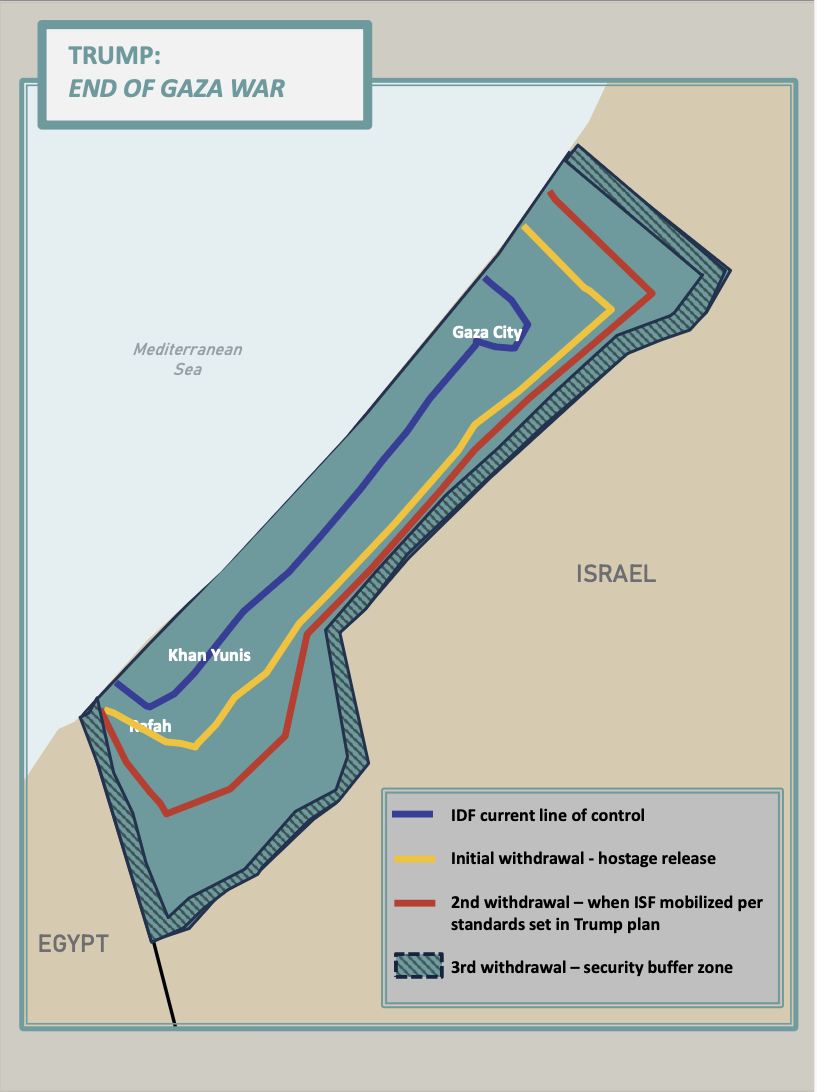
Netanyahu has come out against that framework, insisting that Israel will conduct no withdrawals until Hamas has been completely disarmed.
A second official familiar with the matter acknowledged that the dispute was not resolved during Monday’s Jerusalem meeting between top Trump aide Jared Kushner and Netanyahu.
While the first source familiar with the negotiations clarifies that the Board of Peace has not abandoned the original phased framework, he acknowledges that a wholesale approach is being considered.
In this different approach, the entire area currently under Hamas’s control would be decommissioned of weapons all at once, rather than sector by sector, the source says.
Once that wholesale disarmament has been verified by the Board of Peace, Israel would be required to withdraw its troops, not to the Red Line, but all the way to the perimeter of Gaza, the source adds.
Such a drastic change to the disarmament roadmap would inevitably require Hamas’s approval, in what would surely drag out the process further.
Arab diplomats from mediating countries have told The Times of Israel that this was the risk in trying to advance the disarmament plan before the October 27 Knesset election, given that Netanyahu is unlikely to make any substantive concessions as the vote approaches.
The source’s revelation helps explain a statement issued by a Board of Peace official earlier Monday that claimed Netanyahu and Kushner agreed “that there will be no IDF redeployment from Gaza until Hamas is fully disarmed and all of Gaza is demilitarized — every weapon, light and heavy, and every tunnel.”
The source notes that the operative phrase in that sentence is “from Gaza,” meaning that the sides have agreed that Israeli troops won’t be required to physically pull out of the Gaza Strip.
But that was never the main dispute, since the original Board of Peace plan only requires the IDF to pull its troops back closer to the Israel-Gaza border as each sector is verifiably decommissioned, rather than pull out of Gaza completely.
Given that Netanyahu has not agreed to such withdrawals, the Board of Peace sufficed with reiterating a point that the sides have already accepted.
Key Update
Despite coalition objections, 159 ballot boxes to be placed in assisted living facilities
Illustrative. An Israeli elections ballot box. (Hadas Parush/ Flash90)
The Central Elections Commission is planning to place ballot boxes in 159 assisted-living facilities, despite efforts by pro-Netanyahu parties to block the facilities from serving as polling places, according to Ynet.
Older voters tend to lean against Netanyahu, so removing ballot boxes from the facilities would likely depress turnout among that demographic. The coalition advanced legislation last month to block the placement of the ballot boxes.
But the Central Elections Committee has submitted an outline to the Supreme Court that would place the boxes in facilities that requested them and meet the relevant criteria. That represents a decrease from 290 that previously served as polling places, according to the report.
Trump says Iran won’t agree to the deal US says is needed, he’s not looking to extend MOU

US President Donald Trump speaks as he meets with lifeguard Ryder Williams in the Oval Office of the White House, August 17, 2026, in Washington. (AP Photo/ Manuel Balce Ceneta)
US President Donald Trump tells reporters that Iran “wants to make a deal, but they’re not going to make the kind of deal that I feel is necessary.”
He adds that the United States is not seeking an extension of the 60-day memorandum of understanding with Iran that was signed in June and expired on Monday.
PM, Kushner, agree on deconfliction mechanism for reacting to Hamas threats in Gaza — report
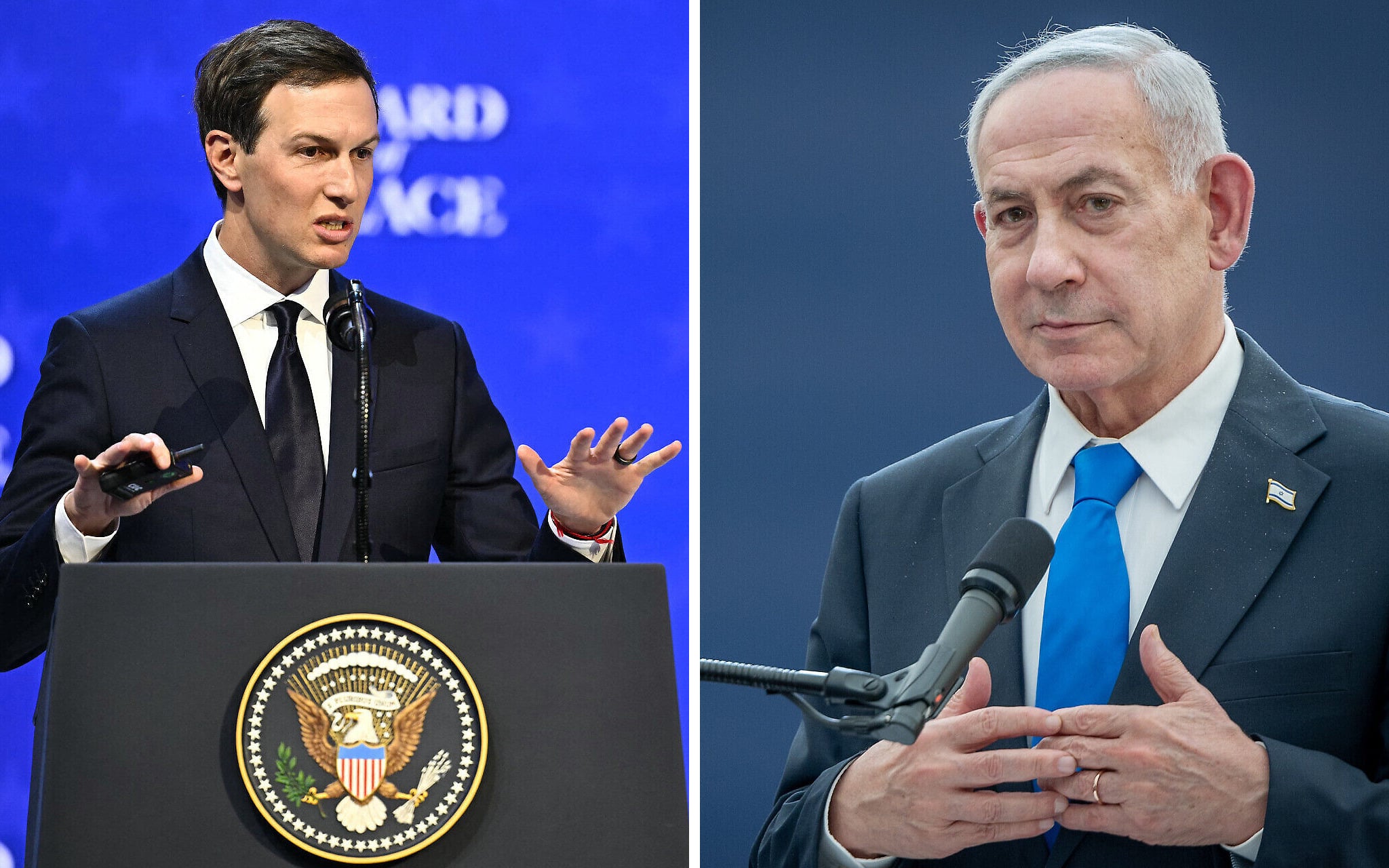
Left to right: White House adviser Jared Kushner, Board of Peace envoy Nickolay Mladenov, Prime Minister Benjamin Netanyahu. (Fabrice COFFRINI / AFP, Chaim Goldberg/FLASH90)
Prime Minister Benjamin Netanyahu and US President Donald Trump’s son-in-law and adviser Jared Kushner agreed during their meeting today to establish a deconfliction mechanism for assessing emerging Hamas threats in Gaza, as Washington presses Israel to allow the terror group to demonstrate that it is serious about disarming, Channel 12 reports, citing a senior US official.
Netanyahu’s office said earlier that the sides agreed to establish two working groups focused on Gaza’s demilitarization and humanitarian needs during today’s meeting, but did not elaborate on the composition of or precise role of the groups.
The premier has expressed heavy skepticism about Hamas’s commitment to disarm, and brought to the meeting Shin Bet chief David Zini and IDF head of military intelligence Shlomi Binder to brief Kushner on alleged Hamas violations of Trump’s Gaza plan, another source familiar with the details of the meeting tells the Hebrew network.
Kushner made clear to Netanyahu that the reconstruction of Gaza would begin only after the demilitarization process was completed, and that the Board of Peace supports Israel’s right to act against imminent threats from Hamas, but that Israel should not define “imminent threats” too broadly, the US official says.
To that end, Kushner and Netanyahu agreed to establish a deconfliction mechanism for Gaza, to assess whether Israeli claims of emerging threats are genuine or could be resolved through non-military means, the official says.
Israeli military officers have previously said that rules of engagement in the territory are much tighter now than they had been before the disarmament plan was unveiled.
Kushner told Netanyahu that the Hamas disarmament process would see Hamas hand over its weapons to the Board-backed Palestinian technocratic government, which would transfer those weapons to the International Stabilization Force, a peacekeeping body meant to secure postwar Gaza, which would then destroy them, the official continues.
The US official says the gaps with Israel are not huge, but that Washington wants Jerusalem to take limited steps to give the process room to test whether Hamas actually begins surrendering its weapons.
During the meeting, Netanyahu pressed Kushner on why he chose to meet senior Hamas officials in Egypt yesterday, to which Kushner responded that he wanted to hear their commitment to disarmament directly from them, “face-to-face,” the US official says.
Kushner also told Netanyahu that his last in-person meeting with Hamas officials, alongside US special envoy Steve Witkoff, resulted in the October 2025 hostage release deal, the official adds.
In unusual cross-party move, far-right minister’s aide says he recruited 324 Likud members

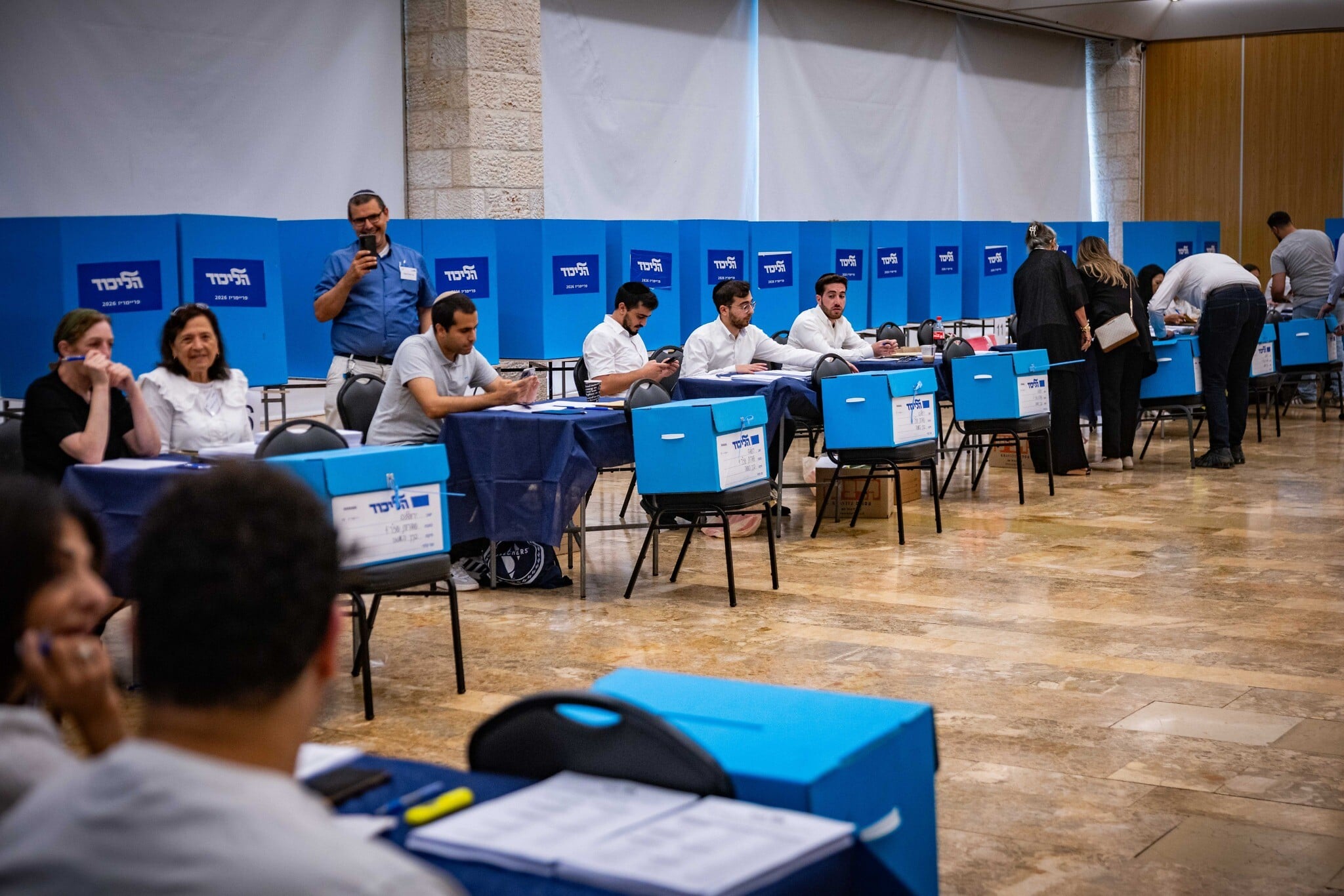
Likud members vote in the party's primary in Jerusalem, August 17, 2026. (Sam Sokol/The Times of Israel)
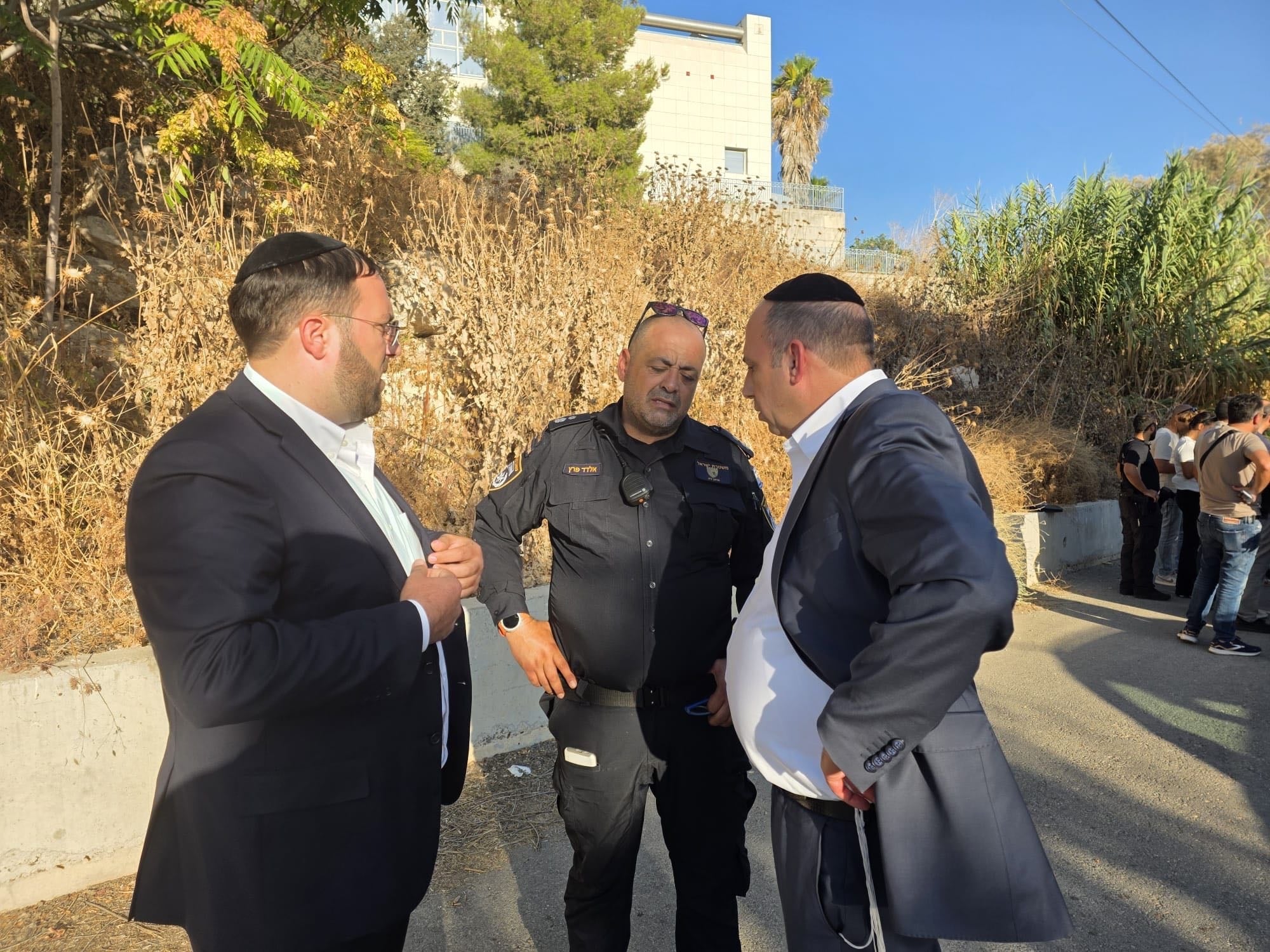
A senior aide to Heritage Minister Amichai Eliyahu of the far-right Otzma Yehudit party says he convinced hundreds of people, including members of the ultra-Orthodox community, to sign up as members of Prime Minister Benjamin Netanyahu’s ruling Likud party ahead of its primary election today.
The effort by Israel Diskind, Eliyahu’s spokesman, is an unusual case of a prominent figure affiliated with one party becoming involved in another party’s primary election, in a bid to influence the shape of the next government. In Diskind’s case, he hopes the voters he registered support candidates who demand more safety precautions at an annual Jewish pilgrimage that was the site of a disaster in 2021.
Speaking to The Times of Israel outside a polling place during the Likud party primary in Beit Shemesh, Diskind says that he convinced 324 people to join Likud, even though he is aware that not all of them will vote for the party on election day.
Diskind was motivated because in 2021, a crowd crush killed 45 ultra-Orthodox men and boys, including Diskind’s brother, and injured over 100, as they traversed a slippery walkway at the annual Lag B’Omer pilgrimage in Meron, in Israel’s deadliest peacetime civilian disaster to date. A state commission of inquiry blamed a number of senior officials, including Netanyahu, for the incident and changes have been made as to how to pilgrimage is run.
Diskind was formerly a spokesman for the bereaved families and has been active regarding the issue.
He believes more fixes are necessary and blamed ultra-Orthodox lawmakers for failing their constituents and “not taking care” of the issue, stressing that he is not trying to push Likud to violate core principles of the political right such as advocating for West Bank settlements, and is not trying to send “a Trojan horse inside Likud.”
Elaborating in a subsequent message, Diskind states that he “prefers not to be a Likud member, but rather to influence it.”
“I started registering members 3 years ago when I realized from within the government how the Likud game works, and how necessary it is to build an influential power base in Likud in order to succeed in driving actions like the Meron repairs and building the memorial at the disaster site,” he writes.
“I have brought in quite a few people who managed to complete the qualifying period, and there are others who will only be able to vote [in primaries] later on,” he adds.
Report: Military brass from Uganda, Burundi in Israel to discuss joining Gaza security force
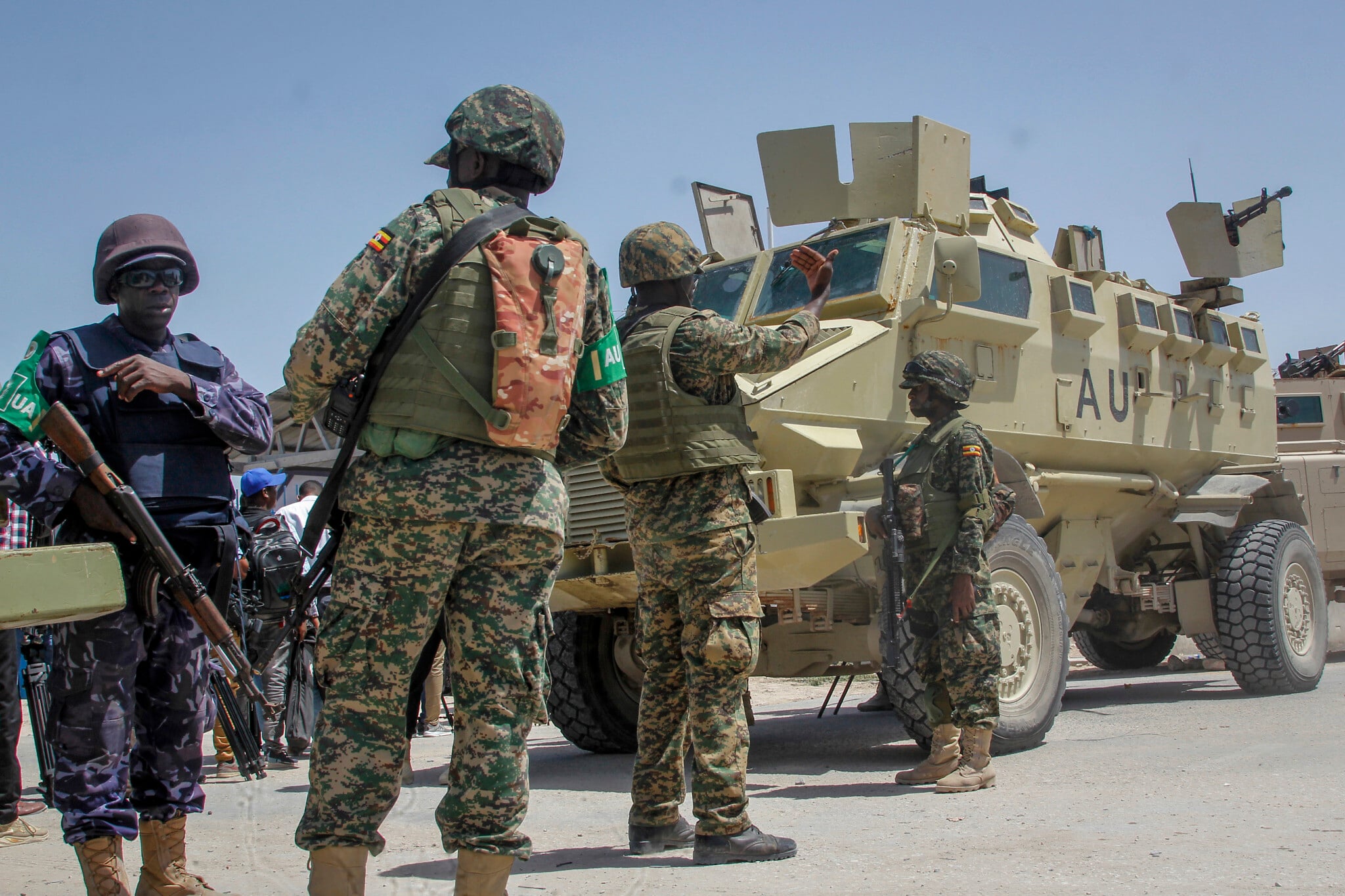
African Union peacekeepers from Uganda provide security as Somali lawmakers arrive to cast their vote in the presidential election, at the Halane military camp in Mogadishu, Somalia May 15, 2022. (AP Photo/Farah Abdi Warsameh)
Senior military officers from the African nations of Uganda and Burundi visited the US-led Civil-Military Coordination Center in Kiryat Gat today to discuss sending hundreds of soldiers to join the nascent international security force meant to patrol postwar Gaza, the Kan public broadcaster reports.
Uganda’s parliament earlier this month approved the deployment of troops to Gaza as part of the international force proposed by US President Donald Trump’s Board of Peace to secure the territory following the devastating Israel-Hamas war and the withdrawal of the IDF from the enclave.
However, this marks the first report of the involvement of Burundi in the International Stabilization Force for Gaza.
The force, proposed by Trump’s Board of Peace in February, would be led by American Maj. Gen. Jasper Jeffers, who said in May that the envisioned 20,000-strong force would ensure “future prosperity and enduring peace.”
However, the progress of the truce is currently held up by a dispute between Israel and Hamas over demands that the terror group disarm and Israel withdraw from its positions in the Strip. Hamas has accepted a framework proposed by the Board of Peace, while Prime Minister Benjamin Netanyahu has rejected it, demanding Hamas’s full disarmament before any Israeli withdrawal.
Woman gives birth to baby with unknown father in latest Assuta IVF scandal

Assuta Medical Center in Tel Aviv's Ramat HaHayal neighborhood, May 20, 2023. (Avshalom Sassoni/Flash90)
A woman who underwent in-vitro fertilization at Assuta Medical Center in Tel Aviv is taking legal action after a DNA test revealed that her baby was born from the wrong sperm donor, according to a report on Channel 12.
The woman discovered what had happened after her second child was born, and bore no resemblance to his older brother. The woman subsequently did the DNA test and found that she did not recognize the baby’s biological father, the report says. The two boys were meant to be born from the same donor.
This is the third such scandal to hit Assuta, which pledged to reform its operations following the previous errors.
“When she received the results, her world was destroyed,” the woman’s lawyers wrote in a letter to the Health Ministry. “As of today, she doesn’t know the identity of the man whose sperm fertilized her egg, his genetic and health information, and his characteristics and personality, including his religion.”
Assuta said in a statement to Channel 12 that it has begun a “deep investigation” of the matter and that “at this stage, it is impossible to reach conclusions and additional investigation is necessary.” The hospital said it is in touch with both the mother and the Health Ministry.


read more: