EU says won’t recognize unilateral Israeli annexation in West Bank
Bloc’s FM reiterates support for two-state solution, says Israel’s extending of sovereignty over settlements, Jordan Valley would be ‘contrary to international law’
Joshua Davidovich is The Times of Israel's Deputy Editor
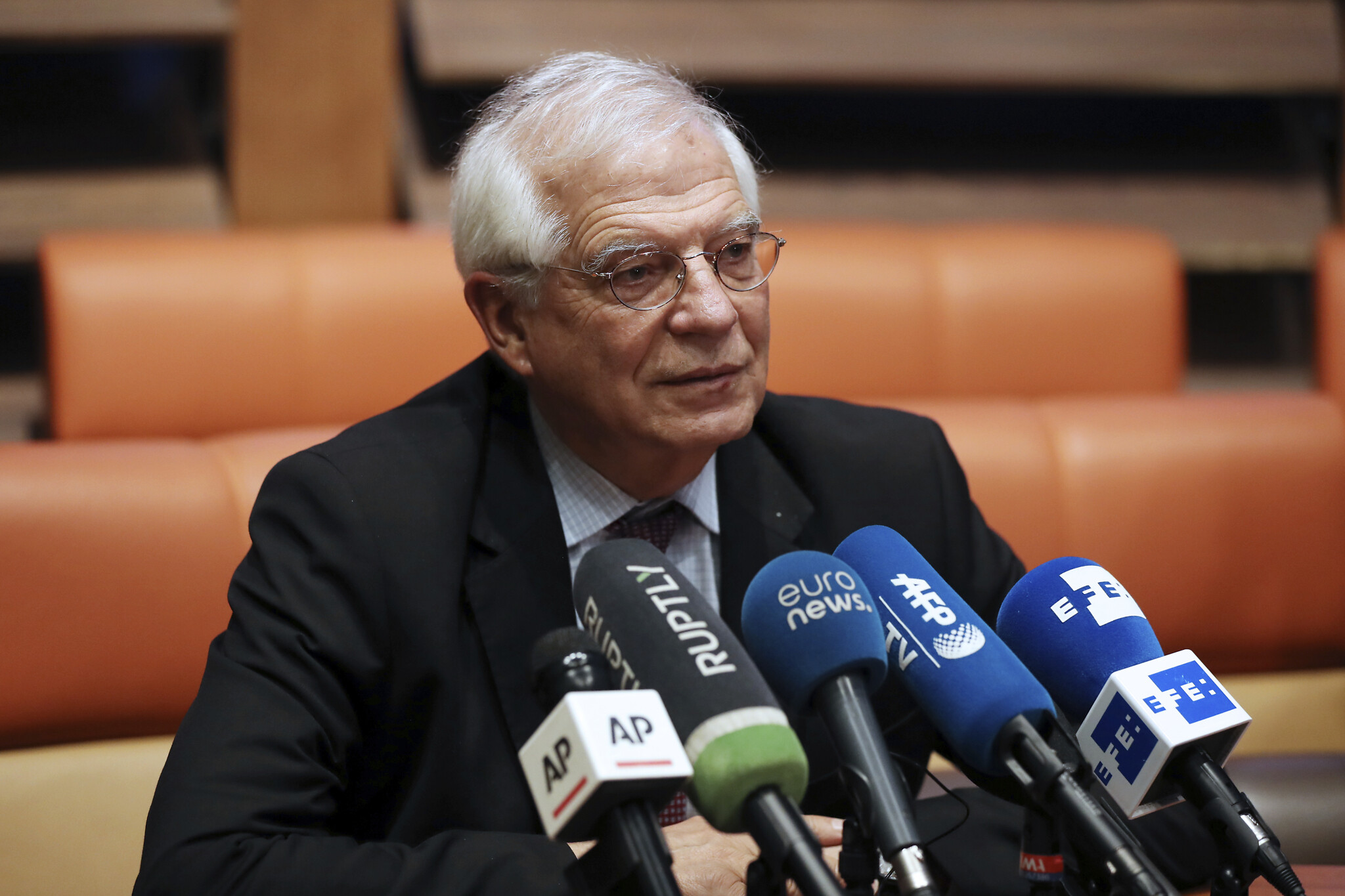
European Union foreign policy chief Josep Borrell gives a press briefing after his meetings with Iranian leaders, in Tehran, Iran, February 3, 2020. (AP Photo/Vahid Salemi)
The Times of Israel liveblogged Monday’s events as they unfolded.
Opposition figures are starting off their day by chomping at the new government along with their morning coffee and Danish.
“[Prime Minister Benjamin Netanyahu] is an able politician who managed to fold half of Blue and White under him and make a government. This is a disgusting government, bloated and broken,” opposition chief Yair Lapid of Yesh Atid-Telem tells Kan radio.
“I’m happy I am not in this revulsion, there is no other way to describe this coalition,” Yisrael Beytenu leader Avigdor Liberman tells Army Radio. “They are taking apart and putting together ministries like it’s a Lego toy.”
“We’ll do everything to shorten the life of this government, with the help of Yair Lapid and others,” says Joint List head Ayman Odeh, also to Army Radio.
A man from the coastal town of Jisr al-Zarqa has been found dead with apparent gunshot wounds, it what may be the third shooting death within hours.
The man, 26, was found on a street in the nearby city of Harish. Police are investigating.
According to the Ynet news site, the victim, who is not named in press reports, is known to police.
On Sunday afternoon, 59-year-old Abd Elhalim Shlavi was gunned down in the central Israeli city of Qalansawe, hours before Matan Levi, 23, was shot to death in Kiryat Ata, near Haifa.
There is no announced link between the killings. No suspects have been named.
Israel is gearing up for another scorcher, with temperatures expected to soar to 44°C (111°F) in some places Monday, as a heat-wave continues to melt the country from Eilat to the Golan.
The Parks and Nature Authority has called on people to avoid going on hikes or visiting nature spots without shade for fear of people suffering heatstroke. On Sunday, the parks service closed several areas because of the heat.
Israelis enjoy the beach in Tel Aviv, as temperatures rise to 40 degrees in some parts of the country, May 16, 2020. (Miriam Alster/Flash90)
The heat wave is expected to last until the weekend, though some slight relief is predicted for Friday, when the mercury will slump to a merely toasty 35°C (95°F) or slightly lower in some places, before dropping to more seasonal temperatures on Saturday.
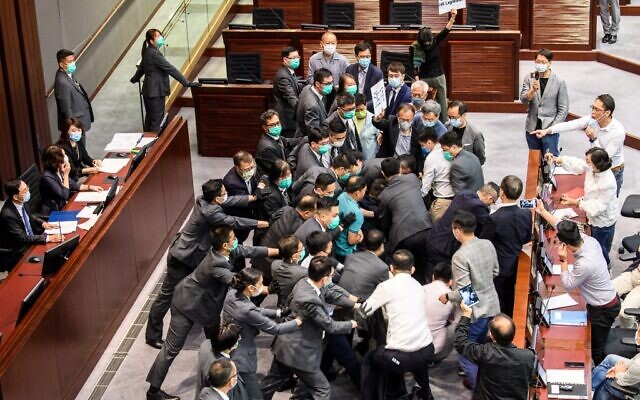
Clashes have broken out in Hong Kong’s legislature for the second time this month as the city’s pro-democracy camp tried to scupper a controversial law that bans insulting China’s national anthem.
Fighting erupted in the House Committee, a body that helps scrutinize bills, with protesting pro-democracy lawmakers dragged from the chamber by security guards and scuffles between rival camps flared up on the chamber floor.
The committee has been without a leader since October, meaning no bills have made it to the legislature for a vote, including one that criminalizes ridiculing or altering the national anthem.
Pro democracy and pro Beijing lawmakers scuffle at the House Committee’s election of chairpersons at the Legislative Council in Hong Kong on May 18, 2020. (Anthony WALLACE / AFP)
Pro-democracy lawmakers have used filibustering and procedural delays to stop voting for a new chair. But in recent weeks pro-Beijing politicians have moved to break the stalemate.
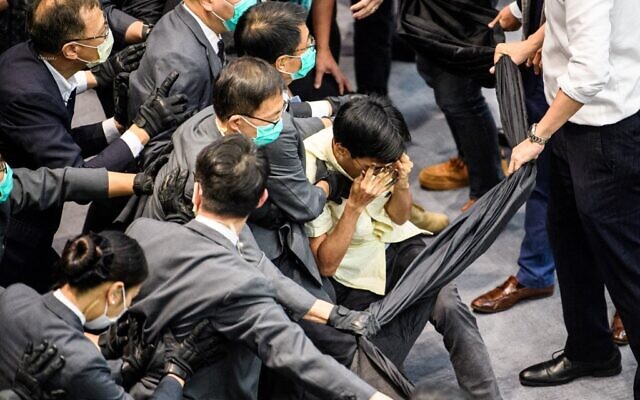
During Monday’s scuffles, one pro-democracy lawmaker threw torn up pages of the legislature’s rulebook at his opponents. Others were wrestled out the chamber by suited security guards in facemasks and leather gloves.
Pro democracy lawmaker Eddie Chu (center right) is surrounded by security during a scuffle with pro Beijing lawmakers at the House Committee’s election of chairpersons at the Legislative Council in Hong Kong on May 18, 2020. (Anthony WALLACE / AFP)
The chaotic scenes are the latest expression of an entrenched political crisis engulfing Hong Kong.
The Lod District Court court is set to hand down its verdict this morning in the murder trial of the primary suspect in the 2015 firebombing of a Palestinian family’s home in the West Bank village of Duma.
Amiram Ben-Uliel, who was indicted January 3, 2016, for murder in the killing of the Dawabsha family in Duma (courtesy)
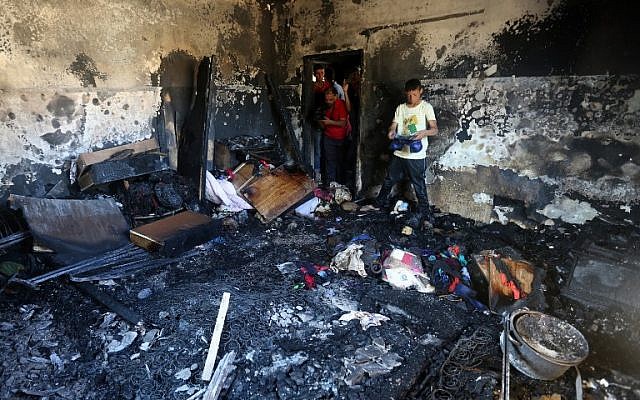
Amiram Ben-Uliel is suspected of hurling a Molotov cocktail into a home in the West Bank village of Duma in July 2015, killing three members of the Dawabsha family sleeping inside, including a baby.
Ben-Uliel is one of two suspects who have been indicted on terror charges in the attack. The second, an accomplice who’s name has not been released as he was a minor at the time of the attack, reached a plea agreement with the State Prosecutor’s Office last May in which he admitted to having planned the torching of the Dawabsha home. If convicted, he faces life in prison.
Palestinians look at the damage after a house was set on fire and a baby killed, allegedly by Jewish terrorists, in the West Bank village of Duma, on July 31, 2015. (AFP/Jaafar Ashtiyeh)
According to the indictment against him, Ben-Uliel and a teen accomplice planned to carry out an attack against Palestinians as revenge for a fatal drive-by shooting days earlier.
When the younger accomplice failed to show at the rendezvous point in July 2015, Ben-Uliel decided to carry out the attack on his own, the charge sheet says. He entered the Duma village and sprayed Hebrew graffiti on one home, then hurled Molotov cocktails through the windows of a pair of homes. The first building was empty, but in the second slept the members of the Dawabsha family. Eighteen-month-old Ali Saad Dawabsha was burned to death along with his parents, Riham and Saad, while 4-year-old Ahmad was seriously injured.
Saad and Riham Dawabsha, with baby Ali. All three died when the Dawabsha home in the West Bank village of Duma was firebombed, by suspected Jewish extremists, on July 31, 2015 (Channel 2 screenshot)
Ben-Uliel, has claimed innocence, insisting he only confessed to the crime after being subjected to torture at the hands of Shin Bet interrogators.
In 2018, a panel of Central District Court judges ruled that confessions given under duress by Ben-Uliel would be inadmissible in the case against him.
However, additional confessions given when not under enhanced interrogation were ruled admissible and the prosecution has insisted they are enough to convict Ben-Uliel.
The Lod District Court has found the primary suspect in the 2015 firebombing of a Palestinian family’s home guilty of murdering three members of the Dawabsha family.
In addition to three counts of murder, Amiram Ben Uliel was convicted of two counts of attempted murder and one count of arson. The court acquitted him on charges of membership in a terror organization.
The right-wing Honenu legal aid group is decrying the conviction of Amiram Ben Uliel on three counts of murder for killing three members of a Palestinian family in a 2015 firebombing.
“This is a black day for the State of Israel,” the head of the group says, according to Israel National News. “A day when an Israeli court lent a hand to convicting a man whose innocence cried out to the heavens.”
The Lod District Court says it will hold a hearing on sentencing for Amiram Ben-Uliel on June 9, before making a final decision sometime later.
While he was cleared of belonging to a terror organization, he was convicted of conspiracy to carry out a hate crime, and the verdict treats his attack on the Palestinian Dawabsha family as terror, which could affect sentencing.
Right-wing lawmakers have pushed in recent years, without success, to legislate a death penalty for terrorists.
Speaking to The Times of Israel immediately after the ruling, Hussein Dawabsha says he is “satisfied by the verdict” and that it is “good that the murderer would remain behind bars, but that it will not return” his daughter Riham, son-in-law Sa’ad and his eighteen-month-old grandson.
He says 9-year-old Ahmed Dawabsha, who survived the attack but suffered extensive burns, “is asking every night where his mother is, where his father is, where his brother is. This verdict does not make it any easier to answer him,” Dawabsha says.
Ahmed Dawabsha, the sole survivor of a West Bank arson attack in Duma village, is carried by his grandfather Hussein at the Tel HaShomer Hospital in Ramat Gan, Israel on July 22, 2016 (AP Photo/Tsafrir Abayov)
“I hope this ruling serves as deterrence and prevents other terrorists from attacking innocents,” he adds, claiming that other accomplices in the attack on his family were still roaming free and calling on authorities to bring theme to justice as well.
Nasser, an uncle, also tells the channel that the pain for Ahmed Dawabsha is not dissipating.
“He goes around with kids his age and feels like he’s missing something, because he lost his mother and father.”
He also says that settlers in the area continue to attack and threaten Palestinians, with the backing of the IDF.
Yitzhak Bam, an attorney for Amiram Ben-Uliel, says he will appeal his client’s conviction at the Supreme Court, accusing the judges of “legal acrobatics” and relying on coerced statements that had been ruled inadmissible.
“Amiram was convicted of acts to which he admitted but not acts that he committed. His confession was given during a serious violation of his rights, which included torture, and we hope that the Supreme Court will overrule this decision,” Bam says.
The state prosecution has informed attorneys for Rabbi Eliezer Berland that it intends to charge him with money laundering, tax evasion and other financial crimes, according to reports in Hebrew-language media.
Rabbi Eliezer Berland arrives for a hearing at the Jerusalem District Court on February 28, 2020. (Yonatan Sindel/Flash90)
Berland, the head of the Hasidic Shuvu Bonim sect, is already facing charges over his alleged role in a miracles for money scam in which he is accused of taking millions from sick people for prayers or fake cures.
Berland previously served time in prison for sexual assault, following a several-year international manhunt.
The new charges can only be filed after he is given a hearing.
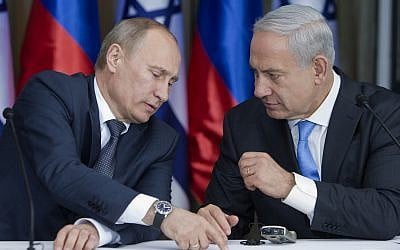
Russian President Vladimir Putin has sent a message to congratulate Benjamin Netanyahu on assuming office for another term as prime minister, the Kremlin says.
Russian President Vladimir Putin (left) with Prime Minister Benjamin Netanyahu, as they prepare to deliver joint statements, after a meeting and a lunch in the Israeli leader’s Jerusalem residence, June 25, 2012. (AP/Jim Hollander, Pool/File)
“I greatly appreciate the relations established between us, which create opportunities for a detailed and efficient discussion of any issue on the bilateral and international agendas, even the most complicated ones. I expect that the new government under your leadership will continue the trend of developing friendly relations and mutually advantageous cooperation between our nations. It obviously meets the interests of the peoples of Russia and Israel and is in line with the need for peace, security and stability,” Putin purrs.
Incoming Foreign Minister Gabi Ashkenazi has given a ringing endorsement of US President Donald Trump’s Mideast peace plan, calling it a “historic opportunity” to shape Israel’s borders but stopping short of explicitly mentioning a possible annexation of West Bank territory.
“We’re in front of significant regional opportunities, primarily President Trump’s peace initiative. I consider this plan a significant milestone,” he says at a modest changing-of-the-guard ceremony at the Foreign Ministry conference room in Jerusalem.
“President Trump presented us with a historic opportunity to shape the future of the State of Israel and its boundaries for decades to come,” he says of the scheme, which envisions a Palestinian state on some 70 percent of the West Bank, pockmarked with settlement enclaves that would be annexed to Israel.
Sitting next to his predecessor as Israel’s top diplomat, incoming Finance Minister Israel Katz, Ashkenazi says the administration’s plan will be advanced “responsibly, with full coordination with the United States and maintaining all of the State of Israel’s peace agreements and strategic interests.”
Much of the international community, and especially Jordan, vociferously opposes Prime Minister Netanyahu’s plan to unilaterally annex large parts of the Jordan Valley. According to the coalition agreement, he can bring the annexation to a vote in the Knesset or the cabinet as soon as July 1.
It’s only been alive less than a day, but Israel’s pell-mell government is already showing cracks between its disparate flanks after Labor party head Amir Peretz indicates he will pursue less capitalist-friendly policies as economy minister.
Incoming Economy Minister Amir Peretz at a changeover ceremony in Jerusalem on May 18 2020. (Yonatan Sindel/Flash90)
“The strength of those who held extreme economic stances that led to piggish capitalism in earlier governments is smaller in this coalition, and this gives us a bigger chance to advance humane economics,” he says in a speech upon entering his new office.
Likud MK Shlomo Karai says Peretz’s humane economics will translate to increased regulations and red tape for business. “This is failed fiscal policy under cover of being humane. A wolf in sheep’s clothing.”
Yamina MK Matan Kahane also speaks out, complaining that “piggish socialism of giving out public money to pressure groups made up of Mapai associates has returned to a key position in the economy.”
Prime Minister Benjamin Netanyahu has been a major proponent of deregulation, which he has credited with opening up the economy.
The Health Ministry says no new cases of COVID-19 have been reported this morning as of 11 a.m., though there were four new cases during the night, bringing the total number of infections to 16,621, an increase of 14 cases over Sunday morning.
Only 905 tests have been performed as of 11 a.m., less than half the number administered over the same period on most other days.
No new deaths were reported Sunday night or Monday morning, keeping the death toll at 272.
However, the number of people on ventilators has gone from 44 on Sunday night to 47 on Monday morning.
Greece has reopened the Acropolis in Athens and other ancient sites, along with high schools, shopping malls and mainland travel in the latest round of easing pandemic restrictions imposed in late March.
Paving stickers were used as markers to keep visitors apart outside the Acropolis, while students were placed on rotation with online teaching to keep classes below 50% capacity.
Public compliance with strict lockdown measures helped keep the COVID-19 death toll to 166 while the total number of confirmed cases stood at 2,834 on Sunday. But authorities are eager to reopen the vital tourism sector, following a warning by the EU Commission that Greece is likely to suffer the worst recession in the bloc this year.
Public beaches reopened over the weekend amid heatwave temperatures, with strict distancing rules imposed by the government, but crowding did occur on buses from Athens to the nearby coast.
Travel to the Greek islands remains broadly restricted.
Japanese technology company SoftBank Group Corp. is reporting losses of 961.6 billion yen ($9 billion) for the fiscal year through March, thanks to red ink related to its Vision Fund investments including troubled office space-sharing venture WeWork.
SoftBank, founded in 1981, said Monday the drop in share prices around the world from the fallout of the coronavirus pandemic had slammed the value of its sprawling investments.
In this January 16, 2018, photo, Adam Neumann, center, co-founder and CEO of WeWork, attends the opening bell ceremony at Nasdaq in New York (AP Photo/Mark Lennihan)
SoftBank was a major investor in WeWork, which saw its valuation plummet due to concerns about Israeli co-founder Adam Neumann, whose reported lavish living has tarnished the brand. The firm had been pursuing an IPO with a $47 billion valuation, but increased scrutiny of Neumann and the firm’s profitability sank that price by over two-thirds.
Neumann has since been forced out and the IPO shelved.
The future of the office-sharing business model itself is in question as reopening economies try to abide by social-distancing measures against the virus that causes COVID-19.
On top of WeWork’s poor performance, SoftBank suffered damage to the value of Uber and other holdings in its portfolio. The pandemic is adding to uncertainties.
China has decided it will not send a team to investigate the death of ambassador Du Wei in his Herzliya home Sunday, the Ynet news website reports.
A preliminary probe by Israeli authorities found that Wei, who had begun his term in February, died of natural causes from unspecified health issues.
Journalist film as an ambulance leaves the residence of the Chinese ambassador, in the central Israeli city of Herzliya, Sunday, May 17, 2020. (AP/Sebastian Scheiner)
According to Israeli media reports, no signs of violence were found on his body, but the Haaretz daily reported Monday that Beijing would send a team Tuesday to carry out an independent investigation.
The Israeli Foreign Ministry does not immediately comment on either report.
The death came at a sensitive time for Israel-China ties.
Chinese Foreign Ministry spokesman Zhao Lijian confirms that ambassador Du Wei, 57, died unexpectedly “of health reasons,” a day ago, according to the Hong Kong-based South China Morning Post.
Then-Chinese ambassador to Ukraine Du Wei, left, speaks at a ceremonial reception in Kiev, Ukraine, September 24, 2019. (Sergey Starostenko/Xinhua via AP)
“We are deeply saddened by the death of Ambassador Du and would like to extend our deepest condolences to his family. The Ministry of Foreign Affairs is currently conducting the follow-up work,” Zhao says, according to the paper.
The ministry said Sunday it believed the death was of natural causes but details still needed to be verified.
The Foreign Ministry says it will back a push for an independent evaluation of the World Health Organization’s response to the coronavirus pandemic that will probe the origins of the novel coronavirus.
The EU motion, which has been condemned by China, has the support of more than half of WHO’s member countries and will be discussed this week at the decision-making body of the UN health agency, which is being held virtually this year.
The proposal is intended to initiate “a stepwise process of impartial, independent and comprehensive evaluation” of WHO’s efforts to coordinate the international response to COVID-19, including the functioning of international health law and its actions within the greater UN health system.
Australia has been seen as a leader in rallying global support for an inquiry including a probe of the origins of the virus, attracting Chinese criticism that it is parroting the United States and inviting a Chinese boycott of exports and services.
The US has accused China of creating the virus in a lab and attempting to cover it up, as well as failing to warn the world about the disease.
Opening the World Health Assembly, UN Chief Antonio Guterres says the world is paying a “heavy price” for the lack of consistent strategies against the virus, calling out countries that dragged their feet or ignored health guidelines.
Temperatures in the Jordan Valley north of the Dead Sea have reached 45º (113ºF), and are hovering between 40º (107ºF) and 42º (113ºF) in many other parts of the country, according to the Israel Meteorological Service.
Jerusalem is a relatively chilly 36º (96.8ºF).
The Israel Electric Corporation says 13,194 megawatts of power are currently being used to power air conditioners and the like, just a few hundred megawatts shy of the record of 13,526 set in July last year. It says it has just over 1,000 megawatts in reserves.
According to Channel 12 news, some schools are shutting down only a day after reopening because they do not want children to be forced to wear face masks in the unbearable heat.
Luckily the heat wave is only expected to last another 5-6 days, also known as forever.
Incoming Defense Minister Benny Gantz spoke this morning with the families of two Israeli men and two fallen IDF soldiers who are being held by the Hamas terror group in Gaza, promising to return them to Israel, his office says.
These conversations with the families of Hisham al-Sayed, Abera Mengistu, Staff Sgt. Oron Shaul and Lt. Hadar Goldin were Gantz’s first meetings with people outside his ministry since he informally entered his position yesterday.
Leah Goldin, right, and her husband Simcha Goldin and other family members and supporters gather outside the state memorial ceremony for Operation Protective Edge at Mount Herzl on July 23, 2019. (Noam Revkin Fenton/Flash90)
“During the conversations, Gantz expressed his dedication to bringing them home,” his office says.
Gantz served as IDF chief of staff when the remains of Shaul and Goldin were taken captive by Hamas during the 2014 Gaza war and when Mengistu, who suffered from mental health issues, crossed the border from Israel into Gaza in September 2014 and was captured by the terror group. Al-Sayed, who also had mental health problems, crossed the border into Gaza in April 2015, two months after Gantz’s tenure ended.
This evening, Gantz — who also serves as alternate prime minister — will officially take over as defense minister from Naftali Bennett in a small ceremony in the military’s Kirya headquarters in Tel Aviv.
The State Prosecutor’s Office reached a plea agreement with the American-Israeli man convicted of hoaxing Jewish community centers with thousands of bomb threats, which will tack an additional 45 days onto his seven-year sentence.
As part of the arrangement, the 22-year-old, whose name is under gag order and can only be identified by the initial M., will plead guilty to having phoned in additional bomb threats from prison.
M., an Israeli-American who was convicted of hoaxing JCCs and other targets around the world with thousands of bomb threats, arrives at the Tel Aviv District Court for his sentencing on November 22, 2018. (Jacob Magid/Times of Israel)
In exchange the prosecution dropped the charge of attempted escape, the man’s father tells The Times of Israel, adding that the incident referred to as an escape had been a psychotic episode by his son, who has been diagnosed with autism.
Despite what he insisted was a lack of evidence for the attempted escape charge, the hacker’s father explained that he and his wife had no choice but to agree to the plea deal, with the hope that once the charge is scrapped from his record, the court will agree to remove his son from the maximum security ward for those who pose an escape risk.
The man’s father, whose name is also barred from publication, said that he has filed an appeal with the Tel Aviv Magistrate’s Court to compel the Israel Prisons Service to improve his son’s conditions, alleging mistreatment at the hands of guards.
A hearing on the petition is scheduled for next month.
A day after breaking the electricity usage record for a day in May, Israel has broken it again, Channel 13 news reports. And with the mercury expected to spike even higher on Tuesday, will probably break it tomorrow as well.
Explaining why this heat wave seems so much worse than others, Channel 12 news says that the fact that high temperatures remain at night means each day just builds upon the last, with temperatures ramping up higher and higher until the wave is expected to finally break on Friday.
More and more classes are being canceled because of the high heat combined with the need for stifling face masks, according to Hebrew media reports.
In Rishon Lezion, parents have said they will keep their kids home for next few days to protest the mask requirement.
In other cities, including Herzliya, the city has said classes will be canceled on Tuesday at least, and Tel Aviv has told each school to decide on its own whether to scrap lessons.
Ramat Gan Mayor Carmel Shama Hacohen tells Channel 12 news he has also decided to cancel classes for older students until Sunday.
According to Health Ministry requirements, students in the fourth grade and up must cover their mouths and noses with masks out of fear of spreading the novel coronavirus.
Walla news quotes the Pediatricians Association calling for students to be exempt from the mask requirement.
“Kids wearing masks for long hours is not practical and borders on extremely difficult. Masks that become soaked with sweat are unsustainable,” the organization is quoted saying.
WASHINGTON — US biotech firm Moderna reports “positive interim” results in the first clinical tests of its vaccine against the new coronavirus performed on a small number of volunteers.
The vaccine appears to produce an immune response in eight people who received it, of the same amplitude as that observed in people infected with the virus, the company says, adding that phase 3 trials with a large number of volunteers would begin in July.
The Tel Aviv Municipality calls on residents of Neve Ofer, a neighborhood in the south of the city, to remain at home except for essential needs after five members of one family tested positive for the coronavirus.
“After the discovery of a few cases of coronavirus in the neighborhood, you are requested to act in accordance with Health Ministry instructions: Wear masks, avoid crowding and crowds, and adhere to hygiene rules,” the ministry says in a statement to Neve Ofer residents.
Anyone who was in contact with any of those infected was instructed to enter quarantine.
According to the Ynet news site, the parents and three of their kids complained a week ago about losing their sense of taste, but didn’t exhibit other symptoms of COVID-19 and therefore weren’t tested until a few days later.
“The children were very active last week,” an unnamed family friend tells the website. “One of the kids went to a school — an ultra-Orthodox one — and for a few days there was complete uncertainty. The family was asking for an entire week to be tested and only yesterday were the children tested.”
Attorney General Avichai Mandelblit decries “false claims” against prosecutors, in apparent reference to criticism by supporters of Prime Minister Benjamin Netanyahu, whom Mandelblit indicted in a series of graft cases.
Mandelblit is speaking at the passing of the baton ceremony at the Justice Ministry, where Blue and White lawmaker Avi Nissenkorn takes over for Likud MK Amir Ohana.
“You are facing many challenges and we’re here to help you. We have one path, the path of law and justice. Even when the winds outside are stormy, even when they try to divert us from our path, raising false claims and trying to harm our work, this is our way,” Mandelblit tells Nissenkorn.
He also addresses Ohana, a Netanyahu loyalist whom he frequently clashed with since the Likud lawmaker became acting justice minister last year.
“It’s no secret there were disputes between us, but alongside them there was good joint work,” Mandelblit says.
Outgoing Justice Minister Amir Ohana takes a few parting shots at the Justice Ministry as he is replaced by Blue and White’s Avi Nissenkorn.
“I leave my role today with mixed feelings,” Ohana, who is moving to the Public Security Ministry, says during an event at the Justice Ministry. “The much needed reform of the Prosecutor General’s Department and the State Attorney’s Office didn’t happen, because the system, today no less than the past, is calibrated to protect its power more than its calibrated to protect the public’s trust in it.”
He adds: “This to me is very unfortunate, but I know the day will come — and I hope it won’t grow out of a deep crisis — that things will look different.”
Ohana’s successor sounds a much different tone.
“The Justice Ministry is the shield that defends democracy and today needs protecting. I’ll be one to protect it,” Nissenkorn says.
Nissenkorn, a former head of the Histadrut labor federation, says that while criticism of the justice system “is not only legitimate but reasonable,” it doesn’t provide carte blanche for “delegitimization.”
Prime Minister Netanyahu is asking to not have to attend the opening of his corruption trial next week, Channel 12 reports.
The network says it’s unclear on what grounds Netanyahu will request the exemption from showing up at the May 24 hearing at the Jerusalem District Court.
Netanyahu has been indicted in three cases on charges of fraud and breach of trust, as well as bribery in one of them. He denies wrongdoing and has claimed the charges are an effort by political rivals, the media and law enforcement to remove him from office.
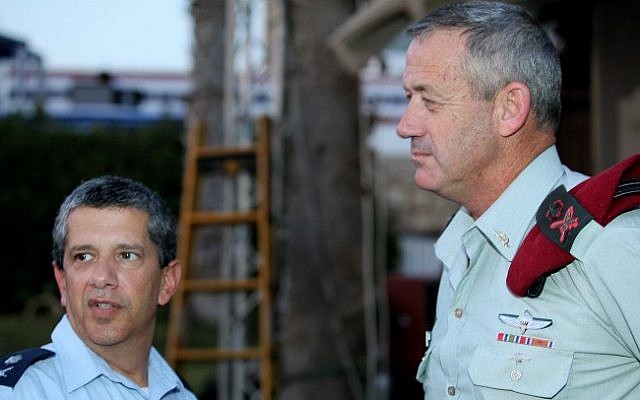
The former commander of the Israeli Air Force, Amir Eshel, will take over as director-general of the Defense Ministry from Udi Adam, who announced he is stepping down from his position, shortly before incoming Defense Minister Benny Gantz formally enters his position.
Eshel, who is seen as a close confidant of Gantz, will enter the position in the coming days, Gantz’s office says.
Adam, who has served in the position since 2016, says he will stay on to train Eshel.
“I am ending my four-year tenure with a feeling of satisfaction from seeing through a number of processes, which contributed and are contributing to the State of Israel and will continue to contribute to the resilience of the IDF,” writes Adam, who previously served as an IDF general and the director of Israel’s nuclear facility in Dimona.
Gantz thanks Adam for his service, noting his many accomplishments during his four-year tenure.
“I am full of appreciation for the way he managed and manages the ministry and the achievements he has reached,” Gantz says.
— Judah Ari Gross
Amir Eshel (left) with Benny Gantz (Moshe Shai/Flash90)
Military prosectors file an indictment against a soldier who allegedly created dummy checkpoints near his home in the West Bank, using them as a ploy to carjack unsuspecting Palestinian drivers.
According to the indictment, the suspect on three occasions in March stood armed and uniformed in the middle of a road in the central West Bank and would instruct Palestinian cars to stop under the false impression he was operating a checkpoint.
He stole three cars using the tactic and them left them abandoned on the side of the road after using them for his personal needs, the indictment says.
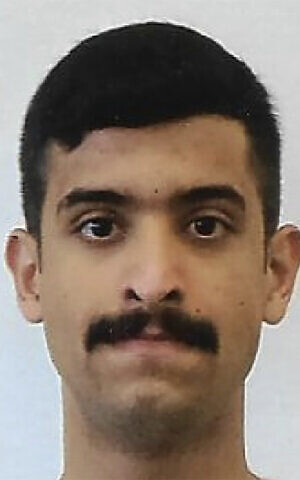
The FBI has found a link between the gunman in a deadly attack at a military base last December and an al-Qaeda operative, a US official says.
Attorney General William Barr and FBI Director Chris Wray were set to hold a news conference to announce developments in the shooting late last year at the Pensacola Naval Air Station, in which a Saudi Air Force officer killed three US sailors and injured eight other people.
The FBI declines to comment ahead of the news conference.
This undated photo provided by the FBI shows Mohammed Alshamrani. (FBI via AP)
The contacts between the shooter, Mohammed Alshamrani, and the al-Qaeda operative were discovered on the shooter’s phone, according to the official, who wasn’t authorized to discuss the case by name and speaks on the condition of anonymity.
Alshamrani, who was killed by a sheriff’s deputy during the rampage at a classroom building, was undergoing flight training at Pensacola, where members of foreign militaries routinely receive instruction.
The Justice Department had previously asked Apple to help extract data from two iPhones that belonged to the gunman, including one that authorities say Alshamrani damaged with a bullet after being confronted by law enforcement. It was not immediately clear how the FBI and Justice Department were able to ultimately access the phone.
Law enforcement officials left no doubt that Alshamrani was motivated by jihadist ideology, saying he visited a New York City memorial to the attacks of September 11, 2001, over the Thanksgiving holiday weekend and posted anti-American and anti-Israeli messages on social media just two hours before the shooting.
New Finance Minister Israel Katz says he’s slashing his salary by 10 percent in a show of solidarity with the over one million Israelis out of work due to the economic crisis accompanying the coronavirus pandemic.
“At this difficult time we must set a personal example as elected officials,” he writes on Twitter.
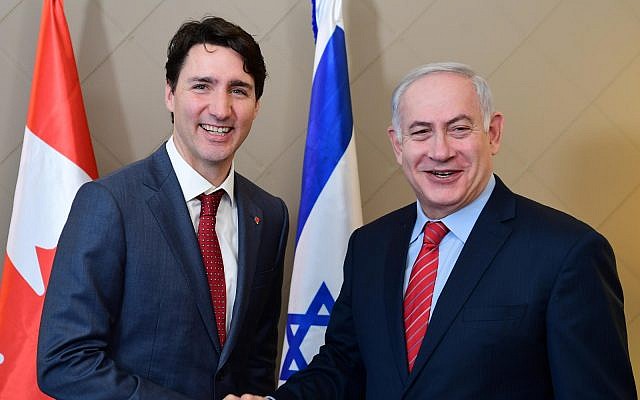
Canadian Prime Minister Justin Trudeau congratulates Prime Minister Benjamin Netanyahu and Defense Minister Benny Gantz on forming a new government.
“Canada and Israel share a long history as close friends, as well as partners in international organizations. As the decades have passed, we have remained united by our shared democratic values and close people-to-people ties,” a statement from Trudeau’s office says.
Netanyahu’s office says Trudeau phoned his Israeli counterpart, with the two discussing the fight against the coronavirus and agreeing on “technological cooperation, with an emphasis on finding a medicine and vaccine.”
They also discussed “the latest developments in the region,” which a statement from the Prime Minister’s Office doesn’t elaborate on.
Prime Minister Benjamin Netanyahu (R) shakes hands with Canadian Prime Minister Justin Trudeau at the World Economic Forum in Davos, Switzerland on January 24, 2018. (GPOl)
Outgoing Health Minister Yaakov Litzman says the government may have gone too far at times in its response to the coronavirus.
“I don’t know many sick people there at the moment, but the number is low and we’re getting out of it. We succeeded, in large part because of quarantines and warnings — maybe too strong — but we did good things,” Litzman says at a ceremony as he is replaced as health minister by Yuli Edelstein.
The comments came a day after Litzman, who himself was infected with COVID-19 and accused of flouting his own ministry’s regulations, said the director-general of the Health Ministry’s warnings about the virus were “exaggerated.”
At the ceremony, Bar Siman-Tov praised Litzman for his leadership of the Health Ministry, which he has been de facto head of for much of the past decade, while warning that Israel cannot let up in the fight against the virus
“We can’t stop the fight against the virus for a moment,” he says.
In his remarks, Edelstein vows “we’ll invest all resources” to prepare for a potential second wave.
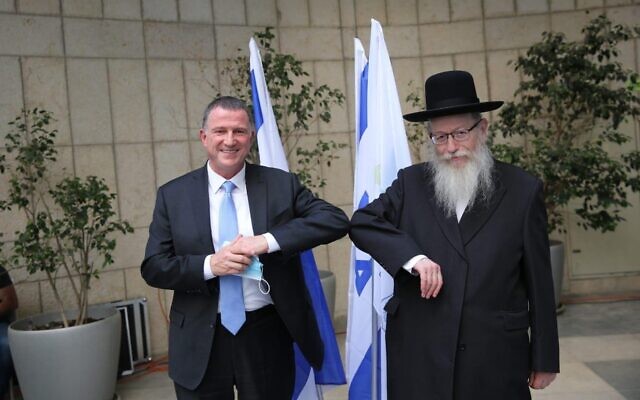
New Health Minister Yuli Edelstein (L) and outgoing Health Minister Yaakov Litzman at a passing of the baton ceremony at the Health Ministry on May 18, 2020. (Health Ministry)
Blue and White chairman Benny Gantz takes over as defense minister from Naftali Bennett at an official ceremony at the Defense Ministry.
Gantz, a former IDF chief of staff who also has the role of alternate prime minister in the new government, vows to advance US President Donald Trump’s peace plan, but stops short of backing unilateral annexation of parts of the West Bank.
“I’m committed to do everything possible to advance diplomatic agreements and to strive for peace. Peace was and remains an important Zionist desire,” he says. “We’ll maintain our strength to take advantage of regional opportunities in general and to advance the peace plan of the American administration and President Trump [and] everything it contains.”
In his remarks, Bennett implored Gantz not to let up the campaign against Iran’s military presence in Syria.
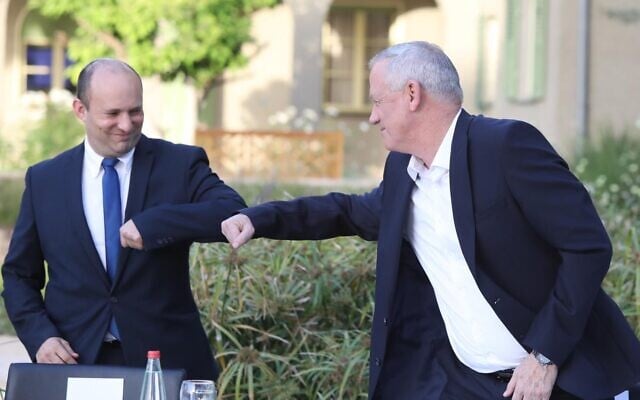
New Defense Minister Benny Gantz (R) and outgoing Defense Minister Naftali Bennett bump elbows at a passing of the baton ceremony at the Defense Ministry in Tel Aviv, May 18, 2020. (Oded Karni/GPO)
Passing the baton to Gantz, Bennett tells him not to let up in the campaign against Iran’s military presence in Syria.
“Though Iran has begun a process of withdrawal from Syria, the work needs to be completed. We’ve increased the number of attacks against Iranian forces and the Quds Force in Syria,” he says.
Bennett, who is now headed for the opposition, after being left out of the new government, adds: “We can’t let up on Iran for a moment. We must increase the diplomatic, economic, military and technological pressure and act in other dimensions.”
Police announce the arrest of a suspect in the case of vandalism at the grave of an IDF soldier killed last week, during an operation in the West Bank.
The suspect, a 41-year-old woman from Rishon Lezion, is brought in for questioning and tomorrow will be brought before a court for a remand hearing.
The military last week said it found signs of digging around the grave in Beer Yaakov of Sgt. First Class Amit Ben-Ygal, who was killed by a rock thrown from the roof of a building while his unit was making arrests in the West Bank village of Yabed.
WASHINGTON — Attorney General William Barr says that he does not expect investigations into the origins of the FBI’s Russia investigation to lead to criminal probes into either US President Donald Trump’s Democratic opponent, Joe Biden, or former president Barack Obama.
Trump has stated without evidence that he believes Obama committed unspecified crimes, and some of Trump’s supporters have encouraged criminal inquiries into Obama and Biden for what they say are unspecified abuses during the investigation into ties between Russia and Trump’s 2016 presidential campaign.
But Barr signals today that he will not be swayed by political pressure to investigate the president’s opponents, and does not believe that a criminal investigation into the early days of the Russia probe being conducted by US Attorney John Durham will lead to investigations into either Obama or Biden.
“Whatever their level of involvement, based on the information I have today, I don’t expect Mr. Durham’s work will lead to a criminal investigation of either man,” Barr says.
Trump in the last week has repeatedly tweeted “OBAMAGATE.”
More broadly, Barr says, “We cannot allow this process to be hijacked by efforts to drum up criminal investigations of either candidate.”
The Health Ministry reports 26 new coronavirus cases over the last 24 hours, as the number of COVID-19 deaths rises.
According to the ministry’s statistics, 276 people have died from the virus, four more than had by this morning.
Of the 3,114 active infections, 52 people are in serious condition, 42 of whom are on ventilators.
Another 39 people are in moderate condition and the rest have mild symptoms.
So far, 13,253 Israelis out of the 16,643 who have been infected have recovered.
The number of new cases in Israel has dropped significantly in recent weeks, with the government easing restrictions on movement, economic activity, and gatherings.
Israel’s Ambassador to the United States Ron Dermer is lobbying for Israel to quickly move ahead with annexing parts of the West Bank as the presumptive Democratic nominee Joe Biden may win the US presidential elections in November, Channel 13 reports.
Citing three unnamed Israeli and American sources, the network says Dermer has been trying to convince members of the Trump administration, Republic senators and congressmen, journalists and other figures of the need to move forward with the application of Israeli sovereignty over settlements and the Jordan Valley.
“We need to move forward with annexation now because we don’t know what will happen in the US presidential elections in November — Biden may win. Now there’s a window of opportunity and therefore this needs to be done now,” Dermer is quoted saying during closed briefings.
He reportedly adds: “There’s a one time opportunity to advance annexation while Trump is still there.”
The report says Dermer, who is a close confidante of Prime Minister Netanyahu, was looking to speed up annexation, as he was aware of disagreements in the White House and State Department, with some US officials saying the move should wait.
According to the report, US officials’ hesitancy about annexation was the result of multiple factors: Opposition by allies Jordan, Saudi Arabia and the United Arab Emirates; concerns the move could destabilize Jordan; the White House’s preoccupation with the coronavirus pandemic; and the reservations expressed by new Defense Minister Benny Gantz and Foreign Minister Gabi Ashkenazi, when they met with US Secretary of State Mike Pompeo last week.
An aide to Biden said last month that the former US vice president opposes unilateral annexation.
Likud MK Sharren Haskel says she turned down Prime Minister Netanyahu’s offer to be appointed Israel’s ambassador to Australia, saying she preferred to remain in the Knesset.
Under the coalition deal between Likud and Blue and White, Netanyahu could appoint ambassadors to Australia, France, United Kingdom and the United Nations. So far, only a Likud minister has been appointed envoy to the UN.
“I admit that as someone who lived in Australia for a few years and is currently in close contact with senior government officials and members of parliament, this offer captivated me and I’m sure I could succeeded in this role. But this isn’t what you choose me for and it isn’t why I entered the Knesset,” she writes in a Facebook post.
Haskel, who is considered close to Netanyahu’s Likud rival Gideon Sa’ar, criticizes the coalition agreement with Blue and White.
“We gave up ministries that are an ideological asset for the right. We gave up positions of influence and leadership of the most important committees in the Knesset,” she says.
Likud MK Sharren Haskel at a Knesset plenary session on May 23, 2018. (Yonatan Sindel/Flash90/File)
Government ministers are coming out against former health minister Yaakov Litzman, denying that he expressed opposition during cabinet meetings to forecasts that tens of thousands Israelis could die from COVID-19.
In an interview yesterday, Litzman called the warnings of a potentially high death toll by ministry director-general Moshe Bar Siman-Tov “exaggerated” and said he railed against them at a cabinet meeting.
“If there was an exaggeration,” an unnamed minister tells Channel 12 news, “why was Litzman the one to approve the lockdown of Bnei Brak and defend the decision to his community and in the media.”
The minister continues: “Litzman let Bar Siman-Tov be the main actor in the play, many times he got off the [telephone] line or didn’t get on it all to allow Bar Siman-Tov to lead. In some sense [Litzman] wasn’t present for the event at all.”
The criticism came as Litzman, who heads the ultra-Orthodox United Torah Judaism party, officially left the Health Ministry today and moved over to the Housing Ministry.
Bar Siman-Tov, who announced last week he would be stepping down as director-general, said in response to Litzman’s criticism that he respected his former boss and was certain the measures adopted by the government to contain the pandemic had saved thousands of lives.
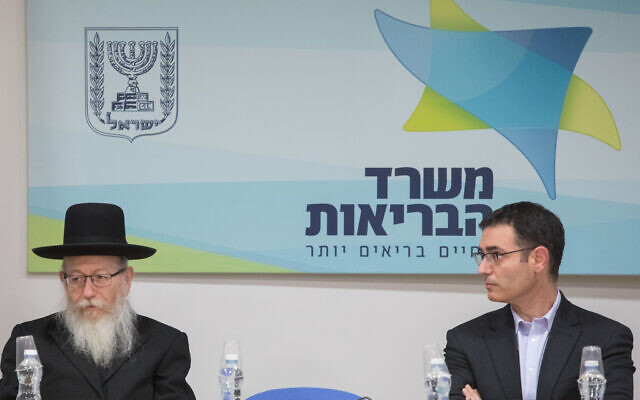
Then-health minister Yaakov Litzman, left, and Health Ministry director general Moshe Bar Siman-Tov, during a press conference at the Health Ministry in Jerusalem on January 3, 2019. (Noam Revkin Fenton/Flash90)
WASHINGTON — US Secretary of State Mike Pompeo says he sought the firing of a watchdog because the man undermined the State Department’s mission, and denies that the move was retaliation for an investigation.
“It’s simply not possible for this to be an act of retaliation. End of story,” Pompeo tells The Washington Post in his first public comments on the sacking of inspector general Steve Linick.
ROME — Italy has registered its lowest daily increases in both deaths and new cases of COVID-19 since before the national lockdown there began in early March.
According to data from the Health Ministry, 99 deaths of persons with coronavirus infections are registered in a 24-hour period ending this evening.
That same period sees 451 confirmed new cases.
Italians enjoyed a first day of regained freedoms today, including being able to sit down at a cafe or restaurant, shop in all retail stores or attend church services such as Mass.
But until next month they still cannot travel outside their regions except for work or other strict necessities, as lockdown rules are gradually lifted.
Italy now officially has 32,007 deaths, although many in nursing homes who died during the lockdown period were not tested for the coronavirus, as the tests were mainly given to hospitalized patients.
Overall, there are 225,886 confirmed cases of COVID-19 in Italy, where Europe’s outbreak began.
The European Union’s top diplomat congratulates Israel on the formation of a new government, while urging it not to move forward with unilateral annexation of parts of the West Bank.
In a statement, Josep Borrell says the EU is willing to help restart long dormant peace talks between Israel and the Palestinian Authority.
“International law is a fundamental pillar of the international rules-based order. In this respect, the EU and its member states recall that they will not recognize any changes to the 1967 borders unless agreed by Israelis and Palestinians. The two-state solution, with Jerusalem as the future capital for both states, is the only way to ensure sustainable peace and stability in the region,” he says.
Borrell adds: “In this vein, we note with grave concern the provision – to be submitted for approval by the Israeli cabinet – on the annexation of parts of occupied Palestinian territories, as stated by the Prime Minister [Netanyahu] when presenting his government to the Knesset on May 17, and as envisaged in the coalition agreement signed earlier. We strongly urge Israel to refrain from any unilateral decision that would lead to the annexation of any occupied Palestinian territory and would be, as such, contrary to international law.”
The statement comes several days after EU ministers met to discuss possible responses if Israel annexes West Bank settlements and the Jordan Valley.
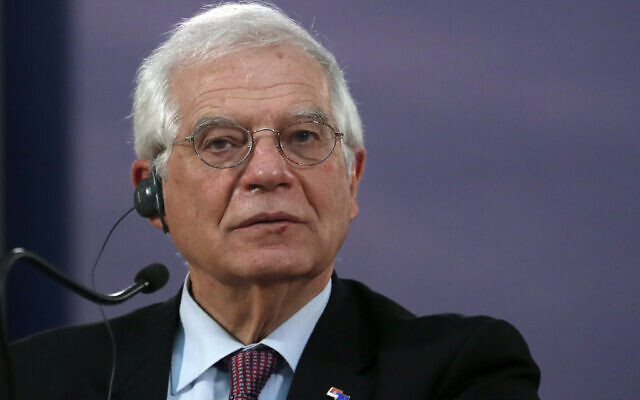
European Union foreign policy chief Josep Borrell during a press conference in Belgrade, Serbia, January 31, 2020. (Darko Vojinovic/AP)
As a multimedia journalist, my job is to take the quality, fact-based journalism produced by The Times of Israel newsroom and make it accessible across every platform — from Instagram posts to podcasts to short-form videos.
This is how many, especially young people, consume news these days. But misinformation is rampant on social media. Our team at ToI produces accurate, responsible short-form reporting on Israel and the Jewish world.
If you believe in the importance of factual social media journalism, please consider joining our reader support group, The Times of Israel Community. Your financial support is essential to sustain responsible multimedia reporting.
We’re really pleased that you’ve read X Times of Israel articles in the past month.
That’s why we started the Times of Israel - to provide discerning readers like you with must-read coverage of Israel and the Jewish world.
So now we have a request. Unlike other news outlets, we haven’t put up a paywall. But as the journalism we do is costly, we invite readers for whom The Times of Israel has become important to help support our work by joining The Times of Israel Community.
For as little as $6 a month you can help support our quality journalism while enjoying The Times of Israel AD-FREE, as well as accessing exclusive content available only to Times of Israel Community members.
Thank you, David Horovitz, Founding Editor of The Times of Israel


 Add ToI as a Preferred Source on Google