

PA premier says Ramallah best placed to lead postwar Gaza, despite Israeli obstacles
Mohammad Mustafa says West Bank-based body is committed to seeing reforms through, insists PA offers the best chance for stability in the Strip
 Add ToI as a Preferred Source on Google
Jacob Magid is The Times of Israel's US bureau chief
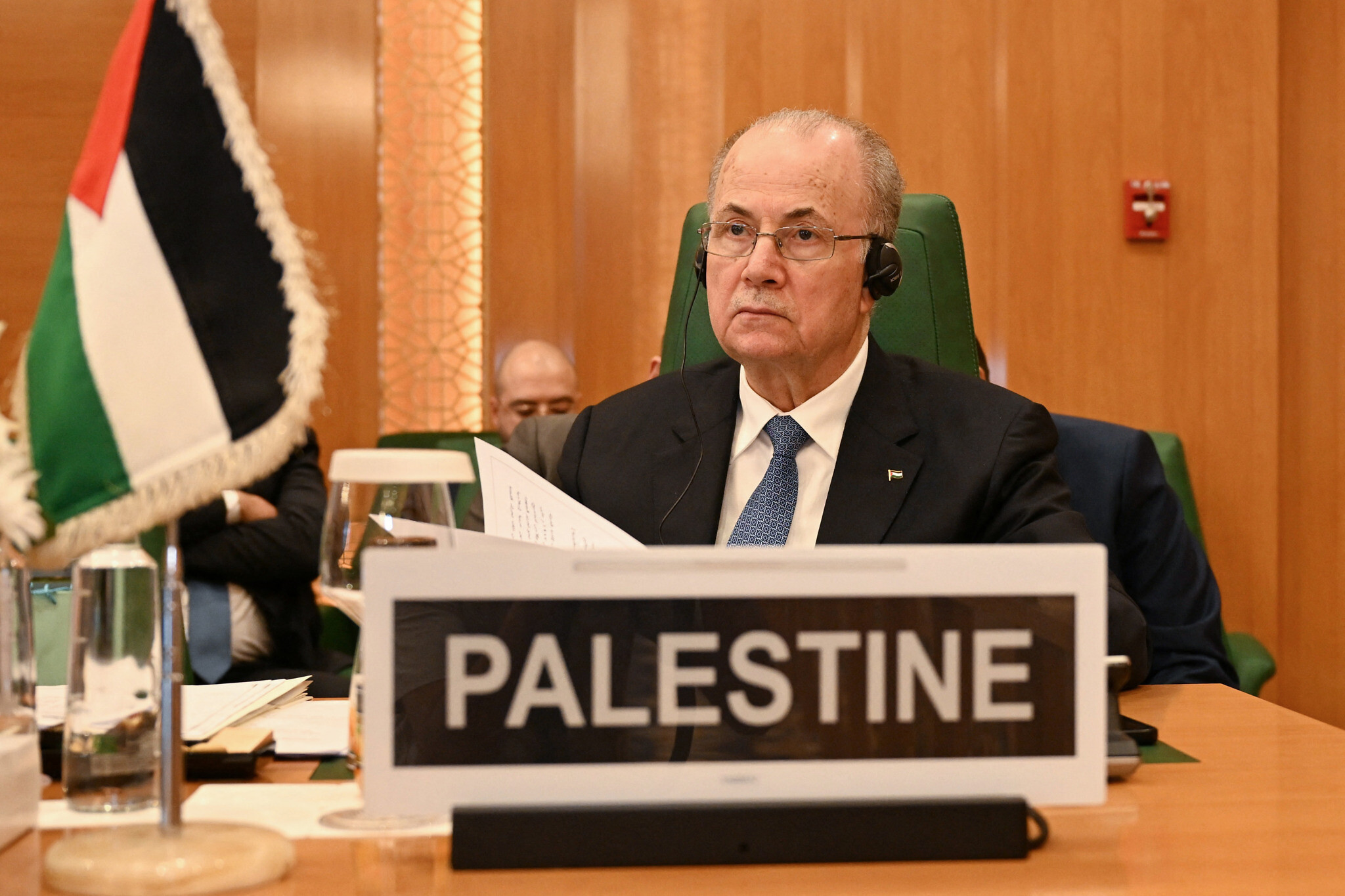
Palestinian Authority Prime Minister Mohammad Mustafa made the case on Thursday for Ramallah to play a leading role in the postwar management of Gaza, arguing that it is best positioned to do so despite the obstacles put up by Prime Minister Benjamin Netanyahu’s government.
“The Palestinian Authority is important, not only for keep[ing] the West Bank stable, but also for restoring the situation in Gaza,” Mustafa said during a virtual event with the Washington-based Brookings Institution think tank. “Despite all the challenges, despite all the difficulties, despite the issues that need reform — which we are working on — the only party that can get things back on track with support from international partners is the Palestinian Authority.”
While much of the international community backs the PA replacing Hamas as the governing body in Gaza, Israel has maintained an effective veto over the transition, claiming that the Ramallah-based body is irredeemably corrupt and encourages violence against Israel.
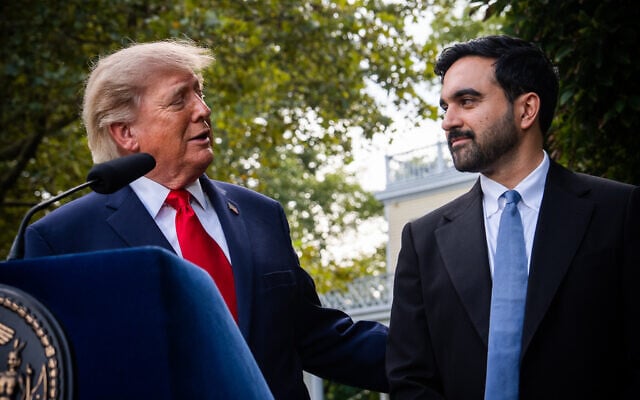
US President Donald Trump’s administration has sometimes been similarly critical of the PA, and even barred PA President Mahmoud Abbas from entering the US for the UN General Assembly last month. But as key Arab stakeholders have conditioned their support in the post-war management of Gaza on a role for a reformed PA, Washington appears to be slightly adapting its approach, allowing Abbas to participate in a conference of world leaders earlier this month in Egypt, where Trump was seen warmly embracing the PA leader.
A longtime economic adviser to Abbas who previously served as deputy prime minister and economy minister, in addition to heading the Palestine Investment Fund and holding senior positions at the World Bank, Mustafa was appointed prime minister last year amid mounting calls for reform of the PA, which hasn’t held parliamentary elections since 2006 and presidential elections since 2005.
He used the relatively rare appearance before an American audience to lay out the challenges the PA faces and the reforms that he has been implementing.
Mustafa began by highlighting the over 1,000 checkpoints that the IDF has sprung up throughout the West Bank that have significantly curbed Palestinian movement, hampering the West Bank economy as a result. Israel says the measures are needed to maintain the security of settlers living in the territory amid efforts by Palestinian terror groups to target civilians and soldiers.
The PA premier went on to highlight the over $3 billion in funds that the Israeli government has been withholding from the PA, which “has been making our economic life extremely difficult.”
Due to the PA’s sub-state status, the Oslo Accords stipulate that Israel collect clearance revenues on the authority’s behalf and transfer those funds on a monthly basis to Ramallah. The PA is heavily reliant on the funds, which make up a majority of its annual budget.
Israel has repeatedly withheld such funds, citing the PA’s welfare payments to convicted terrorists and their families, as well as the relatives of dead attackers, with Jerusalem saying the practice directly rewards terror.
Abbas signed a decree in February ending the policy of payments to prisoners based on the length of their sentence. While documents obtained by The Times of Israel indicate that the old system has indeed been scrapped, Israel claims it remains in place, but has yet to offer proof on the matter.
The lack of funds has meant public sector employees have missed out on 13 months of salary payments over the last three years alone, Mustafa said.
Public school teachers have gone on strike due to partially paid salaries, thus causing a delay to the start of the school year.
Meanwhile, new Israeli banking policies have also prevented the PA from depositing roughly $4.6 billion, creating a severe liquidity crisis that has compounded the already-dire economic situation.
Unemployment in the West Bank has climbed to 35 percent, with more than 200,000 Palestinians losing their jobs inside Israel when the IDF revoked their entry permits due to security concerns following the Hamas attack of October 7, 2023.
Mustafa said that Ramallah has managed to convince Arab and European countries to provide additional assistance to offset the lack of funds, but the PA is still piling up a massive deficit due to borrowing from the private sector.
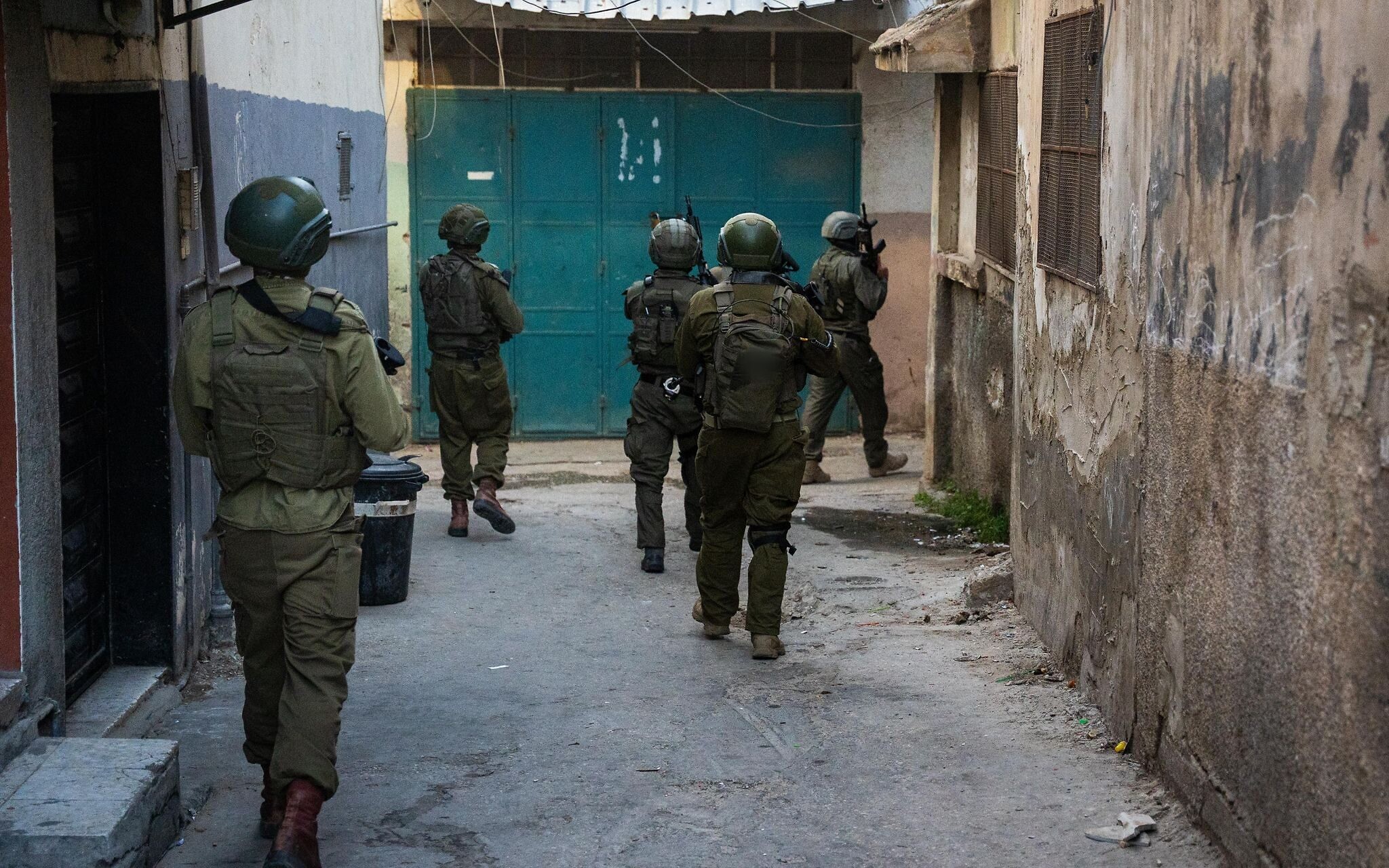
The PA premier then highlighted the IDF’s counter-terror operations throughout the West Bank that have forced tens of thousands of Palestinians from their homes in the midst of the economic crisis. Israel says such operations are a security necessity to combat entrenched terror networks and prevent numerous plots for deadly attacks every year.
Those raids have taken place amid near-daily attacks by settlers on Palestinians that have gone largely unchecked.

The Biden administration led Western countries in sanctioning extremist settler individuals and entities last year. But Trump had undone the policy, and Mustafa acknowledged that the sanctions had little effect on the ground.
Nonetheless, he urged countries to take “more serious actions to give the right signal… to this Israeli government that this is not acceptable.”
Israel can’t use reform as an ‘excuse’
Asked about the reforms that he and the PA are undertaking, Mustafa acknowledged that Ramallah still has work to do, but he pointed to elections that Abbas has agreed to hold next year. Municipal elections will also be held in early 2026, the prime minister said.
Abbas has announced plans for elections on multiple occasions in the past, but has repeatedly canceled them. He has blamed Israeli restrictions, but critics have pointed to fears that he and his widely unpopular Fatah party would suffer crushing defeats in any public vote.
“Even if we are not the best performing administration in the world, we still have a responsibility toward our people, especially our people in Gaza,” Mustafa said. “What they need most today is assistance so that we can shelter them, send their kids back to schools, treat the injured people, start getting them new jobs… [and] rebuild Gaza.”
He also noted that while many world leaders have called on the PA to reform, the term has become something of a buzzword that often goes unspecified.
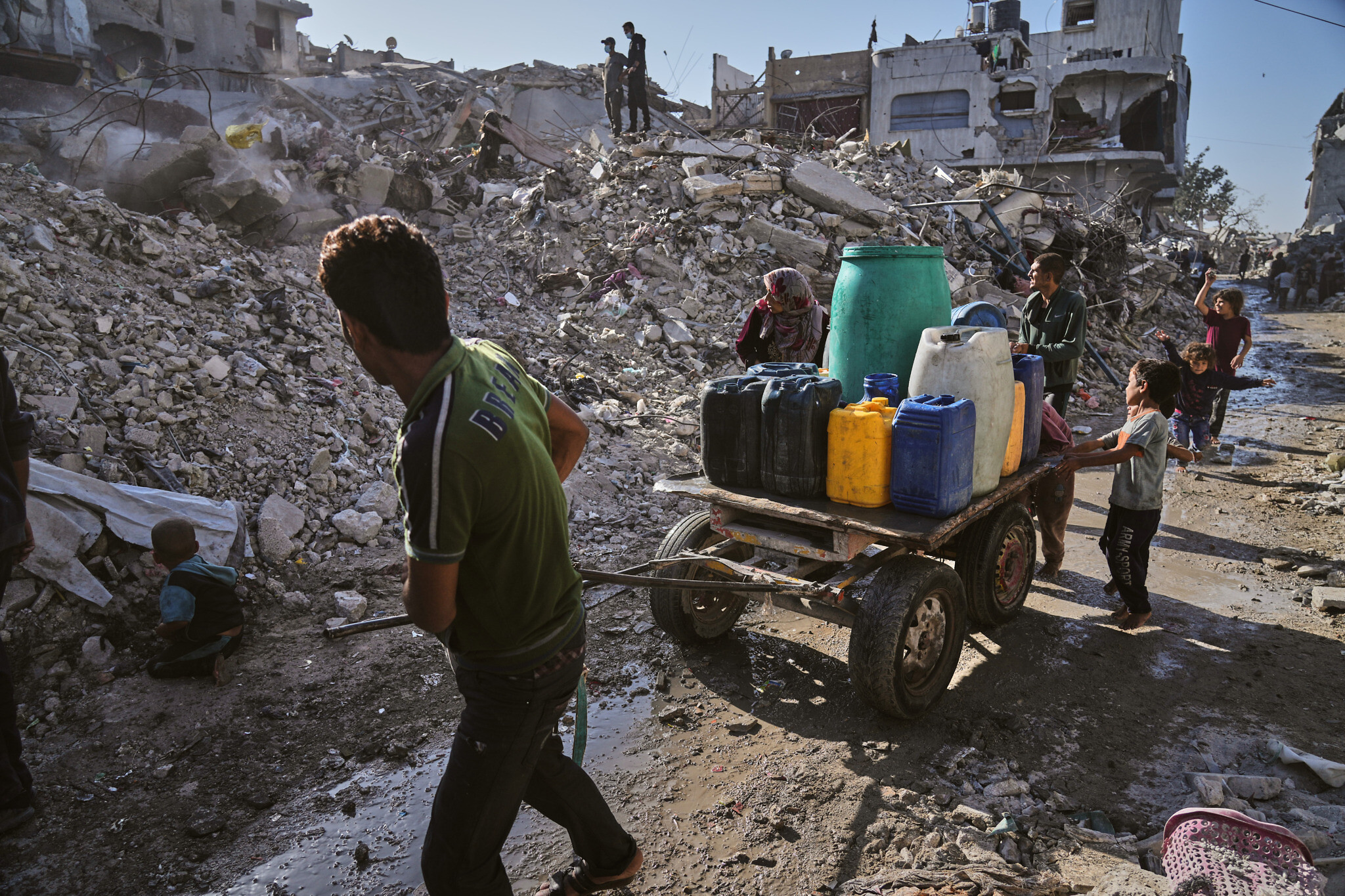
“While we are making every effort to [carry out] these reforms, we hope that this will not be used as an excuse for the Israeli government to continue its occupation,” Mustafa said.
As for the PA’s ability to resume running Gaza after it was ousted by Hamas in 2007, Mustafa pointed out that Ramallah already has 35,000 employees in the Strip, including 6,000 teachers, 7,000 doctors and thousands of dormant security personnel, which could serve as the backbone for a police force necessary for stabilizing Gaza.
Several thousand other PA employees are also being trained by Jordan and Egypt in order to be later deployed in Gaza, he said, adding that PA personnel have also been tasked with helping resume the management of the Rafah Border Crossing, once Israel agrees to reopen it.
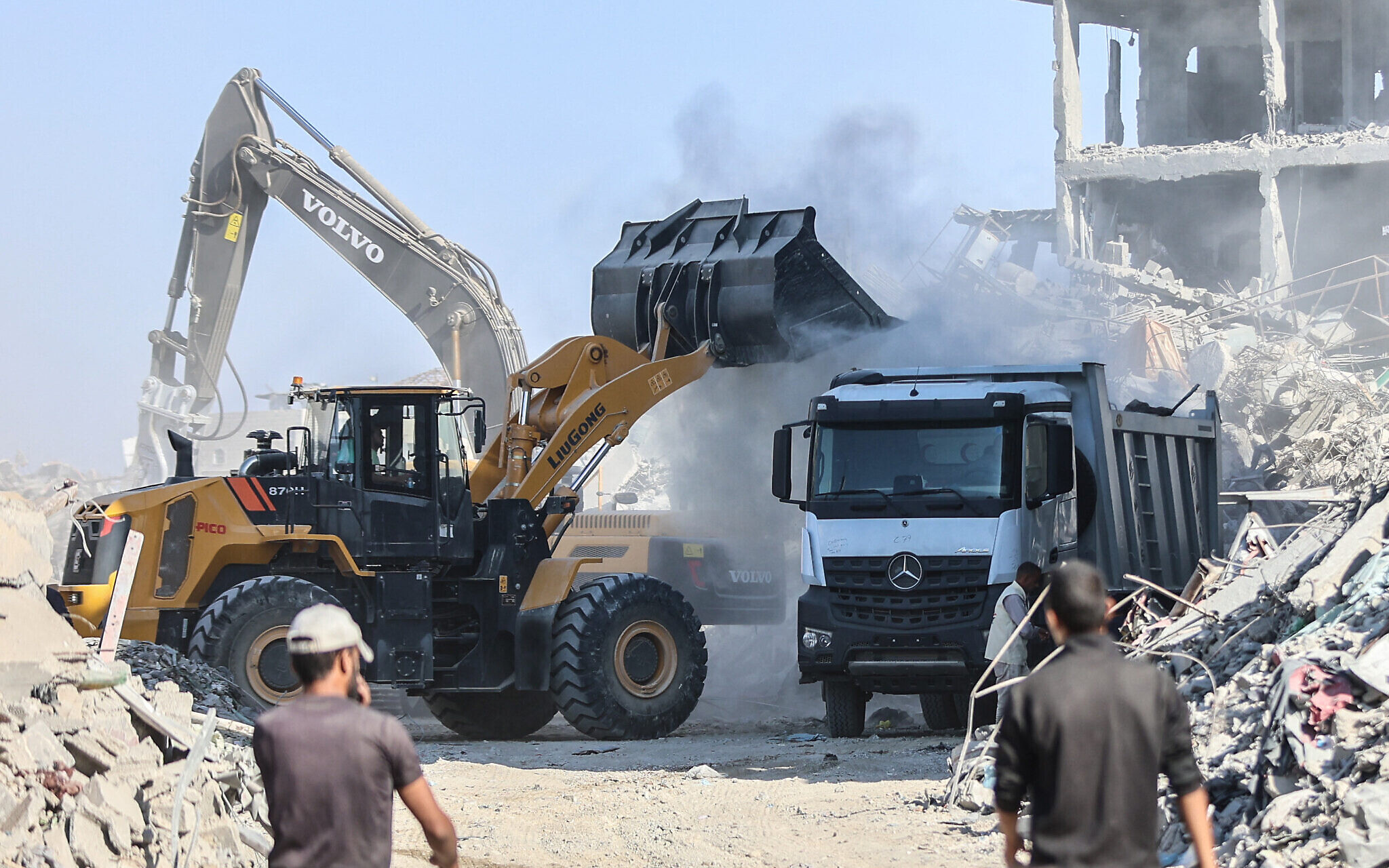
Mustafa said the PA is prepared to formally invite an international security force to help stabilize the Strip, as envisioned by Trump’s 20-point plan for ending the war.
However, he stressed that the security force be mandated by the UN Security Council, work with and support existing PA forces, and also be a temporary solution.
“I encourage everybody to help get the PA in the right place… not only to govern in the West Bank, but also in Gaza because this is the best way possible to get us out of the situation in [the Strip],” Mustafa continued. “No international mission alone can do it. The PA is a big asset for stability in the region.”
Asked in closing how he views the recent decisions by several major Western countries to recognize a Palestinian state, Mustafa insisted that those moves were not merely symbolic.
“I think this will help us restore hope that a two-state solution is still possible [by demonstrating that] there is still a strong international support for it,” he said. “It’s important to remind the Israeli government and the Israeli people that occupation is not the solution. There are still millions of Palestinians living next door, and they still demand their rights, regardless of time passing.”




The Times of Israel Community.