

Putsch paranoia: 7 things to know for October 25
The palace intrigue surrounding a supposed overthrow plot deepens, with most not buying Netanyahu’s claims against Rivlin and Sa’ar
 Add ToI as a Preferred Source on Google
Joshua Davidovich is The Times of Israel's Deputy Editor
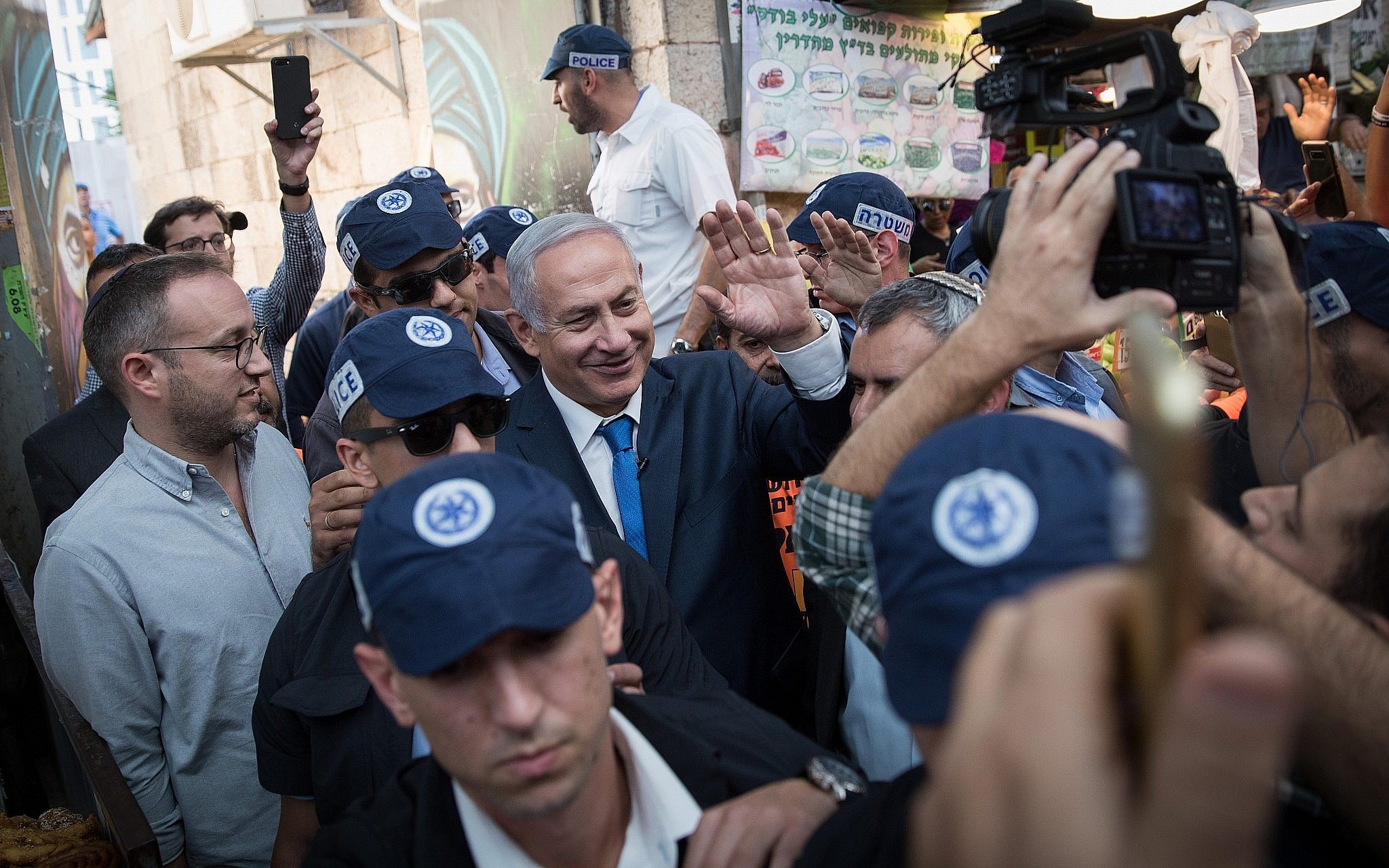
1. Putsch pitch: A full-blown political scandal has erupted in the Likud amid claims that former minister Gideon Sa’ar has put together a plot according to which President Reuven Rivlin would choose him to form the next government after elections and not Prime Minister Benjamin Netanyahu.
- The Israel Hayom tabloid, which originally reported the claims against Sa’ar coming out of Netanyahu’s camp, is continuing to attack Sa’ar, its front page blasting “He planned a putsch” as its top headline.
- The paper’s Haim Shine, attempting to refute Rivlin’s dismissal of the plot as “paranoia,” seems to say that average Likud voters, the people who have had their man in power for nearly a decade, are being disenfranchised: “This is a good reason to worry, regardless of who is at the source of the info behind the conspiracy. Among many Israelis there is a bad feeling that their will is not taken into account, that their vote is worthless and that their elected officials cannot carry out the policies they were elected for.”
2. Suicide or assassination? Sa’ar has hit back at the brickbats being slung at him from Netanyahu’s camp, accusing Netanyahu in an Army Radio interview of “crossing a red line” and comparing the affair to a “trumped-up drumhead execution, without evidence, without facts.”
- Respondiing, one Netanyahu adviser writes on Twitter that Sa’ar is committing political suicide in Likud by calling the prime minister a liar.
- A no more even-keeled response sent out by Netanyahu’s office (citable to a source close to Netanyahu) accuses Sa’ar of “hysteria” and of being a “subversive.”
3. Sick in the head: Many aren’t buying it, especially considering the fact that Netanyahu has long been seen to view Sa’ar as a top rival within the Likud (which many thought was behind Sa’ar’s sudden departure from politics several years ago).
- In Haaretz, columnist Yossi Verter writes that Netanyahu’s office has been trying to sell journalists the Rivlin coup story for weeks, but nobody would bite given the utter lack of evidence. Once it came out in Israel Hayom and Rivlin pushed back, the prime minister’s people switched to accusing Sa’ar of launching the plot, which they thought might be more politically palatable.
- “This is truly the type of story that is hard to deal with using rational tools because it is so obviously absurd. The thought that Rivlin, the No. 1 democrat in the country, would start a revolt against the will of the people in the elections and grant Sa’ar the mandate to establish the next government, just because they are friends while Rivlin and Bibi are at each other’s throats, is more than paranoia. It is full psychosis. True insanity,” he writes.
- Maariv’s Ben Caspit takes readers back to 1993, when Netanyahu got on TV in front of the whole country to admit to an affair and accuse a Likud rival of criminality, after somebody had threatened to release a tape of him with another woman and torpedo his political career. Except there was likely no tape, and Netanyahu likely knew it, but he let his paranoia get the best of him.
- “The tension caused him to embarrass his wife in front of the whole country and create a massive hysteria with several victims over nothing. It seems that in the 25 years that have passed, nothing has changed,” he writes.
- Ynet’s Attila Somfavili on why Netanyahu is going after Sa’ar: “He’s the only one who comes close to the popularity of the prime minister, the only one who polls show would not crash the Likud if Netanyahu goes out, the only one seen as a relevant leader for the Likud in the post-Netanyahu era. So what does Netanyahu know about his legal situation that he has started to turn Sa’ar into a traitor?
4. It’s the law, stupid: Yedioth’s Sima Kadmon writes that politically assassinating Sa’ar wasn’t even the main point: “It’s much more logical that this is spin, a test balloon, to see how the winds are blowing on readying the ground for passing a new law that will be proposed in the Knesset to limit Rivlin’s ability to use his judgment and shrink how much weight he has in the formation of a coalition.”
- Why might Netanyahu be worried about this now? While unlikely, he could fear that should he be too deep in a legal morass after the next elections, Rivlin could take that into account and choose a different potential leader.
5. Haredi-trading: Yedioth leads its print edition with a bombshell of a transcript from a recording of Jerusalem mayoral candidate Moshe Lion insinuating that Defense Minister Avigdor Liberman had agreed to soften a law on military service for the ultra-Orthodox in exchange for the ultra-Orthodox giving support to Lion in the hotly contested race.
- “It’s the end of us … if heaven forbid this gets out,” Lion is quoted saying, and he may be right.
- The story’s publication is most likely to help Zeev Elkin gain back support with some right-wing non-ultra-Orthodox, just five days before the election. Responding to the report, Elkin says the race for mayor of Jerusalem has “always been dirty.”
- He’d likely know. Haaretz reports that Elkin’s camp has admitted to being behind a poster that portrayed candidate Ofer Berkovitch as a left-wing extremist.
- The paper notes that the lawyer for Berkovitch’s party has warned Elkin’s people that the campaign is likely illegal because it is unsigned. The Elkin camp’s response: It’s okay because it’s a public service.
6. Elkin’s landsmanshaft: ToI’s Sue Surkes reports that Elkin is doing well to conform to other campaign laws by filing paperwork showing millions of shekels in loan guarantees (campaign money donated against the expectation it will be reimbursed by the state depending on election results.) Lion and Berkovitch have yet to file any paperwork on the guarantees (they have until 45 days after the election).
- The filings show a remarkable trend of nearly everybody donating these guaranteed loans being businessmen from the former Soviet Union, where Elkin himself is from. Among the names listed are Siberian oil baron Yuri Zelvensky and a host of others, though everybody appears to be on the level.
- Conspicuously absent from Elkin’s supporters’ list are business tycoons Vladimir Gusinsky and Mikhail Mirilashvili, both of whom backed him in the past. Both have been accused of what they say are trumped-up crimes in Russia.
7. Talking heads: With the Jewish Federations of North America closing up shop in Tel Aviv, ToI’s Amanda Borschel-Dan looks at whether the meeting fulfilled its purpose of having Israeli and Diaspora Jews get down to real talk. The answer? Kinda.
- “According to several participants, in many cases, just as the conversations got rolling, it was time to move on to the next topic. The moral of that story? You can talk, but only superficially.”
- “Outside of the programmed plenums and panels, the real magic happened in the halls and lunch tables. There, old friends reconnected over some surprisingly good kosher food, and new friends were made.”







The Times of Israel Community.