

Senior Saudi diplomat: It’s Israel, not PA, that most needs reform to secure peace
Manal Radwan says Palestinian Authority is already working on reforms, but Israeli government opposes two-state solution, incites against Palestinians, Arabs and Muslims
 Add ToI as a Preferred Source on Google
Jacob Magid is The Times of Israel's US bureau chief
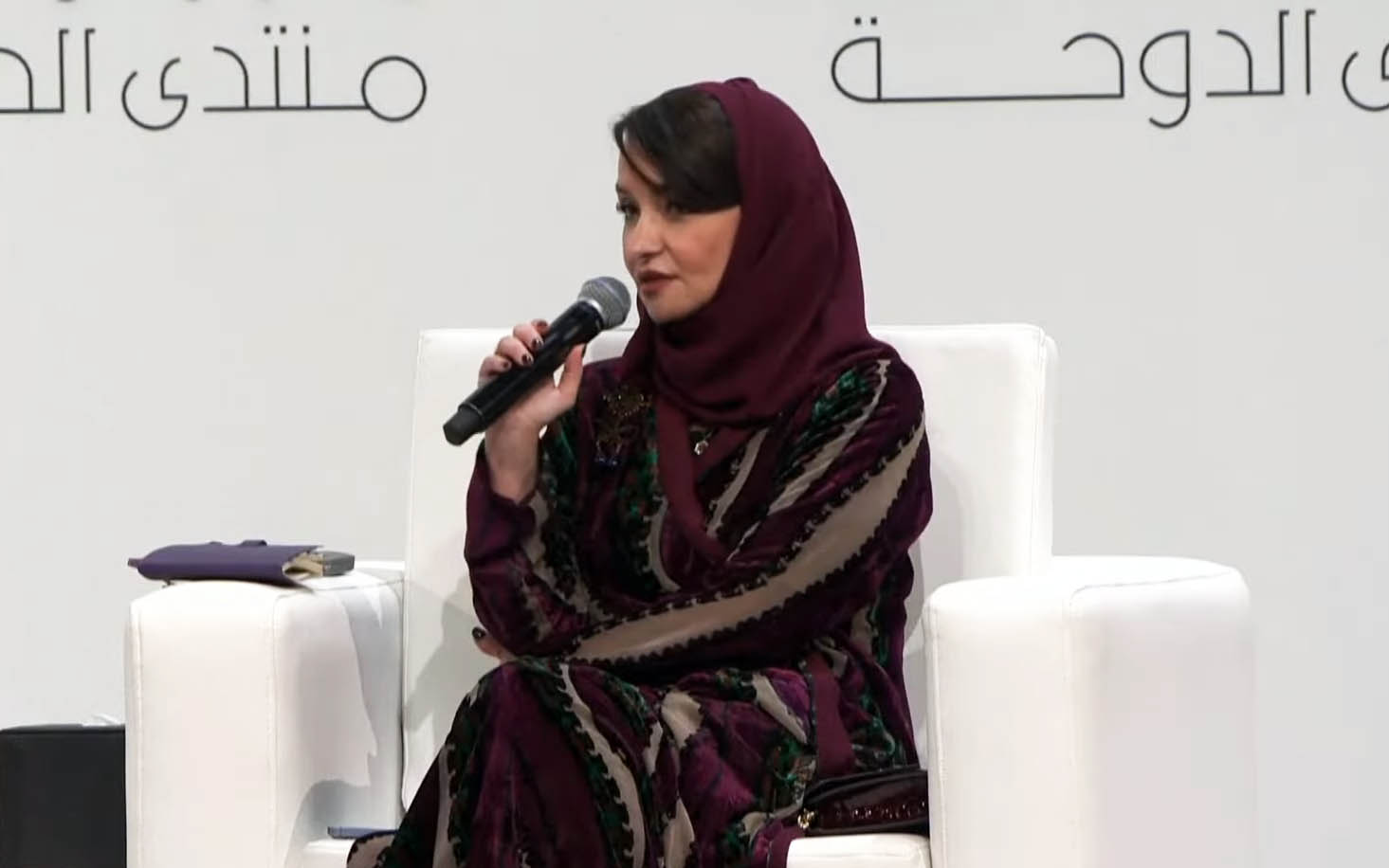
DOHA — A senior Saudi diplomat said that while there is much focus in the international community on the need for the Palestinian Authority to engage in a comprehensive reform process, a reform of the Israeli government is what is most needed for peace in the region.
“The Palestinians have been reforming for the past 30 years. [Palestinian Authority] President Mahmoud Abbas had put [forward] a robust reform plan that he committed himself to, because this is good for the Palestinians,” said Manal Radwan, a minister in Saudi Arabia’s foreign ministry, during an onstage panel discussion at the Doha Forum conference in Qatar on Saturday.
“Saudi Arabia, of course, is committed, and we work on a daily basis with the PA to help in its reform plan, but what we need to really get a sustainable peace and security and an end to this conflict and to implement President Trump’s 20-point peace plan and to implement the Security Council resolution is a reformed Israeli government,” she said.
“We have an Israeli government that opposes the two-state solution. We have an Israeli government that has officials continuously inciting against Palestinians, against Arabs, against Muslims,” Radwan continued. “We don’t see that we have a partner for peace, not even a partner for a sustainable ceasefire. So that is the actual and the important reform that we are hoping to see.”
It was the latest biting criticism of Israel by a senior Saudi figure, coming just hours after the country’s former intelligence chief and royal family member Prince Turki al-Faisal asserted that Israel is the most destabilizing country in the region, due to its ongoing military actions in Gaza, the West Bank, Syria and Lebanon, which were catalyzed by the October 7, 2023, Hamas-led invasion of southern Israel and the Gaza war it triggered.
Radwan’s defense of the PA and its ongoing reform process stands out, given that Riyadh has been one of the most aggressive stakeholders privately urging Abbas to engage in a comprehensive reform amid years of corruption and mismanagement allegations.
H.E. Manal Radwan, Minister Plenipotentiary at the Ministry of Foreign Affairs of Saudi Arabia, joins “The Gaza Reckoning” at #DohaForum25 to discuss regional diplomacy and responsibility. pic.twitter.com/ncHCLd7C6s
— Doha Forum (@DohaForum) December 6, 2025
Saudi Arabia fumed upon learning last month that the PA’s then-finance minister had signed off on illicit payments to security prisoners under the old so-called “pay-for-slay” mechanism, a US official told The Times of Israel at the time.
Abbas fired the minister in a move that was convincing enough to Washington that it decided to shelve plans to sanction the PA president and other senior officials, and the response appeared to satisfy Riyadh as well, a Palestinian official said.
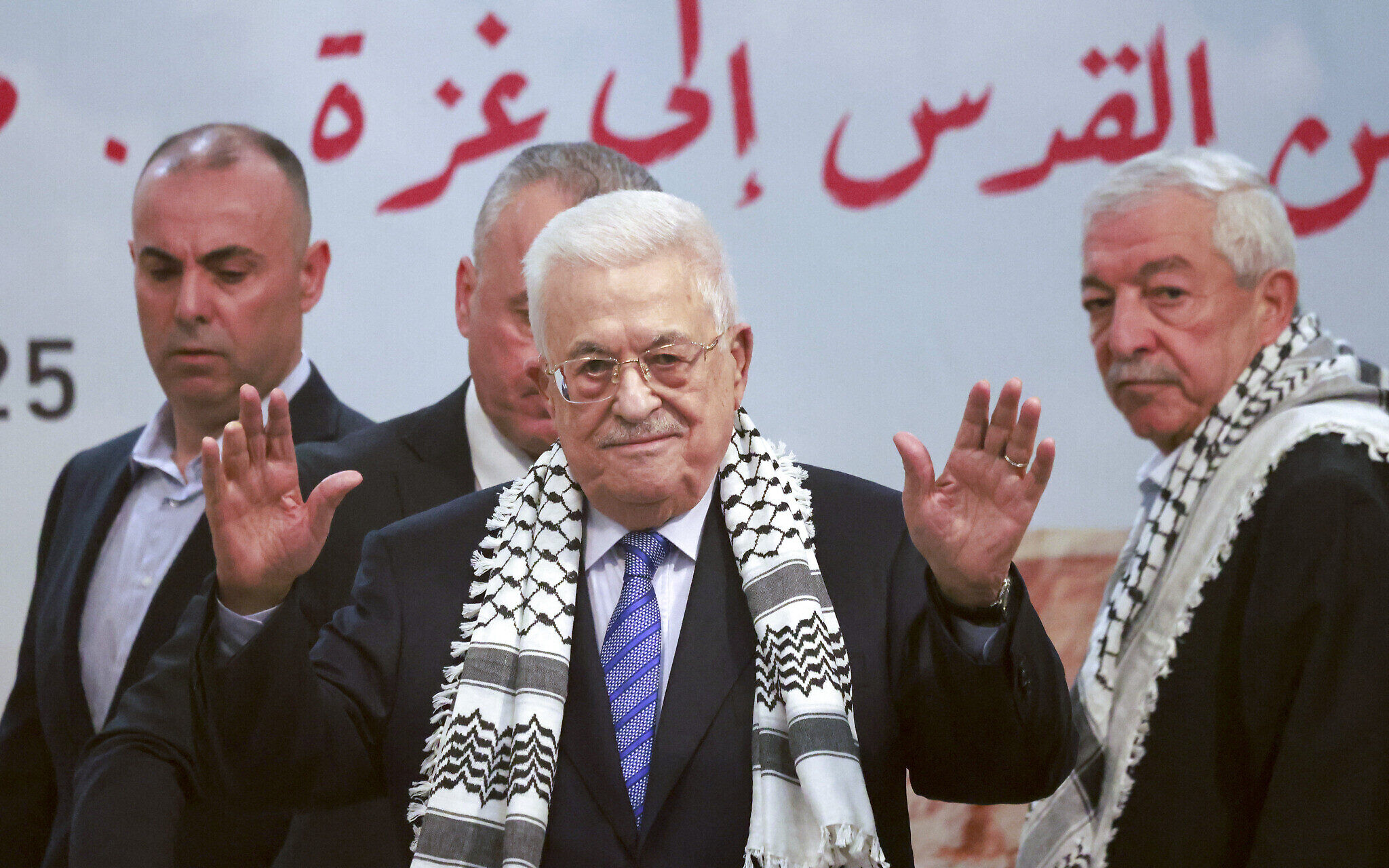
Turki, the former Saudi intelligence chief, said Friday that Israel is more of a “troublemaker” in the Middle East than Iran.
Asked which is a greater threat to regional stability during an onstage interview at the Milken Institute’s Middle East and Africa Summit in Abu Dhabi, Turki responded, “For the moment, definitely it is Israel.”
“We’ve seen that Iran has been dealt a strong hand by the US,” he said, apparently referencing Washington’s strike on Iran’s nuclear facilities in June, at the end of days of bombardment by Israel. Turki, as a prominent member of the Saudi royal family, remains influential in Riyadh even after leaving government.
“Events in Lebanon with the diminishing of Hezbollah and the change of the regime in Syria have obviously affected Iran’s ability to affect and influence events in the broader Middle East,” he continued.
“Israel is feeling its oats by bombing Syria on almost a daily basis, continuing to bomb Palestinians — whether in Gaza or the West Bank and also in Lebanon, where there’s supposed to be a ceasefire,” Turki said. Israel has said that it is responding to violations of ceasefires.
“That is definitely not a harbinger of peace in our part of the world. In my view, it is Israel now that is the troublemaker and should be reined in,” he said.
His comments further highlighted how far Riyadh apparently remains from normalizing relations with Israel, and point to a broader anxiety in the region about Israel’s military actions.
The Saudi criticism of Israel came as the US was said to be gearing up for phase two of its ceasefire plan that halted the war in the Gaza Strip.
Phase two pertains to the establishment of governance and security mechanisms that will be responsible for administering postwar Gaza in place of Hamas, and US President Donald Trump will reveal the individuals and countries involved in those mechanisms as part of his expected announcement, a US official told The Times of Israel on Friday, confirming a Channel 12 news report on Thursday.
Trump wants the plan to create broader peace and stability in the Middle East, along with normalization between Arab states and Israel, including Saudi Arabia.







The Times of Israel Community.