

Shas, Degel HaTorah trade barbs in fight for control of Jerusalem religious council
Haredi parties battle for control of capital’s religious bureaucracy, leading to boycotts of coalition legislation as form of leverage
 Add ToI as a Preferred Source on Google
Sam Sokol is a former political correspondent at The Times of Israel. He was previously a reporter for the Jerusalem Post, Jewish Telegraphic Agency and Haaretz. He is the author of "Putin’s Hybrid War and the Jews"

A feud between the ultra-Orthodox Shas and Degel HaTorah parties over control of Jerusalem’s religious council spilled over into public view Monday, with senior lawmakers from both parties accusing each other of harming religion in Israel.
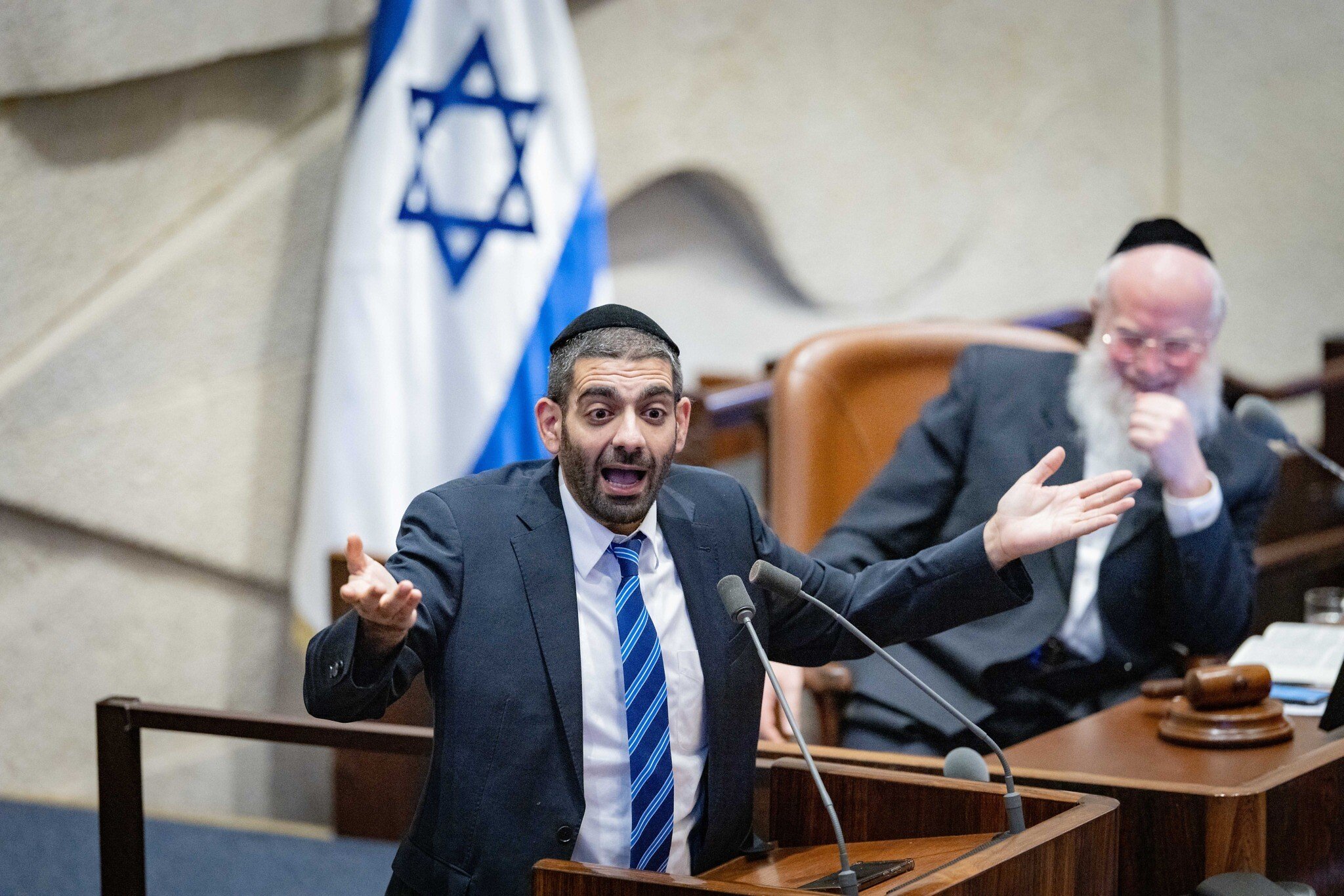
According to the Behadrei Haredim news site, during Shas’s weekly faction meeting in the Knesset, MK Michael Malkieli accused Degel HaTorah chairman Moshe Gafni of joining “forces with the religion-haters from the opposition” to prevent the approval of NIS 30 million ($9.4 million) for the renovation of ritual baths “just because of a certain role that they thought they deserved.”
Malkieli alleged that this calls into question Gafni’s “decision-making in all matters” relating to religion in Israel.
Malkieli served as religious affairs minister until Shas resigned from the government over the summer as part of an ongoing dispute regarding ultra-Orthodox enlistment.
Last week, Degel HaTorah abstained from voting for additional funding for the Religious Services Ministry, a key Shas interest, as part of the fight over the appointment of the Jerusalem religious council’s new chairman.
The ultra-Orthodox Kikar Hashabbat news site reported that Gafni opposes the appointment of Shas chairman Aryeh Deri’s associate Hananel Shem Tov to the position, insisting that it belongs to his party. Shas, meanwhile, argues that its coalition agreement gives it the authority to choose the council chairman.
Degel HaTorah is one of two factions comprising the larger United Torah Judaism party, which on Monday decided to boycott votes on coalition legislation this week in order to gain leverage in the dispute, marking an escalation from the partial legislation boycott the party has maintained for months, in which it has declined to vote on preliminary readings of private bills advanced by coalition lawmakers.
Responding to Malkieli’s comments, a spokesman for Gafni on Tuesday released a statement, attributed to associates of the faction chair, decrying “attempts at cheap smears” motivated by “fear of losing control, power and authority.”
Gafni “acts in accordance with the guidance of our masters and rabbis, the great Torah sages, at every step,” the spokesman said, accusing Shas of mismanagement of religious affairs.
“We have all witnessed the damage and destruction they have left behind in recent years regarding kashrut, mikvehs, and all religious services, including in Jerusalem. The era in which Degel HaTorah’s community lacks representation on these issues throughout the country — from Metula to Eilat, including Jerusalem, where Degel HaTorah is the largest faction in the city — has come to an end,” the spokesman said.
“If anyone in Shas has not yet understood the new reality, they should internalize it. The public has already spoken. The change is already underway.”
Shas has long made control of local rabbinates a top policy priority, advancing legislation and pushing regulations aimed at giving it control over the appointment of municipal rabbis.
According to Ariel Finkelstein, a researcher at the Israel Democracy Institute who focuses on issues of religion and state, Shas sees patronage through the councils as key to building and maintaining its political power in a way that Degel HaTorah generally does not, while Jerusalem is important to Gafni because the Ashkenazi Haredim he represents constitute a majority of the city’s ultra-Orthodox population and “want autonomy and non-interference.”

“Technically, the decision on the head of the religious council is made by the religious services minister — currently Yariv Levin. Gafni sees that while Shas previously held the ministry, things were handled internally. Now, Shas doesn’t; Levin is Likud. The director general remains a Shas person, so Shas feels it’s still theirs. But Gafni says: If Likud decides, I should get my share too,” explained Finkelstein.
“There is an ironic, and perhaps tragic, dimension to the fact that Shas — having repeatedly used its power to arrange jobs — now attacks Gafni for trying to claim a share of the pie,” said Seth Farber, the director of the ITIM nonprofit, which helps Israelis navigate their country’s religious bureaucracy.
Condemning the “distribution of patronage jobs in the religious establishment,” Farber argued that “when the state abdicates its responsibility and allows political parties to run religious institutions as political extensions, it ends up with a system that is divided, unprofessional, and devoid of public trust.”
“It is no coincidence that this dispute has already led to political paralysis and a coalition crisis. When struggles for control replace public administration, the entire country pays the price,” he said.







The Times of Israel Community.