

US had detailed cyber-attack plan in case Iran talks failed
Report: Operation would have targeted communications systems, air defenses; was devised partly for fear of Israeli strike on Iran
- See more Times of Israel on Google - add us as a Preferred Source

While negotiating with Iran, the US reportedly formulated a comprehensive plan to target major Iranian military facilities with cyber-attacks. Washington was preparing for the possibility that the talks, aimed at curbing Tehran’s renegade nuclear program, would fail and Iran would lash out at America or its regional allies, The New York Times reported Wednesday.
Code-named Nitro Zeus, the plan would target Iran’s air defenses, communications systems and parts of its power grid, the report said, citing the upcoming documentary film “Zero Days,” as well as interviews with military and intelligence officials. The plan reportedly involved thousands of military and intelligence personnel, with the US prepared to spend millions of dollars and install electronic spying devices in Iranian computer networks.
Devised by the Pentagon, the plan was put in place to assure President Barack Obama that should Iran move against the US or regional allies in the event of a breakdown in the nuclear talks, Washington would have a sophisticated alternative to full-scale war. According to the report, the plan was also given special priority because US officials believed there was a high probability that Prime Minister Benjamin Netanyahu would order a strike on the Islamic Republic’s nuclear facilities, drawing the United States into the ensuing hostilities.
Nitro Zeus was put on ice following the landmark nuclear agreement between Iran and the permanent five members of the UN Security Council plus Germany (P5+1) last July. That deal, vociferously opposed by Israel, determined that longstanding sanctions against Tehran would be lifted in exchange for curbs on its nuclear program.
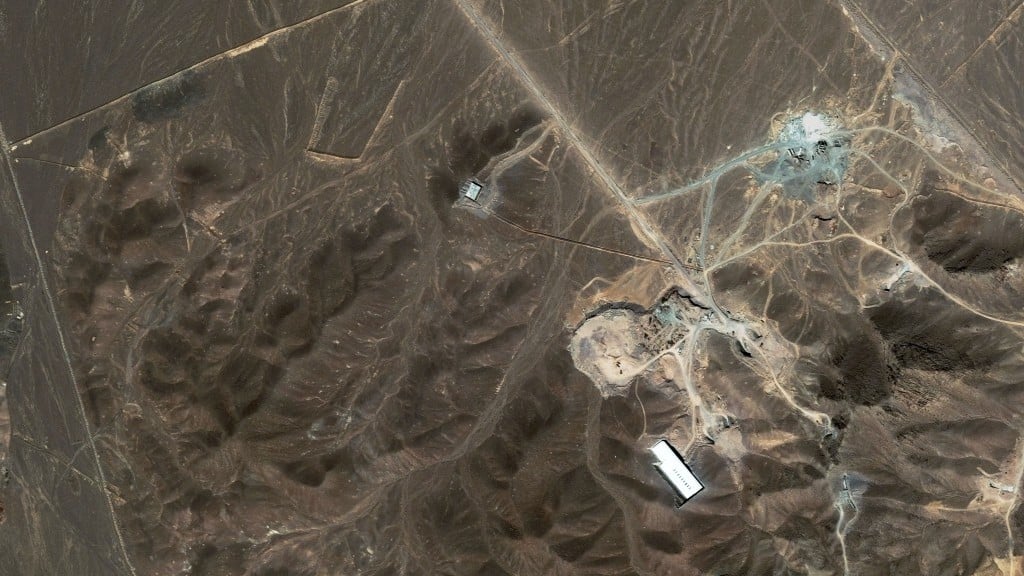
The report said that while the Pentagon was working on Nitro Zeus, other US intelligence agencies developed another narrowly focused plan to disable the computer networks at the underground Fordo uranium enrichment site. Unlike Nitro Zeus, however, the Fordo cyber-attack plan can still be authorized even in the absence of hostilities. Such an attack, the report said, would be a follow-up to a computer virus that sabotaged 1,000 uranium-enriching centrifuges in Iran. The Stuxnet virus, first discovered in 2010, has been widely attributed to the United States and Israel, working in tandem, but neither government has acknowledged responsibility.
“Zero Days,” the documentary in which the existence of the cyber-attack plan is revealed, is scheduled to be screened Wednesday at the Berlin Film Festival. According to The New York Times, the film describes “the escalating conflict between Iran and the West in the years leading up to the agreement, the discovery of the cyber attack on the Natanz enrichment plant, and the debates inside the Pentagon over whether the United States has a workable doctrine for the use of a new form of weaponry whose ultimate effects are only vaguely understood.”
On Monday Samantha Power, Washington’s ambassador to the UN, said that Iran’s compliance with the terms of the nuclear deal has so far been “strong,” but warned it was still fueling conflict in the region and remained a threat.
“What this deal does if implemented — and so far the implementation has been strong but it’s very early days — is it cuts off the pathways to a nuclear weapon and it gives us much more visibility into Iran’s program than we had before,” Power, who was visiting Israel at the time, told a group of students. “Iran of course is still a threat. Iran is supporting terrorism. Iran is supporting parties to conflict like the Assad regime (in Syria).”
Israel strongly opposed the nuclear deal, with Netanyahu warning it would not block Iran’s path to nuclear weapons. He also said that lifting sanctions would allow Iran to increase its support to proxy militias in the region, including terror groups such as Hezbollah.








The Times of Israel Community.