

Wife of jailed Rabin assassin Yigal Amir registers party calling for his freedom
As party registration kicks off, new faction seeks to clear right-wing extremist convicted of gunning down prime minister at 1995 peace rally
 Add ToI as a Preferred Source on Google
Raoul Wootliff is a former Times of Israel political correspondent and Daily Briefing podcast producer.

The wife of Yigal Amir, the man who assassinated prime minister Yitzhak Rabin at a peace rally 24 years ago, officially registered a new political party on Tuesday to run in March’s election, as the Central Elections Committee kicked off two days of party registration.
Filing forms for the Mishpat Tzedek (Fair Trial) party, Larissa Trimbobler-Amir called for a retrial for her convicted husband and “all other innocent people unjustly incarcerated.”
Yigal Amir’s mother, Geula Amir, is placed number six on the list of eight candidates presented by the new party.
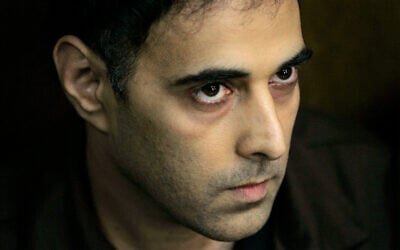
Amir, now 49, is serving a life sentence for the assassination of Rabin. He remains in solitary confinement, though he got married while in prison in 2004 after a protracted legal struggle.
The case against Amir was clear-cut: He was caught on video raising a gun to Rabin. He calmly confessed to the police, reenacted the crime for them and never recanted his testimony.
Still, fringe conspiracy theories have emerged positing a number of possibilities other than Amir being the assassin. The theories rely on some purportedly ambiguous facts surrounding the night of the murder: claims that the bullets were blanks, witnesses who say they didn’t see blood at the scene, an abnormally long drive to a very nearby hospital.
Previous attempts to have Amir freed based on the conspiracy theories have fallen short.
Both the court that convicted Amir and the subsequent Shamgar Commission established to investigate the chain of events leading up to the assassination rejected the conspiracy claims and concluded that Amir was guilty of murder.
Trimbobler-Amir, who has long campaigned to free her husband, said on Tuesday that “only we can do it, not the politicians, they don’t care.”
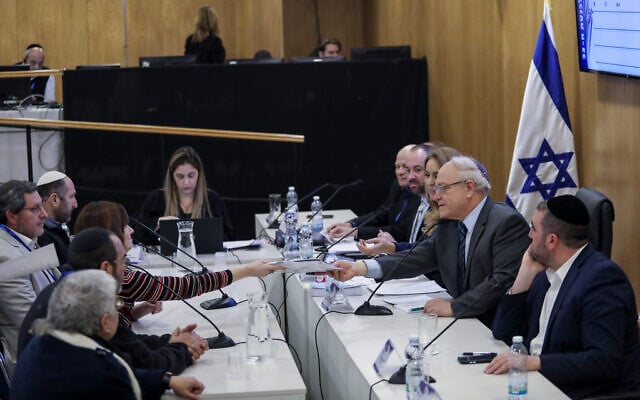
With 48 days to go until the March 2 national vote, the Central Elections Committee opened its doors at 11 a.m, on Tuesday for parties jostling for the Knesset’s 120 seats to register their rosters.
With over 40 parties in total having taken registration forms, only nine had filed by Tuesday afternoon, setting up a potentially busy day on Wednesday before the midnight deadline.
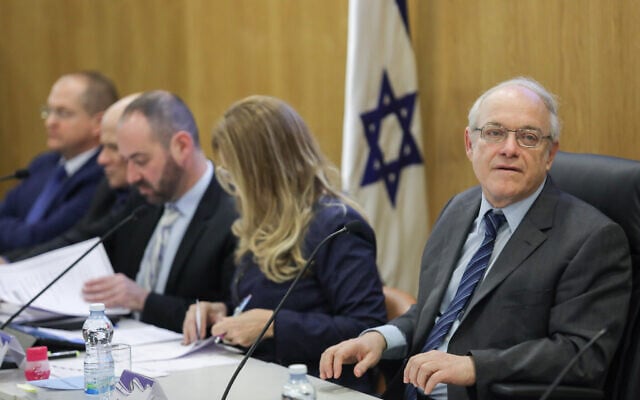
One by one, parties presented their lists to the committee’s chair, Supreme Court Judge Neal Hendel, filing details on each candidate and requesting a letter or letters from the Hebrew alphabet that will represent them on ballot slips come April.
The other parties that filed by early Tuesday afternoon were HaHazon (The Vision), Ani V’ata (Me and You), Otzma Liberalit Kalkalit (Liberal Economic Power) headed by economist Gilad Alpher who ran with Moshe Feiglin’s Zehut party in the April election, Da’am, HaGush Hatanachi (The Bible Bloc), Zechuyotenu B’koleinu (Our Rights are in our Hands), Halev HaYehudi (The Jewish Heart), and Manhigut Hevratit (Social Leadership).
In an antiquated and at-times bizarre process, new parties compete for the free letters not already in use by existing parties, which are given out on a first come, first served basis. The last of the parties to register are therefore forced to take obscure pairings of letters that make little sense and have no relation to their party name.
The discussions over the letters are also significant, given that each paper ballot slip for each party must be printed as many times as there are eligible voters, with extras printed to make sure no one is prevented from voting for their preferred party. With approximately 6,300,000 Israelis eligible to vote, the spokesperson for the Central Elections Committee said that some eight million slips would be printed per party.






The Times of Israel Community.