

Widely cited Times of Israel archive of Oct. 7 fallen now available on social media
Those We Have Lost seeks to commemorate all those slain in the Hamas onslaught. It will now appear in its own channels on Instagram, X, and Facebook as the invasion’s 3rd anniversary approaches
 Add ToI as a Preferred Source on Google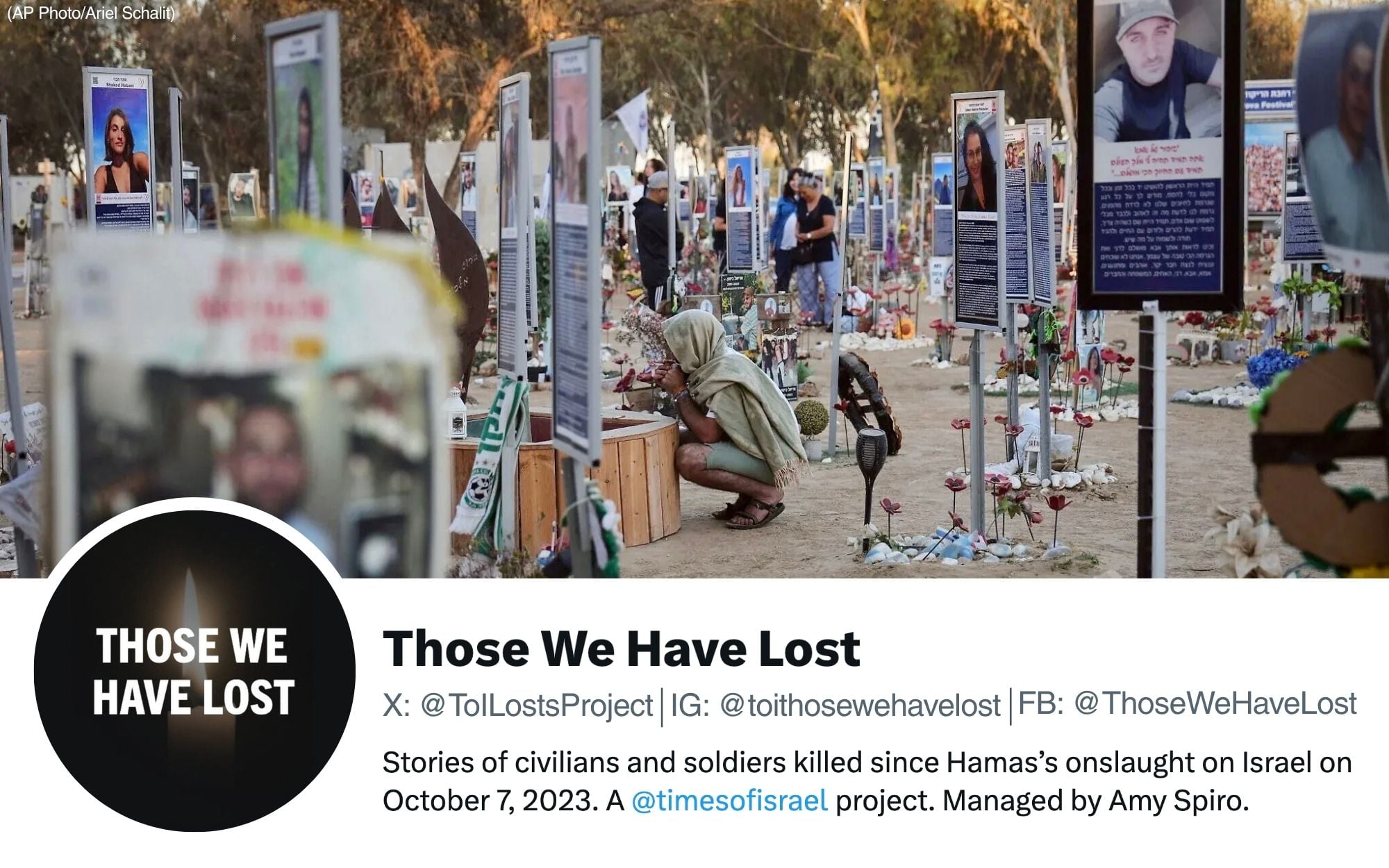
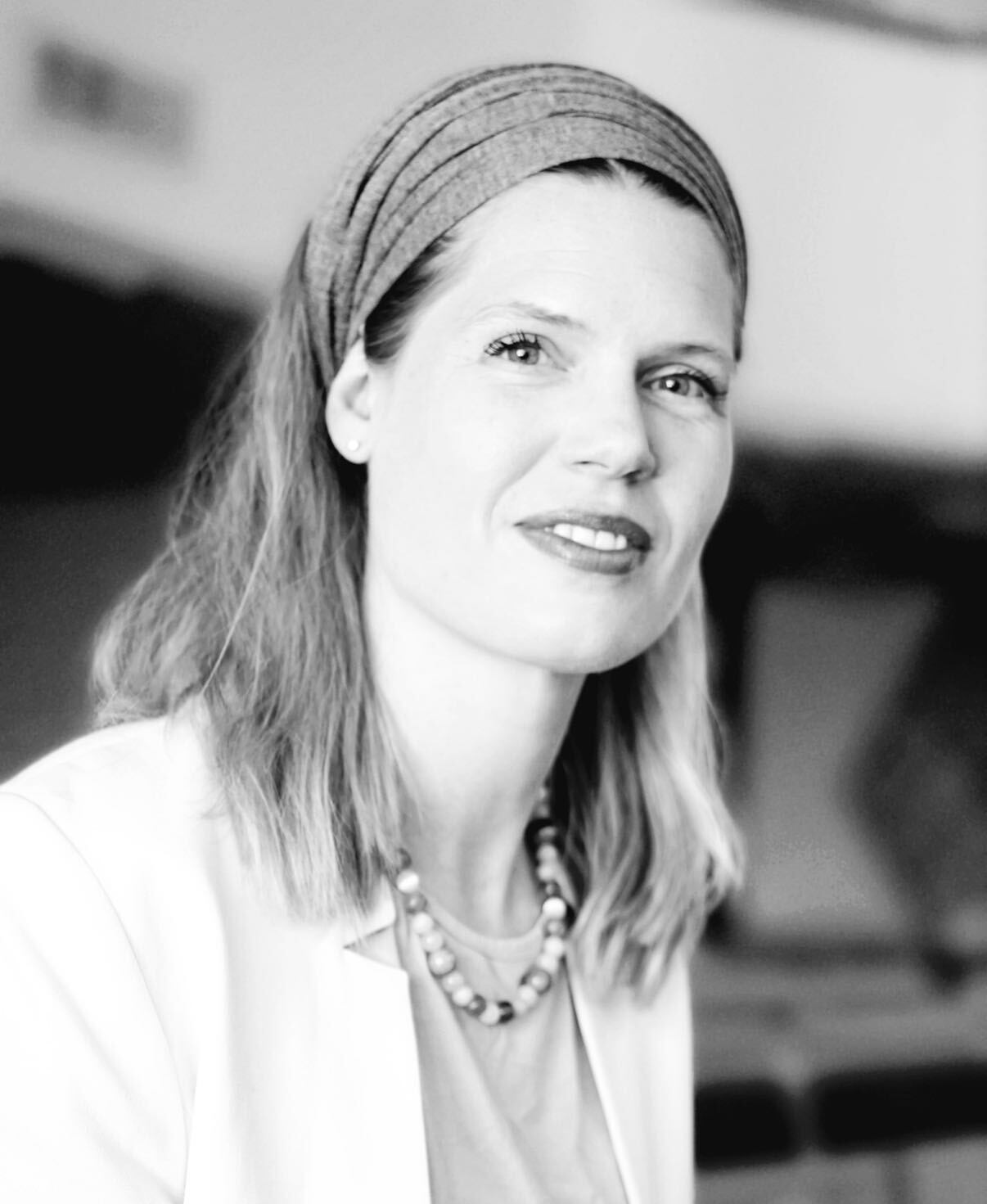
After 15 years in the Israeli media, Times of Israel reporter Amy Spiro was accustomed to covering war casualties and terror attacks, as well as their aftermath.
“The victims were always front and center,” Spiro said.
However, the unfathomable scope of Hamas’s October 7, 2023, onslaught changed the way Israelis cover and commemorate tragedy.
Some 1,200 people were brutally slain on that day, and 251 were abducted to the Gaza Strip, where they were held hostage by Hamas and other terror groups. Many members of Israel’s security forces were also killed as the country battled Hamas in Gaza and the Hezbollah terror organization on the northern border.
“How can we possibly tell that many stories?” Spiro said. “How could we possibly really spotlight that many people?”
Between constant hostage and military developments, and hundreds of grieving families, it seemed impossible for local media to devote enough space to memorialize the individual victims.
But that didn’t stop Spiro and a team of Times of Israel reporters from trying. They set out to document the stories of the terror victims and soldiers killed in the Israel-Hamas war through September 2025. The project was later updated after the final hostages’ remains were returned in late 2025 and early 2026, making it the most comprehensive English-language archive of civilians and soldiers killed in the war.
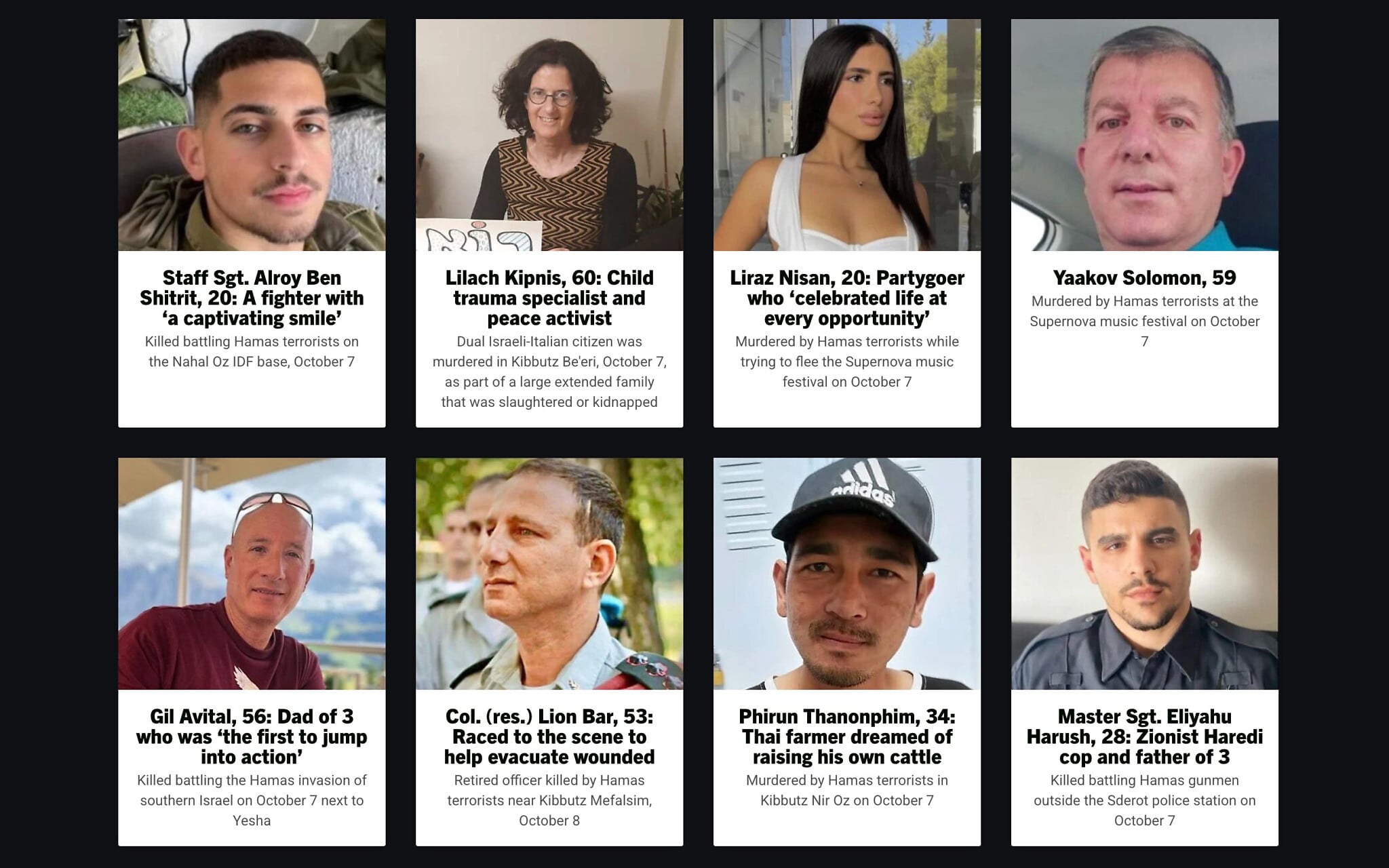
Those We Have Lost is a public resource that, until now, has lived on The Times of Israel’s website. As the third anniversary of October 7 approaches, we have dedicated new ToI channels on Instagram (@toithosewehavelost), X (@ToILostsProject), and Facebook (Those We Have Lost), to help those creating memorial projects more easily access the information.
On the website, the archive has a search function to find specific names linked to an obituary, and the front page reshuffles every time it’s clicked to unveil a new set of profiles.
As the database expands to social media, users will be able to simply type a name into the search function on X and Facebook to share a victim’s obituary, or repost their snapshot memorial on Instagram.
“We’ve tried to make it as accessible as possible,” Spiro said.
Spiro gathered information about many of the victims through dedicated memorial accounts and posts on social media, especially for younger people, who make up a large proportion of those killed in the war.
“I really wanted to make sure that everyone was having their due… A photo and a name is a tribute, but there’s always so much more than that,” she said, noting that an enormous amount of research was necessary to create such comprehensive obituaries.
Many synagogues and Jewish nonprofits around the world have tapped into Those We Have Lost and incorporated the information into their ceremonies and memorials. Spiro cited one synagogue whose members “adopted” a person to pray for from the archive.
Dr. Alexandra Herfroy-Mischler, a researcher at the Jacob Robinson Institute for the History of Individual and Collective Rights at Hebrew University, said that Those We Have Lost gives victims the “justice of dignity,” adding that it names, remembers, and keeps the victims at the forefront of the national agenda.
“Temporality is completely crossed,” Herfroy-Mischler said, arguing that its spot on the website and permanent social media presence puts the victims’ “dignity back into place.”
She said projects such as Those We Have Lost are especially important as Israelis continue to seek justice at the grassroots level.
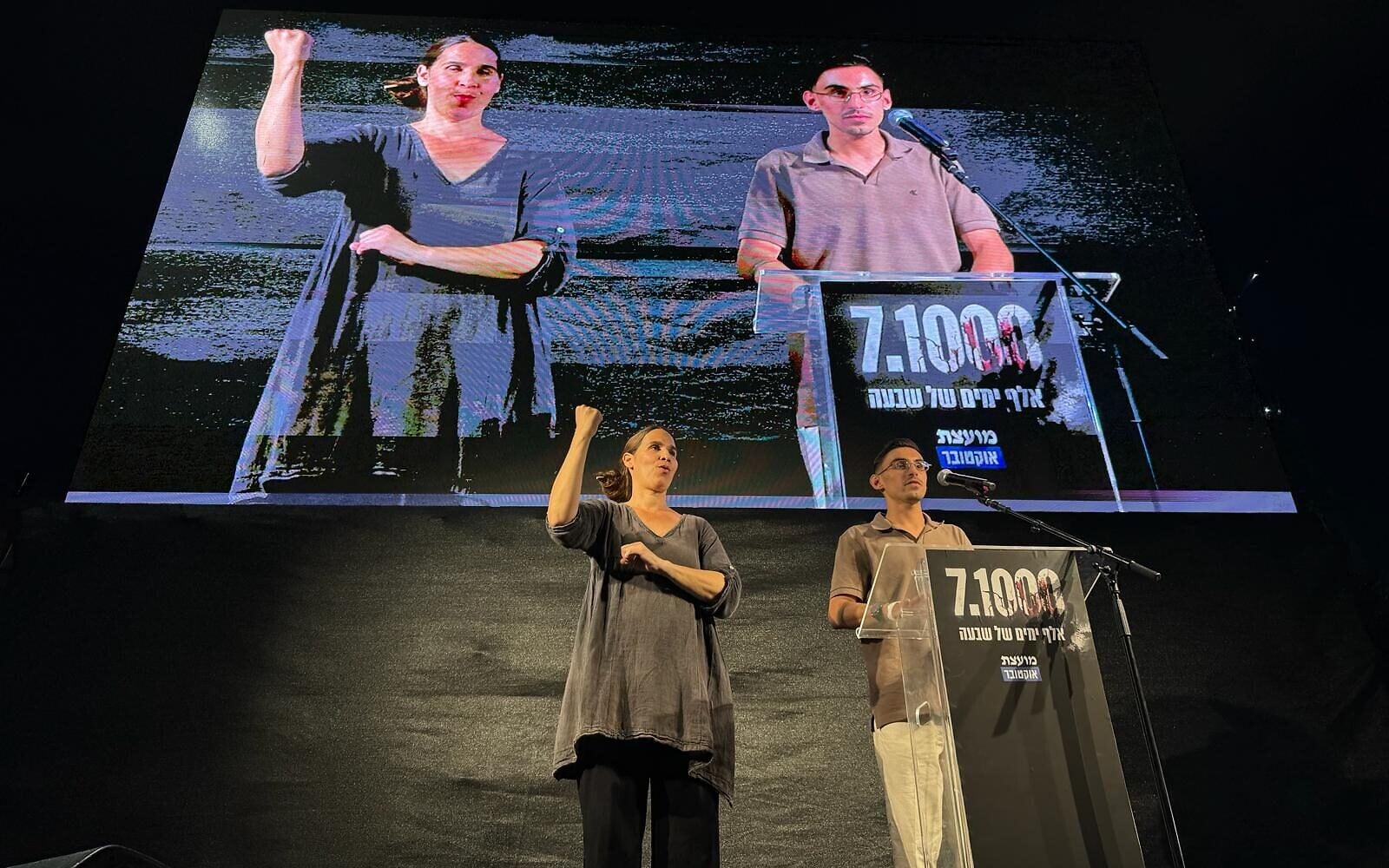
Israeli NGOs are providing data to the UN and international community, and shaping national commemorations in the voice of the people. Two such organizations are the Civil Commission, which documents and raises international awareness of Hamas’s crimes against women and children, and Edut 710, an Israeli effort to digitize every October 7 testimony.
The “stockpiling of information” about October 7 by these organizations and Spiro’s Those We Have Lost reflect a collective Jewish PTSD after the Holocaust that was reactivated by the Hamas-led massacre, said Herfroy-Mischler.
“No one will believe us, no one will remember the victims, and no one will prosecute the criminals,” she said. “So civil society needs to gather all the information to hold onto the knowledge.”
Having a publicly accessible archive like Those We Have Lost helps alleviate fears that the world will forget, while providing a tool to bear witness and counter denial of the atrocities in the international arena, said Herfroy-Mischler.
Spiro said that what helped her continue working on the project when it became overwhelming was the feedback that said, “We’re using it. We’re gaining from it. We’re learning from it.”
“Not just in the US, but largely in the US, they’re looking for information, and they see us as a resource,” she said. “And therefore to have this for them, it was big.”



The Times of Israel Community.