

Netanyahu turns the flydubai near disaster into a perfect campaign prop
As the PM spins a thwarted attack to project strength and potentially boost his poll ratings, the prospect arises of a rotation agreement with Eisenkot to break the looming electoral deadlock

 Add ToI as a Preferred Source on Google
Tal Schneider is a Political Correspondent at The Times of Israel
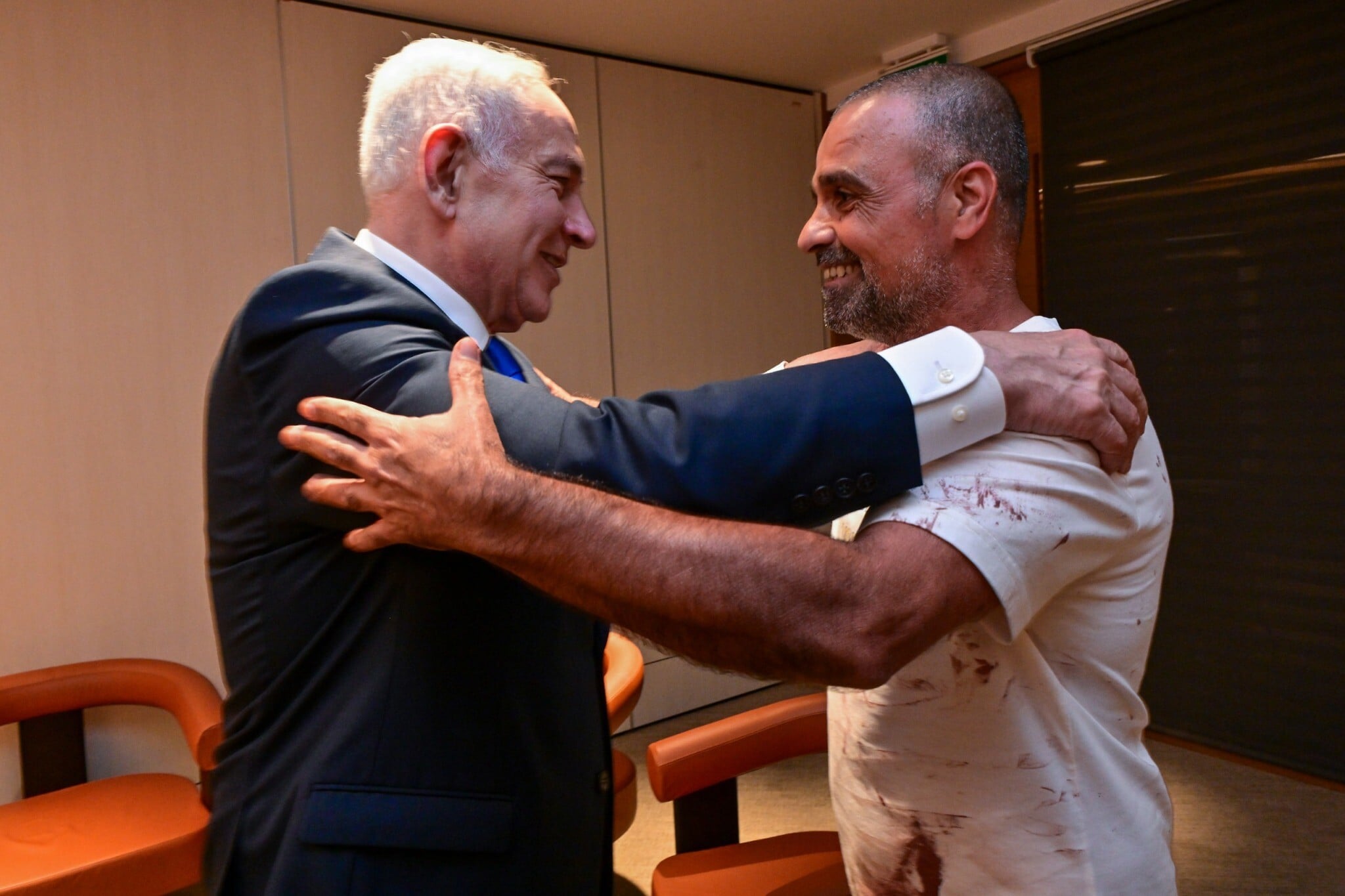
Prime Minister Benjamin Netanyahu’s public relations team has spent the entire election campaign waiting for the perfect photo op. It did not materialize at the UN General Assembly in New York a week ago — not with US President Donald Trump, and not with Secretary of State Marco Rubio.
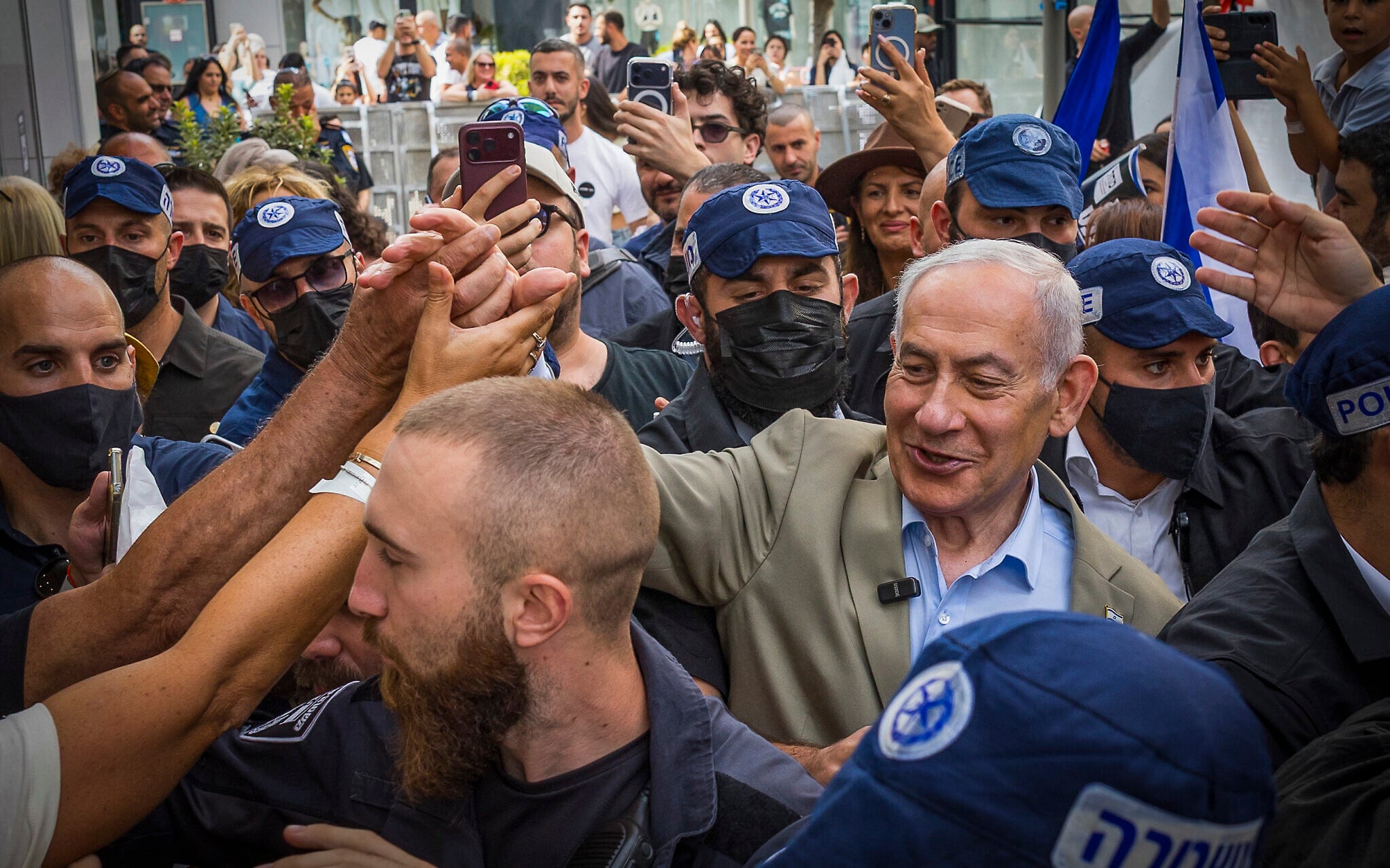
But on Wednesday, after the passengers of a flydubai flight narrowly escaped a mid-air catastrophe, Netanyahu rushed to position himself in the frame.
To fully grasp the political spin, one must first understand the sheer scale of the averted disaster.
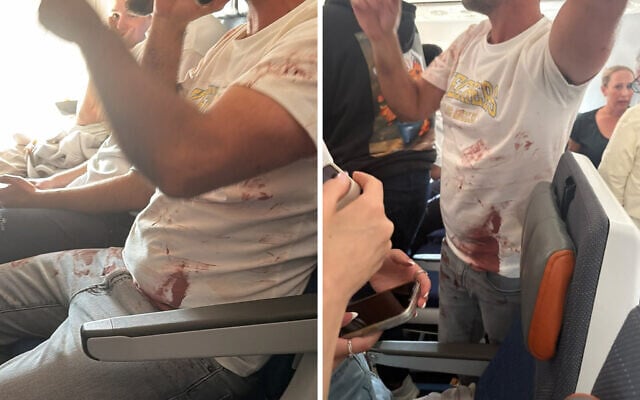
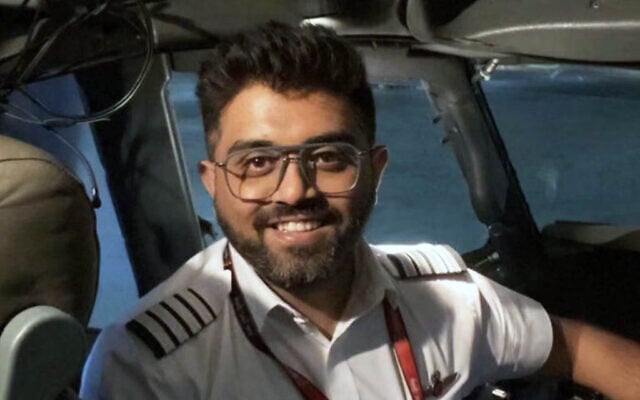
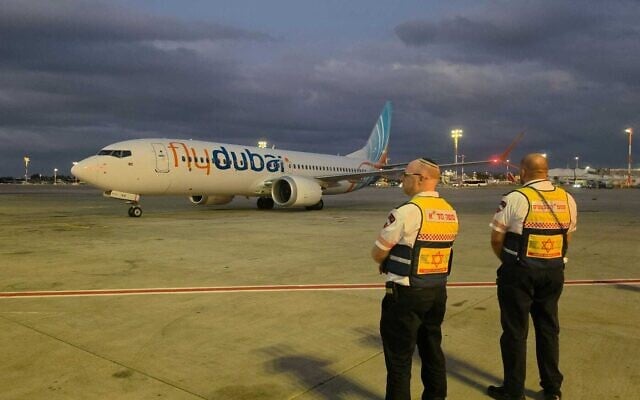
Flydubai flight FZ 1073 was traveling from Dubai International Airport to Ben Gurion Airport in Tel Aviv when a violent struggle broke out in the cockpit. An Omani co-pilot stabbed the aircraft’s Indian captain, Smit Machchhar, and allegedly attempted to crash the Boeing 737 MAX 8, sending the plane plunging nearly 14,000 feet in less than 30 seconds.
A disaster was only prevented when Machchhar managed to click open the cockpit door, and Israeli passengers stormed in to subdue the attacker. The flight ultimately made an emergency landing at Tabuk Airport in northern Saudi Arabia.
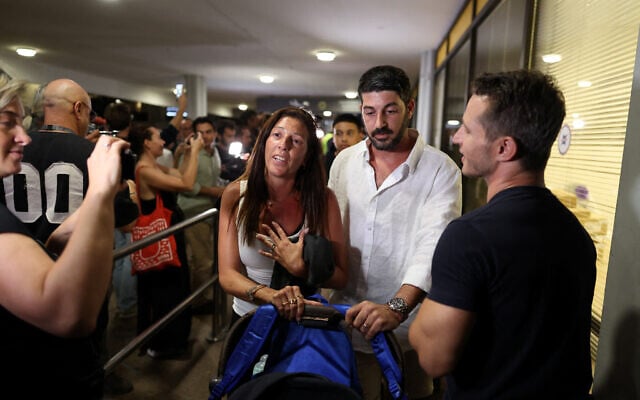
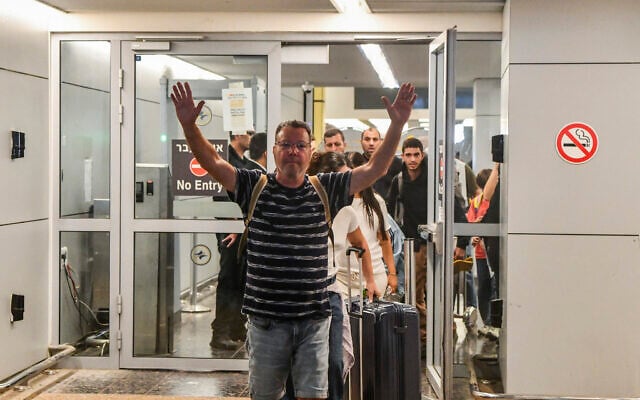
The prime minister, who is quick to dish out hugs when there is a happy ending but distances himself when he must be held accountable for a failure, arrived at Ben Gurion Airport to greet the Israelis returning home from the harrowing ordeal.
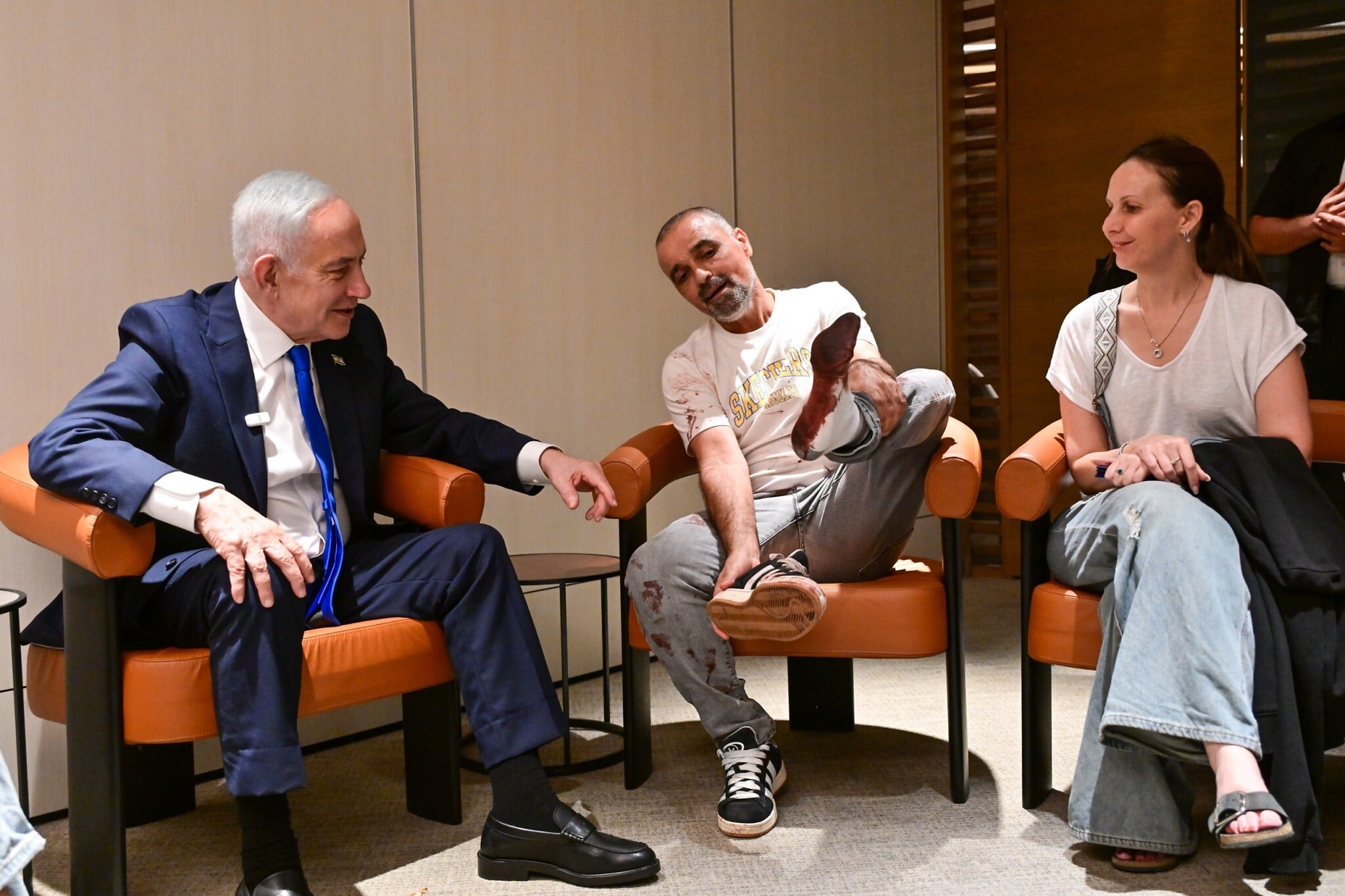
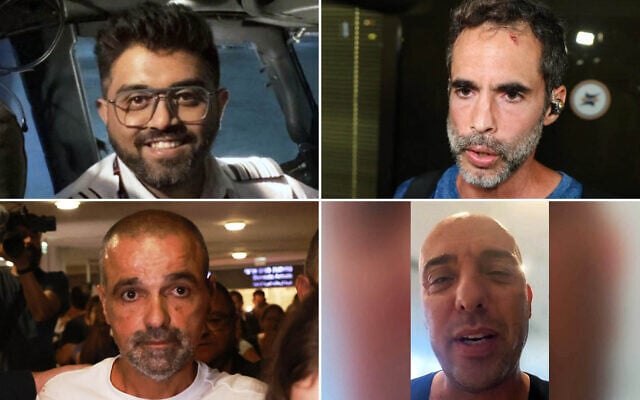
The passengers were the true heroes, but Netanyahu was quick to seize the photo opportunity. He embraced Yaniv Hayun, one of the Israelis central to thwarting the attack. In his media interviews, Hayun made a point of sharing the credit. He emphasized the teamwork and solidarity among several of the flight’s heroes, specifically naming Asaf Rajuan, Tzvika Manes, and Dr. Shota Musayev.
Hayun also noted that while the Israelis were stranded on the ground in Tabuk, Netanyahu called him and promised to connect him with Israeli security agencies.
From the standpoint of Netanyahu’s reelection campaign, his team could hardly have asked for a better event: a genuine, pulse-pounding story featuring civilian heroes to embrace and 174 passengers — most of them Israelis, including many children — to welcome home safely. The passengers had escaped a life-threatening ordeal, and the campaign had just been handed a golden opportunity to recover its momentum.
Polling slumps and right-wing lifelines
Netanyahu’s Likud party has indeed lost altitude in recent weeks. In some polls, the ruling party — which holds 32 seats in the outgoing Knesset — has plummeted to as low as 18.
However, a political lifeline for the broader right-wing bloc unexpectedly arrived from Brig. Gen. (res.) Ofer Winter. The hawkish former military commander recently founded his own party, People of Israel, which has brought disappointed right-wing voters who refused to vote for Likud back into the bloc.
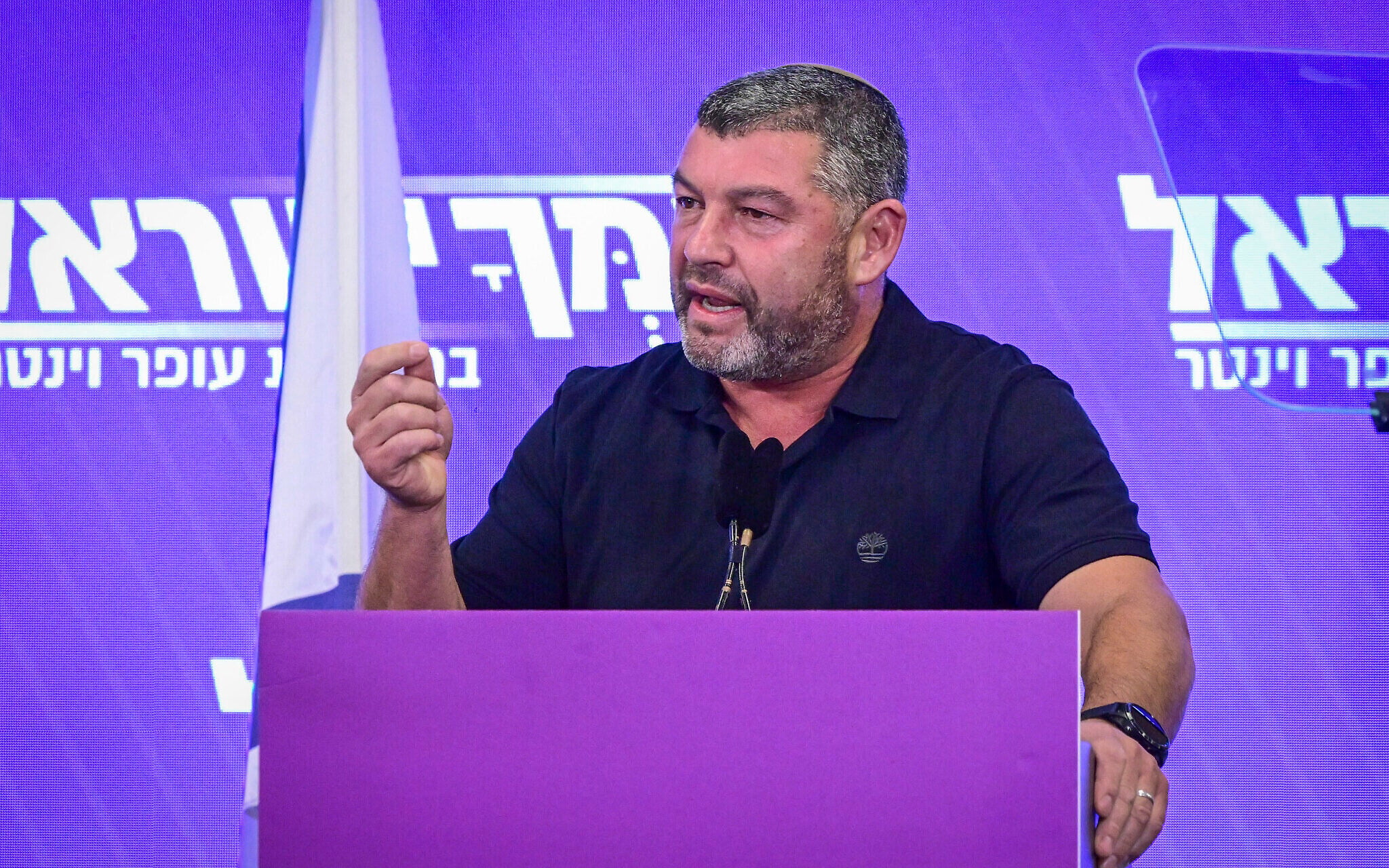
At the same time, with the Arab-majority Joint List and Ra’am factions gaining strength across the aisle, former IDF chief of staff Gadi Eisenkot’s centrist bloc has weakened. Consequently, Netanyahu’s bloc has stabilized — at least in the sense that it can prevent Eisenkot from forming a coalition government. And then, the perfect heroic image arrived on the tarmac.
The glaring security questions regarding the flight remain unanswered: How was an Omani co-pilot, now suspected of trying to crash a passenger jet, cleared to operate a flight bound for Tel Aviv? What background checks were carried out, and what systemic lessons can be learned from the incident?
These are urgent questions that demand thorough answers. But a campaign is a campaign, and Netanyahu’s advisers naturally preferred to use the episode for political ammunition.
The night before the alleged crash attempt, Opposition Leader Yair Lapid received a security briefing from Netanyahu at his request. Lapid wanted to understand whether, beyond the standard existential threats that accompany the country on a daily basis, there was concrete intelligence explaining a highly alarming statement Netanyahu had issued on Tuesday afternoon from an Air Force base about potential pre-election plots by Israel’s “enemies.”
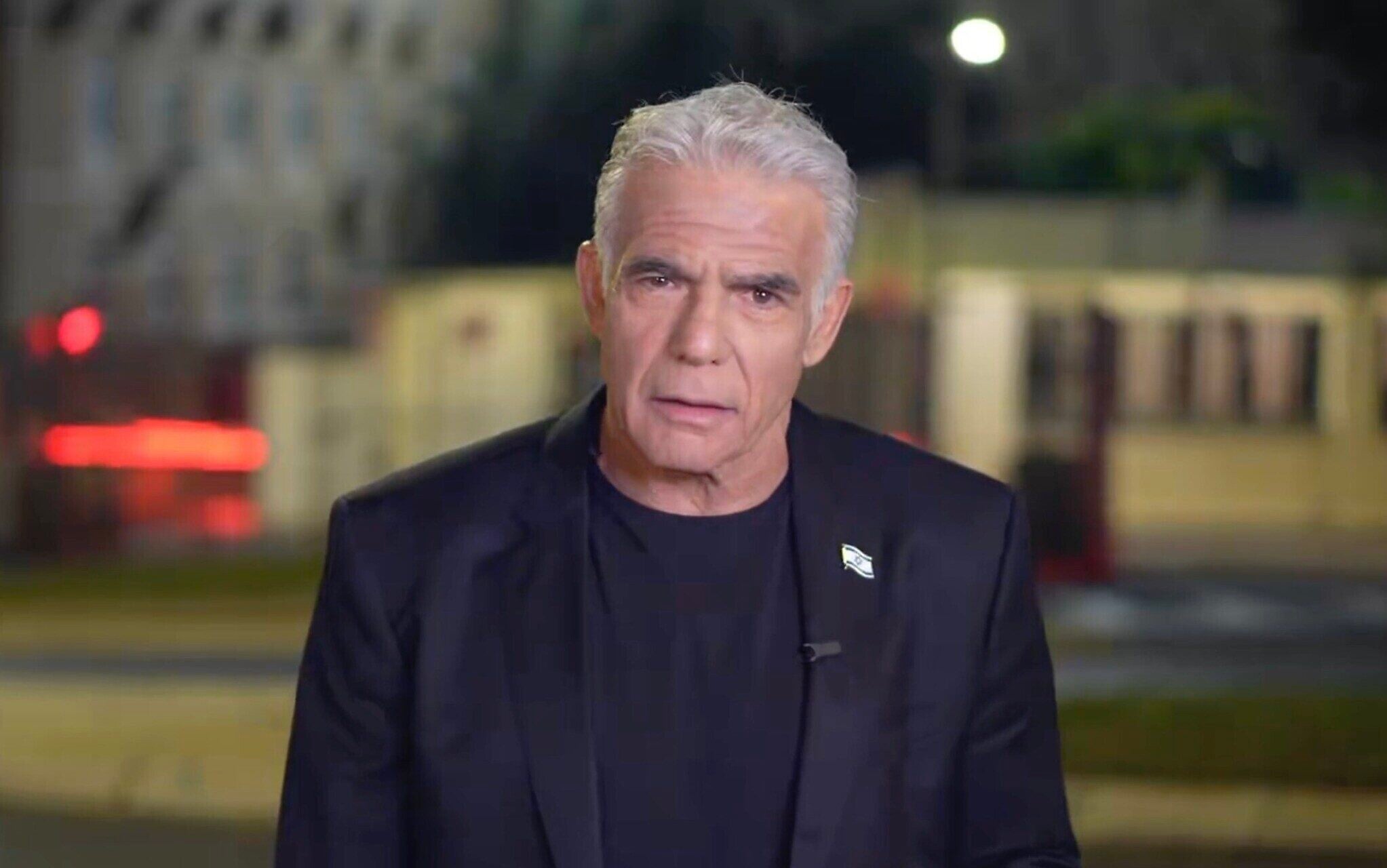
After the meeting, Lapid stated that he did not take the threats lightly but noted that he had heard no new details.
The next day, while the flydubai plane and its passengers were still stranded in Saudi Arabia, Netanyahu’s adviser and spokesperson Jonatan Urich was already politically weaponizing the incident on behalf of his boss. On X, Urich explicitly claimed that Netanyahu had warned of just such danger a day earlier, while Lapid and former prime minister Naftali Bennett had merely mocked him.
The brazen attempt to portray Netanyahu as an oracle who had foreseen the specific aviation danger invited obvious retorts. Niv Dimor, an adviser to Lapid, fired back at Urich on X: “Netanyahu knew they were going to hijack a passenger plane carrying Israeli civilians? How did he not prevent it? Why did innocent civilians once again have to step up to prevent the disaster?”
That evening, Bennett appeared on television and sharpened the attack: “How are Netanyahu and [Defense Minister] Israel Katz not ashamed? What are they, an alert app? He is the prime minister. If he knows, he should convene the transportation minister, the Airports Authority. What did he do? He is an alert machine. If all you know how to do is issue warnings, go home. The disaster was averted thanks to the courage of civilians.”
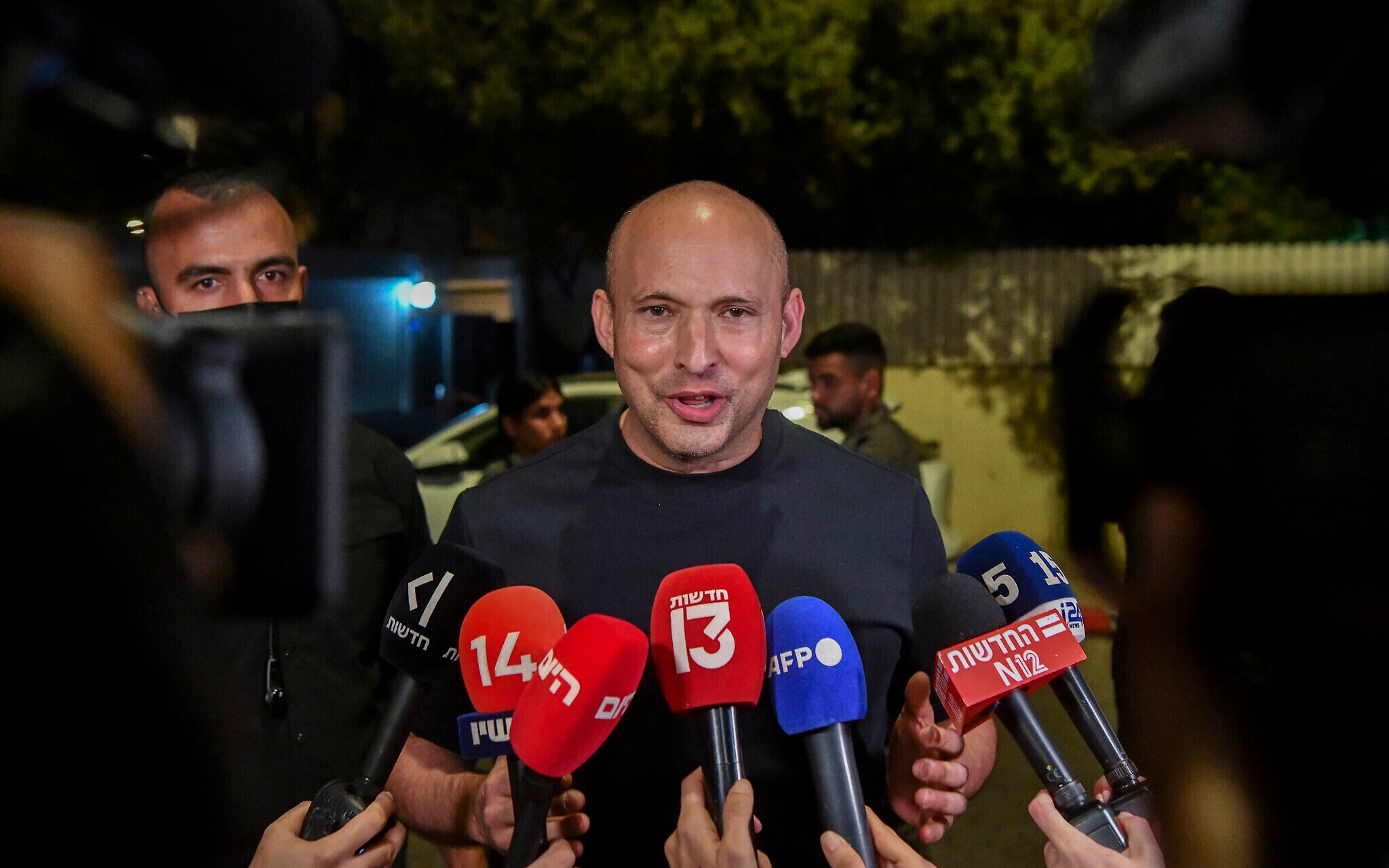
The battle for credit continued. Media outlets soon published a response from an anonymous “senior source” – an attribution often used in Hebrew media to describe Netanyahu himself — asserting that Lapid had indeed been informed during the security briefing about “increased hostile activity abroad.”
Lapid swiftly fired back: “The warning about activity abroad is specific, has existed for more than two years, and has nothing to do with airplanes or anything remotely resembling what happened this morning. This is the modus operandi of this ‘source’ and his office. Another lie and another lie until everyone gets confused.”
The attempt to portray Netanyahu as a leader who warned the public in advance raises an inescapable question: If the warning Netanyahu gave Lapid was general, what does it have to do with what happened on the plane? And if Netanyahu truly knew of a specific, concrete danger, why did he not act to prevent it? The warm embrace at Ben Gurion Airport does not answer those questions.
A looming deadlock as Election Day approaches
We are less than four weeks from Election Day. Further dramatic events could still shake up the national agenda, and in the interim, the state commemorations marking three years since the October 7, 2023, Hamas-led massacre will take place.
But within Likud, a distinct sense of victory is already beginning to take shape, even though the polls still do not give Netanyahu’s bloc the 61-seat majority needed to form a government. From their perspective, it is enough that Eisenkot’s path to power is currently blocked.
That is the overriding trend emerging from the latest polls. Likud itself is not gaining strength, but Winter’s party is stabilizing the wider Netanyahu bloc. And the far-right Religious Zionism party is currently polling at around six-seven seats, apparently boosted by the addition of hardliner Moshe Feiglin.
Meanwhile, the Arab parties Ra’am and the Joint List are also gaining strength, producing a profound political deadlock. Netanyahu’s bloc remains far from an outright majority, while Eisenkot’s bloc — when excluding the Arab parties — has slipped away from the 59 seats it comfortably held for almost the entire past year.
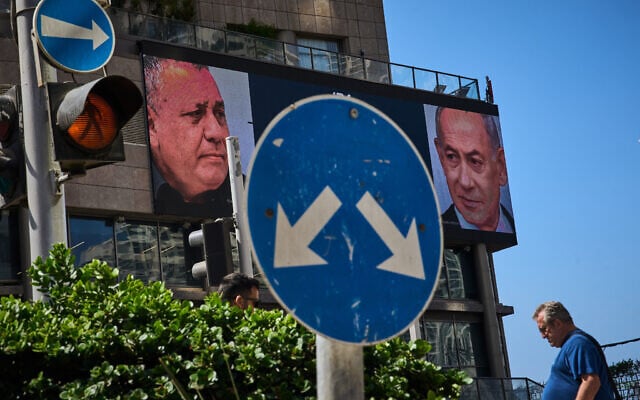
Such a deadlock could put Eisenkot and Bennett’s firm campaign promises not to sit in a government with Likud to the ultimate test.
If Eisenkot’s bloc wins slightly more seats than Netanyahu’s, it is easy to imagine President Isaac Herzog summoning both leaders to a three-way meeting to try and broker a power-sharing rotation agreement.
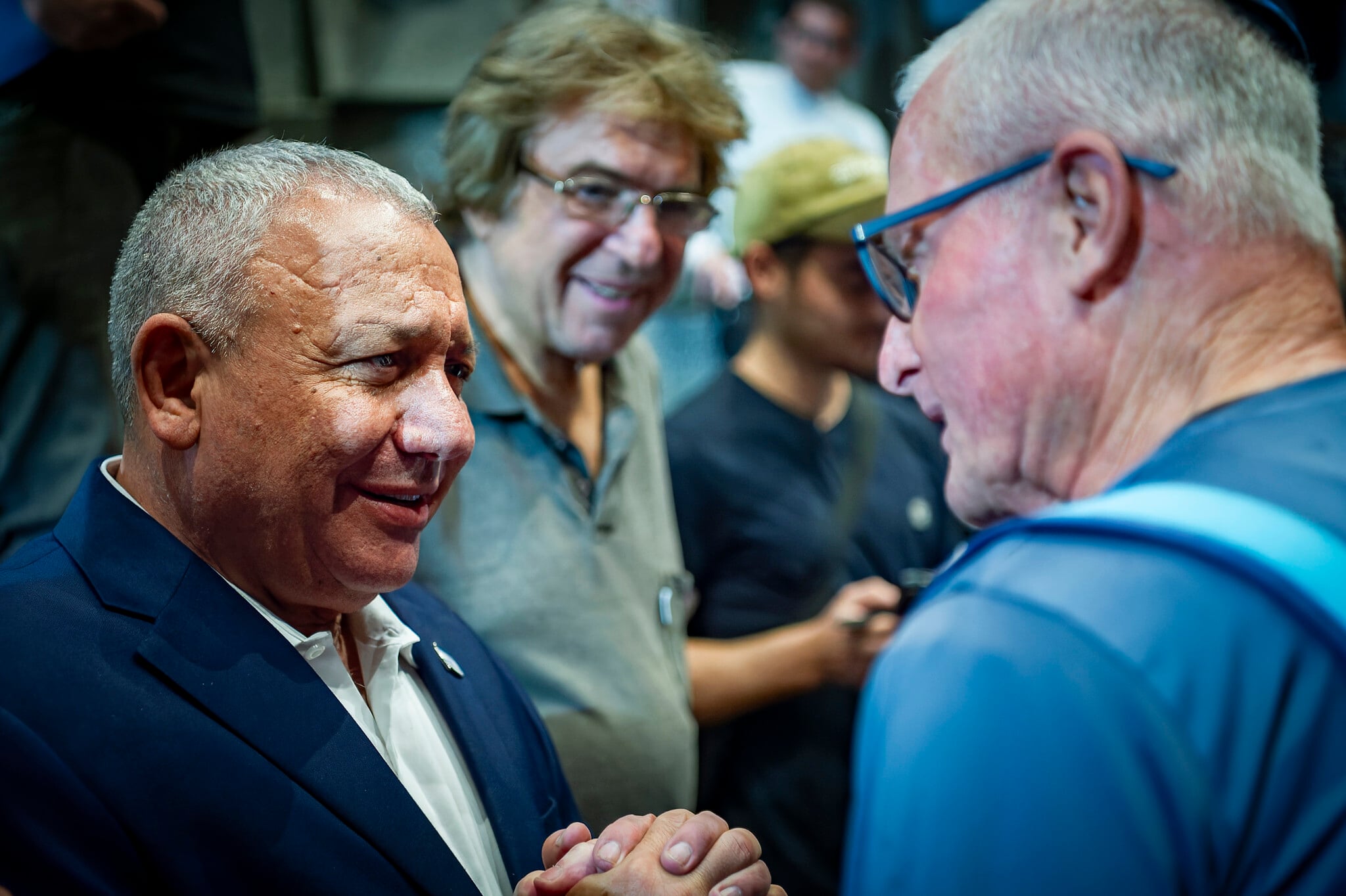
A purely hypothetical scenario at this stage, it might look like this: Eisenkot would serve first as prime minister for two years, with Netanyahu replacing him for the subsequent two years. As part of the grand arrangement, Herzog would grant Netanyahu a presidential pardon to end his ongoing corruption trials, and during Eisenkot’s term, Netanyahu would be appointed defense minister.
The possibility of actually implementing such a complex arrangement would, of course, also heavily depend on navigating thorny legal questions.
It would be a highly complex, indeed contorted political arrangement, but it is easy to see what each of the involved players might gain from it.
Herzog could present the sudden end of Netanyahu’s criminal trial as a necessary national compromise intended to extricate the country from a paralyzing crisis; Netanyahu would gain a literal get-out-of-jail-free card, remain in power, and return to the premiership in short order; and Eisenkot would enter the Prime Minister’s Office for 24 months — a brief period, but a highly significant one.
It would, however, leave the remaining question of what Eisenkot and his Change Bloc allies would do about their ironclad commitment to establish a state commission of inquiry into the systemic failures surrounding October 7.


The Times of Israel Community.