

Amid uncertain times, European Jews renovate old synagogues, dedicate new Torahs
In Vienna, Leipzig, Budapest and cities across the continent, local Jews are working to restore houses of worship to former glory despite rising antisemitism, say it’s a ‘sign of resilience’
 Add ToI as a Preferred Source on Google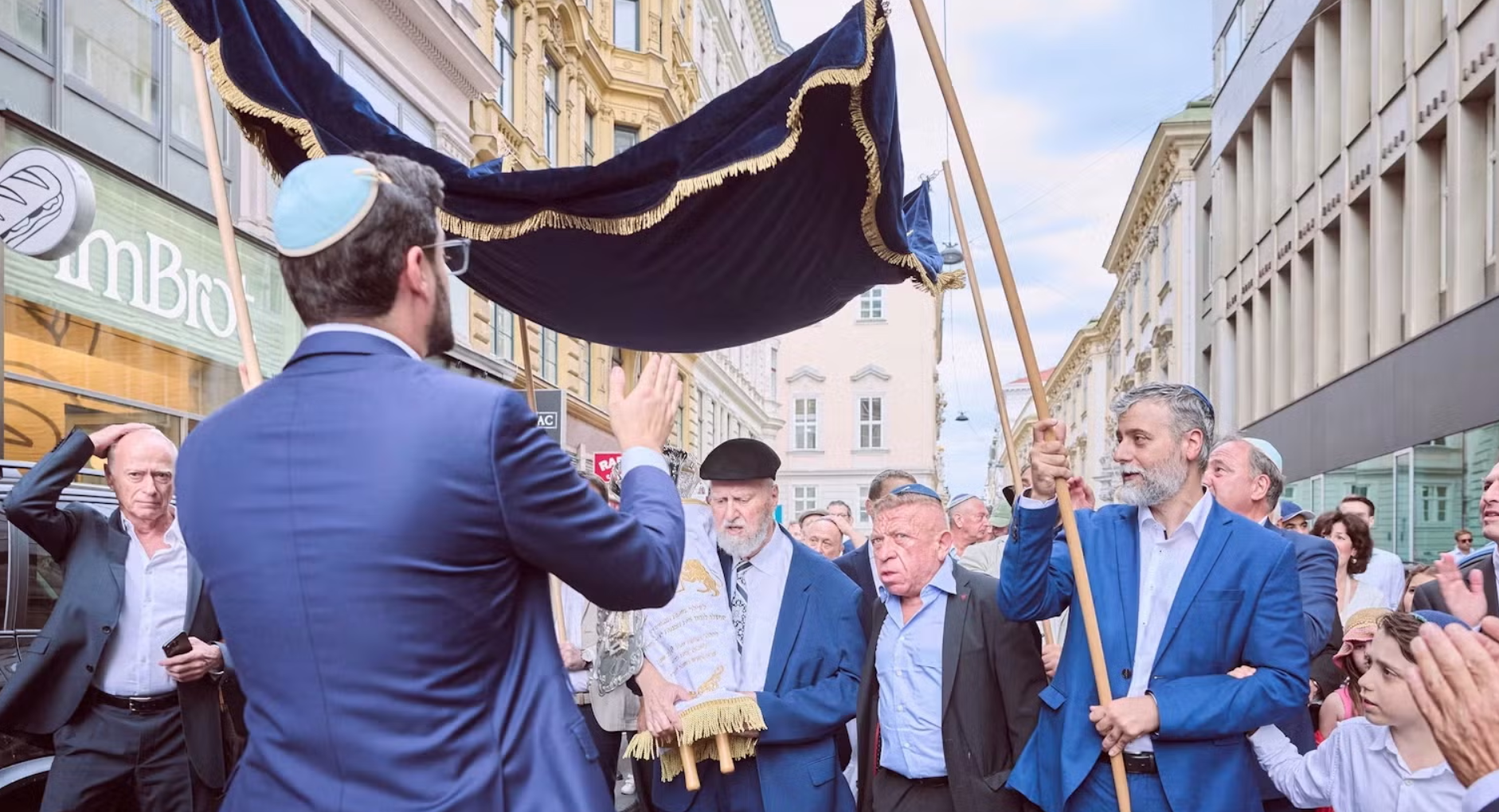
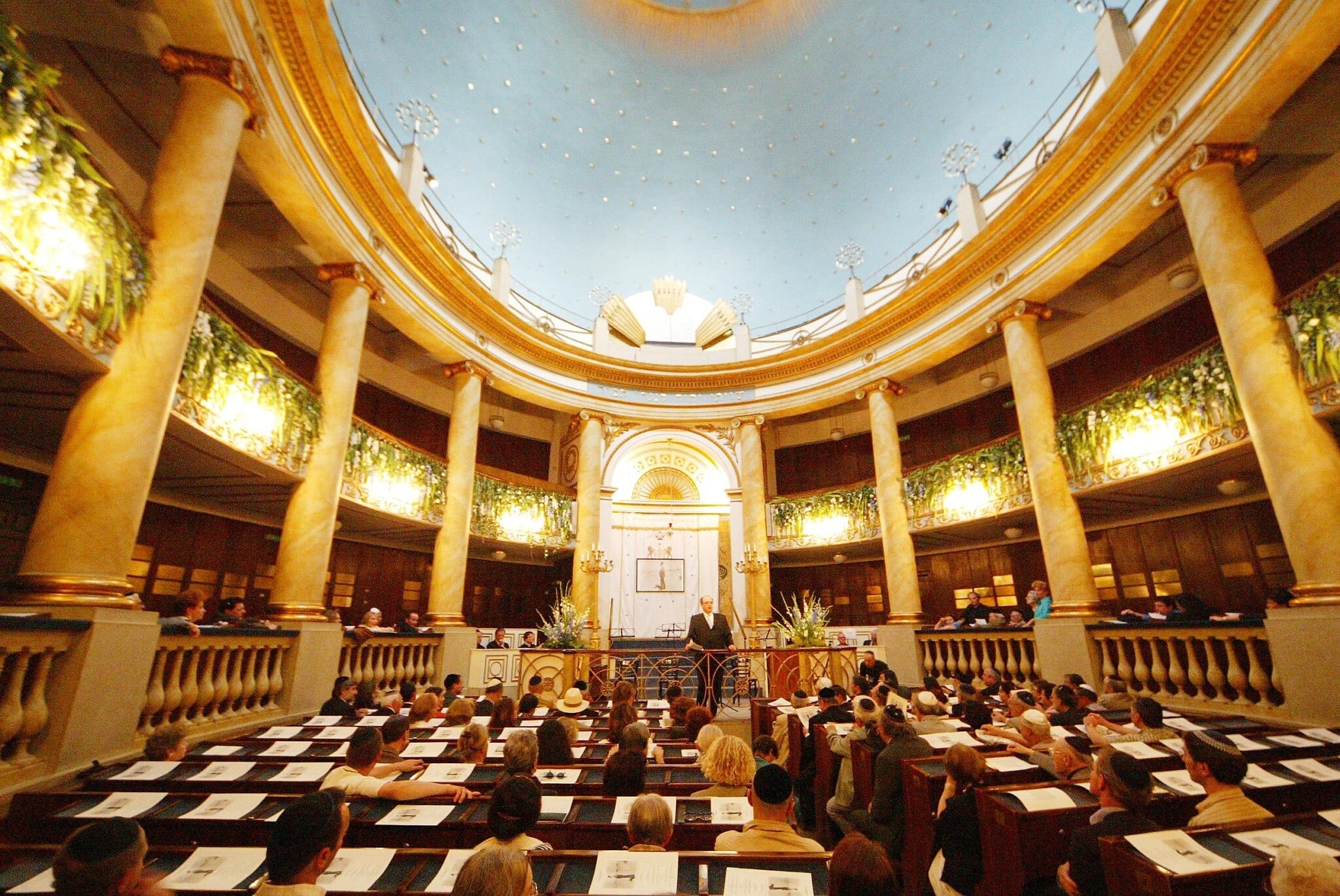
JTA — Getting a “200-year-old lady” ready for a major debut is quite a task. But in Vienna, the Jewish community’s historic main synagogue made it just in time for the Jewish New Year.
The “lady” — Vienna’s stately Stadttempel synagogue, or City Temple — has been rededicated after more than a year of top-to-bottom renovations, from floors to windows, to the heating and cooling systems, from safety features to restroom facilities. The job cost more than 10 million euros, or $11.3 million.
The synagogue was “still beautiful but has its signs of age,” Rabbi Jaron Engelmayer told the Jewish Telegraphic Agency in a phone interview. “And it wasn’t adequate for some matters of today.”
“The whole concept was sticking to what it was and still is, but it has a new face,” said Engelmayer, who has been chief rabbi of Vienna’s Jewish community since 2020. The Orthodox congregation also inaugurated a new Torah scroll in ceremonies Sept. 15. Parts of it incorporated earlier manuscripts “written in the old synagogue of the Middle Ages in Vienna,” making it a bridge to history, he said.
Large and small, Jewish communities in Europe are marking the season of renewal in concrete ways at a time of uncertainty seeded by antisemitism and anti-Israel sentiment.
In Budapest, the historic Rákospalota synagogue — used as a library warehouse for decades — recently held its first service in its renovated premises. And a 15-member Jewish prayer group in Leipzig has welcomed its first Torah scroll, on a 99-year loan.
All are looking to the future, whether fixing a hole in the roof or dedicating a holy book.
“Jews by definition have to be optimistic,” said Rabbi Pinchas Goldschmidt, head of the Munich-based Conference of European Rabbis, which represents some 800 Orthodox Jewish communities.
“They have no other choice. And having said that, if in the past there was a tendency to say, ‘Okay, the situation is bad over here, let’s go somewhere else,’ today, wherever you look, the situation is not good,” he said.
Taking action is more constructive than regretting current circumstances, said Rabbi Elisa Klapheck, head of Germany’s non-Orthodox General Rabbinical Assembly, which has 45 member rabbis.
“We can lament antisemitism, we can lament attacks on Jewish communities, but that doesn’t help us,” she said. “So I think on a smaller scale, but maybe a much more resilient scale, the chagim [holidays] have shown that there was a positive atmosphere.”
Ruth Ellen Gruber, developer of the Jewish Heritage Europe portal, a project of the Rothschild Foundation Hanadiv Europe, expressed amazement at the pace of the rehabilitations.
“Despite increasing incidents of antisemitism, there are so many synagogue restoration projects that I cannot keep up,” said Gruber. Whether maintenance or preservation, all are “sign[s] of resilience among Jewish communities, volunteers, researchers, NGOs, civic bodies, and others,” she said in an email to JTA.
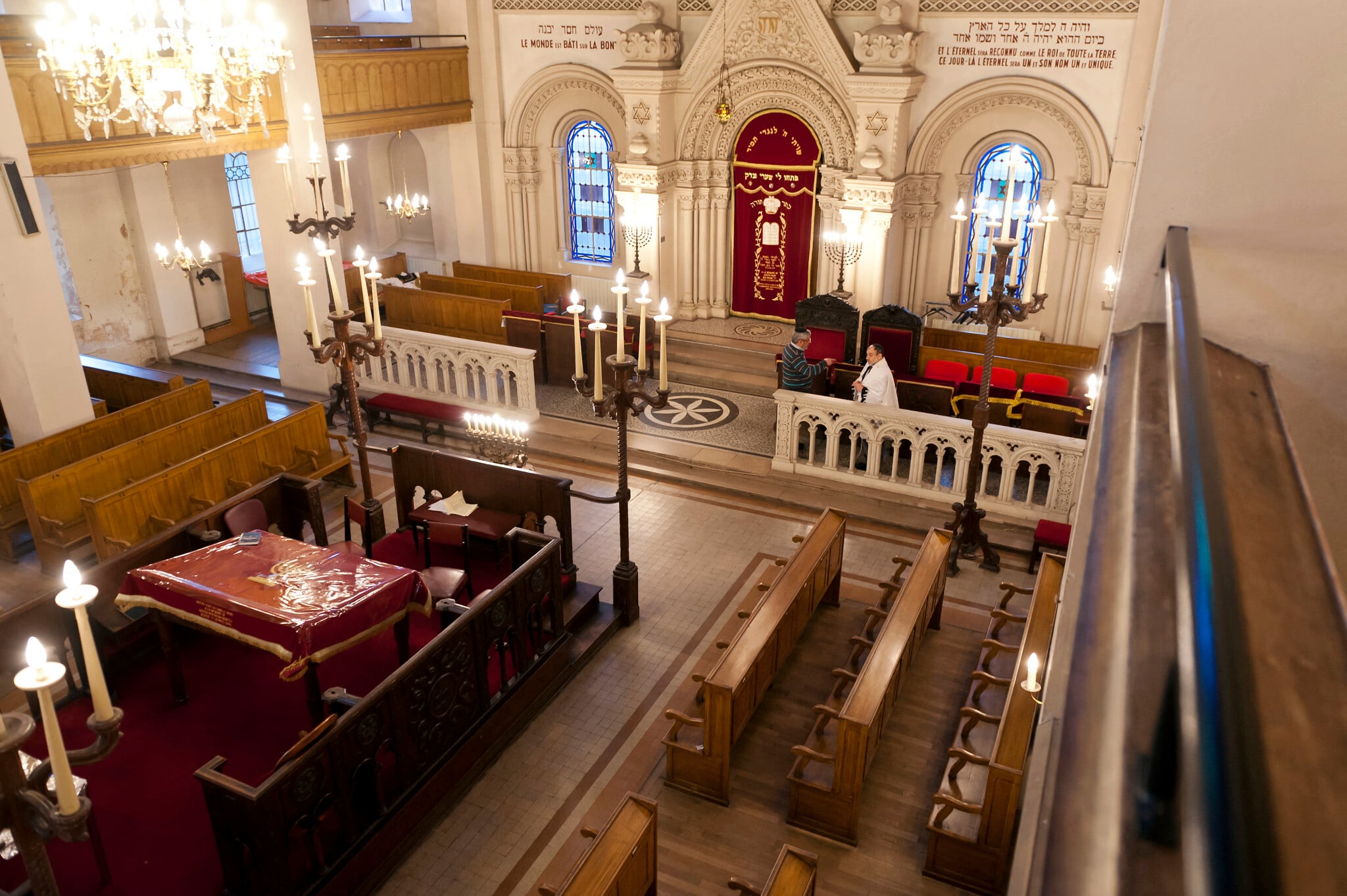
Examples include the Ashkenazi Great Synagogue in Constanta, Romania; the grand synagogue in Metz, France; the domed synagogue in Trencin, Slovakia; the Etz Hayyim Synagogue in Larissa, Greece; and the historic Yanbol synagogue in Istanbul.
“Some will serve as museums or cultural centers that usually house Jewish heritage exhibitions; others will serve as venues for both Jewish worship and cultural events,” she said.
In Leipzig, Rabbi Esther Jonas-Maerten doesn’t actually have a synagogue building for her Beth Ez Chaim “Lehrhaus,” a study group that meets in private homes. But she now has a Torah scroll for participants in the program, which is open to all who wish to learn more about Judaism.
The scroll, on a 99-year-loan from the Kehilat Shalom synagogue in Gaithersburg, Maryland, will be formally dedicated in ceremonies on October 4. “That will be the first public event with our new Torah,” Jonas-Maerten, a Conservative rabbi, told JTA in a phone interview.
After a long and fruitless search for a scroll her group could afford, she asked Washington, DC-based Rabbi Lauren Tuchman to share her appeal: “I wrote a letter basically saying, ‘Most wanted! A sefer Torah!” Jonas-Maerten recalled. “Within two weeks, I got a response.”
The US-Europe connection has been a fruitful one, when it comes to Torahs.

Last year, the Conservative congregation Ki Tov in Warsaw received the gift of a scroll from New Jersey sister congregation B’nai Sholom/Fair Lawn Jewish Center. The scroll, originally from Europe, was donated in memory of Holocaust survivors.
The independent Berlin-Brandenburg congregation Ohel Hachidush received its first scroll in 2008 from Shir Tikvah in Troy, Michigan, and purchased a second scroll in 2024 from retiring Rabbi Moshe Halfon of Mount Sinai Synagogue in Cheyenne, Wyoming.
Both needed repair, especially the first one, Cantor Jalda Rebling, a Jewish Renewal movement ordainee who co-founded Ohel Hachidush with Anna Adam, told JTA.
“Its brokenness is also a symbol, I always say, for our Jewish history here in Europe,” said Rebling, “because all our Jewish lives are broken, and we all love this Torah.”
Vienna’s Jewish community currently has about 12,000 members. Before World War II, it numbered close to 200,000, according to the community’s website. Many fled, and about 47,000 Austrian Jews, most of them from Vienna, were murdered in the Holocaust.

Today’s community is “quite small in numbers, but very highly active and diverse in its traditions,” said Engelmayer, whose mother’s family came from Switzerland and father’s from Poland. “It goes from Ashkenazi to Sephardi, from secular to ultra-Orthodox, and it’s a whole range between. And it feels like a family.”
During Engelmayer’s tenure, “there was the COVID crisis and afterwards the war in Ukraine, which brought a lot of fugitives and refugees to Vienna – also Jews. And of course, the 7th of October, which brought a big rise in antisemitism, which is still being dealt with today.”
Nevertheless, celebrants went “through the streets of Vienna with high hats and proudly Jewish, bringing the new Torah scroll into the restored synagogue,” Engelmayer said: All those challenges led to “an increase of inner strength, of holding together, of answering to the crisis by much more Jewish life and being more active and more visible.”






The Times of Israel Community.