

In ‘Good Morning Gaza,’ tank commander gives first-person look at troops’ inner lives
Film by reservist Matan Sacofsky airs October 4 on Yes Docu as channel marks three years since October 7 massacre and atrocities
 Add ToI as a Preferred Source on Google
Jessica Steinberg, The Times of Israel's culture and lifestyles editor, covers the Sabra scene from south to north and back to the center
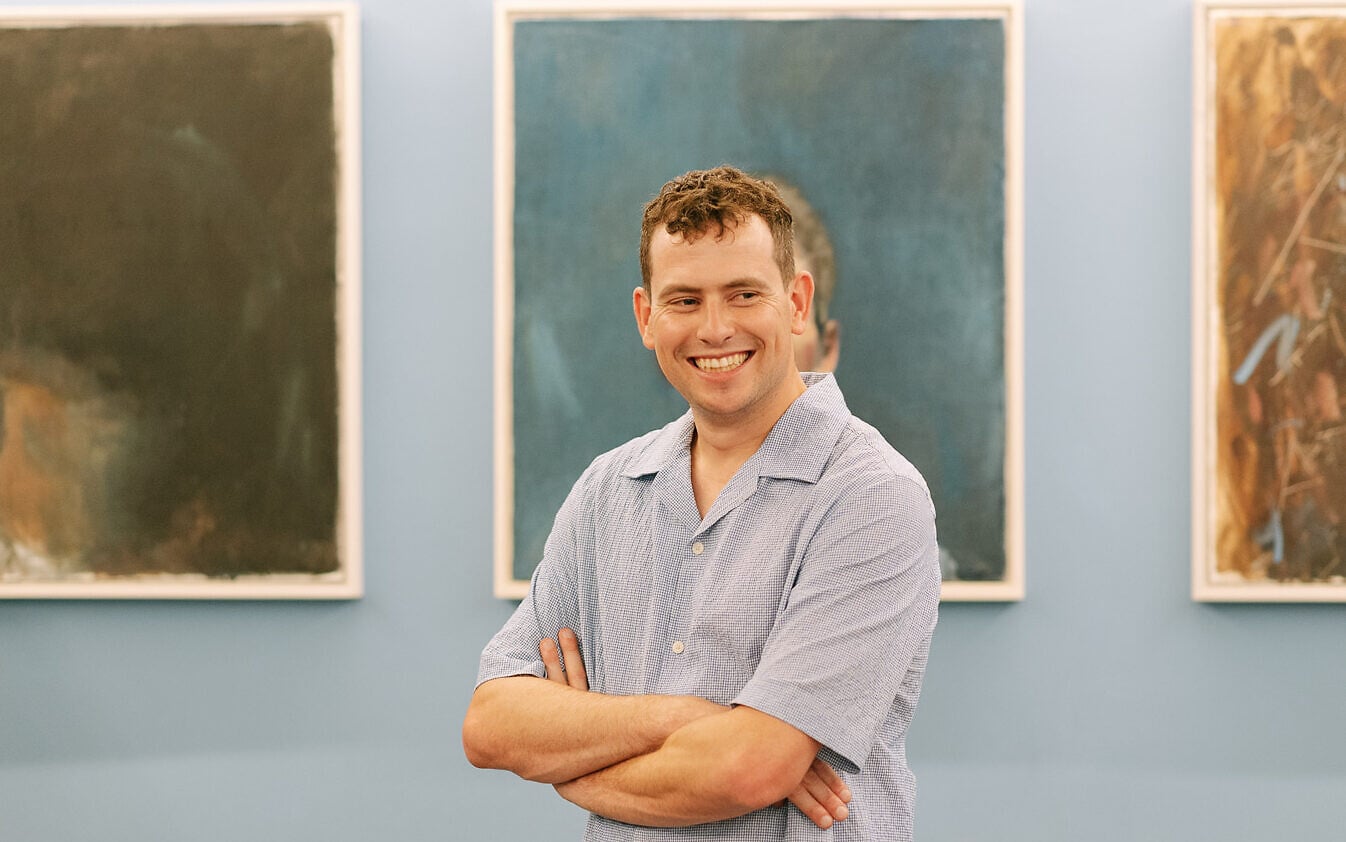
When reservist Matan Sacofsky was called up on October 7, 2023, to command a tank in Gaza, the artist and filmmaker brought his camera gear.
“I’m a film student,” said Sacofsky. “When you’re in a tank, you actually have a place to put your stuff.”
On that day, Sacofsky and his unit made their way to the military base near Kibbutz Nahal Oz, which had been overrun by terrorists, before heading to Kibbutz Kfar Aza, which was devastated in the surprise invasion led by the Hamas terror group.
(Months later, Sacofsky and his twin brother, a paratrooper, discovered they had been battling side by side in Kibbutz Kfar Aza, Sacofsky in his tank, his brother on foot.)
Some 1,200 people in southern Israel were butchered in the bloody onslaught, which touched off the Gaza war, while 251 were kidnapped to the Gaza Strip. The vast majority of both were civilians.
Sacofsky, a recent graduate of the Sam Spiegel Film School in Jerusalem, didn’t touch his equipment during the first two weeks of the war, as he and his crew adjusted to the realities of combat in the Gaza Strip.
Eventually, he began filming his fellow soldiers in his spare time and decided to create a diary showing what it was like being on the front lines.
As a tank commander sent into reserve duty, Sacofsky has an unusually direct vantage point: He often rides with his head and shoulders exposed above the vehicle’s top hatch, giving him a clear view of the battlefield.
At some point during that initial tour of reserve duty in Gaza, Sacofsky heard the podcast of tank driver and psychology student Or Brandes.
Sacofsky knew Brandes from their post-high school gap year, when they both spent time learning at Yeshivat Ma’ale Gilboa in northern Israel; his own cousin also happened to be Brandes’s commander.
The podcast was full of banter and jokes, as well as heavier moments when Brandes encouraged his fellow reservists to open up about their complicated emotions as they battled terrorists in Gaza.
Sacofsky took a clip of Brandes’s podcast, included several shots of his tank heading into Gaza, and showed it to his film school instructors.
They introduced Sacofsky to Hanan Brandes, a journalist and filmmaker related to Brandes, and the two immediately decided to work together.
Sacofsky shot “Good Morning Gaza” from a point-of-view perspective, making viewers feel as if they are in Gaza, in the tank, with Brandes and his crew.
Brandes’s voice is heard, as are other soldiers’ voices speaking on the podcast. It’s not long into the film before viewers understand that Brandes was killed in Gaza in December 2023.
As the film developed, Sacofsky added one-on-one nighttime conversations with other reservists, shot in red light that made their faces harder to see — an artistic decision he made deliberately.
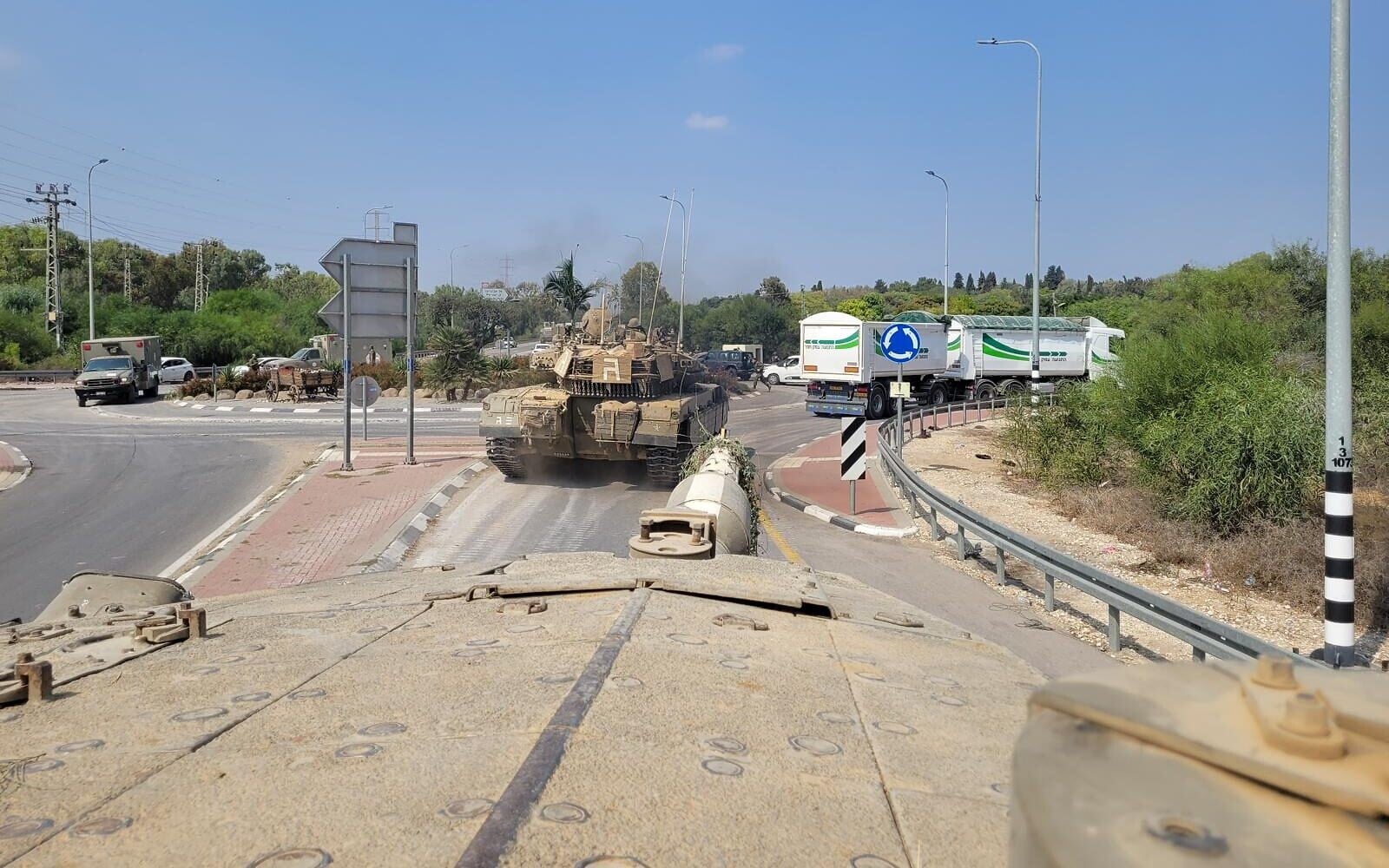
Being on reserve duty differs from serving as an enlisted soldier, said Sacofsky. Units carry out their missions, which can take just a few hours, and then the soldiers wait around.
“Everyone completely understands why they’re there. They’re older and nobody needs to tell you what to do — you just do it,” he said. “While you wait, people are hanging around, and everyone comes from different places, and they talk.”
First screened at the Jerusalem Film Festival in July, “Good Morning Gaza” offers a rare glimpse into the inner lives of soldiers in the traumatic aftermath of October 7 and the war in Gaza.
The 52-minute documentary will air October 4 on Yes Docu as the channel marks three years since the October 7 onslaught.
There are also screenings throughout the country at select theaters.
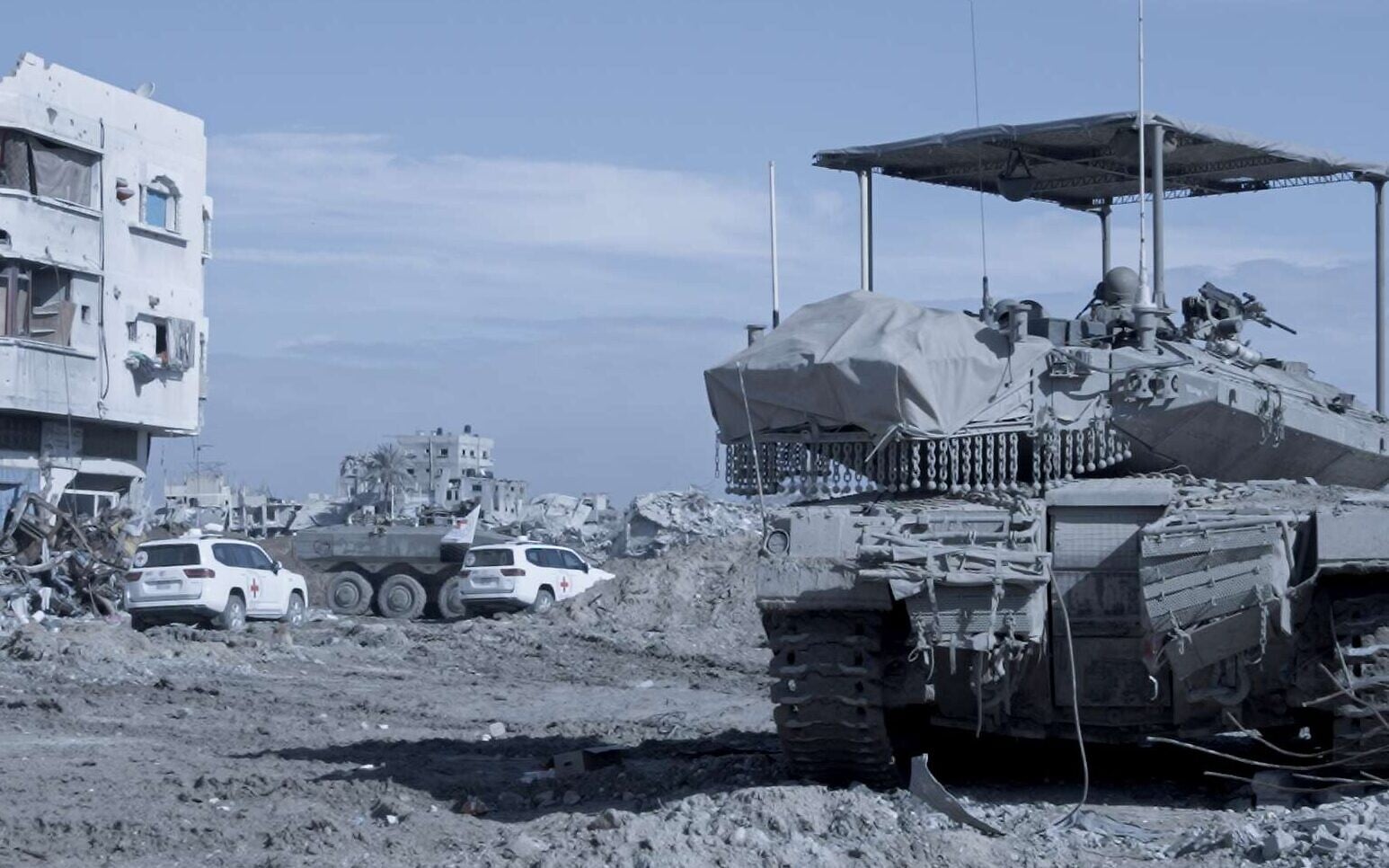
With the film now slated to air on Yes Docu, Sacofsky is considering expanding it into a series telling the stories of other soldiers as well.
The film is also being promoted in other markets — though Sacofsky is aware that a documentary featuring IDF soldiers will be difficult to sell to the international festival circuit, given the hostility Israel has faced globally since October 7, which includes a widespread rejection of Israeli arts and culture.
“The film we made is a knockout to everyone who’s here,” said Sacofsky. “I’m not sure if it’s going to be a knockout to everyone in the world.”
Still, he sees it as an historic piece that will still resonate years from now.
Portrait of an artist
With his first film done, the 30-year-old Sacofsky is back to his other occupation: art.
He has always painted and studied with acclaimed artist Amir Rubin since he was 10. After completing his mandatory military service, Sacofsky spent a year in Europe — in between stints at film school — studying the masterpieces in Madrid, Paris, London and Rome.
“For a long time I’ve been in these two worlds,” he said.
Before October 7, Sacofsky identified with expressionism and worked primarily as a landscape artist.
His works are dreamy interpretations of familiar locales: the balconies above Jerusalem’s Mahane Yehuda market, the low-lying buildings of the Israel Museum perched on a hill, a street scene at the intersection of Agron and King George streets.
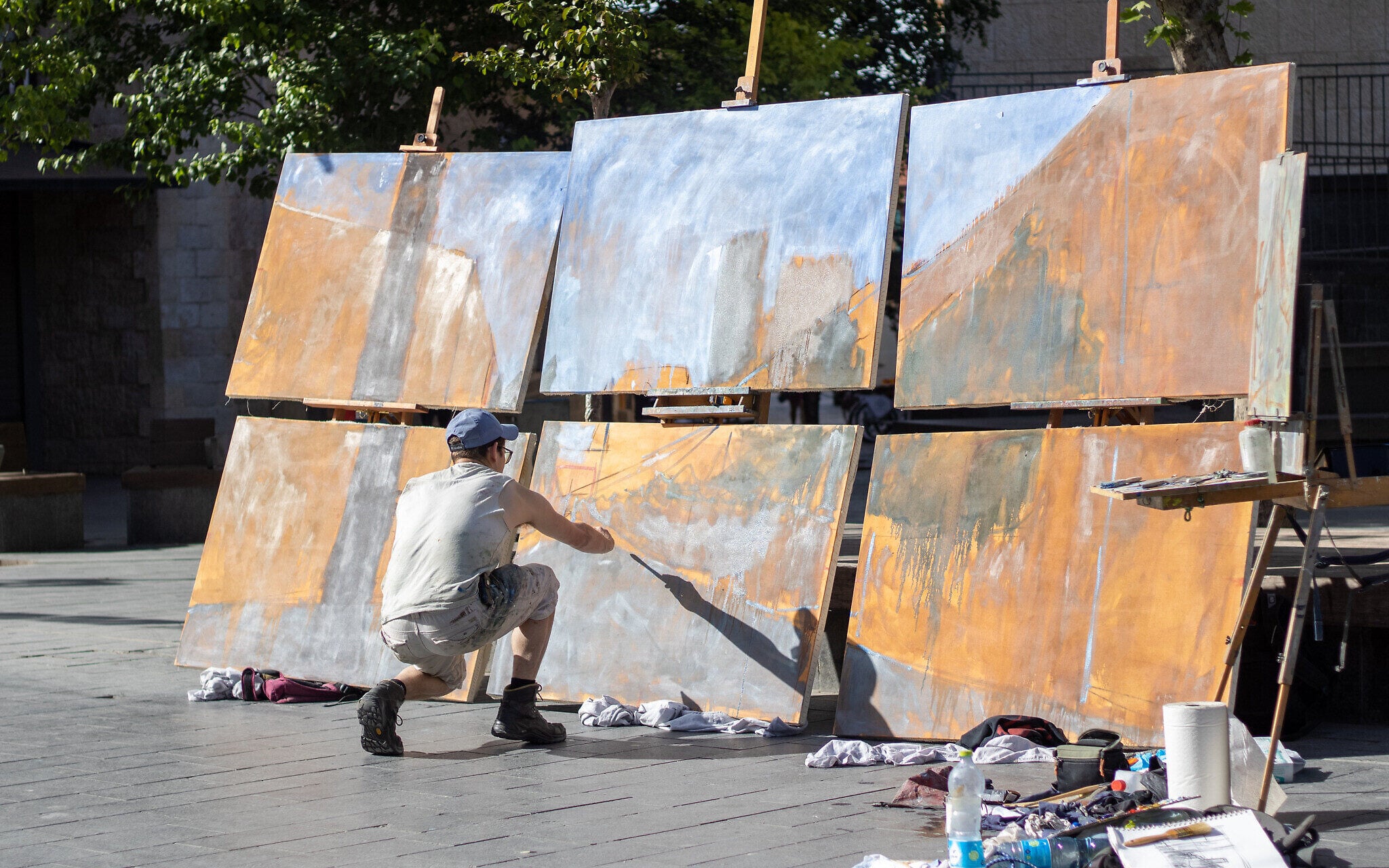
“I love expressionism, I love the idea that a painting can express feelings,” he said.
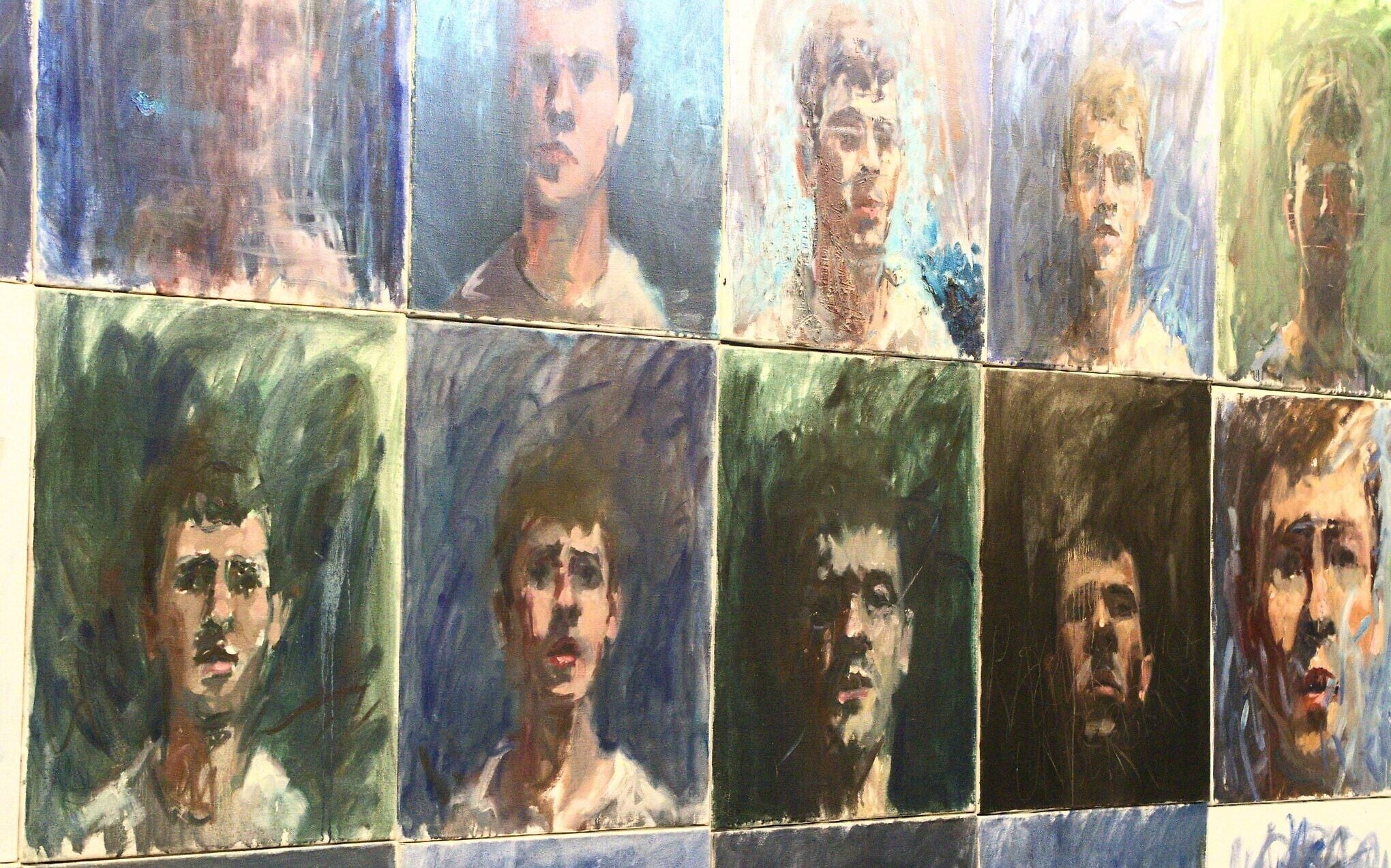
Before the war and after his time scrutinizing Rembrandt and Van Gogh, Sacofsky painted 160 self-portraits, each created in one sitting to capture how he felt at that moment.
“Then I was called to war, where everyone has to stop thinking about themselves,” he said.
Now, after the trauma of October 7 and three rounds serving as a tank reservist in Gaza, Sacofsky’s paintings have changed.
One recent series includes four oversized collages strewn with bullet casings, collected from his tank and brought back to Jerusalem.
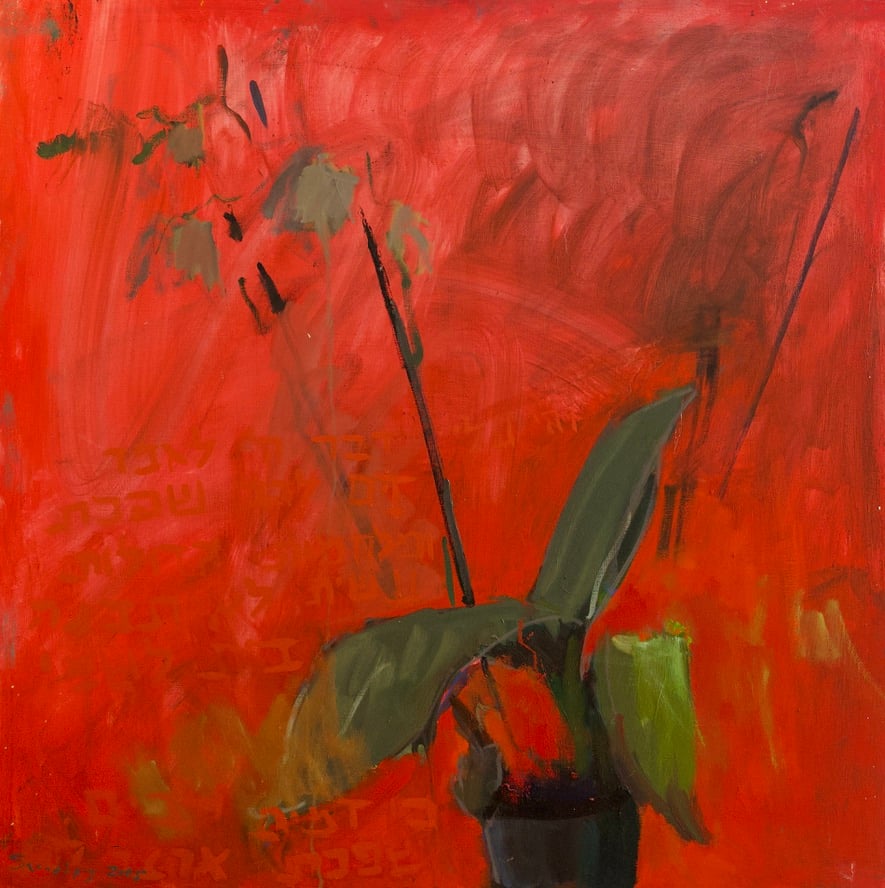
He often pairs those dark, textured works with a series of orchid still lifes, showing the elegant flowers as they dry and die. The orchids were first painted against deep red backgrounds, and later in blues and yellows as his mood began to shift.
“It became a diary of painting them through the war,” said Sacofsky, “about being in a rough, rough place.”
The orchid and bullet casing series have been included in different post-October 7 exhibits. A Knesset exhibit included a short series of Sacofsky’s landscapes of Gaza, dark, grim works often displaying one source of light.
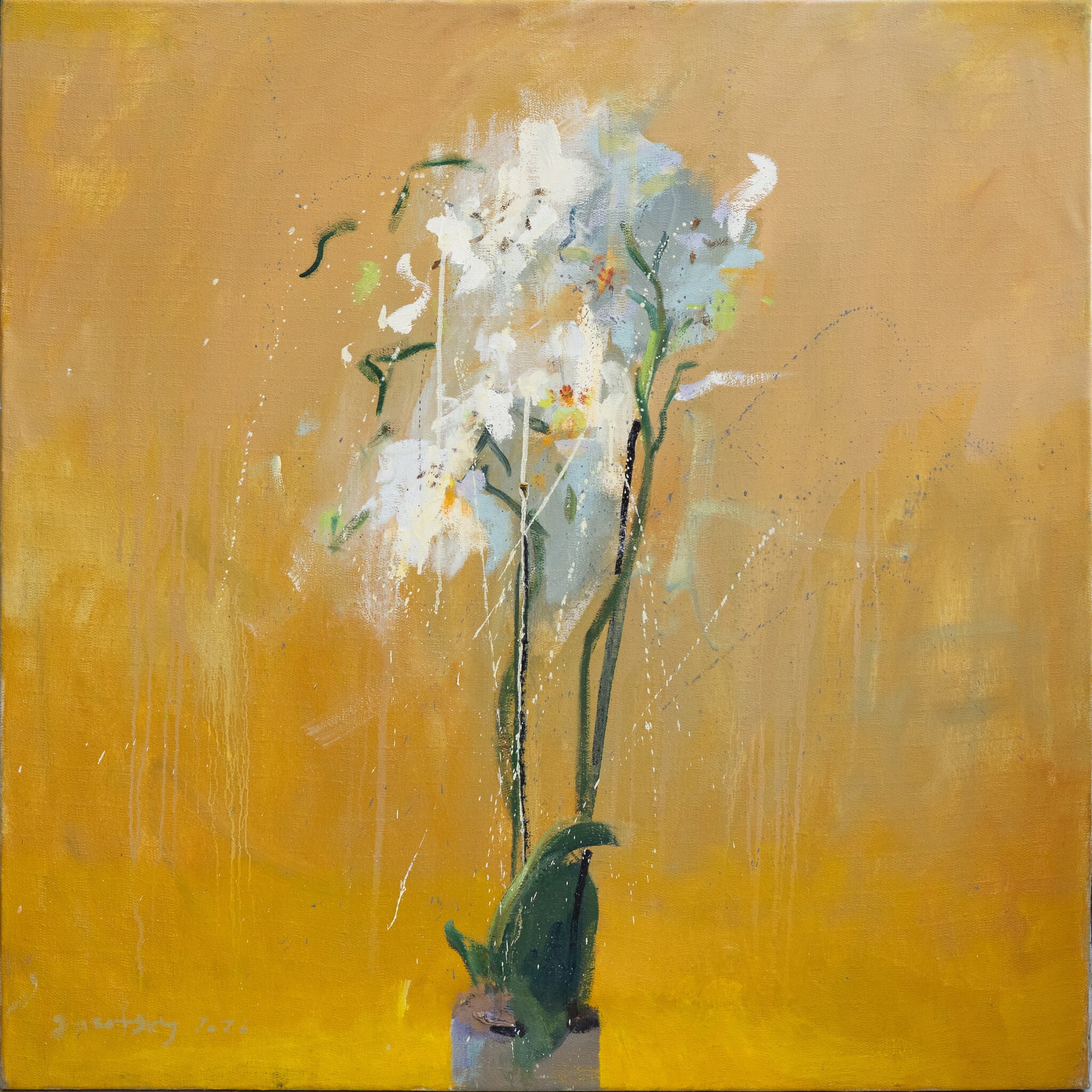
The orchid series are included in the upcoming Jerusalem Biennale, along with 70 of the self-portraits, hung in the former National Library building on Givat Ram.
After his first round in Gaza, Sacofsky applied to one of the funds supporting reservists and received a grant that helped him open a small studio and gallery space on Bethlehem Road in Baka, giving him easier access to potential clients.
“I just said, ‘Listen, this is a dream I have, and I know life is fragile,'” said Sacofsky.
Now with one film and five exhibits under his belt, Sacofsky hopes to return fully to his landscapes.
“There was a period where I decided to stop painting red orchids, and that was meaningful for me, and I decided, ‘You know what, no more, no more. I’m painting blue orchids,'” said Sacofsky. “It was a transition to getting to this different space. For now, I’m done with the orchids.”




The Times of Israel Community.