

A photographer aims to expose your most intimate stories… anonymously
As his idiosyncratic new project brings him to Jerusalem, Michel Szulc Krzyzanowski says he seeks to restore a sense of personal privacy in a world of intrusive social networks
 Add ToI as a Preferred Source on Google
Jessica Steinberg, The Times of Israel's culture and lifestyles editor, covers the Sabra scene from south to north and back to the center
How many times a day do you share aspects of your life on Facebook and Instagram, Twitter and Pinterest? Has it become difficult to figure out what and what not to share, like and comment?
Photographer Michel Szulc Krzyzanowski has nothing against the wonders of the socially networked world, but worries that incessant wrangling with smartphones, tablets and computers has caused people to forget how to value personal relationships, intimacy and privacy. Now he’s looking to change that way of thinking.
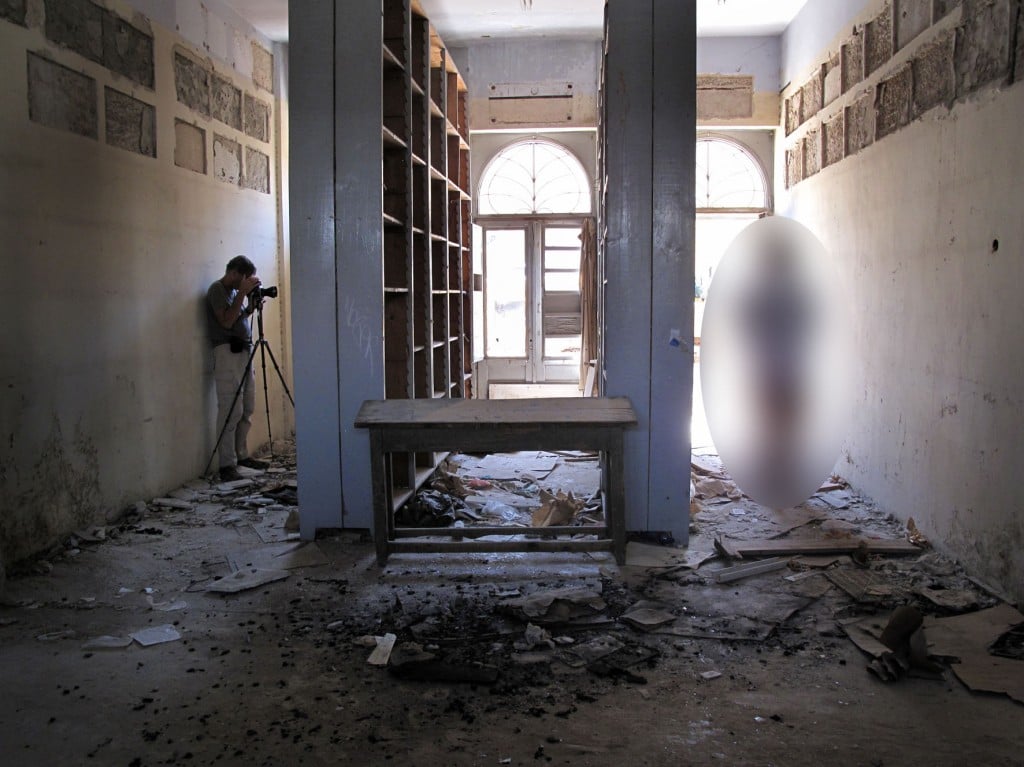
Szulc Krzyzanowski has spent the last year traveling to eight different cities around the world, meeting, photographing and documenting people who show and tell him personal stories and details that they have never shared before… with anyone.
Called “What the World Has Never Seen” (WTWHNS), it is the latest in a long line of photo projects initiated by Szulc Krzyzanowski over the last 40 years, all aiming to witness and gauge the world from a perspective not always considered.
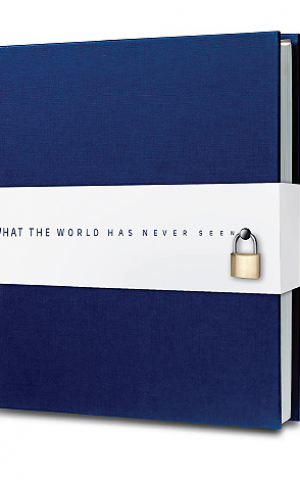
Once he completes the interviewing, photographing and compilation process, the photos and accompanying stories will be compiled in a book. But only 200 copies will initially be printed, to be read first by those who participated — either by being interviewed for it, or by helping to pay for the project. Some copies will be available to the public, directly from Szulc Krzyzanowski, at a price he has not yet disclosed.
The book will have a small padlock to prevent non-participants from being able to read what was shown and told to Szulc Krzyzanowski in confidence, in order to emphasize the concept of privacy. The only way to see what people shared will be by paying… or, presumably, breaking the lock. And that’s the idea.
“I’m looking to initiate public discussion,” said Szulc Krzyzanowski, a lanky, somewhat laconic Dane who has been living in Mexico for the last seven years. “If someone breaks the lock on the book, and one of the storytellers presses charges, that could lead to a court case about privacy and what you can and can’t reveal.”
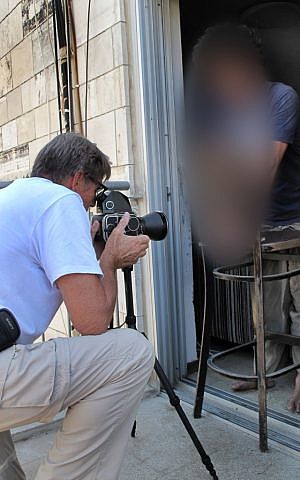
The photographer and his producer just spent three weeks in Jerusalem, the seventh destination for the project, and the most difficult city so far, he said, but the most interesting photographically. He began the project last August and has been to New York, Moscow, Istanbul, Soppong (Thailand), Buenos Aires and Nairobi, with Oosterhout (Holland) planned as his final destination.
“People are defensive here because it’s a place in conflict and they’re very aware of traps,” he conjectured about Jerusalem. “There’s more fear of exposure with people here… a fear of response even though no one will ever know. It’s unjustified, but real.”
This trip to Jerusalem was Szulc Krzyzanowski’s second time in Israel; his first time was back in the mid-1980s, when he spent most of his three weeks in the then-newly built settlement of Ofra.
For the WTWHNS project, Szulc Krzyzanowski and his producer, Heleen Peeters, who handled the logistical elements of the Jerusalem visit, met with all kinds of Jerusalemites — from East and West Jerusalem, religious and secular, liberals and conservatives, Arabs and Jews. It’s not so much about who’s talking, he said, as whether everyone has the courage to show and tell their secret.
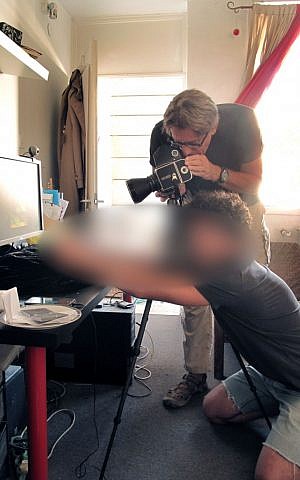
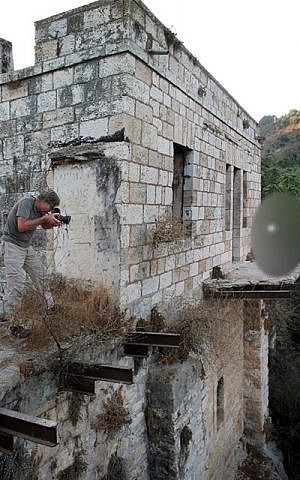
The various producers who are hired to gather interviewees in each city tend to utilize the very social networks that Szulc Krzyzanowski aims to alter; they contact organizations, schools and anyone who might know someone who has a story to tell that’s never been told before. When the interviews are in place, he and his producer photograph the storyteller in private, respecting their story and blurring their features in the photos in order to emphasize the privacy of what’s being told and displayed.
Once someone has shared their secret with Szulc Krzyzanowski, it’s hard to say how many others will ever hear it or see it. Besides the locked book, he hopes to stage an exhibit of the photographs in each city, but in a locked room of a public space that will prevent the general public from sauntering in and carelessly witnessing the private matters shared by random strangers with Szulc Krzyzanowski over the last year. Anyone who wants to see the photos and read the stories will have to make an effort to obtain the key to the room, a logistical detail he admits could get somewhat complicated.
Because Szulc Krzyzanowski won’t share the stories or identities of those photographed, it’s hard to know what types of secrets are being told or shown. I wondered out loud if they were political in nature, the kind of thing one would tell a therapist, or something that perhaps isn’t such a big secret after all. But Szulc Krzyzanowski wouldn’t reveal a word, just that people shared unbelievable stories.
“It’s about creating a new way to make people think,” he said. “Are we conquered by technological developments? Are we dealing with them in the best way possible? We used to live without mobile phones and had a happy life, and now we can’t live without them. How is our new social structure affecting our social and moral values and traditions?”
The WTWHNS book will be published in December with the exhibits to hopefully follow soon afterwards, depending on whether Szulc Krzyzanowski can find the appropriate spaces in each city. For now, you can visit the WTWHNS website, but if you want to see what people told him, you’ll need to email him (through the website) and purchase the book. Until then, it’s under lock and key.


The Times of Israel Community.