

Egypt’s Mubarak acquitted of murder, graft charges
Ex-president cleared of corruption in gas deal with Israel; acquitted of conspiring to kill hundreds of protesters during 2011 revolt
 Add ToI as a Preferred Source on Google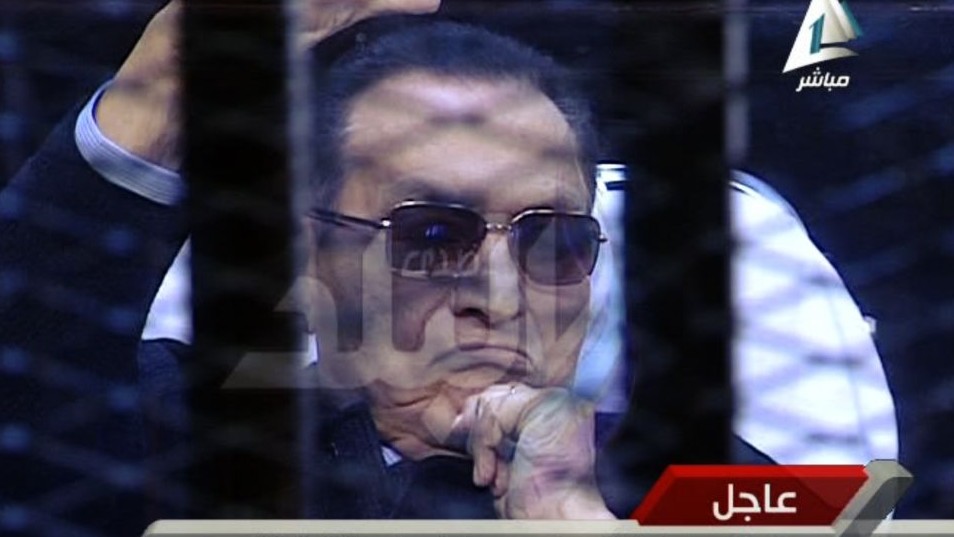
CAIRO, Egypt — An Egyptian court acquitted former president Hosni Mubarak of murder and separate corruption charges involving gas exports to Israel, almost four years after he was overthrown in a popular uprising.
The court also acquitted five of his top security commanders of the murder charges. Judge Mahmud Kamel al-Rashidi said Mubarak, the commanders, including the former interior minister Habib al-Adly, were “innocent.”
Mubarak’s two sons, Alaa and Gamal, were also found not guilty of corruption charges related to the gas exports, in the same separate case.
Applause and cheers broke out in the court after the rulings were read, according to reports.
Mubarak, 86, was accused along with the five of involvement in the killing of hundreds of demonstrators during the 2011 revolt that ended his three-decade rule. An appeals court overturned an initial life sentence for Mubarak in 2012 on a technicality.
He was also accused of abusing his power to amass wealth, including a gas deal with Israel, and of embezzling 125 million Egyptian pounds ($18m) earmarked for the renovation of presidential palaces.
Egyptian and other Twitter users voiced their deep disappointment with the murder verdict, posting pictures of some of the close to 1,000 protesters killed during the 18-day uprising in 2011 that unseated Mubarak
انا اسف والله 🙁 pic.twitter.com/bx6lrBLANc
— تَرنيمَة (@_Eskandar_) November 29, 2014
https://twitter.com/minafayek/status/538627836773691392
May the #Jan25 martyrs rest in peace for good..today they were killed again, we are sorry we have failed you #Egypt
— Gigi Ibrahim (@Gsquare86) November 29, 2014
Today's verdict sends this message: if you are powerful , you will find a way out, if you are poor and weak, "Egypt justice" will crush you.
— The Big Pharaoh (@TheBigPharaoh) November 29, 2014
Despite the acquittal, Mubarak is not expected to be released because he is serving a three-year sentence in another corruption case, a judicial official said.
Ahead of the ruling, security was beefed up around the court at the sprawling police academy on the outskirts of Cairo, with 5,000 police deployed, the official MENA news agency reported, citing a senior official.
Mubarak reacts to acquittals. pic.twitter.com/Ar2vG8oHzH
— Mai El-Sadany (@maitelsadany) November 29, 2014
The new verdict was initially scheduled for September 27, but the judge had postponed it, saying he had not finished writing the reasoning after a retrial that saw thousands of case files presented.
Saturday’s verdict came as the revolutionary fervour that unseated Mubarak has largely ebbed across the country.
Mubarak’s Islamist successor Mohamed Morsi was himself removed last year by then-army chief Abdel Fattah al-Sissi, who is now president, and put on trial along with hundreds of other Islamists.
Morsi and several top leaders of his Muslim Brotherhood movement are accused of committing acts of violence during the anti-Mubarak uprising as well as during huge anti-Morsi protests which prompted the army to remove him.
Crackdown
Several top left-leaning youth activists who led the campaign against Mubarak have also been jailed by the authorities for staging unauthorized protests after the June 2013 overthrow of the divisive Morsi.
Sissi, who won a presidential election in May after crushing his Islamist opponents, has made law and order and economic stability his top priorities rather than democratic freedoms — the key demand during the anti-Mubarak uprising.
The police force, which Mubarak was accused of ordering to quell the 2011 uprising, is now feted in the largely pro-government media as it wages a deadly crackdown on pro-Morsi Islamist protesters and militants.
At least 1,400 people have been killed in the crackdown, with scores of soldiers and policemen dying in militant attacks.
Mubarak, who attended the trial hearings in an upright stretcher wearing his trademark shades, said at his retrial in August that he was nearing the end of his life “with a good conscience”.
“The Hosni Mubarak before you would never have ordered the killings of protesters,” he said.
Mubarak’s former interior minister Adly accused the Muslim Brotherhood and Palestinian militants of attacking protesters during the 2011 uprising to malign the police.
During the retrial, which opened in May 2013, most witnesses — senior military and police officers under Mubarak — have given testimony seen as favorable to the former leader.






The Times of Israel Community.