

7 suspects held for Bnei Brak attack on female soldiers sent to house arrest; rest go free
IDF rejects police claim that servicewomen attacked in Bnei Brak were in area to encourage Haredi enlistment, while anti-draft protests briefly revive near Jerusalem, Beit Shemesh
 Add ToI as a Preferred Source on Google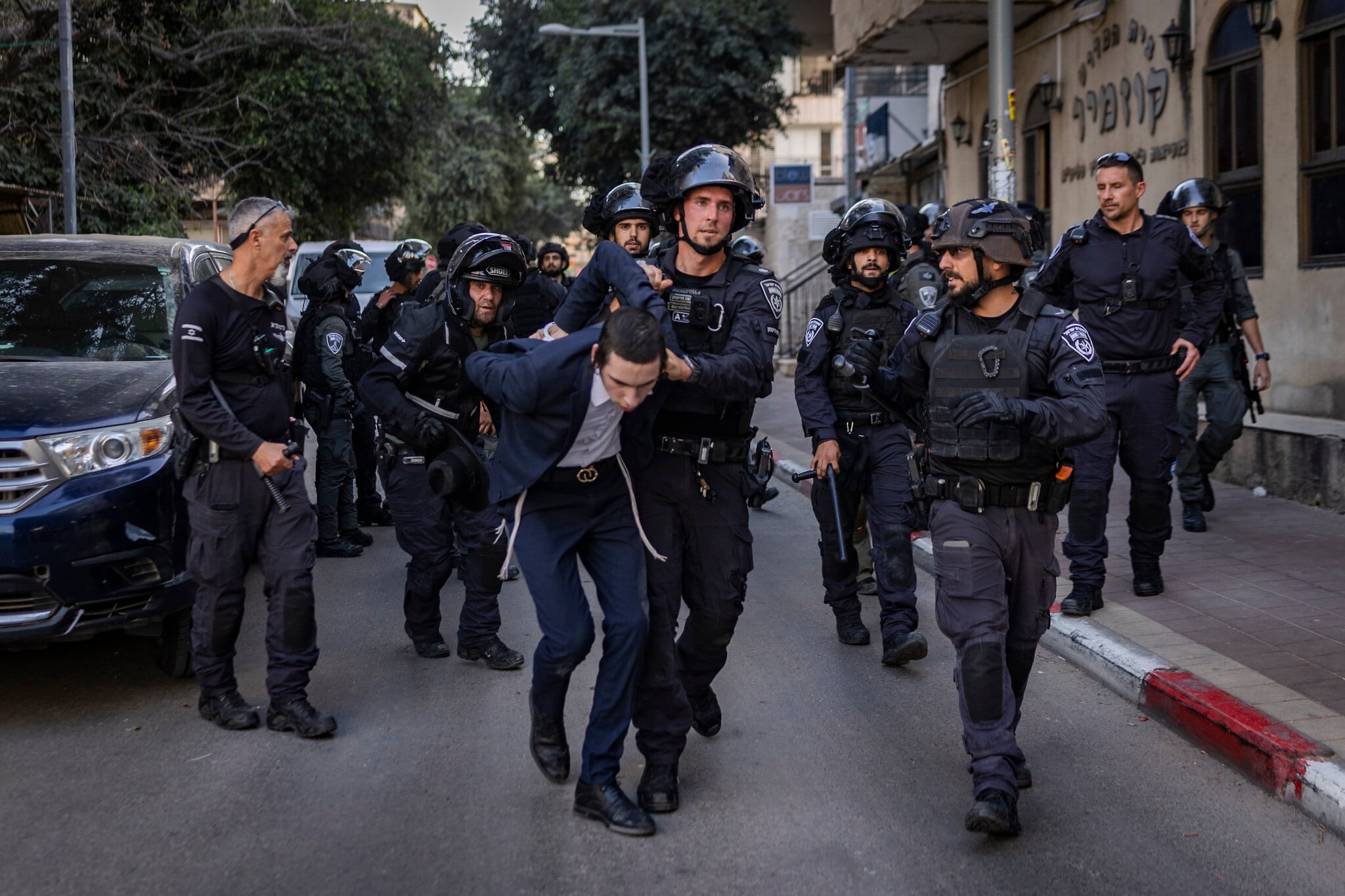
All 26 suspects arrested Sunday during mass riots in Bnei Brak were released from police custody by Monday afternoon, with most freed, and courts in Tel Aviv sending the last seven detainees to house arrest.
Sunday’s chaos erupted when a hundreds-strong mob attacked a pair of female soldiers who arrived in the Haredi city. The servicewomen — whom the army said were visiting a draftee — had to hide until police arrived to rescue them from the crowd, which ran them out of the city.
The attack set off a wave of larger riots in which Haredi residents, mostly young men, lightly injured five policemen, overturned a patrol car, and set an officer’s motorcycle on fire.
The commotion dragged on into the evening, despite the large number of officers operating in the city. Police said they arrested a total of 26 suspects, but set the majority free on Sunday night.
On Monday morning, police brought three suspects to the Tel Aviv Magistrate’s Court with a request to extend their remand. Officers brought another four minors to a hearing in the Bat Yam Juvenile Court for the same purpose.
The two courts released all seven detainees to house arrest.
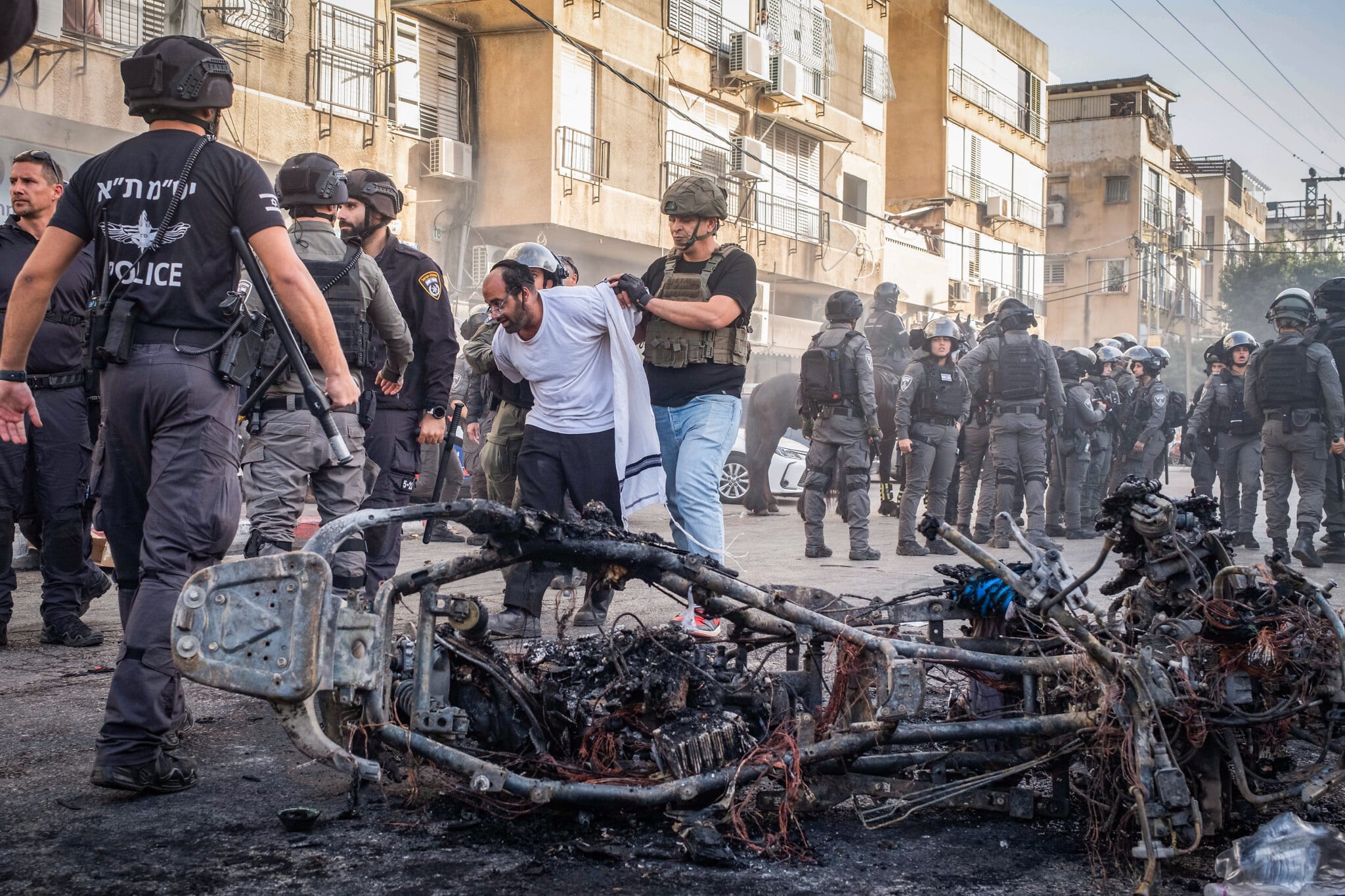
Shlomo Hadad, a lawyer representing the detained suspects, said police accused his clients of attacking officers and setting fire to a motorcycle. The court freed them “because there was no evidence for anything,” he claimed, characterizing the arrests as a “show for the media.”
According to Ynet, a Tel Aviv Magistrate’s Court judge said that there was reasonable suspicion that two of the adult suspects released to house arrest had assaulted a police officer.
Hadad also contended that the total number of detainees was 28, not 26. He claimed that law enforcement did not list two suspects who were taken to a separate police station in the area.
Police were still searching for those who overturned the patrol car and set fire to the motorcycle, Tel Aviv District police commander Haim Sargaroff told reporters Sunday evening.
Meanwhile, on Monday afternoon, hundreds of Haredi anti-conscription demonstrators briefly blocked traffic at the entrance to Jerusalem, as well as on Route 38, near Beit Shemesh.
מפגינים חרדים חוסמים בשעה זו את הכניסה לעיר ירושלים ואת כביש 38 ליד בית שמש
צילום: חרדים ירושלים pic.twitter.com/SXQYqOnzrk
— שלומי הלר | Shlomi Heller (@Heller_shlomi) February 16, 2026
Police managed to disperse the demonstrators. In footage from the short-lived protest in Jerusalem, demonstrators were seen sitting on the pavement as traffic in both directions came to a standstill.
Army, police spar over prelude to riots
As the dust settled from Sunday’s riots, police said the IDF had sent the two female soldiers to Bnei Brak in order to encourage enlistment of young Haredi men. The army denied this, maintaining that the women had been in the city to visit a draftee.
“There is no home visit here; this is the distribution of flyers to pre-induction candidates to interest them in military units ahead of their enlistment,” Cdr. Elad Klein, chief of the police’s Dan Precinct, told Kan radio on Monday morning.
Klein said that, while there is no need for the IDF to “receive approval” for such activities, “I think it is proper and right to update the police so they know to prepare, and we won’t have to go in with a limited force to rescue female soldiers.”
The IDF stridently rejected Klein’s allegations, insisting that the two squad commanders at the Education and Youth Corps had been in Bnei Brak to visit one draftee at his home ahead of his enlistment and provide him with an information pamphlet.
אחרי שמפקד מרחב דן במשטרה טען שהחיילות שהותקפו אתמול בבני ברק הגיעו לחלק עלונים לעידוד גיוס, בצה"ל מפרסמים את העלון שהתכוונו להביא למלש"ב
"לקראת הגיוס שלך לטירונות בחוות השומר הנה כמה דברים שחשוב שתדע:
תאריך הגיוס: 10.3.26 יום שלישי"נעצור כאן… כך לא נראה עלון לעידוד גיוס, כך… pic.twitter.com/ZzvL9wcbNM
— איתי בלומנטל ???????? Itay Blumental (@ItayBlumental) February 16, 2026
The military published an image of the pamphlet that was given to the draftee, which it says is given out to all soldiers who are set to arrive at the Havat Hashomer training base — intended for recruits who have difficulties entering the army’s regular framework.
The pamphlet specified the draftee’s enlistment date, details about the training, and other preparations he should carry out before officially joining the army.
Earlier that morning, Knesset lawmakers held a conference to honor female fighters. The event, organized by Blue and White MK Chili Tropper, had been in the works since before the riots, but took on renewed significance in light of the violence.
“The very fact that this conference is being held is a clear statement [that] the State of Israel recognizes the contribution of women to its national security,” Yisrael Beytenu chairman Avigdor Liberman said during the event.
“Women combatants are not a footnote. They are at the heart of the Israeli story. In recent years, we have often discussed the question of whether women should be fighters in the IDF or not… The answer was and remains yes,” he added.






The Times of Israel Community.