

8 lightly hurt by cluster bombs in central Israel as Iranian attacks persist across region
US launches massive strikes on Iranian ammunition bunkers near Isfahan overnight; crude oil tanker set ablaze by drone strike off Dubai, briefly spiking oil prices
 Add ToI as a Preferred Source on Google
Eight people were wounded in an Iranian ballistic missile attack that scattered cluster bombs across central Israel on Tuesday amid continued attacks by the Islamic Republic across the Middle East, after its own sites was battered overnight by US strikes around the central city of Isfahan.
The attacks were testament to the intensity of the monthlong war the US and Israel launched against Iran, which has maintained its chokehold on the Strait of Hormuz, closing off the vital waterway for global energy shipments, sending oil prices skyrocketing and roiling world markets.
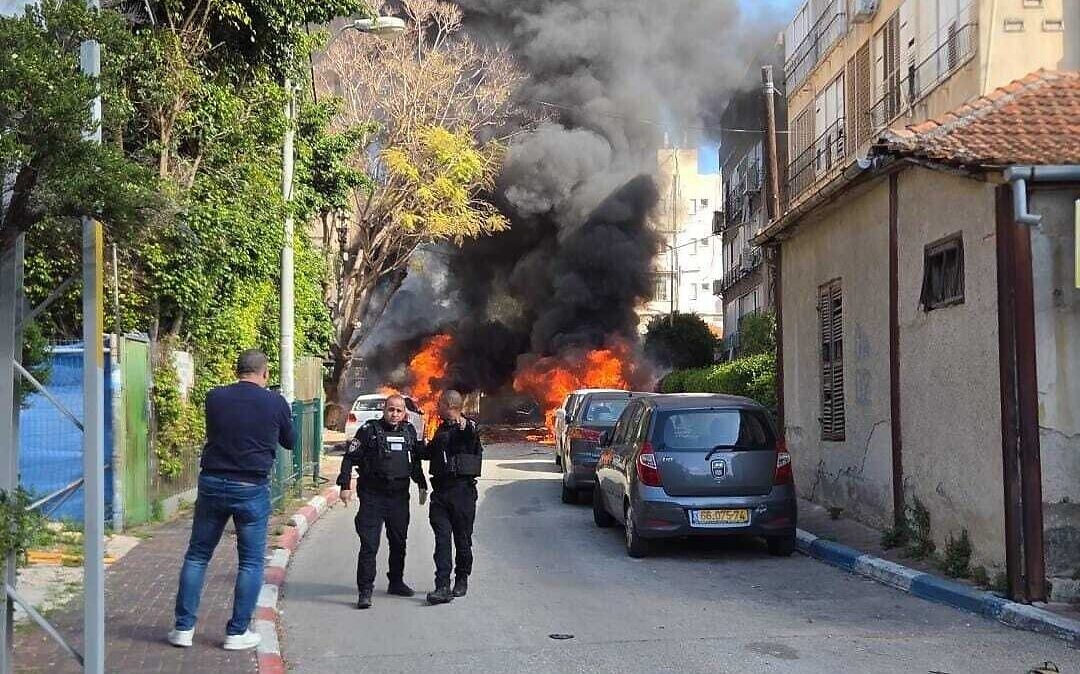
In central Israel, medics said eight people were lightly wounded by a ballistic missile that indiscriminately scattered cluster bomblets across a swathe of central Israel.
Impacts were reported in Bnei Brak, Ramat Gan, and Petah Tikva. Footage showed damage and destruction with several cars on fire as a result of the impacts.
The attack was the second since midnight, after a pair of salvos triggered sirens in Jerusalem and across central Israel at around 5:30 a.m. The IDF said the missiles fired in both attacks were either intercepted by Israeli air defenses or allowed to fall in open areas.
A third attack followed soon after, setting off sirens across central Israel and in several settlements in the Jordan Valley area of the West Bank, but did not cause any injuries.
The small number of missiles launched in the attack were intercepted or hit open areas, according to the IDF.
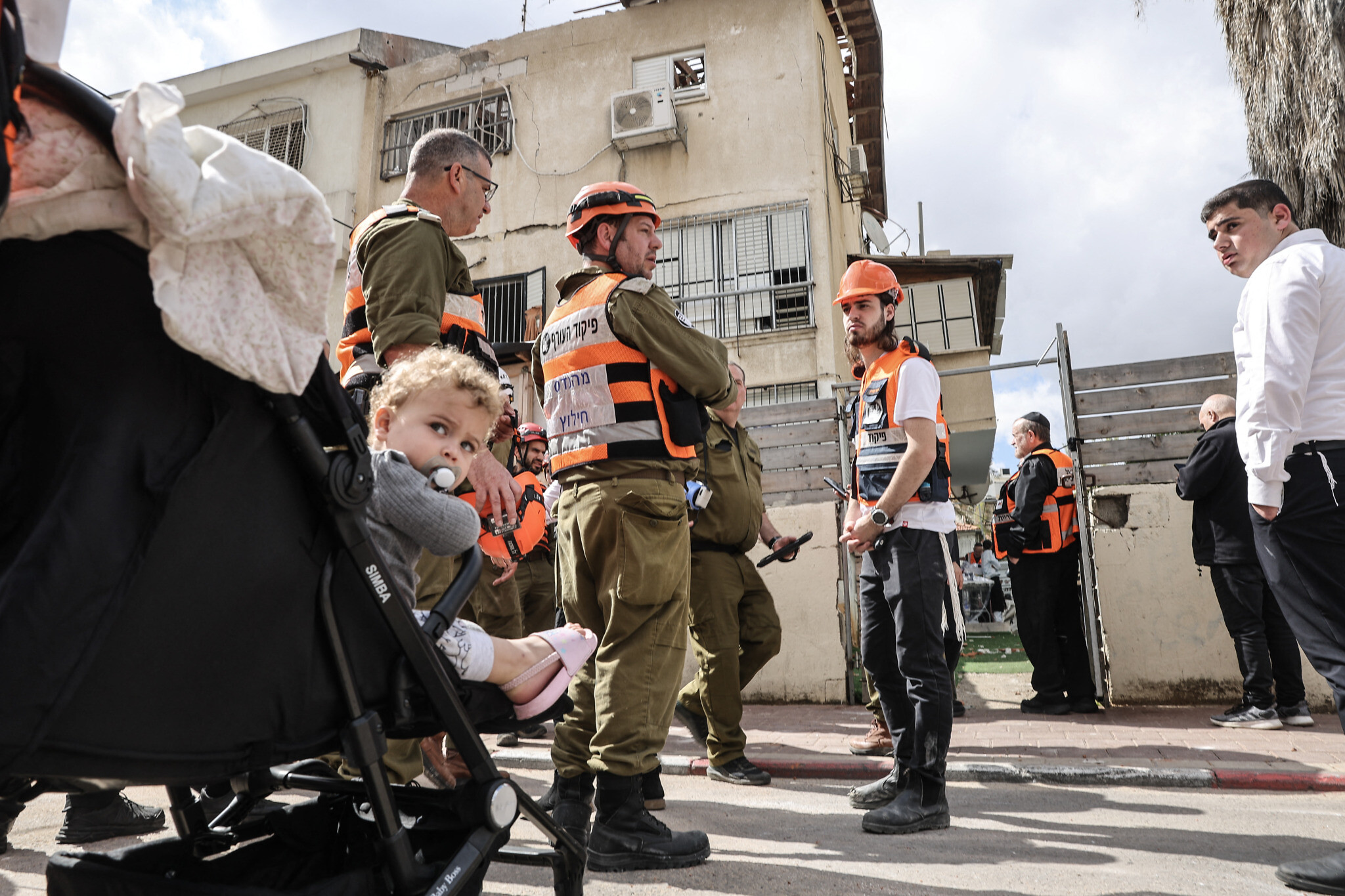
With Iran keeping up a steady pace of missile fire on Israel more than a month into the war that began on February 28, the IDF Home Front Command said on Tuesday that it did not currently plan to change its wartime regulations.
The guidelines prevent large gatherings and educational activities in most areas of the country.
The missile fire on Israel has nevertheless slowed to around 10-15 missiles a day in the past two weeks, down from around 90 on the first day of the war. Iran has not been carrying out large missile barrages, with each attack consisting of a small number of missiles, usually between one and three.
Iranian missile attacks have killed 16 people in Israel, along with four Palestinians in the West Bank. According to the Home Front Command, 5,500 Israelis have been displaced due to damage caused to their homes by the attacks.
US strikes spark fires around Isfahan
Meanwhile, in Iran, the US military carried out massive strikes on Iranian ammunition bunkers near Isfahan, setting the night sky ablaze with a giant fireball.
Footage posted online showed large secondary blasts following the initial strikes.
Citing a US official, The Wall Street Journal reported that the American military dropped “a high volume” of 2,000-pound bunker-buster bombs on the ammunition depot.
'انفجارهای حمله ساعت ۲ به جایی در #اصفهان و انفجارهای ثانویه'
ویدیوی دریافتی، سهشنبه ۱۱ فروردین#Iran pic.twitter.com/a7OvfFO4Wb— Vahid Online (@Vahid) March 30, 2026
US President Donald Trump, who has been insisting there is progress in diplomatic talks toward a ceasefire, shared footage of the attack on his Truth Social account.
Isfahan is home to one of three nuclear sites targeted by the US during Israel’s 12-day war with Iran in June 2025, and some of Iran’s highly enriched uranium is likely stored or buried there. However, the targeted site did not appear lined to the nuclear facilities.
Sounds of explosions were also heard in parts of eastern and western Tehran on Tuesday, Iran’s Tasnim news agency said, minutes after Israel issued a warning of imminent strikes in the city. Residents in the eastern Pirouzi district reported power outages after the blasts, and officials from Iran’s Energy Ministry began efforts to restore power, Tasnim said.
Elsewhere, a strike on a Shiite congregation hall in the northwestern Iranian city of Zanjan on Tuesday killed three people and injured 12, a provincial official told Iranian media.
Separately, an official from Iran’s health ministry told Iranian media on Tuesday that one of the desalination plants on Qeshm Island has been out of service since being hit by an airstrike.
Iran also said that US-Israeli strikes on Tuesday hit one of the largest pharmaceutical companies in Iran which produces anesthetic and cancer drugs.
“During the US and Zionist regime attacks on civilian centers, on the morning of Tuesday, one of the largest companies producing anti-cancer, anesthetic and specialized medicines was damaged and the drug production line was damaged,” the government said in a post on X.
The pharmaceutical company is owned by the Social Security Investment Company, a state-run holding firm managing pension funds.
‘High time to eject US forces’
Iran, not content with only targeting Israel, also kept up its attacks on the Gulf states and shipping, setting ablaze a fully loaded crude oil tanker off Dubai in the early hours of Tuesday.
The drone strike on Kuwait-flagged Al-Salmi was the latest attack on merchant vessels by missiles or explosive air and sea drones in the Gulf and Strait of Hormuz.
Kuwait Petroleum Corp, the ship’s owner, said the attack caused a fire and hull damage.
Authorities in Dubai later said they had brought the fire under control with no oil leak and no injuries to the crew.
Crude oil prices briefly spiked again after the attack on the tanker, which can carry around 2 million barrels of oil worth more than $200 million at current prices. Spot prices of Brent crude, the international standard, hovered around $107 a barrel in early trading, up more than 45% since February 28.
Iran’s stranglehold on the Strait of Hormuz, the waterway leading out of the Persian Gulf through which a fifth of the world’s oil is transported during peacetime, has been largely responsible for driving up global oil prices, as have its attacks on Gulf regional energy infrastructure.
In response to growing Gulf Arab anger — and as several states encourage Washington to continue the war until Iran is no longer a threat — Iranian Foreign Minister Abbas Araghchi insisted Tuesday that Tehran is only targeting US forces, rather than going after civilian infrastructure.
“Our operations are aimed at enemy aggressors who have no respect for Arabs or Iranians, nor can provide any security,” Araghchi wrote on X. “High time to eject US forces.”
Four people in Dubai were also wounded when debris from an intercepted drone fell into a residential area, and loud explosions could be heard later from another attack on the city.
Air raid sirens also sounded in Bahrain, while Saudi Arabia’s Defense Ministry said it had intercepted three ballistic missiles launched toward Riyadh, and falling debris from a drone intercepted southeast of the capital caused minor damage to six homes.









The Times of Israel Community.