

A legendary Mossad commander steps from the shadows
The intensely driven Mike Harari, subject of a new book, received the agency’s top honor for operational work related to Iran’s nuclear program… at age 80
- See more Times of Israel on Google - add us as a Preferred Source
Mitch Ginsburg is the former Times of Israel military correspondent.
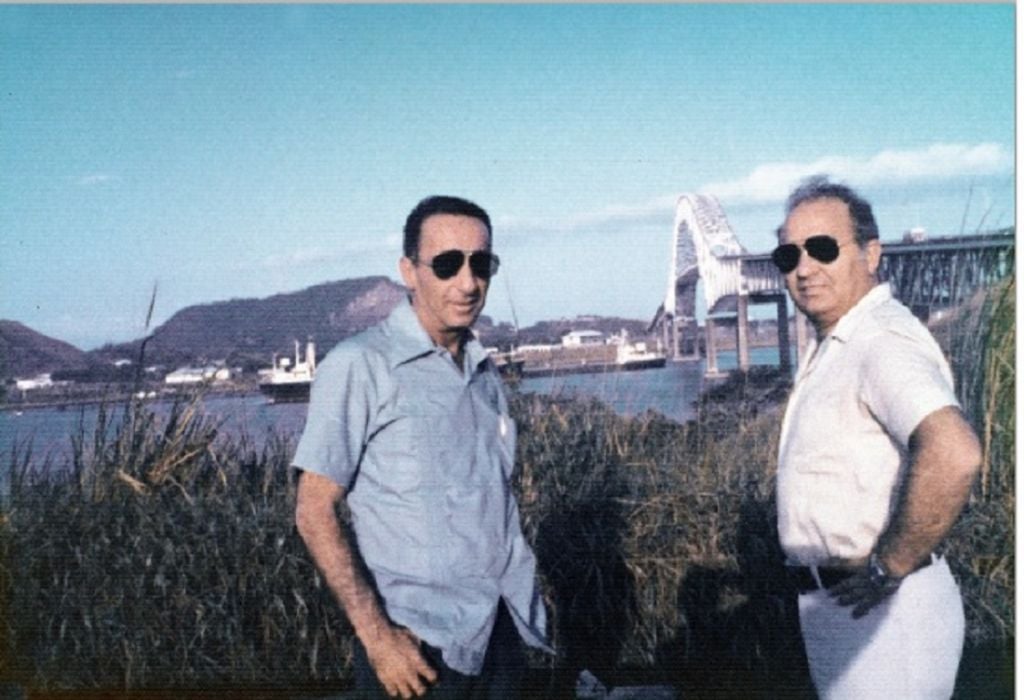
Forget honey traps. The Mossad, a new book has revealed, employs octogenarians in its clandestine endeavors.
At one point in the mid 2000s, Mossad commander Meir Dagan bestowed the intelligence agency’s highest honor on Michael “Mike” Harari, a legendary officer, for work he performed at the age of 80. The citation was given, Aaron J. Klein wrote in “The Master of Operations,” for his “important contribution to a unique operational activity.”
Klein wrote nothing more about the matter. But a knowledgeable source confirmed to the Times of Israel that the mission was part of the Mossad’s clandestine efforts to thwart Iran’s nuclear program and that the work itself required Harari to spend many months abroad in reserves service for the Mossad. “The citation was not for bravery,” the source said, underscoring that Harari was not sent into enemy territory, but for “a creative solution to a problem that couldn’t be solved.”
The source said that young Mossad officers, “who weren’t even born when Mike retired, were left slack-jawed” by what he called an operational solution that resolved a seemingly insurmountable problem.
The book traces the clandestine chapters of Harari’s life and, although it was relentlessly censored, both by Harari himself and the military censorship, it offers a glimpse into the life of an intelligence officer who, as current Mossad head Tamir Pardo wrote in the introduction, “continues to leave a clear and notable mark more than 30 years after he finished his service.”
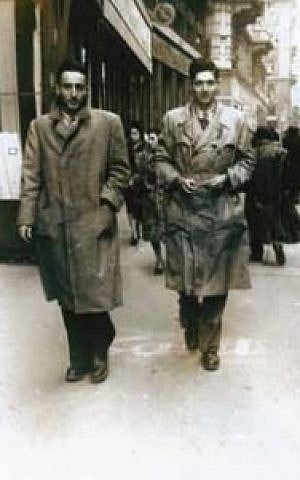
Harari, who began his service in 1943 as a 16 year-old member of the Palmach, spent his most intense years at the helm of Caesarea, the Mossad’s primary operational unit, during the tumultuous period before and after the Munich Olympics massacre in 1972, when dozens of terror plots were foiled in Europe and one innocent man, Ahmed Bouchiki, was gunned down in Lillehammer, Norway, solely because he resembled a wanted terrorist.
A fluent speaker of French, Arabic, Italian, Spanish and English, and a diehard lover of Italian opera, the reader first encounters Harari in 1973, in a car, tailing a Palestinian terrorist through what Klein was forced to call “a European capital.” The PFLP man, driving a Fiat 132 and in the midst of planning an airline hijacking, is weaving through the crowded streets. Harari and the officer by his side are looking for a convenient place to kill him. They follow close behind, determined not to lose the explosive-laden car and to do the deed in an area devoid of innocent civilians. At a traffic circle featuring a grand 17th century sculpture, the other officer, subordinate to Harari, sees he has a window of opportunity and, remote control in hand, asks, “Activate? Activate?”
“No!” Harari roars, “do you know what sculpture that is?”
A few moments later, with the officer still cursing about the missed opportunity, Harari gives the order and the man is eliminated – a hit that was hitherto considered a terror-related work accident.
There are several such episodes in the book, including a plan to assassinate “a quality target” in a Muslim country – an operation that would have altered the reality of the Middle East and one that, the commander of the Mossad told Harari, “only God will save you from if things get complicated…”
Harari, then the station chief in Paris in the 60s, drafted his own cover story – as a filthy rich hunting afficionado eager to bag an elephant and other wild animals. He would not hide the sniper’s rifle he was asked to smuggle into the country, as the head of the Mossad Isser Harel had suggested; he would place it at the bottom of a huge set of luxury suitcases from Paris and if anyone had any questions he would act as if it was understood that he traveled with his own firearm.
Only a change in the “quality target’s” travel plans foiled the ambush and spared the man’s life.
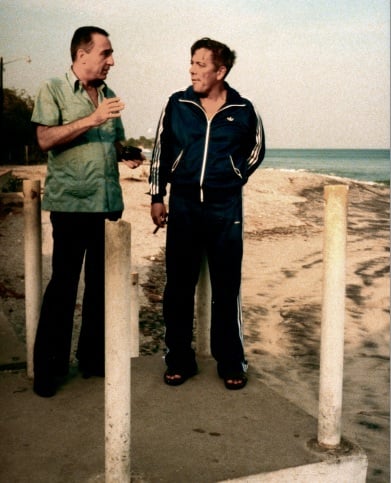
But in truth some of the most telling depictions in the book, the first such exposure for Harari, come amid the non-operational moments. Several years after he retired, for instance, his secretary was besieged by calls from a Canadian businessman. The man wanted to meet Harari. He had a plan to invest in an underwater pearl farm in Eilat. And no matter how many times Harari’s secretary tried to brush him aside, he persisted.
Harari, hardened by experience into a permanent state of suspicion, checked that the man was staying at the hotel he claimed to be in and agreed to grant him five minutes of his time. The man came in a blazer and no tie. His English was authentically Canadian but he carried no briefcase and no business card and his pitch seemed weak for someone so eager to set up a meeting. Moreover, as he spoke, Harari began to feel that his body language was wrong. Still in mid-pitch, Harari cut him off, in Hebrew, and said, “Get up and go back to whoever sent you. Tell them that you are not cut out for this.”
The man sputtered in English but was escorted to the door. When he left, Harari called the commander of Caesarea at the time and future Mossad head Shabbtai Shavit and asked if the Canadian, by chance, was asked to approach him as part of a training exercise. If so, Harari said, “you should know that he’s not fit for the job; spare him the gallows pole.” Shavit called back half an hour later and said, “My guys wouldn’t dare pull that kind of drill on you, but you might want to check with another unit in the Mossad.”
That other unit was the Mossad’s training academy. Harari called there and was told that, yes, in fact, the man was a cadet. He was the best cadet in the class. “Best in the class, not best in the class,” Harari fumed, “he’s not cut out for the job.” Several years later the man became famous as Victor Ostrovosky, the author of a book that many Mossad officers considered an outright betrayal of the agency’s methods.
In another instance, when Prime Minister Golda Meir refused to sign off on a high-profile hit in Libya, on the first anniversary of Muammar Ghaddafi’s rise to power, Harari, an intensely driven man, seeks and attains authorization to carry out a dry run of the strike, in Libya, an enemy country, simply to prove to his officers in Caesarea, and to the political echelon, that it was possible.
“It’s important,” he tells Mossad commander Zvi Zamir, “for our message upstairs, to the political echelon, to Golda. If we do the dry run,” he added, “she’ll know that we’re able to deliver the goods.”





The Times of Israel Community.