

Arab Israelis share Jews’ distrust of Iran, but not their appetite for war
Though most in the Arab community have little affinity for the Islamic Republic, few support the military campaign, seeing Tehran as less of a danger than the war’s potential cost

 Add ToI as a Preferred Source on Google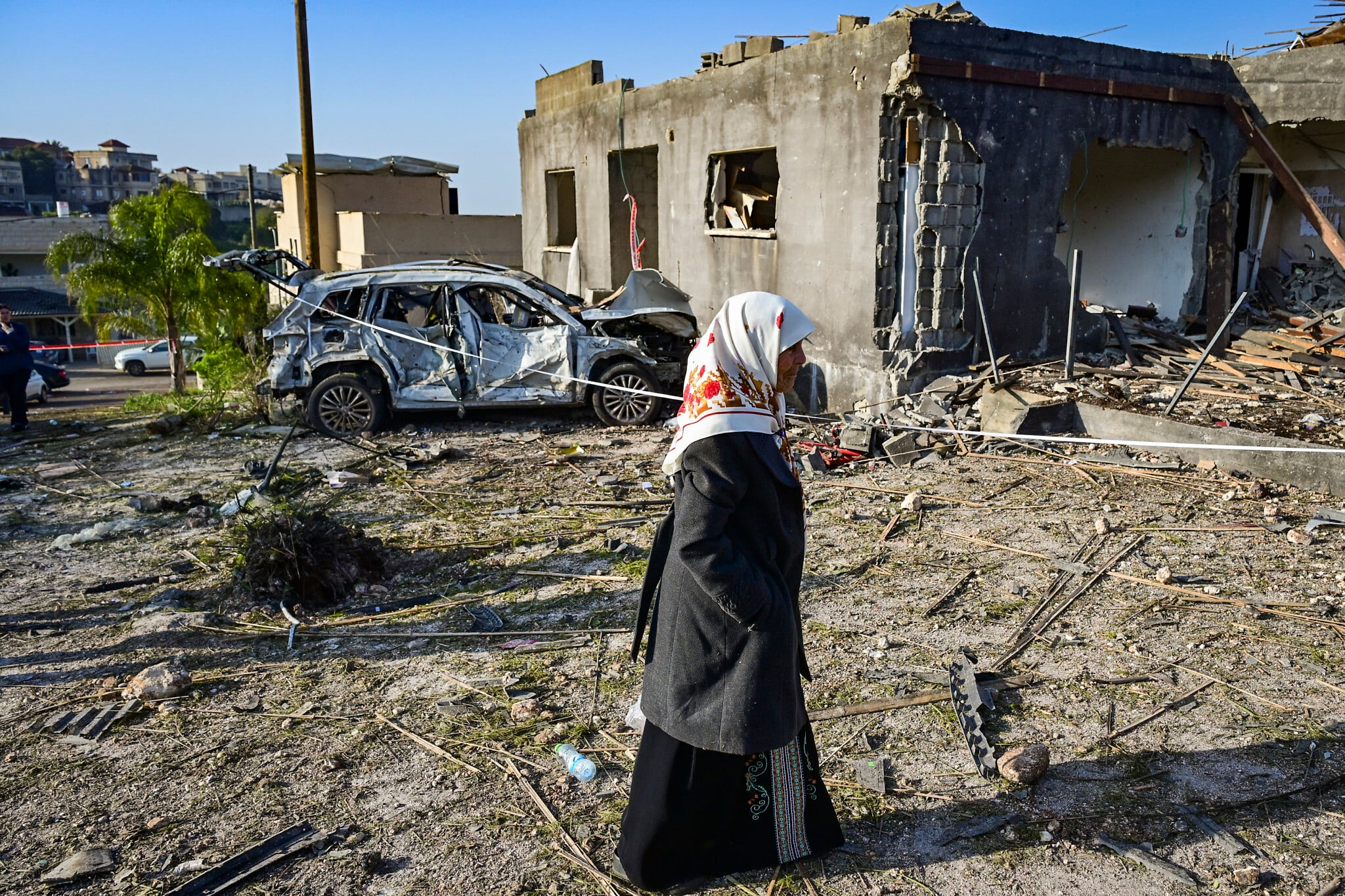
In a Jerusalem supermarket Friday, an Arab employee was restocking the produce aisle when a Jewish man, one of the establishment’s regular patrons, entered. The two smiled and traded pleasantries before their conversation veered into the inescapable reality of war with Iran.
“In the end, everything will turn out okay,” said the employee in Hebrew, to which the customer replied: “What do you mean? Everything is already okay.” Shaking his head, the employee echoed the well-worn refrain: “In war, there are no winners.”
The brief and largely mundane exchange, one of countless like it in Israel and the region over the last weeks, nonetheless underscored the unmistakable rift within Israeli society over how the ongoing conflict is viewed.
Recent polling has shown that despite immense hardships brought on by regular missile fire, the joint US-Israeli campaign against the Islamic Republic enjoys wide support from Jewish Israelis practically across the political spectrum.
But their collective feeling of hopeful determination about the war’s eventual outcome is not shared by most of Israel’s Arab community.
“It’s a different reality,” said Thair Abu Ras, an expert on Arab public opinion at the Jerusalem-based Van Leer Institute. “In Arab towns, the experience of this war is very different from what the average Jewish citizen experiences.”
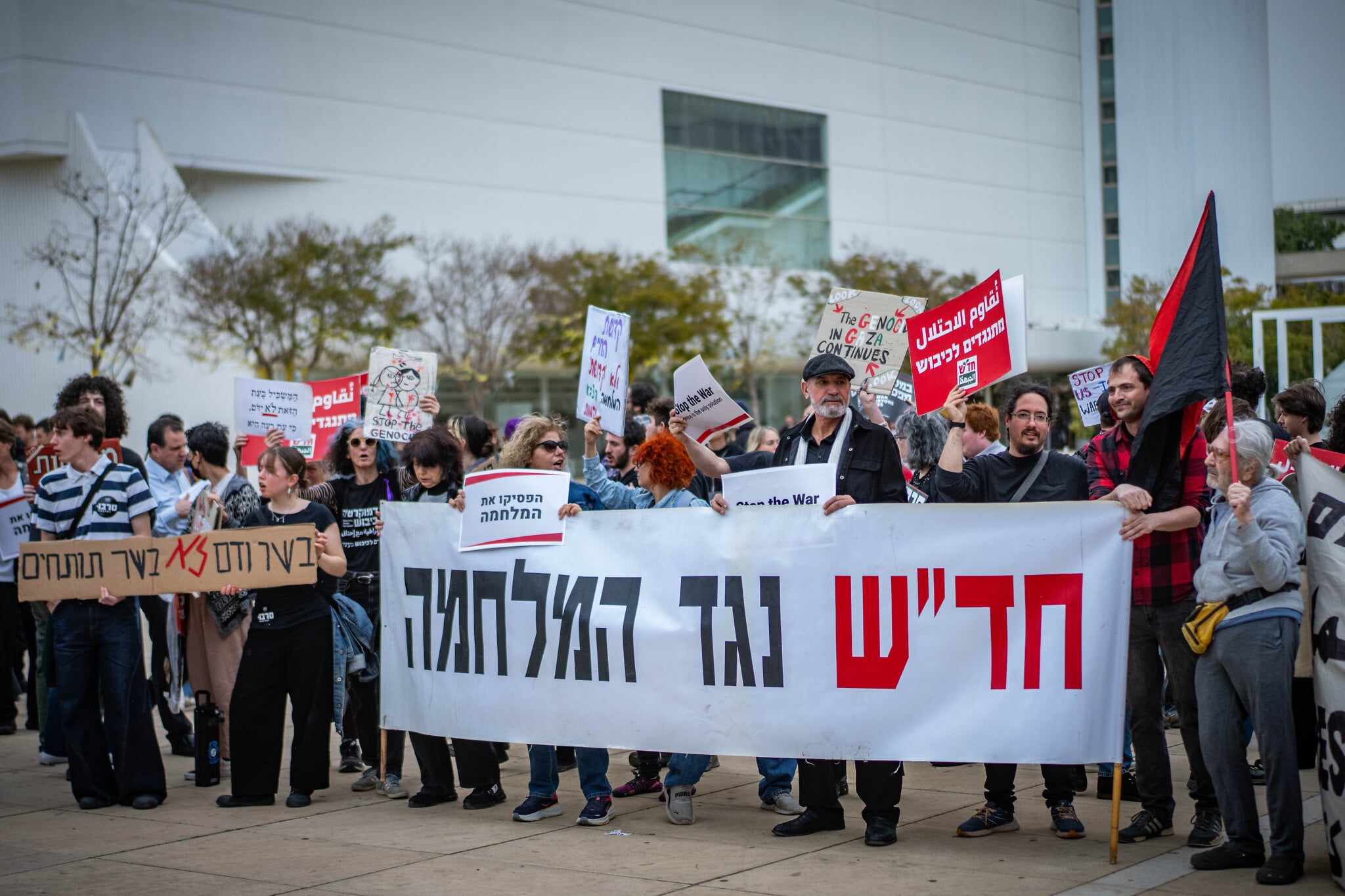
While a whopping 92 percent of Jewish Israelis expressed support for Operation Roaring Lion in an Israel Democracy Institute survey taken in the war’s early days, only 24.6% of Arab citizens felt the same.
An Arab-Jewish split on Israel’s conflicts in the region is nothing new. Similar gaps were recorded during past operations in Gaza, an unsurprising outcome given the substantial connections and familial ties between Palestinians and Israel’s Arab minority.
The mood in Arab society is marked by more ambivalence than over past wars, since the conflict is being waged against a non-Arab, non-Sunni regional power, one that is historically distant from the Israeli-Palestinian conflict.
But worries over missile attacks and deep skepticism toward Israel’s ruling government have nonetheless fueled dissatisfaction over the war, with many convinced that the cost outweighs the benefit — even if Israel were to achieve its aims of hamstringing Iran’s offensive capabilities and toppling the regime.
“We hope that this war will end as soon as possible so that we can have peace,” said Mounir Zbidat, mayor of the northern Arab town of Basmat Tab’un. “That’s it.”
Existential threat?
Tamar Hermann, the veteran pollster behind IDI’s two most recent surveys gauging support for the current war with Iran, noted that most Jewish Israelis see the regime in Tehran as responsible for a host of attacks on the state from all around via its proxy network that includes the Hezbollah and Hamas terror groups.
“Jews see it [the regime] as responsible for the October 7 attacks, Houthi attacks, Hezbollah. They see the regime as the archenemy of the State of Israel, whereas the Arab public sees it somewhat differently,” Hermann said.
In a November 2021 poll conducted by Hermann, only 20% of Arab respondents indicated that they felt Iran posed a moderately large, or very large existential threat to Israel’s existence, compared to 61% of Jewish respondents who answered the same.
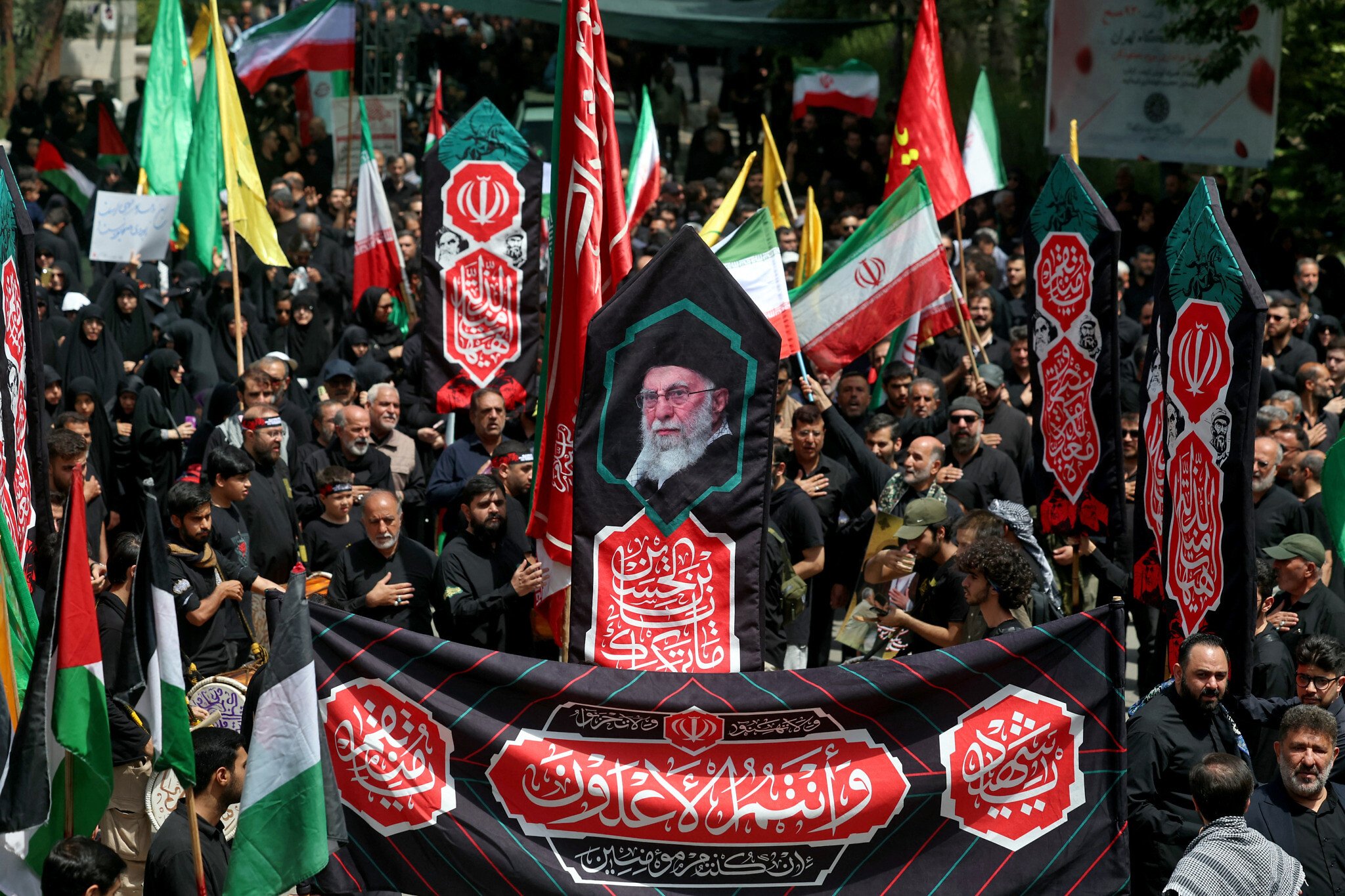
According to Abu Ras, most Arabs still regard the Islamic Republic with animus, seeing it as an aspiring hegemonic power responsible for wreaking havoc in the Middle East, especially after its military interventions in Syria and Iraq.
“The fact that Iran has its own imperial ambitions, that it’s not Arab or Sunni, also plays a role in people’s calculations,” he said. But he added that “Many just don’t feel connected to the war, and aren’t buying the Israeli national narrative.”
Most Israeli Arabs are Sunni Muslims, putting them at odds with Shi’ite Iran. The longstanding split between the branches of Islam has played a large role in tensions between Iran and other Mideast nations.
“I haven’t forgotten what the regime did to Sunni Muslims in Iraq and in Syria,” said Ahmad Awad, an anti-crime activist in Tamra. “I view the Iranian government as my enemy, and it views me, by virtue of being both Sunni and an Israeli citizen, as its enemy.”
Abu Ras noted that Iran’s anti-democratic tendencies were another reason that many Arabs may oppose the country. But Awad indicated that distrust in Israel’s leaders fueled domestic opposition to Jerusalem’s decision to launch the war.
“Most of us don’t want this war, not because of [any affinity for] Iran, but because it’s one of Bibi’s games,” he said, referring to the prime minister. “He wants to stay in power with this war; that’s his goal.”
Lack of security
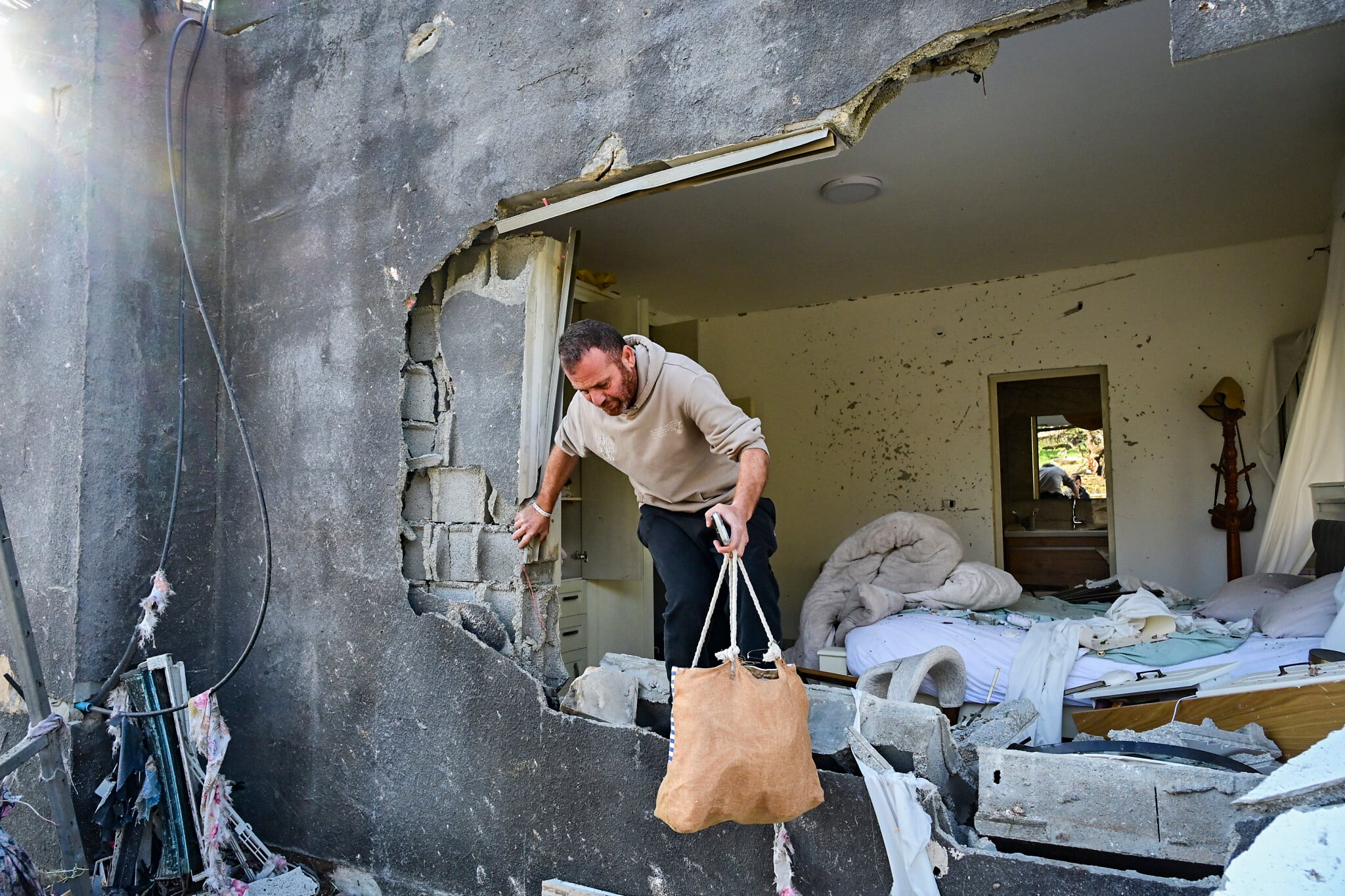
During Israel’s 12-day war with Iran in June, an Iranian missile slammed into a home in Tamra, the northern Arab city where Awad lives. The strike left four women from the same family dead and deeply traumatized residents.
It also drew attention to the stark lack of protective bomb shelters in Arab communities, a problem that remains just as acute today, making many Arabs more vulnerable to Iran and Hezbollah missile attacks than their Jewish neighbors
In the IDI poll, 79% of Jewish respondents reported feeling protected from Iranian attacks, as opposed to only 15% of Arabs.
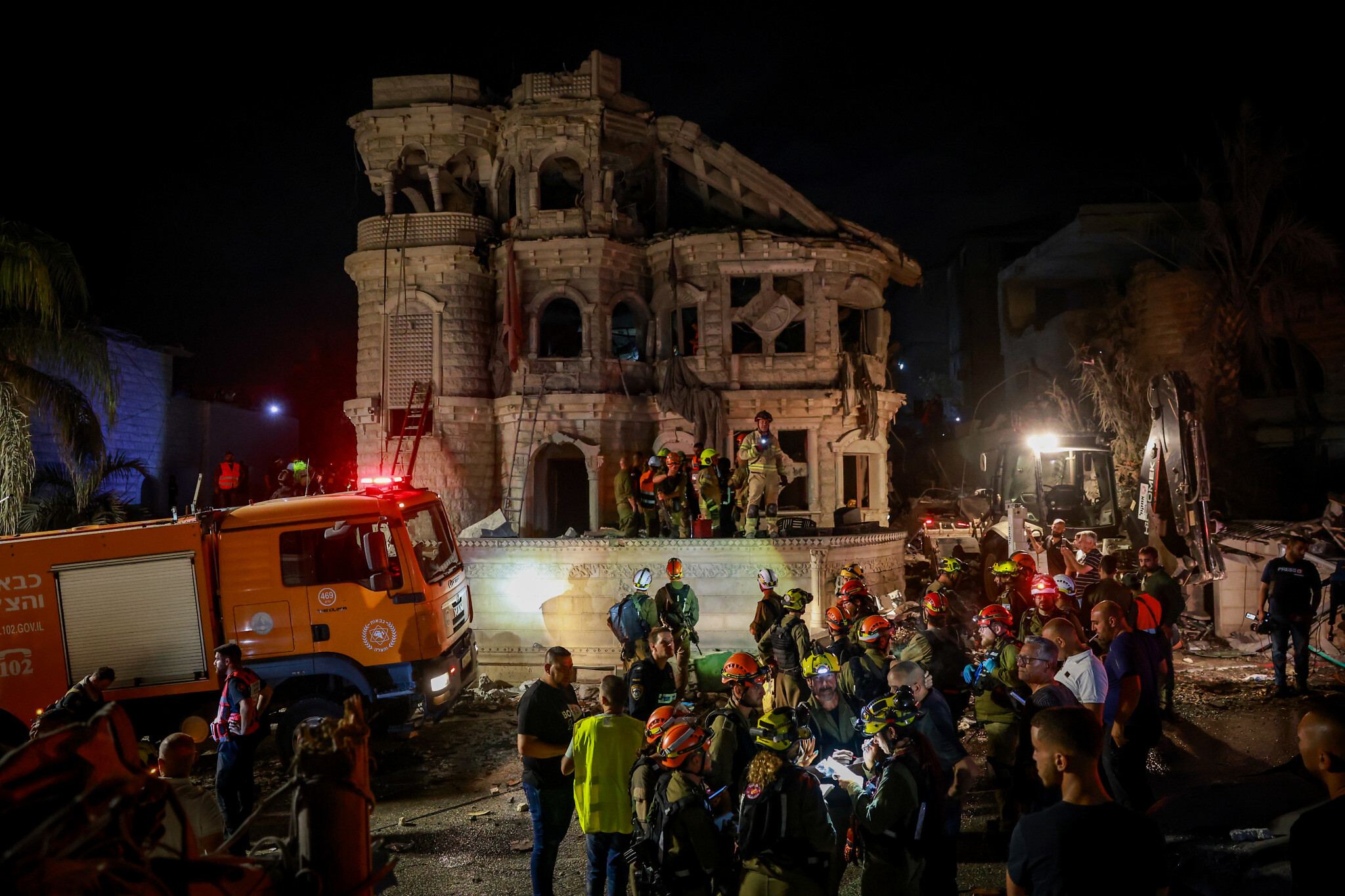
According to official data, only 37 of Israel’s 11,776 public shelters are located in Arab towns. Eight of those 37 are non-operational, according to the Abraham Initiatives organization.
Given the potential toll from missile fire on their towns, many Arab citizens are simply unconvinced that conflict with Iran is worth the cost.
At a meeting between Netanyahu and municipal heads last week to discuss citizen safety, Zbidat, the sole Arab city leader there, said he tried to convey a central point to the premier: “security, security, security.”
Prime Minister Benjamin Netanyahu met yesterday with local council heads, who expressed their support for him regarding the achievements of Operation Roaring Lion and commended his leadership and determination while managing the campaign. pic.twitter.com/iDbLd8J34v
— Prime Minister of Israel (@IsraeliPM) March 10, 2026
“We as Arab citizens feel abandoned, we don’t have enough bomb shelters, even in public schools, there are no shelters,” said the mayor of the northern Bedouin town.
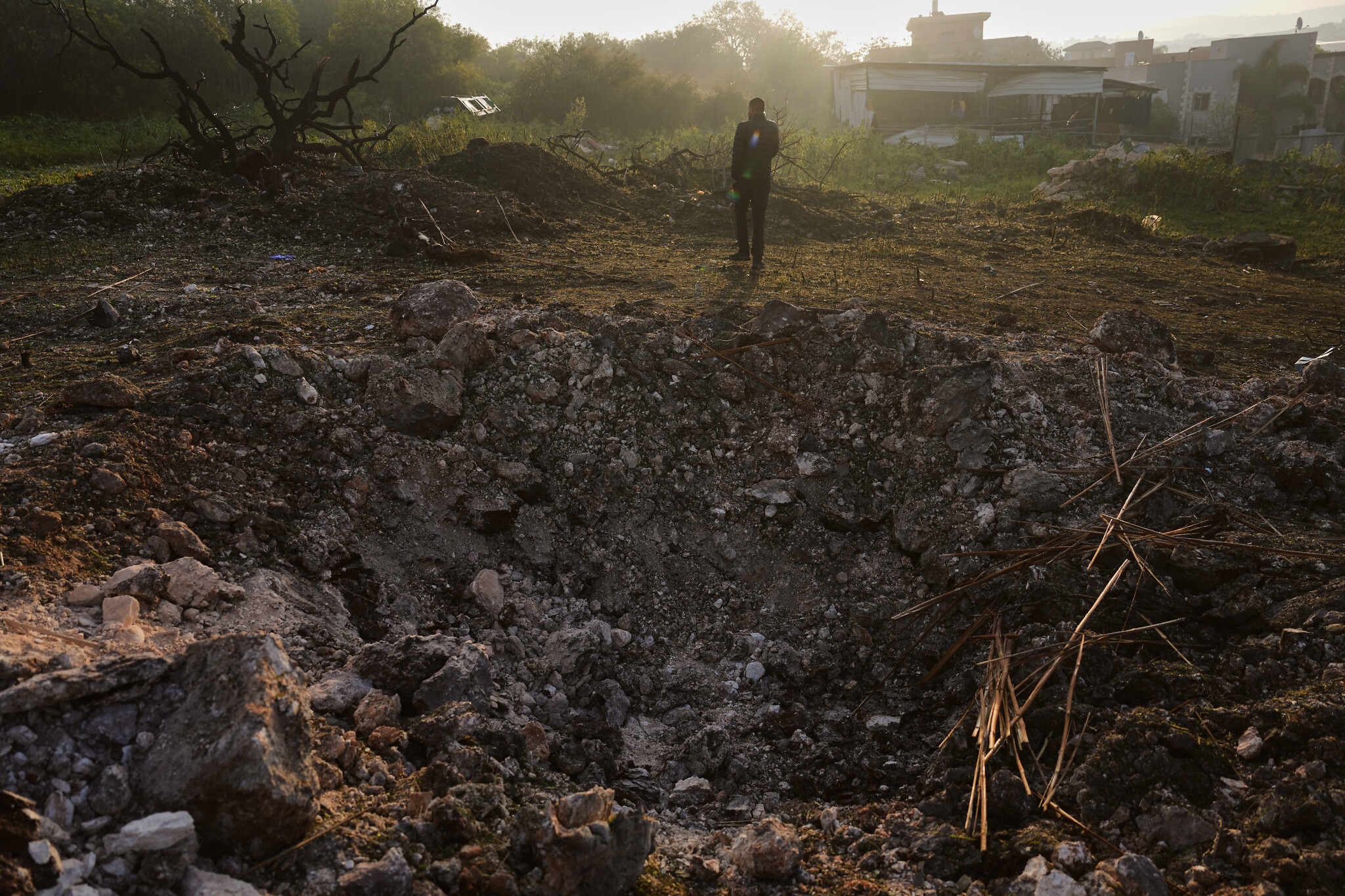
Zbidat noted that on the early morning of Friday, an Iranian warhead impacted in Zarzir, just east of Basmat Tab’un, wounding some 60 residents and causing damage to dozens of homes.
According to the IDF, the missile may have been partially intercepted by air defenses, but the warhead nevertheless remained intact when it struck the Arab town.
The war has also shifted public attention away from the deadly scourge of criminal violence plaguing Arab communities, which has continued amid the fighting, Zbidat said.
Along the lines of security, Zbidat noted that homicides have persisted amid the fighting, with the issue receiving even less attention than it had prior to the war.
Speaking cautiously, the mayor said Netanyahu “didn’t seem to be aware” of an attempt on the life of an Arab politician the night prior to the meeting. On March 8, a masked gunman opened fire on Arraba mayor Ahmad Nassar and his deputy, Anwar Yasin while sitting at a bakery in the city, marking the latest incident of brazen gun violence.
The shooting came after violence appeared to dip in the first few days of the war. It has since shot back up, with 11 people killed in the last two weeks.
“Whenever the country is in a heightened state of emergency like this, organized crime temporarily decreases. Part of the reason is that there’s increased policing in Arab towns, but it’s also because people are a bit more cautious and don’t go out as much,” said Abu Ras. “As days pass on, crime starts to come back.”




The Times of Israel Community.