

Backing strikes on Iran, Ukraine’s ex-defense chief says Kyiv can help defeat common foe
Oleksii Reznikov, who guided country during 2022 invasion, tells ToI that Israel and Ukraine can boost cooperation against Russia-Iran axis, and Europe should support Jerusalem, too

 Add ToI as a Preferred Source on Google
Israel and the US were correct in their decision to launch a preventative war against Iran, Ukraine’s former defense minister told The Times of Israel, describing Kyiv and Jerusalem as engaged in battle against a common enemy and urging Europe to extend its support for his country to backing Israel in its fight against the Islamic Republic.
Oleksii Reznikov, who oversaw Ukraine’s defense during much of the difficult period following Russia’s 2022 invasion of that country, said Ukraine had much to offer Israel to help it counter Iran, calling for robust cooperation on intelligence and military resources.
“If you see the threat, the best scenario is to nullify this threat,” said Reznikov, who stepped down as defense minister in September 2023 amid corruption allegations. He has denied all wrongdoing and was never charged.
“Ukraine and Israel have common enemies,” he argued, calling Russia and Iran, “the real axis of evil.”
“We have the same enemies, because Iran and Russia are in the same camp, and allies with North Korea and other autocracies,” he said.
Reznikov, 59, spoke to The Times of Israel in Tel Aviv days before the start of Operation Roaring Lion, and then again during the first week of the bombing campaign against Iran.
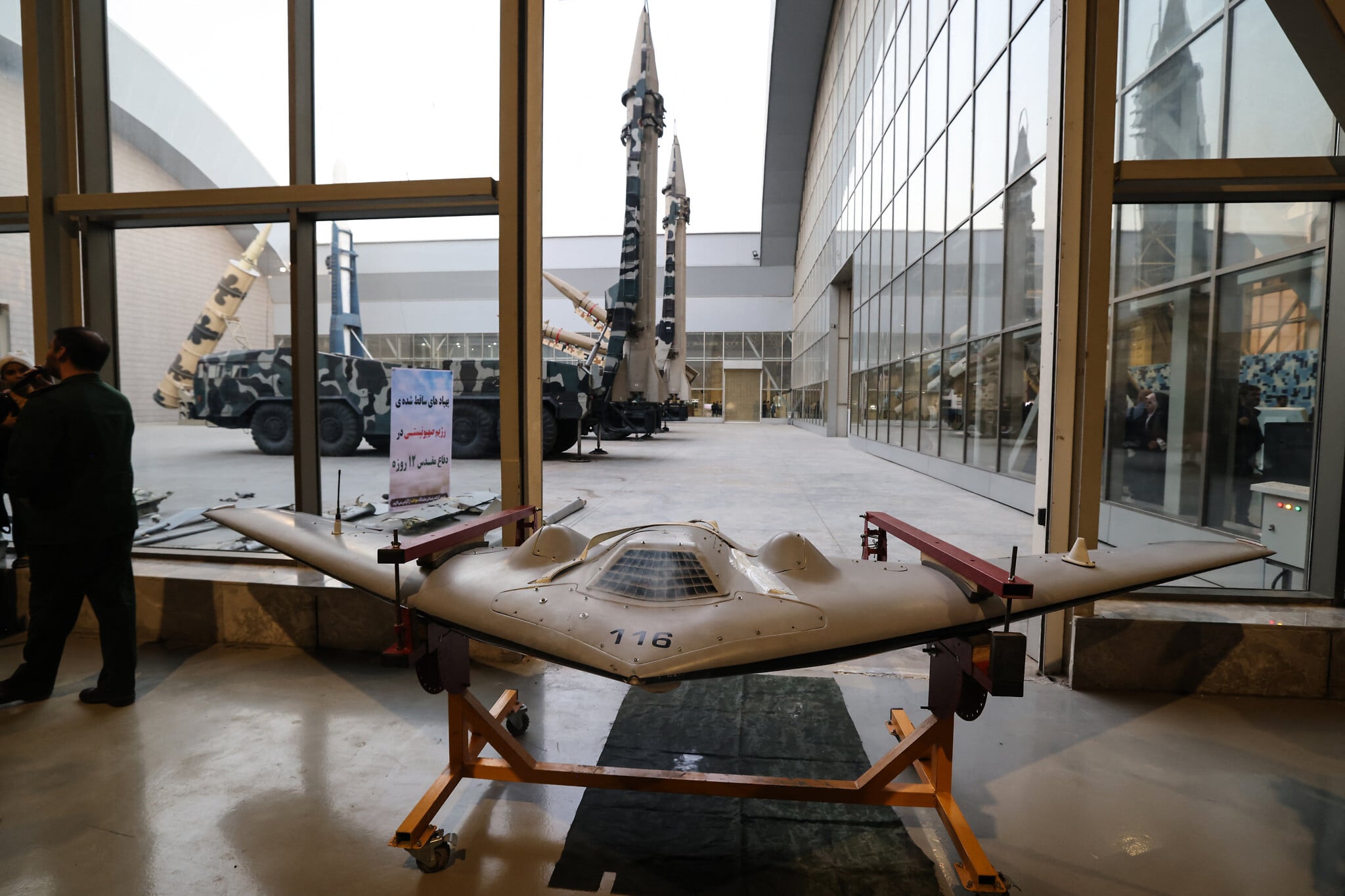
“Iran is using the same drones against you, and Iran is using Russian weaponry against you,” said Reznikov.
Russia and Iran have long enjoyed close ties, and in January 2025, the two countries signed a strategic partnership agreement to further improve cooperation, including military and defense partnerships.
Russia has deployed thousands of the Iranian-designed Shahed drones against Ukrainian cities and critical infrastructure, including energy facilities. Iran, meanwhile, uses Russian-made fighter jets, armored vehicles, air defenses, and many more systems.
In December, Iran signed a secret 500 million euro ($589 million) arms deal with Russia to acquire thousands of advanced shoulder-fired anti-aircraft missiles, according to the Financial Times.
The Washington Post reported Friday that Russia has been assisting Iran in its war with the US and Israel by providing intelligence on the locations of American military assets in the Middle East.

However, two officials familiar with US intelligence told The Associated Press that Washington had not uncovered evidence that Russia is directing Iran on what to do with the information.
“The military cooperation between Iran and Russia is not something new,” Iranian Foreign Minister Abbas Araghchi told NBC News on Sunday. “It’s not a secret. It has been in the past and it’s still there and will continue in the future.”
Despite Russia’s ally being pummeled by Israeli and American airstrikes, there are concerns that Moscow may ultimately benefit from the war. With Iranian energy supplies knocked out and prices of oil skyrocketing, Russia will likely become a main source of fossil fuels for China and others.
Meanwhile, Patriot interceptors used by Ukraine to fend off Russian attacks are being used up in defense of Gulf States being pummeled by Iranian missile and drone strikes.
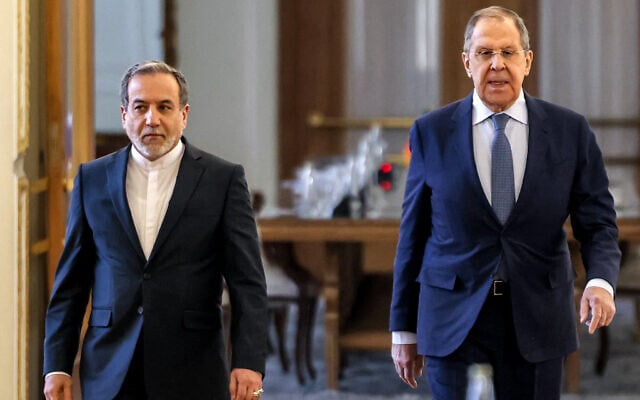
But Kyiv has also maneuvered itself into becoming an important ally in the fight against Iran, using its years of expertise battling Russia, including the cheap and effective interceptors it has developed to counter Russia’s Iranian-designed drones.
Last week, Ukrainian President Volodymyr Zelensky offered US allies in the Middle East a deal where they would swap some of their air defense missiles in exchange for those interceptors to better protect them from Iranian drone attacks, after the US asked for help dealing with the Shaheds.
He confirmed on Sunday that Ukrainian drone experts would be in the Middle East soon, where they would “look at the situation and help.”
Ukraine, said Reznikov, has much to offer Israel as well and is willing to “exchange experience and jointly develop technologies” against the Russian and Iranian threat.
“Today, we have serious experience, how to fight with a terrorist state, and you know how to fight with terrorist organizations,” he noted.
Despite somewhat lukewarm relations between Jerusalem and Kyiv in past years, he expressed his hope that ties with Israel would expand, including mutually beneficial strategic cooperation.
“We have to start on a level of exchanging of information as a minimum,” he said. “Your intelligence, our intelligence. Your armed forces and our armed forces, your general staff and our general staff. Your secret services and our secret service.”
There are elements of that dialogue in place today, he said, “but I think that we can strengthen it, to make it more open, because it’s a joint interest to have more knowledge.”
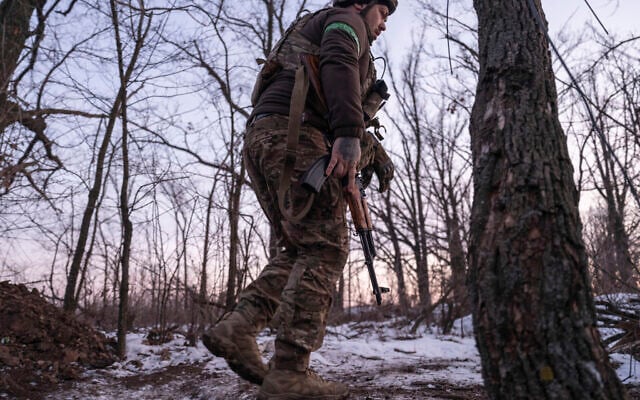
He stressed that “Russia is a very good student,” and will share lessons learned from the battlefield with Iran and other enemies of Israel.
‘Good direction’
Reznikov speaks proudly of his Jewish roots. His paternal grandmother was named Sarah, and he has relatives living in Bat Yam. He refers to Jerusalem using the Hebrew name “Yerushalayim.”
Though he is out of office and mostly working in academia, Reznikov’s comments are largely reflective of official Ukraine’s thinking and its attitudes toward Israel.
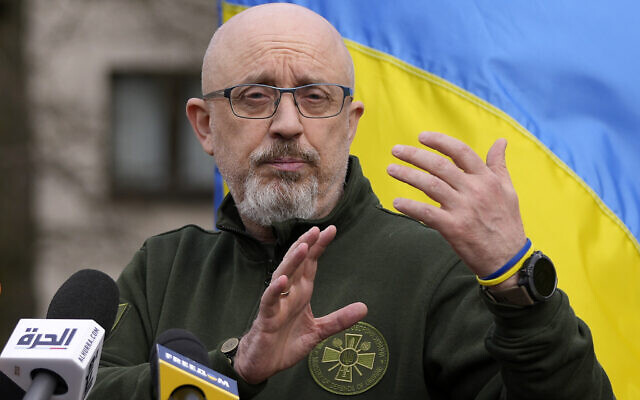
In 2022, Reznikov said that, given his Jewish heritage, he was “disappointed” with Israel for not standing more firmly with Ukraine.
“I’m not angry at Israel. I don’t have harsh feelings. But it is hard for me to understand [its conduct]. I think it’s unfair. It’s shameful,” he said at the time.
While providing humanitarian aid to Ukraine, Jerusalem has pursued a relatively restrained response to the 2022 invasion of Ukraine due to Russia’s widespread military presence in Syria, Israel’s northern bellicose neighbor, and has sought to balance security interests at home and policy abroad while maintaining relations with both Moscow and Kyiv.
However, following the fall of the Russia-allied Bashar Assad regime in Syria just over a year ago, a moderate warming of ties between Kyiv and Jerusalem has taken place.
Despite his earlier disappointment in Israel’s stance on the war, Reznikov said that there is now “a good direction of developing of our bilateral connection, relations.”
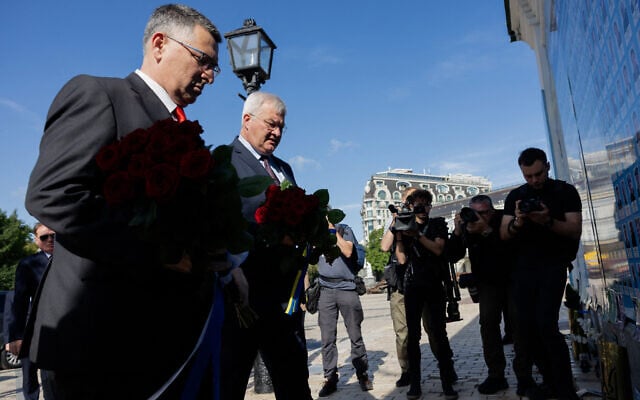
In July, Foreign Minister Gideon Sa’ar was in Kyiv, where he announced a strategic dialogue on the Iranian threat. The visit featured multiple displays of warmth between Sa’ar and Ukrainian officials, including Zelensky, along with discussions on military cooperation.
In December, Sa’ar met in Jerusalem with Ukraine’s Deputy Prime Minister Taras Kachka, the most senior Ukrainian official to visit Israel since Russia invaded Ukraine in 2022.
Kachka was leading a delegation to convene the first meeting of the Intergovernmental Economic Commission since 2021. He told The Times of Israel at the time that he was satisfied with bilateral ties of late.
“It’s a good sign of really good cooperation between our governments,” said Kachka. “We are looking for greater support and we are ready for greater support to Israel as well.”
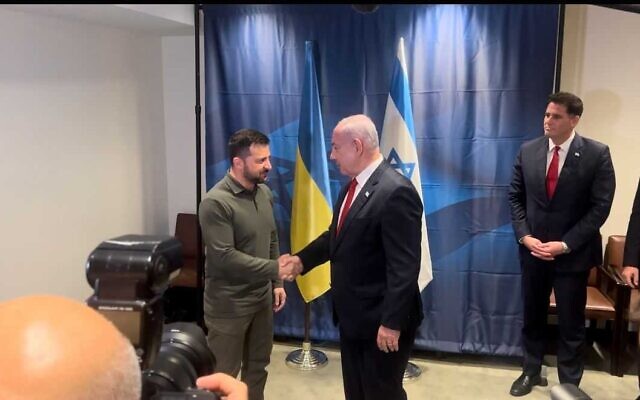
Despite the positive trends, Reznikov lamented frosty personal ties between Prime Minister Benjamin Netanyahu and Zelensky.
The two haven’t spoken since January 2025.
“I don’t see that they have a serious relationship,” said Reznikov.
David’s tech versus Goliath
Reznikov noted that Europe, which has staunchly supported Ukraine throughout its war but largely turned away from Israel following the war in Gaza, should defend both countries as democracies under threat.
“It’s absolutely the wrong way if they will separate” Israel and Ukraine in their minds, Reznikov said, “because we share the same values, as a democracy, place the same value on human lives, and share the same enemies.”
“The risks for Europe will remain the same — democracies or tyranny of autocracies,” Reznikov stressed.

Four years into the war, Reznikov insisted that Ukraine can still defeat Russia.
“It’s David and Goliath,” he said. “David was young, but very brave and smart. He used the cutting edge technology, like stone, and sling. He hit and defeated the monster.”
Months of US-led peace efforts have failed to stop the fighting. Zelensky says he has made significant progress on the terms of a possible peace settlement in talks with Washington envoys.
But Moscow has given no public signal that it is willing to budge from its demands, including winning control of all Ukrainian territory in the key industrial Donbas region and imposing severe restrictions on the size of Ukraine’s post-war military and the type of weaponry it can possess.
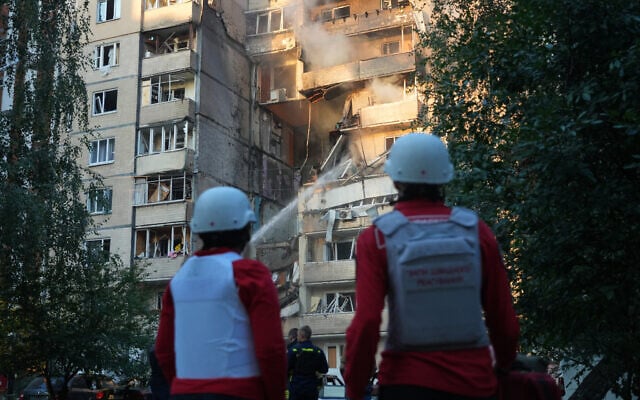
“They will not go on the offensive anymore,” Reznikov said of Russia’s strategy, with the war settling into a casualty-heavy stalemate reminiscent of the Western Front in World War I. “So the next stage should be some technological breakthrough.”
Money and resources from the West are key for a Ukrainian victory, as are sanctions on Russia, he said.
“It’s a doable scenario. It’s possible. That’s why we will win this war,” Reznikov predicted, making clear that for Ukraine, defeat is not an option. “We need to survive like Israel.”




The Times of Israel Community.