

Casting ballot, long-shot Balad head Sami Abou Shahadeh predicts ‘election surprise’
With fate hinging on Arab turnout, leader of hardline anti-Zionist party confident he will return to Knesset as other Arab voters in Jaffa seek ‘change’ by sticking with Lapid
 Add ToI as a Preferred Source on Google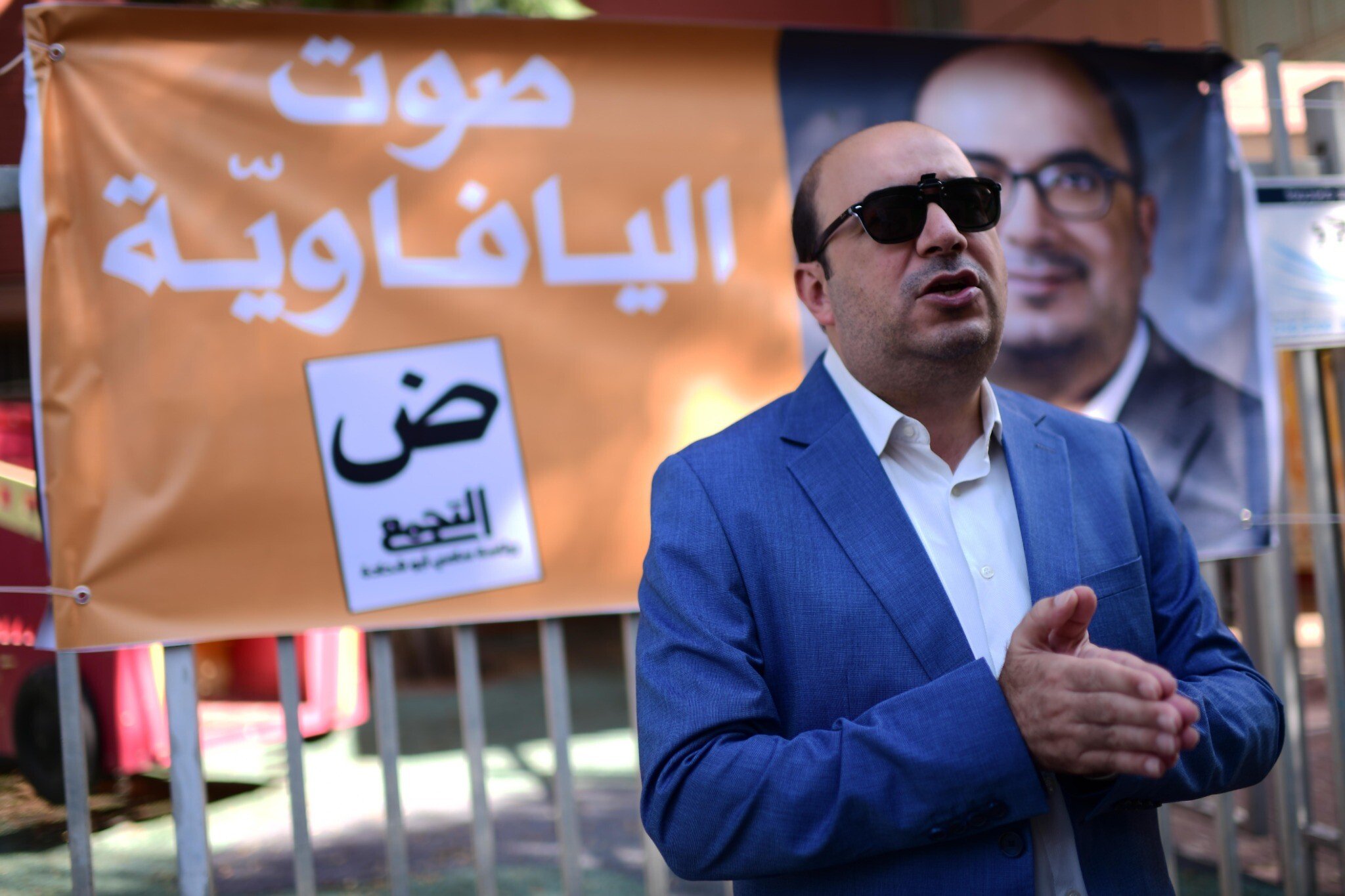
Balad leader Sami Abou Shahadeh strode confidently with his wife and three children down Rabbi Nachman of Breslau Street — named after the 18th century founder of an important branch of Hasidic Judaism — as he headed to his local polling station in Jaffa on Tuesday.
With his hardline anti-Zionist Balad party polling below the 3.25 percent threshold needed to return to the Knesset and widely seen as a dark horse, the MK nonetheless projected confidence that turnout among Arabs would be higher than forecast, ushering his faction back into the halls of power.
“I believe that what we said a month and a half ago will come true today. Afterward, all the analysts will come to explain why they thought wrong — Balad will make it past the electoral threshold and will be the surprise of the elections,” Abou Shahadeh said.
In September, Balad surprised many by breaking away from the Joint List — a slate it shared with fellow Arab-majority parties Hadash and Ta’al, a move that combined with the separate Islamist party Ra’am served to sunder the Arab vote into three.
Arab turnout was at the time projected to fall below 40%, making it unlikely that three parties would cross the threshold. Balad was seen as most likely to fall by the wayside while siphoning Arab support from Hadash-Ta’al and Ra’am and threatening to bury those parties as well.
Since then, pollsters have revised their turnout projections upward to around 50 percent.
Afif Abu Much, an Arab Israeli political analyst, predicted Arab turnout would need to reach 53%-57% for Balad to win entry to the Knesset — a target likely within reach. Turnout among Arabs, which has traditionally trailed numbers for Jewish Israelis for a number of reasons, has swung wildly in recent elections between under 45% to over 64%.
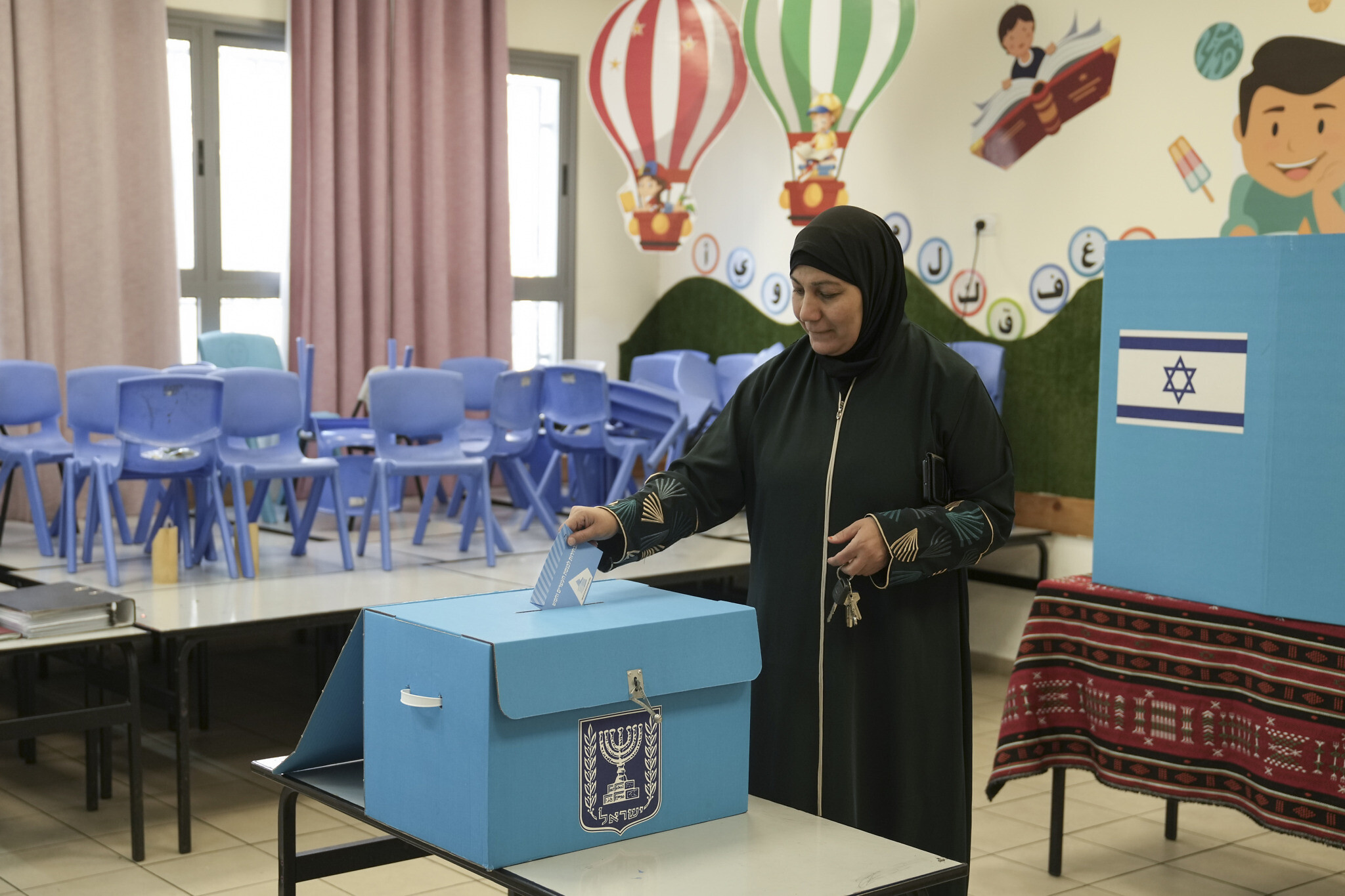
As of 2 p.m., turnout among Arabs was at 17%, according to pollsters from the aChord Center at Hebrew University. Turnout among the general population sat at 38.9%, the Central Elections Committee said.
Abou Shahadeh told The Times of Israel he had no regrets about the independent run, even if his party misses the threshold.
“Balad, from the beginning, has been the only political party that carried a democratic agenda within this racist system. Balad is going to win in the end,” he said from outside the polling station. “It’s going to take us time. We are not claiming that things are going to change in the near future.”
For much of the campaign, Abou Shahadeh and members of Balad have pilloried the other Arab parties for what they perceive as a servile willingness to give support to the Zionist parties that occupy the vast majority of seats in the Knesset.
In contrast to Ra’am, which has declared its willingness to once again join a coalition in exchange for more funding to Arab communities, and the Hadash-Ta’al alliance, which is keeping open the possibility that it will recommend current Prime Minister Yair Lapid, Balad refuses to play “the game of camps,” as the number three on the Balad slate, Da’a Hush Tatour, called it at the party’s campaign launch in late September.
Stopping to explain to the press his view of the current situation in Israel, Abou Shahadeh claimed the differences between the Zionist parties are purely cosmetic rather than ideologically significant.
“The problem is not that there are a few racists in the Knesset. There is an overwhelming majority of racists in the Knesset. The [outgoing coalition] was not much better than those who preceded them,” he said, standing in front of a poster of his face.
“A racist, ugly society has been created here. Unless there’s voting in favor of a state for all its citizens, in favor of taking on a human, democratic project that’s based on justice and equality… we will not advance to a good place.”
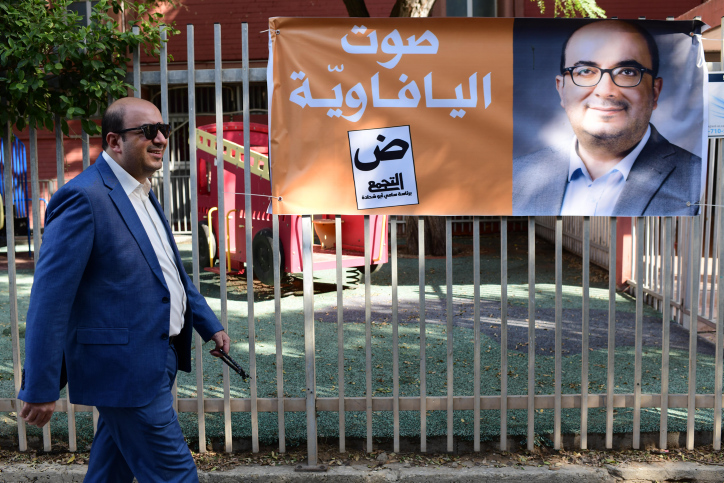
Arab and Jewish voters at the polling station in the ethnically mixed neighborhood felt that the two communities get along well, even if the peaceful coexistence was temporarily broken by the nationwide wave of race riots in May 2021, shortly after the last time Israelis went to the polls.
In the last election, 50%-60% of votes at the polling station in Jaffa went to Arab-majority parties, which most Arab voters support.
Most Jewish voters asked on Tuesday said they cast ballots for Lapid’s party, Yesh Atid. Ashley, a native New Yorker who immigrated to Israel in 2015 and came with her sabra husband Ido and their infant son Leo, said of the neighborhood, “My friend who moved here asked me, ‘Where is the leftist, queer, religious, spiritual movement?’ This is it.”
Their son has picked up some Arabic by playing with kids at the Arabic-language kindergarten next to his Hebrew-language one.
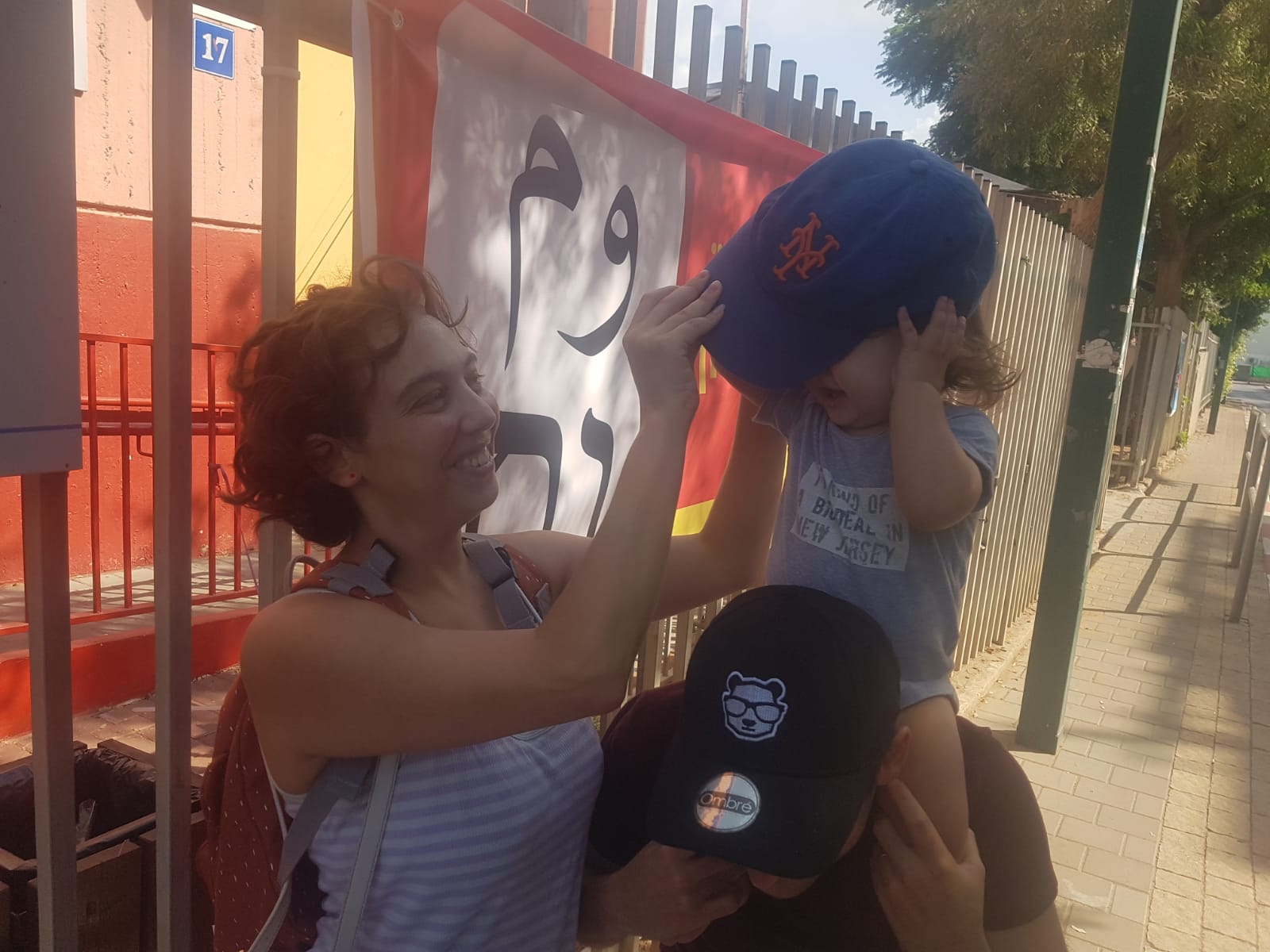
Despite having cast a ballot for the party of Lapid, the sitting prime minister, Ido unironically said it was “time for a change,” in a reflection of the residual effect on national politics of Likud leader Benjamin Netanyahu’s long tenure. Netanyahu was premier from 2009 to 2021.
Dima, a young man who moved to Israel from Russia two years ago, also voted for Yesh Atid. Dima opposes Netanyahu not only because he perceives the opposition leader as sympathetic to Russian President Vladimir Putin but also because his experience in Russia demonstrated to him that power “needs to switch hands” from time to time.
Ribhi, a 50-year-old mechanic, said he voted for Balad because Abou Shahadeh is “a native son, and I like what he says and what he thinks. He knows what he’s talking about, he expresses what we feel in the Arab community.”
He said he brought his two children to the polling station to show them that voting is “their democratic right.”
Mirroring Abou Shahadeh’s view, Ribhi opined that no matter who’s in power, things “never get done for the benefit of Arabs.” At least Balad in the Knesset could “give us a presence,” Ribhi said.
Many voters declined to reveal their ballot choices, like Moriah, a 20-something who said she was in a rush, but offered that “I won’t tell you who I voted for, but I voted for the party that will screw us over the least. You can quote me on that.”








The Times of Israel Community.