

Coalition advances bill to cancel the criminal charge that Netanyahu faces in his trial
Opposition brands legislation to strike the offense of fraud and breach of trust from the law books a ‘mafia-like move’ aimed at enabling PM and his allies to evade justice
 Add ToI as a Preferred Source on Google
Ariela Karmel is a political correspondent at The Times of Israel. She previously reported for Calcalist and Haaretz. She holds an MA in Middle Eastern and African History from Tel Aviv University and a BA in Political Science from the University of British Columbia.
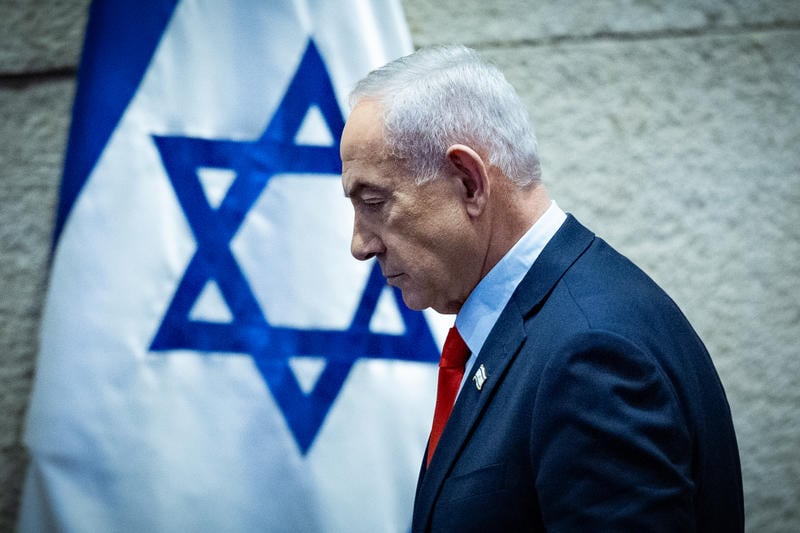
Coalition lawmakers announced Monday that they are advancing a bill to repeal the crime of fraud and breach of trust — a charge that Prime Minister Benjamin Netanyahu faces in all three of his ongoing corruption cases.
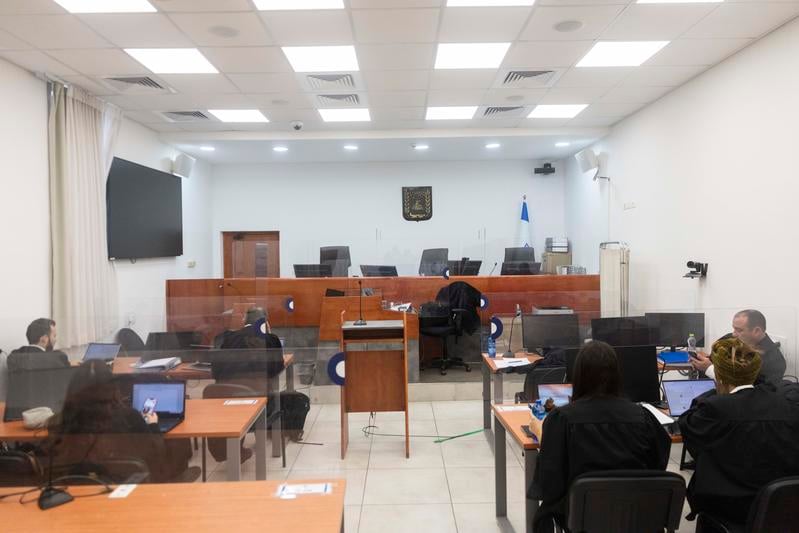
The bill is the latest in a series of attempts by the coalition to deflate or outright scrap the prime minister’s long-running trial. He is charged with fraud and breach of trust in three cases and bribery in one of them. He denies all wrongdoing.
The text of the bill does not specify whether, if passed, it could apply retroactively to charges brought before its enactment, such as those against Netanyahu.
The move to strike the offense of fraud and breach of trust from the law books also represents another front in the years-long effort by the right-wing government to weaken the judiciary.
Opposition leaders decried the bill as an act of “war” meant to enable the prime minister to evade justice. The bill’s sponsors argue that the charge of fraud and breach of trust is vague and superfluous. They propose trashing it while more precisely delineating other types of corruption offenses.
The bill is expected to be discussed at a meeting of the Ministerial Committee for Legislation next week before advancing to its first vote in the Knesset. The sponsors of the bill are Knesset Constitution, Law and Justice Committee chair Simcha Rothman, a far-right Religious Zionism MK, coalition whip Ofir Katz of Likud, and New Hope MK Mishel Buskila.
They said that the offense “severely harms the principle of legality and the foundations of criminal law.” They also claimed it is redundant since Israel already has other laws that address corruption, including prohibitions on bribery and money laundering.
They added that breach of trust is a “vague offense” that has been “sharply criticized by legal experts from across the political spectrum.” They alleged, without evidence, that the charge has been used by the law enforcement system to “police elected officials and public servants for conduct that is not defined as a crime under the Penal Code, and can retroactively determine what is considered criminal at their discretion.”
The text of the bill would also establish “clear offenses that currently have no adequate definition in law,” including conflicts of interest regarding close relatives and governmental insider trading.
Opposition leaders immediately denounced the measure, calling it a “coup” and a “mafia-like” attempt to free the prime minister and his allies from accountability for alleged crimes.
Several other cabinet members — Social Equality Minister May Golan and Energy Secretary Eli Cohen — as well as Likud MK David Bitan and Shas MK and former minister Haim Biton are also on trial for fraud and breach of trust, or are suspected of it.
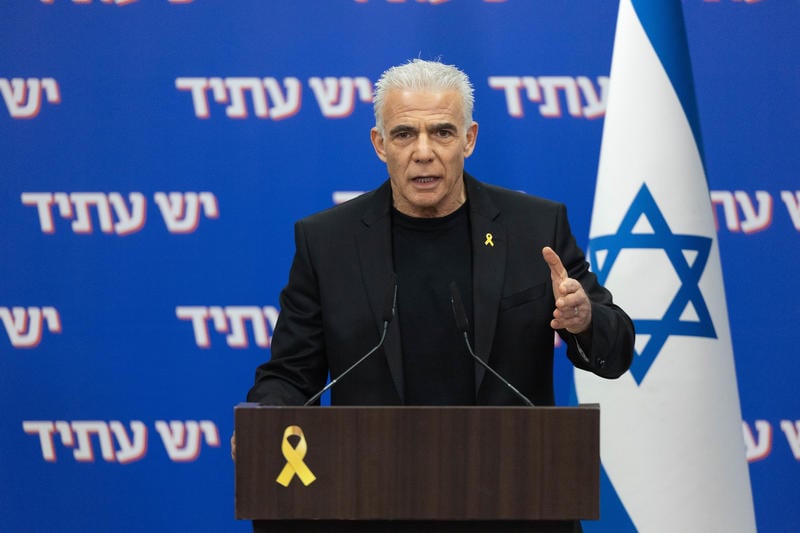
“This is not a reform; it is a full-fledged coup that will turn Israel into a failed, backward third-world country,” wrote Opposition Leader Yair Lapid, chair of the centrist Yesh Atid party, in a post on X. “The coalition has declared war on a democratic, advanced Israel, and we will enlist and fight to protect it.”
“We will fight this madness in the Knesset, in the streets and in the courts, and we will stop it,” Lapid added.
Yair Golan, chair of the left-wing Democrats party, called the bill a “mafia-like move by a government whose senior figures are evading justice and the rule of law.”
“The message to the public is clear: It is permissible to deceive and to betray the public’s trust, as long as the seat of power remains secure,” Golan added.
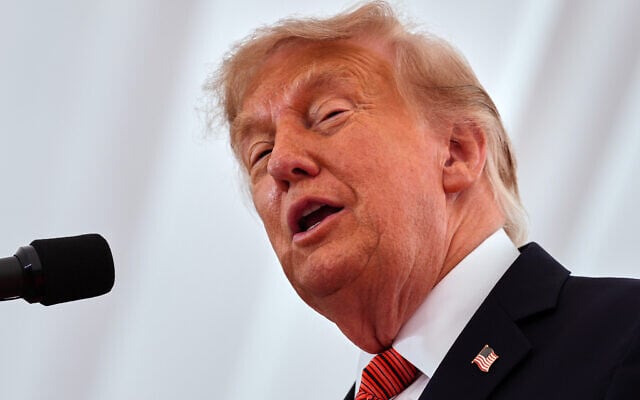
Netanyahu has made other attempts to circumvent his trial, including submitting a formal pardon request to President Isaac Herzog in November, which is still being weighed. US President Donald Trump also sent his own letter to Herzog requesting clemency for the prime minister.
Trump’s letter, sent earlier in November, came after he urged Herzog from the Knesset rostrum during an October speech to pardon Netanyahu.
The prime minister has consistently declared his innocence and decried the trial as a politically motivated witch hunt, and has not indicated any readiness to step down as prime minister.
The coalition has previously tried to advance bills to stymie Netanyahu’s trial, including one in October to delay the trial, which Attorney General Gali Baharav-Miara called “unconstitutional.” The coalition has likewise tried to fire and sideline Baharav-Miara, and to reduce the powers of her office.
It has also pushed for years, via several bills, to enact a contentious judicial overhaul that would weaken Israel’s court system, and cabinet ministers have bashed High Court President Isaac Amit. Rothman is one of the overhaul’s architects.








The Times of Israel Community.