

Experts unite to protect what could be the last wild olive trees in Israel – or the world
The largest known population of the ancient plants grows on fossilized sand ridges in the north and could prove helpful for the olive industry during climate change, researchers say
 Add ToI as a Preferred Source on Google
Sue Surkes is The Times of Israel's environment reporter
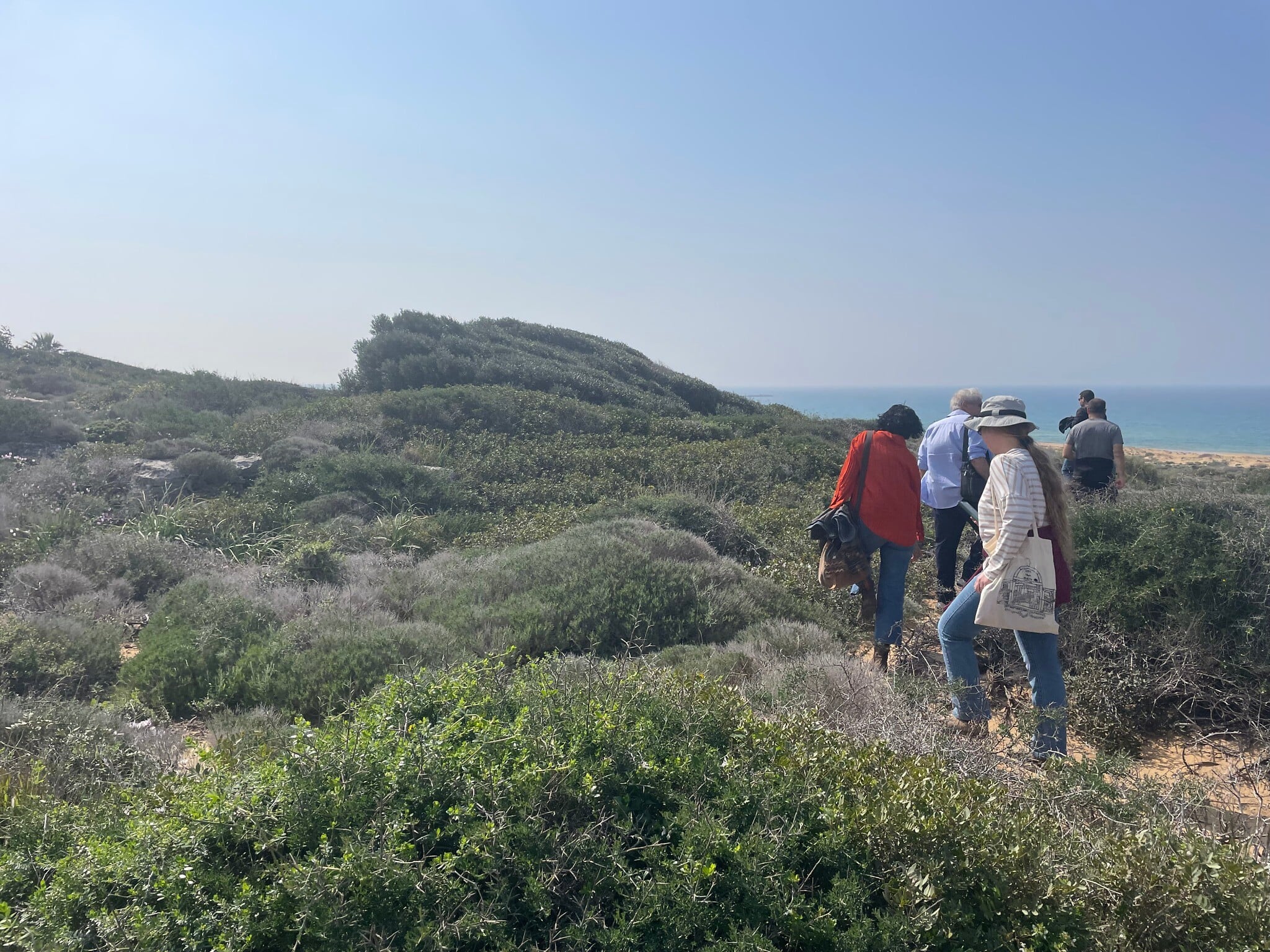
Experts from key state and civil society organizations are joining forces to protect what could be the last wild olive trees in Israel.
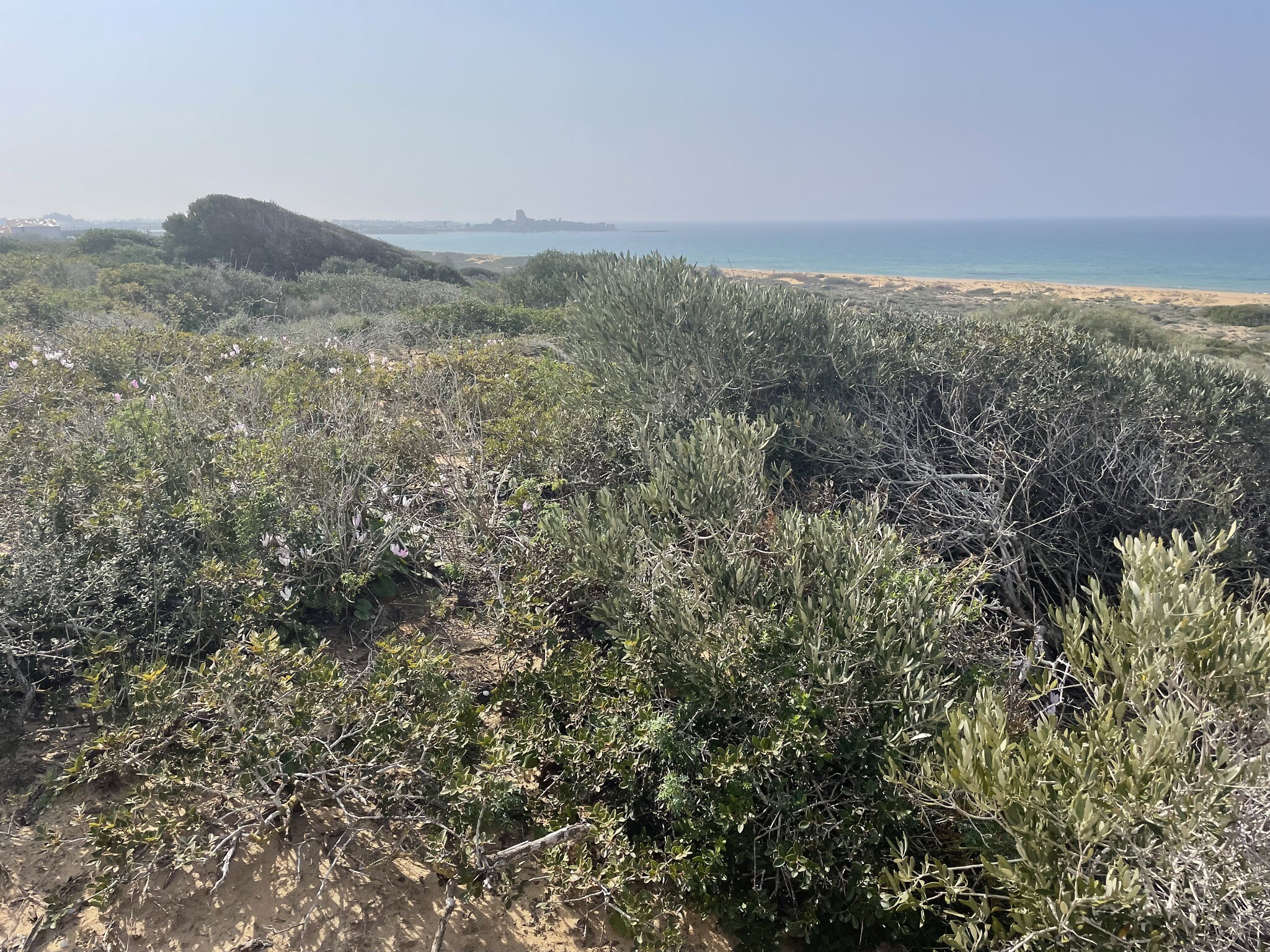
The plants — many looking more like bushes, with tiny fruits that produce relatively little oil — grow on ridges of kurkar, or fossilized sand, in and around the town of Atlit, south of Haifa in northern Israel. Such ridges along Israel’s coast have largely disappeared due to construction and development.
Thought to be the largest known population of wild olive trees in the southern Levant, located at the southernmost distribution point for the wild sylvestris variety, the trees grow close to a submerged, offshore Neolithic village known as Kfar Samir (7600–7000 BCE) where archaeologists found evidence of the earliest facility in the world for producing olive oil.
Dvora Lev-Ramati, a survey and research coordinator at the Open Landscape Institute at Tel Aviv University’s Steinhardt Museum of Natural History, told a recent conference at the British Mandate-period Atlit Detainee Camp that the wild olive species was highly resilient to salt, high temperatures, pests and diseases.
Lev-Ramati took part in a survey of the Atlit olive trees and said they could provide important genetic material for the cultivated olive industry during climate change.
Prof. Dafna Langgut, head of Tel Aviv University’s Laboratory of Archaeobotany and Ancient Environments, which specializes in microscopic identification of plant remains, said that the wild olive, which once grew along most of the Mediterranean coast, largely disappeared during the last ice age. It now survives only in very few places, such as the south Iberian coast and the Carmel coast, along which Atlit is located.

Genetic research by Prof Oz Barazani of the Agriculture Ministry’s Volcani Center and his then master’s degree student Elad Ben-Dor, who both attended the confab, has shown that most olive trees found in the wild in Israel are feral, not wild. Some have their origins in orchards abandoned long ago. Others have grown from the pits of cultivated olives dispersed by birds or pollen from cultivated trees carried on the wind.
Only in the Adamit Park in the western Galilee, an hour’s drive northeast of Atlit, did Barazani and Ben-Dor find trees with the wild variety’s DNA.
Armed with this information, the Volcani teamed up in 2021 with the Open Landscape Institute to map over 1,000 olive trees in and around Atlit.
Barazani told the confab that wild trees in this location were “perhaps the last in Israel and maybe in the world of the sylvestris variety.”
He told The Times of Israel that he could not vouch for recent overseas research claiming wild specimens had been found on some Greek islands and in Morocco.
He also said cuttings had already been taken from the wild trees of Atlit to grow new specimens. These will hopefully replace trees already marked for felling on a site earmarked for a new school.
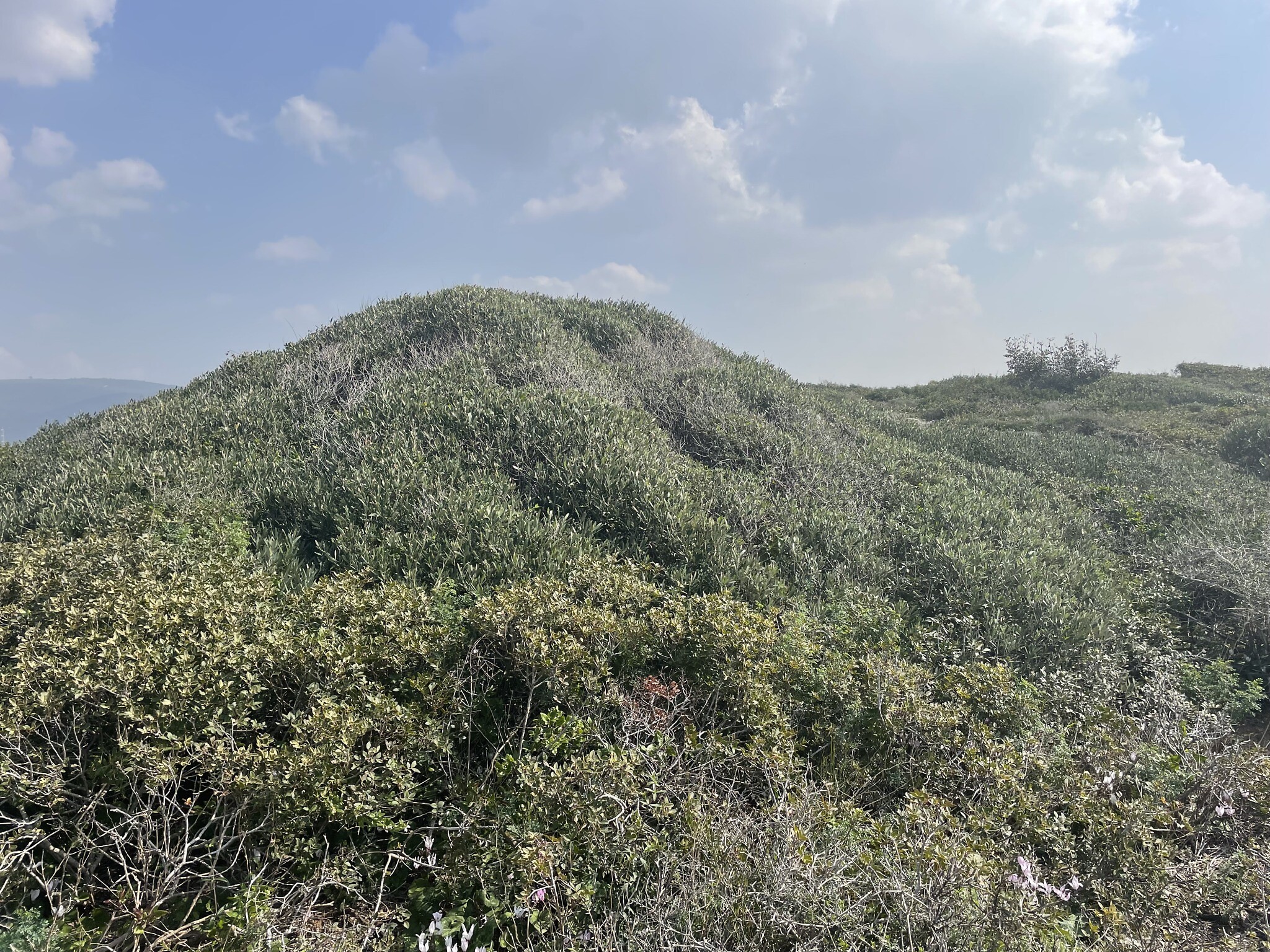
Researchers described the physical features of 1,054 trees, such as the appearance and size, shape and quantity of fruits. They found that most of the trees were bush-like, particularly those facing the sea, and had little fruit and fruits that produced little oil.
Genetic analysis was carried out on 112 specimens, taking the DNA profiles from trees in Admit Park as a control group for comparison.
Some of the Atlit plots were found to have a higher percentage of wild specimens than others, particularly those exposed to westerly winds from the sea. The researchers hypothesized that these winds protected the trees from pollen wafting from cultivated trees nearby.
Within the town of Atlit, there were some trees with a high degree of wild olive DNA, but the influence of cultured varieties was more pronounced.
Contingent on raising additional funds, the team would like to examine other tree populations growing on kurkar as far north as the Haifa outskirts and as far south as Caesarea.
The researchers were unable, however, to develop a method of distinguishing wild from feral trees just by morphological (physical and structural) features, many of which were similar. An easy way to tell one from the other would help planners identify wild trees worthy of conservation.
While the genetics of local plants are protected in 230 terrestrial reserves in Israel, there is only one genetic reserve for particular species — the Amiad Reserve in the eastern Galilee in northern Israel. This protects the wild ancestor of cultivated wheat (Triticum turgidum var. dicoccoides) and other wild cereals.
Ironically, Aaron Aaronsohn, who first discovered wild wheat in northern Israel in 1906, established his research station in Atlit in 1909. The head of the Hof Carmel Regional Authority, Asif Izak, told the conference that a major plan to develop the farm as an educational center had been approved 10 days previously. Among other species, Aaronsohn planted 120 olive trees at the facility to study which cultivars were most suitable for Israel.
At a roundtable meeting after the conference, a decision was made to establish a steering committee to find ways to preserve the wild olive trees. Steps range from possible statutory protection to training municipal gardeners not to plant cultivated olive trees too near wild ones.
The committee will include representatives from the Keren Kayemeth LeIsrael – Jewish National Fund, Israel Nature and Parks Authority, Society for the Protection of Nature in Israel, Volcani Research Center and Hof Carmel Regional Council. The Agriculture Ministry’s forest commissioner, who grants licenses for tree felling, could not commit without ministry permission. Dr. Adi Na’ali, head of the Olive Division at the Israel Plant Council, will chair the committee.








The Times of Israel Community.