

Gadi Eisenkot confirmed as 21st IDF chief of staff
Netanyahu says new military commander is ‘the right man at the right time’; he’ll replace Gantz in February
 Add ToI as a Preferred Source on Google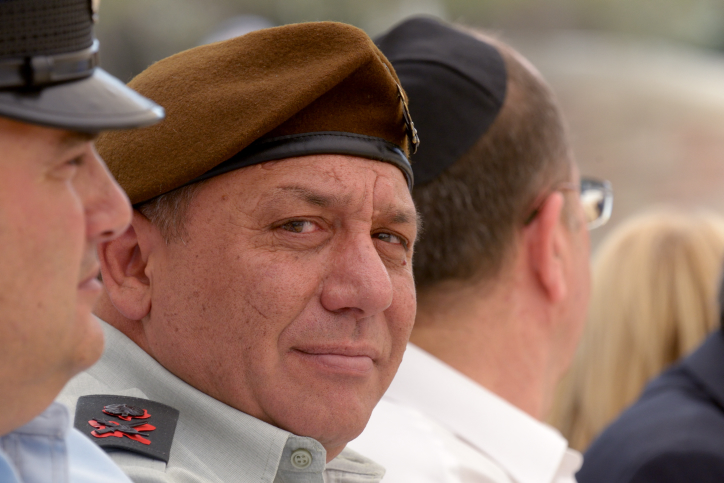
The cabinet on Sunday officially confirmed Maj. Gen. Gadi Eisenkot as the 21st IDF chief of the General Staff. Eisenkot will assume the top military post, succeeding Lt. Gen. Benny Gantz, on February 15, 2015.
“Gadi Eisenkot is the right man in the right place at the right time,” Prime Minister Benjamin Netanyahu said at the start of the cabinet meeting.
“Gadi has been a soldier and a commander. He is a veteran commander and he can lead the IDF in the face of the major challenges that surround us.”
In a Facebook status later Sunday, Jewish Home leader Naftali Bennett said Eisenkot was “a man of values, humble, creative and determined.”
Eisenkot’s deputy will be Yair Golan, a general who formerly headed the IDF’s Northern Command.
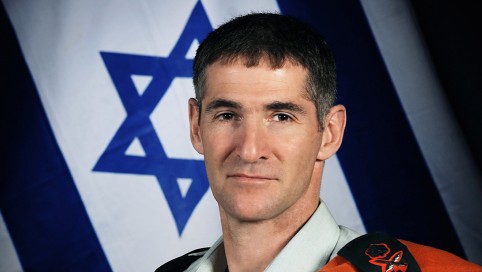
An infantryman from the Golani Brigade, Eisenkot, 54, has headed the General Staff’s operations branch and the Northern Command, and served for the past four years as the deputy chief of the General Staff, a pivotal post on the path to the top spot.
In November 1978, Eisenkot enlisted in the Golani Brigade’s 51st Battalion, where he was eventually given the command of a platoon. Nonetheless, he never saw himself as an army lifer. “Every year I thought I’d stop but then I signed on for one more year and with the years that accumulated to 33 years in uniform,” he told the local Eilat weekly Erev Erev in 2011.
After serving as a company commander during the Lebanon War and climbing up the ladder, he was appointed commander of the Golani Brigade in 1997, stepping into the shoes of his legendary predecessor, Erez Gerstein, who was later killed in Lebanon.
Unlike some of his predecessors, he never served in a special unit and carries no classified commendations for valor. Over the years, though, he made a name for himself as a cool-headed, fair, and insightful officer and commander.

On the first day of the Second Lebanon War in 2006, once it was clear that Israel had lost eight soldiers, including two who had been abducted to Lebanon, Eisenkot was one of the only people in the General Staff’s room to keep his calm. “We can’t just get into a head-on battle and operate out of anger,” he said, according to an account in Yoav Limor and Ofer Shelach’s book “Captives of Lebanon.”
In 2011, defense minister Ehud Barak, who had chosen Eisenkot as his military attache when he served as prime minister in 1999, sought to nominate him to the army’s top spot once his first preference, Maj. Gen. Yoav Galant, was rejected by the attorney general. “I feel I am ripe and ready to be the chief of the General Staff, but the right thing now, for the IDF and the State of Israel, is Gantz,” the Maariv daily quoted Eisenkot as saying, apparently on account of Gantz’s seniority.
Over the years Eisenkot has been careful to avoid stating his position on political affairs or the pressing necessity, if at all, of a military strike against Iran’s nuclear infrastructure.
When asked in 2011 in Yedioth Ahronoth whether he felt Israel could continue to thrive within the 1967 borders, he said it was wrong for an army man to speak about politics and that the army’s job was simply, “to give the political echelon the quiet and the capacity to make decisions from a position of strength.”
Mitch Ginsburg and Adiv Sterman contributed to this report.









The Times of Israel Community.